
Sorghum: Late season management and pests emerging
Josh Lofton- Cropping System Specialist
Tom Royer- Extension entomologist/IPM coordinator
Full-season sorghum across the state is reaching maturity, while late-season and double-crop sorghum are at various stages of early reproductive growth. In the last several weeks, insect pressure has been a major issue throughout the state. Therefore, growers will be left with several management decisions in the next several weeks.
Harvest management for sorghum:
Sorghum harvest aids or desiccants have been periodically used in sorghum throughout Oklahoma. Several reasons exist for growers to use these practices; however, two primary reasons include drying down the vegetative portion of the sorghum plant or managing late-season weeds present in field. Most years in the southern Great Plains, as with this one, there is very little need to rapidly dry-down the primary sorghum stem and first tillers. Higher temperatures, higher winds, and lower humidity will often result in the plant drying at a similar rate to the grain. Since desiccants have little impact on dry-down of the grain, this can result in rapid stem dry-down potentially leading to lodging issues. However, later tillers could still be maturing and take much longer to finish grain and dry-down. Growers have to decide if it is worth waiting for these later tillers prior to harvest. Often, the presence of wildlife and the risk of lodging will result in growers harvesting closer to when the main stem matures. Growers can use desiccants to rapidly dry-down these later tillers, which terminates the tillers. Some grain in these may be harvestable, depending on how close the grain was to black-layer.
The second reason for using desiccants is to help manage late-season weeds in the sorghum crop. Grassy weeds, especially Johnsongrass, are the primary weeds of concern. Currently, few in-season options are available to help control grasses in sorghum. The problem with Johnsongrass is that resources developed can be stored over winter in rhizomes for the successive year’s plants. Using late-season desiccation treatments can limit the transfer of these resources to the storage portions Johnsongrass. Further information regarding using harvest aids in grain sorghum can be found in PSS-2183 (Using Harvest Aids in Grain Sorghum Production | Oklahoma State University (okstate.edu)).
Sorghum pests emerging:
In recent weeks discussion has focused on armyworms and their impact not only on lawns but crops. While these can still be a major issue on crops, especially those that are still vegetative. Most of the impact will be in those crops planted late, without a large amount of vegetative growth. While these are still a major concern, other pests are around. Stinkbugs have been present in sorghum for several years, but they are not normally at high populations, or are not widespread enough to cause major issues. However, we experienced an increased number of calls regarding stinkbugs this year. The particle stinkbug of interest is rice stinkbug. The question becomes, “When do growers need to think about treating for stinkbugs in sorghum?” The best fit for Oklahoma sorghum growers for a treatment threshold for rice stinkbug is to sample 30 emerged heads, and treat when the average number is 0.5 to 1 stinkbug per head. Research based damage thresholds numbers are per acre, not numbers per plant. Therefore, the 0.5 per head threshold is for higher plant populations, and the 1 per head is for lower plant populations. A number of products are available for control of panicle feeding bugs in sorghum.
Can Grain Sorghum Wait on Nitrogen?
Michaela Smith, Masters student under advisement of B. Arnall
Brian Arnall, Precision Nutrient Management Specialist
Grain sorghum producers in Oklahoma are challenged greatly by their environment and sporadic rainfall patterns, which diminish as the season progresses. These uncontrollable variables influence timing of nitrogen (N) application and nitrogen use efficiency. Using rainfall events as an incorporation method forces producers to apply before the event regardless of its intensity or delay application until field conditions are acceptable while anxiously waiting for another rainfall event. When deciding to delay N application it’s important to know the effects on physiological development and grain yield.

Trial structure and breakdown
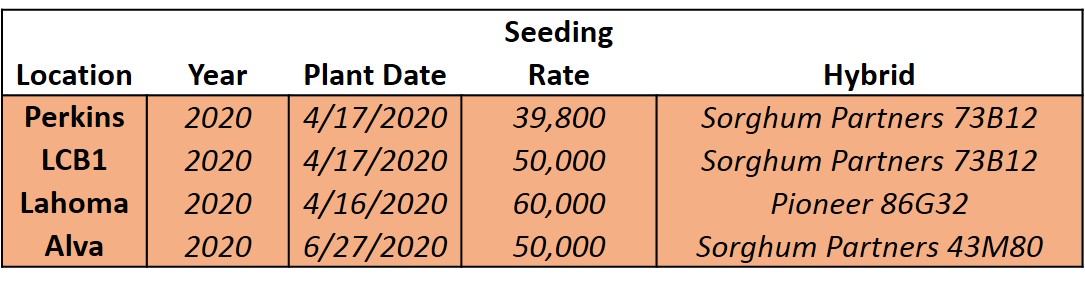
This study was conducted over the 2020 growing season consisting four locations, including one double cropping system following wheat. Ten in-season applications were made using ammonium nitrate (AN) as the N source at a rate of 90 lbs. ac. Using AN as the N source reduced the risk of nitrogen loss through the process of volatilization as the goal of the research was to test the plant not the fertilizer. A pre-plant treatment served as the standard check, while in-season applications were initiated at 21 Days After Planting (DAP) and applications made sequentially at 7-day intervals. A non-fertilized check was included to the study to confirm locations were responsive to N fertilized applications Hybrid, plant date, and seeding rate can be found in Table 1.
Physiological Response to Application Timing
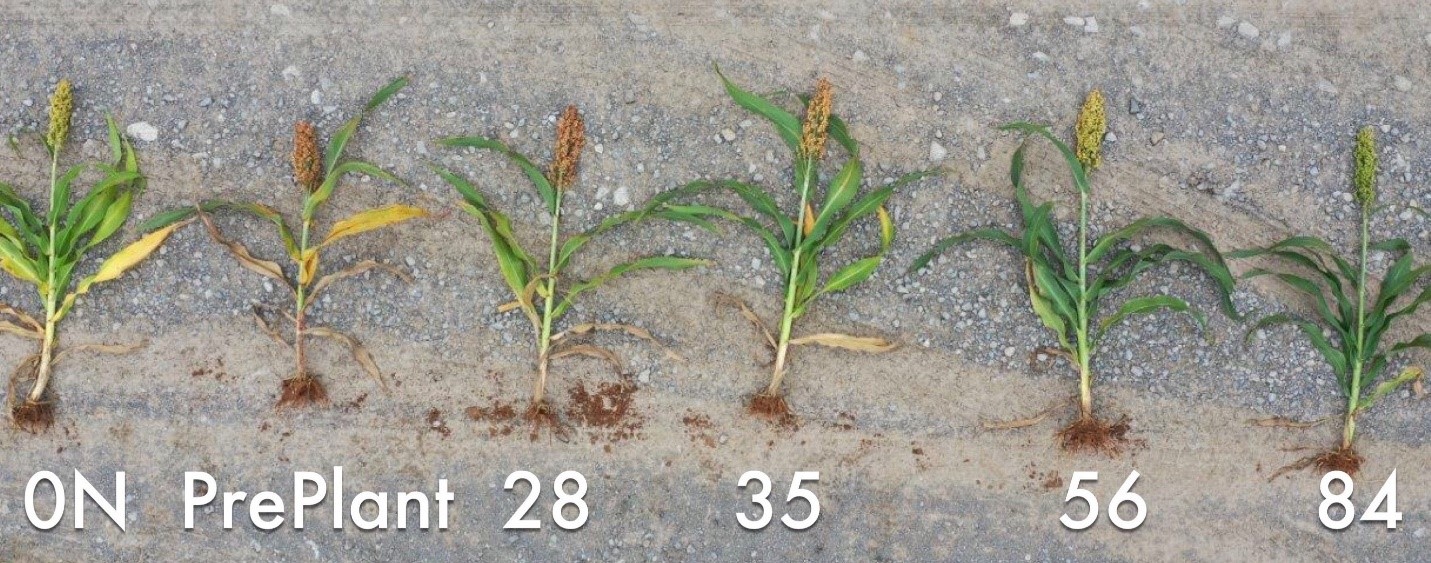
Two of the four locations demonstrated an effect to physiological development and maturity with the delay of nitrogen application. A delay in heading by a one to two-week period was observed at Perkins and Lahoma for applications made after May 21st (Table 2.). This delay in heading contributed to similar delay in maturity and potential harvest date. At Perkins decreased plant height was observed in the pre-plant plot and was associated with the onset of late season nitrogen deficiency (Figure 2). While this response was unexpected, the impact of nitrogen deficiency experienced early in the crop growth on the root and shoot growth has been well documented in many species. As a plant experiences nitrogen limitations growth changes from above ground to the below ground parts (roots) in an attempt to alleviate nitrogen stress. This increase in root growth could contribute to a more efficient uptake of nitrogen and decrease loss. In contrast to Figure 2, pre-plant application is shorter than compared to later season applications, this could be a result of inadequate N uptake thus leading to N loss by leaching, whereas later applications had increased root growth for efficient N interception and uptake.

Yield Response to Application Timing
Response of N was observed at all locations (Figure 3), while the delay of nitrogen varied in its effects across all locations. Grain yield from each N application was compared back to the pre-plant application to evaluate the effects of timing. All four locations responded positively to N fertilizer. At both LCB and Lahoma grain yield was maintained with applications made as late as 42 to 63 DAP respectively before any negative trend in grain yield was observed. Perkins was the only locations to have a statistically significant increase in grain yield due to delayed N applications. At this site, which is a sandy loam, waiting until 42 DAP resulted in a 15 bushel increase over the pre-plant plot. Now Alva which was double crop showed that rainfall is key. At this site, none of the in-season treatments made it up the level of the pre-plant. The reason for this will be discussed further below.

Influence of Rainfall
The loss in grain yield at Perkins in the pre-plant application could likely be reflective of nitrogen loss due to leaching. Pre-plant applications have been well documented in the aspect loss as a result of crop requirement and early physiological development. Long term mesonet rainfall data depicts a decline in the probability of rainfall with the progression of the growing season across all locations. In early season the probability of 0.5 inches of rainfall ranges from 8 to 10% respectively for LCB, Lahoma, and Perkins, and dramatically decline to percentages at low as 5% in mid-July during grain filling period. For Alva rainfall probability is substantially lower as its season was initiated during the drier months, which depicted a probability of 6% for 0.5 inches of rainfall, and 4.5% for 1 inch for early season rainfall crucial for pre-plant incorporation and crop establishment. These probabilities drop considerably compared to regular season as the months progress onward, mid to late August probability for 0.5 inches ranges from 0.8 to 11.5%, while for a 1 inch is 0 to 6.9%. Past weather data provided by the mesonet illustrates how later in the season rainfall and its amount is variable, suggesting that in a double crop scenario delayed application is not recommended while it is in regular season crop due to the increased chance of rainfall probability.
Summary
The purpose of this study was to evaluate the impacts of delayed nitrogen application in grain sorghum. In order to develop an accurate conclusion additional site years are required, although current data could suggest delaying nitrogen application for full season grain sorghum is possible without a detrimental loss in grain yield. This means producers have time to evaluate the crop and market to determine if more inputs are needed and economical, while allowing implementation of technologies such as the N-Rich Strip and SBNRC.
If you have any questions for comments please reach out.
Brian Arnall
b.arnall@okstate.edu
405.744.1722
Acknowledgement of EDC Ag Products Co LLC for support of this project.
Nitrogen timing in a winter wheat forage system
Bronc Finch Ph.D. student under the leadership of D.B. Arnall
Brian Arnall, Precision Nutrient Management Specialist.
The recent weather conditions have caused a delay in the ability to top-dress winter wheat in some parts of Oklahoma. Despite this delay, conditions have still been good for growth, which means a steady increase towards the hollow stem and jointing stages. As these stages approach, or have passed, many concerns have been raised about the decision to apply nitrogen to increase spring forage production of winter wheat. A study conducted over the past two years at Oklahoma State University, in cooperation with Noble Research Institute has had the opportunity to evaluate how a nitrogen application at or just after hollow stem impacts the forage production of winter wheat. This study was set up with three fertilizer treatments of a 60 lb N pre-plant only, 120 lb N pre-plant only, and a 60 lb pre-plant and 60 lb top-dress applications. In the first season of the trial, 2018-2019, the fertilizer application was applied shortly after the wheat achieved the Feekes 6 stage (hollow-stem) due to rain and other conditions preventing a timely top-dress. In the 2019-2020 season of the trial the treatments were applied at a more ideal time, near the end of February and beginning of March before hollow stem. For this study the first cutting was targeted for just prior to hollow stem and the second cutting conducted at early boot stage.
In 2018-2019 the additional 60 lb N applied in the 120 lb N pre-plant increased the dry biomass production in the second harvest by 0.4 and 0.9 tons per acre above the 60 lbs treatment at Chickasha and Lake Carl Blackwell, respectively (Figure 1). The delay of the additional 60 lbs of N increased the yield by an additional 0.7 and 1.7 tons per acre, respectively. The 2019-2020 season showed similar results at the Lake Carl Blackwell location in the second harvest, where the additional 60 lbs N at pre-plant increased biomass yield by 0.6 tons, with the delaying of the additional 60 lbs increasing biomass yield by 0.6 more as compared to the same rate when applied at pre-plant. But that additional yield gained with the split application came at cost as the 120 pre-plant resulted in 0.6 tons more in the first harvest. These results suggest that more N was needed in the pre-plant and top-dress application. The 2019-2020 Chickasha trial showed little difference in rate, more than likely 60 lbs N was enough maximize forage yield.

Total biomass production for 2018-19 winter wheat forage (Figure 2) showed to have a greater increase in total biomass production when the N was split applied with the second application being made shortly after hollow stem. The split application increased total biomass production by as much as 1.3 tons per acre more than the same rate applied as all pre-plant. The 2019-2020 year total biomass production shows to be about the same whether the N was applied all pre or split and applied in February.
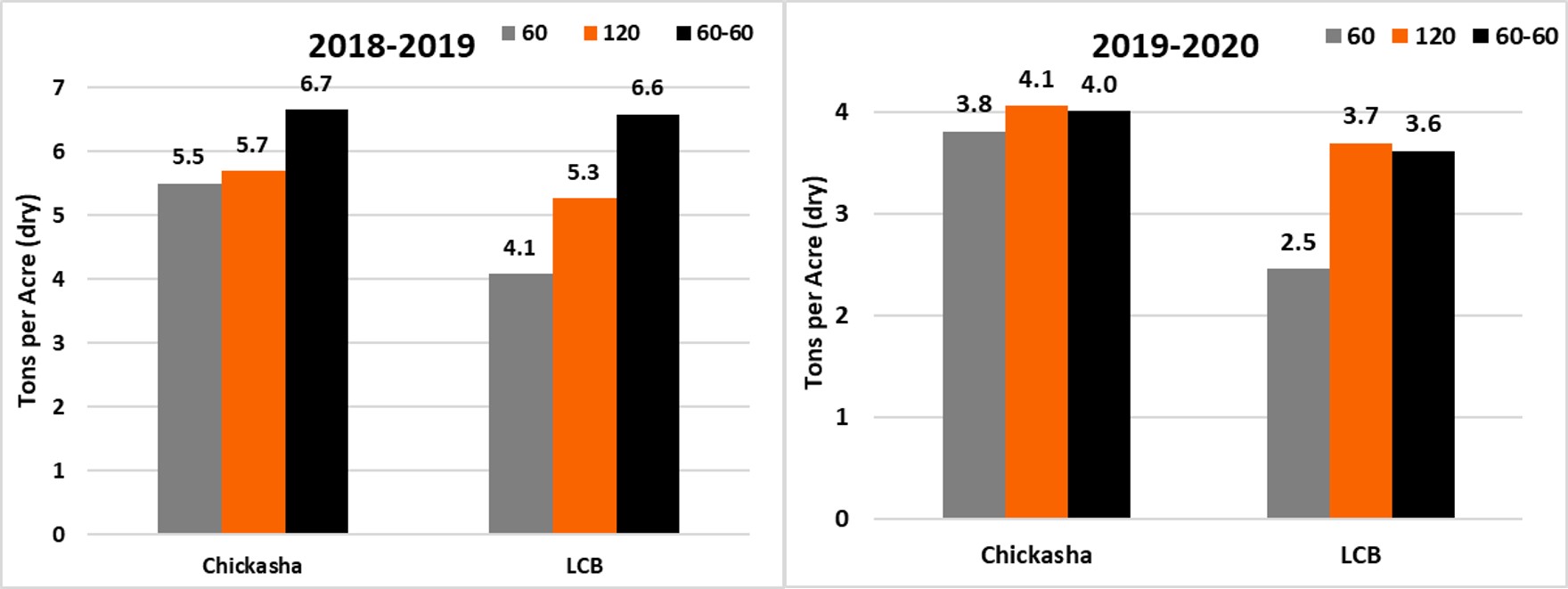
Figure 3 documents N uptake of winter wheat biomass for both years continues the same trend as total biomass. Nitrogen uptake can be directly related to protein as the calculation for protein is %N * 6.25. In all cases uptake was greater than applied. In 2018-2019 split application increased over all nitrogen uptake. Much like the yield of 2019-2020 the N uptake was not significantly impacted by the timing of the N application.
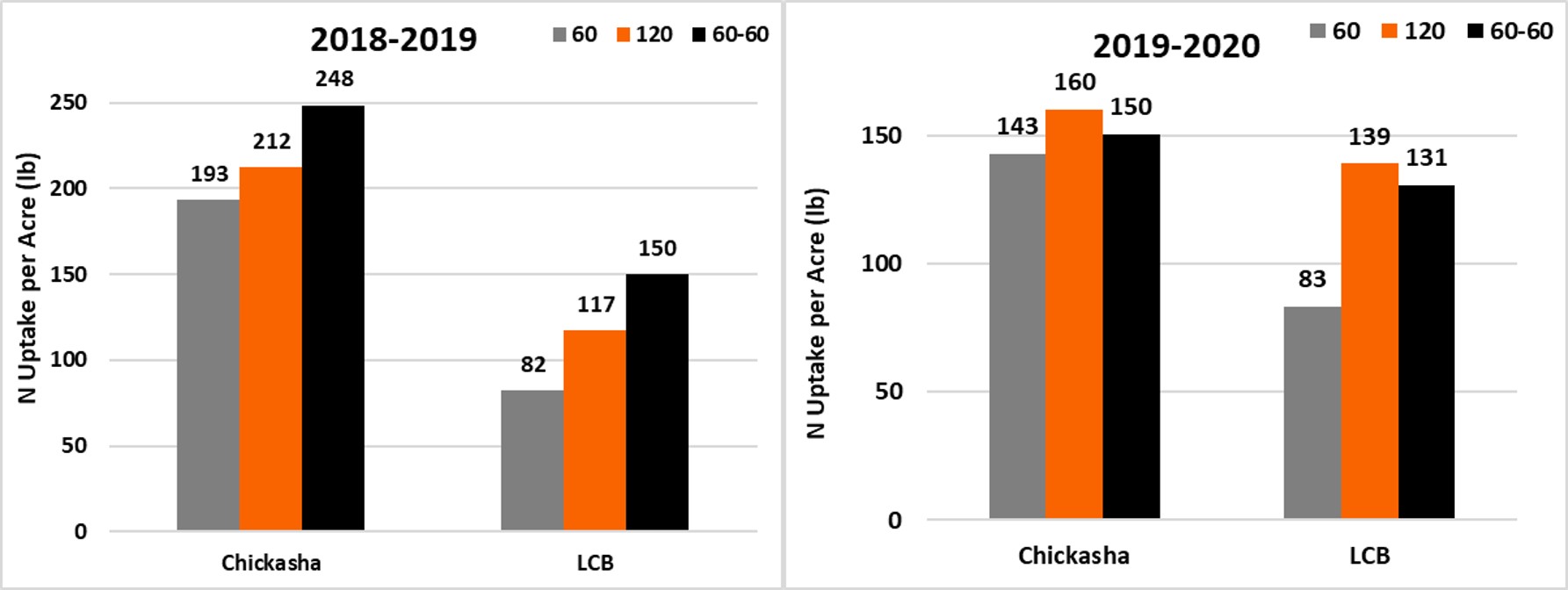
Although the assessment of N application made at or after hollow stem in a winter wheat forage system was not an objective of this study, the circumstances have given a unique opportunity to evaluate the outcome. In the 2018-2019 trials when top-dress application was applied at or just following the hollow stem, yield and nitrogen uptake were both increased over the equivalent pre-plant application. For the 2019-2020 season where N was applied at the planned time yields and N uptake were equivalent to the pre-plant. While this data is not conclusive it does indicate the producers can apply N fertilizer to winter wheat forage at or after hollow stem and successfully increase both forage yield and nitrogen uptake.
For questions or comments please feel free to reach out.
Brian Arnall
b.arnall@okstate.edu
405.744.1722
Acknowledgement of LSB Industries for support of these projects.
Value of in-season application for grain only wheat production.
Data used in this blog is summarized from work by
Joao Souza, under the leadership of D.B. Arnall
Lawrence Aula, under the leadership of W.R. Raun
Key Points
- Wheat is highly resilient and can endure nitrogen stress for a significant period of time and fully recover.
- Delaying all nitrogen until the Feekes 5 to Feekes 7 time frame resulted in improved yields over the pre-plant 32% of the time and a loss of yield 5%. However, grain protein was improved 82% of the time with delayed nitrogen.
- It is better to delay nitrogen application to avoid conditions conducive to N loss.
Historically winter wheat producers have utilized pre-plant nitrogen (N) fertilizer application due to efficiency of time and the lower cost of the primary N source, anhydrous ammonia. However, as the growing cycle of winter wheat is approximately 9 months long with only 80% of the total N accumulation reached by flowering. Research as shown that N applied prior to planting is more likely to be lost due to leaching or denitrification. Researchers at Oklahoma State University have invested significant efforts in evaluating N management strategies. This blog will present the data from multiple trials which allowed for the comparison of nitrogen applied pre-plant versus in-season. The trials were conducted over a four-year period at multiple locations across central Oklahoma.
Delayed Nitrogen – NH4NO3
This study was started in the fall of 2016 and concluded with the 2020 wheat harvest. In all, twelve trials were established and achieved maturity. This study was designed to evaluate the recovery of winter wheat grain yield and protein after the crop was N stressed. Treatments included an untreated check, pre-plant application and ten in-season treatments. The application of in-season treatments was initiated when N deficiency was confirmed and treatments were applied in progressive order every seven growing days to the point of 63 growing days after visual deficiency (DAVD). A growing degree days is any day that the average daily temperature is at or above 40⁰ F. Ammonium nitrate (NH4NO3) was applied at a rate of 90 lbs N ac-1 for all treatments.
Nitrogen response was observed at eleven of the twelve locations, and those sites will be the focus of this review. Nitrogen applications were started ranging from Nov. 10th to Mar. 7th for 0 DAVD and, concluded with 63 DAVD occurring between mid-February and early-May. The analysis of the data evaluated the yield and protein of the in-season applications compared to both the pre-plant application and the application made at the first sign of N deficiency, 0DAVD.
Across the eleven responsive years, the pre-plant application never outperformed the 0DAVD in terms of grain yield or protein. In fact, across all location if the in-season application was made prior to the end of March, the yield and protein was equal to or better than pre-plant applications. Four out of elevens sites, yield was significantly improved with in-season applications, and protein was improved in ten out of eleven locations. For the ten site/years that had applications in March, the mid-March application of 90 lbs of N, which is about the stage of hollow stem (Feekes 6), statistically increased yield four times and protein nine times compared to the pre-plant treatment.
The studies objective was to evaluate how long the crop could be deficient and fully recover. There was no relation between when the crop became deficient and when the crop could no longer recover. Yield as maintained as long as the N was applied by late March, or just before the flag leaf is visible (Feekes 8), grain yield was the same as if applied on the first day of deficiency. However, if the N was delayed to March protein was increased six out of the eleven locations.

Delayed Nitrogen – Urea
A mirror study to the Delayed Nitrogen – NH4NO3 was established in the fall of 2018 and concluded with the 2020 harvest. This study was placed next to the NH4NO3 and treatments applied on the same days using the same rate (90 lbs N ac-1) applied as urea to evaluate efficiency of urea applications over a range of dates.
Three of the four locations produced a positive response to N fertilizer and documented similar results as the NH4NO3 project. Across these three sites in-season N was always equal to the pre-plant rate if applied before the flag leaf is visible. In addition, if the urea was applied just after hollow stem, not only was yield maintained but protein was significantly increased compared to both the pre-plant and 0DAVD treatments at all three responsive sites.
Split Rate Nitrogen – NH4NO3
This study looked at multiple rates and times of N application but for this factsheet we will focus on a small set of treatments. Performed over two years and four total sites this project looked at split application of N versus a one-time application, 45/45 split or 90 lbs of N. Application timing was 0, 30, 60, 90, 120 growing days (GDD>0), trying to have applications at planting in December, February, March and April. In three of the four sites the 90 day application produced the greatest yield and protein for both 45/45 and 90 treatments. In this study the one-time application of 90 lbs N ac-1 out yielded the 45/45 split in two of the four years and was equal the other two. The 90 day application of 90 lbs N ac-1 produced a higher protein concentration at all sites compared to the 45/45 split applied on the same date.
Nitrogen Rate by Time – Urea Source
This study evaluated four rates of N (0, 40, 80, 120 lbs N) applied at three times (30 days pre-plant, pre-plant, and Feekes 5) using urea. Feekes 5 is the growth stage prior to hollow stem when the wheats leaf sheaths are becoming strongly erect. This project was completed over two locations for two years, however of the four site/years only three statistically responded to N fertilizer. In those three responsive trials the Feekes 5 application grain yield was equal to pre-plant once, greater than pre-plant once, and less than pre-plant once. The grain protein was only statistically different between the pre-plant and Feekes 5 once, with an increase in protein with late N. The one location with yield loss can be likely attributed to N loss from urea volatilization. The urea was applied on no-till immediately after a heavy rainfall with no substantial precipitation occurring for a week after application.
Summary
This factsheet summarizes four separate research projects which can contribute data from 24 trials to evaluate the application of in-season N compared to pre-plant N, see Table 1. Of these 24 site/years we can draw conclusions from the 22 that responded to N fertilizer applications. Across these trials applying all N pre-plant resulted in the highest grain yield once, applying all N in-season near or after hollow stem resulted in an increase in grain yield above that of the pre-plant seven times. However, the delaying of N application until hollow stem resulted in a significant increase in grain protein concentration at 18 of the 22 trials.
These results are significant for the winter wheat growers of the southern Great Plains as this research documented not only the ability but the necessity to move away from pre-plant and fall N applications for winter wheat grain production. The window for N application is likely much greater than most wheat producers would have considered. This work showed that not only could N be delayed and yield not sacrificed but, when delayed; yield will be maintained and protein concentration increased.
The final conclusion is that the timing of N application should not be based upon the presence of N deficiency or calendar date. Rather the timing should be based upon the weather and enviroment during application. While many of the projects used NH4NO3 as the N source to limit the impact of N loss via volatilization, the primary source for in-season nitrogen in the region are dry urea and urea ammonium nitrate (UAN) solution. Both of these sources have well documented loss due volatilization. The location from the Nitrogen Rate by Time trial which Feekes 5 applications were statisically below the pre-plant application supports this. This data set provides signifiant evidence that the optimum application window is quite wide and allowing producers more flexiabltiy to avoid those environments which will likely lead to N losses.
Special thanks to EDC Ag Products Co LLC for suppling NH4NO3 used in the delayed N project.

Table 1: Summary of all trial locations and years. The X represents statistical significance, alpha = 0.05. In-season application represents all treatments applied at least 30 growing degree days after planting. Majority of the treatments in the studies were applied after spring green up.
Yellow Wheat the 2020 Edition.
I have been trying to write this blog addressing the yellow wheat for about two weeks now. But with finally finding a dry”ish” day or two and a lot of calls and emails about yellow wheat, I am just now getting to it.
So the short story is there is a lot of wheat out there in the state that is show signs of chlorosis, or yellowing. I wish I could say I have all the answers for you in this article, but I will have to lay heavily upon the agronomist best answer, “Well it Depends.”.
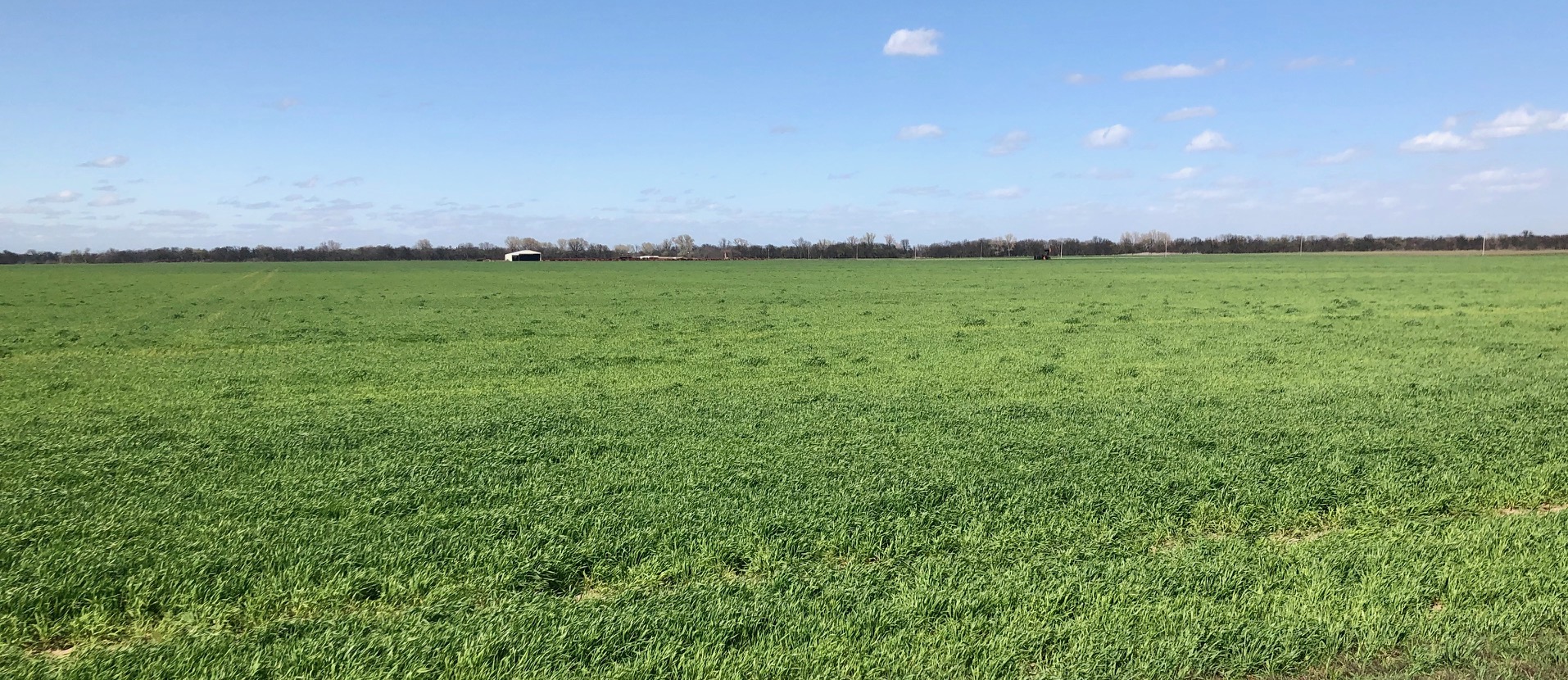
Cow pox showing up in a wheat field in Kay County.
First we will start with the things I know least about and then move on to things that are more in my wheelhouse. In the last two weeks I have been on multiple email strings trying to chase down the cause of chlorosis in fields all over the state. One of these included Dr. Bob Hunger and the Plant Disease & Insect Diag Lab (PDIDL) and in one field his final thought was “So, my best guess is cold and wet soils along with fungi colonizing the older leaves that are starting to senesce.” At the same time I am finding regular occurrence of Tan Spot and Leaf Rust increase. All these pathogen cause some level of chlorosis and if you do not get down and pull some samples you will never know the cause.

Originally thought to be leaf rust, but corrected by Dr. Hunger who suggested it is early stages of striped rust, found in Stillwater Oklahoma 3.27.2020.
A new for me this year is what I am calling the herbicide ding. I was able to get over a lot of my wheat that first week of March with a shot of herbicide, everything was almost to hollowstem. The wheat really got dinged. Very visual yellowing and stunting of the plants. Talking with Dr Manucheri, she had seen the same thing in her plots in Tipton. I have also visited several farmer fields with the same symptoms. Dr. Manucheri shared with me the Finesse label. Directly from the label “Temporary discolorations and/or crop injury may occur if herbicide is applied when the crop is stressed by severe weather conditions (such as heavy rainfall, prolonged cold weather, or wide fluctuations in day/night temps), disease or insect damage, low fertility, applications to course soils, or when applied in combination with surfactant and high rates of liquid fertilizer solutions.” This can be found on page 5, http://www.cdms.net/ldat/ldFSL002.pdf . You can just about mark off every weather and application condition mentions, on the same field.
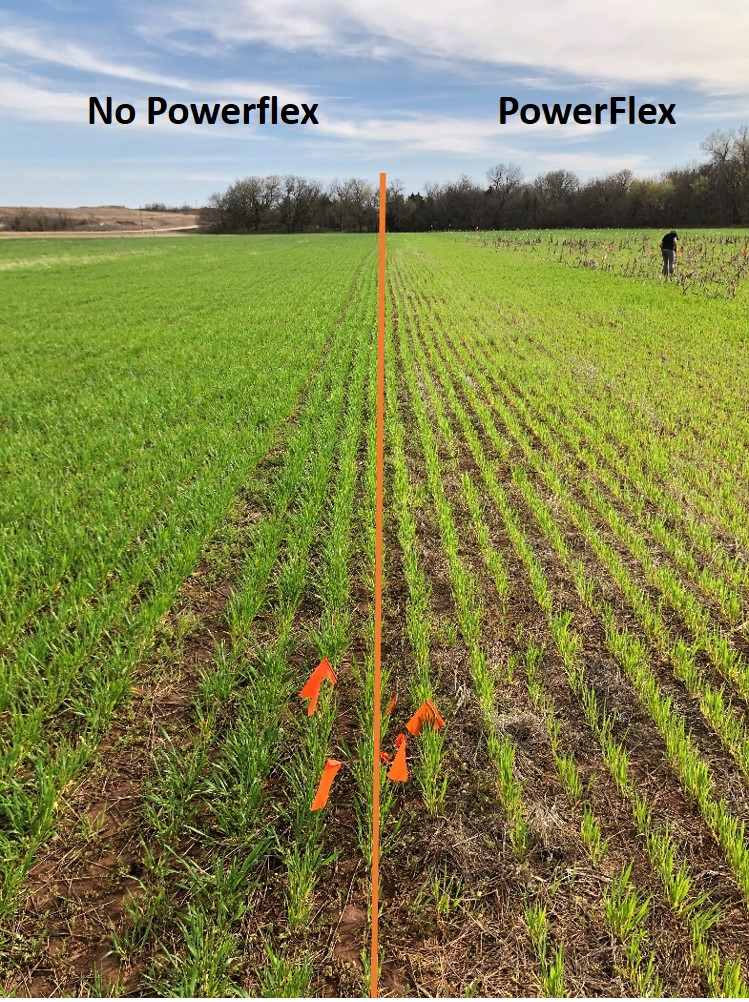
Image collected 3.25.20. The right side was treated with Powerflex on 3.5.20. The left side was not treated so that sorghum could be planted in April.
Now to the yellow wheat I can comfortably talk about. There is nitrogen deficiencies out there. That should not come as a shock with the amount of rain we have received over the last couple months. I also believe that a fair amount of the wheat crop out there is a bit lacking on roots department.

The overarching wet cools soils that we have more than likely have led to reduced root exploration in some areas. And if you combine short roots with a nitrate leaching then the probability of N being out of the reach of the crop is high. Then the question is “Is there still time to do anything?”. The trip I look over the weekend (3/28, 3/29) that encompassed a great deal of the North Central Ok wheat belt showed me that the majority of the wheat had really progressed physiologically in the last two weeks. At this point, a positive return on N investment hinges on the stage the wheat is at.
Our delayed N work over the past several years show that we have maintained the yield on our trials even when fertilizer was delayed into the first week of April. https://osunpk.com/2019/08/14/how-long-can-wheat-wait-for-nitrogen-one-more-year-of-data/

Each graph is from a location where the delayed N study was preformed. The objective of our study was to determine the impact of prolonged nitrogen deficiency on winter wheat grain yield and protein. Eight studies were conducted with 11 N application timings in no-till dryland conditions. A pre-plant treatment of 90 lbs ac-1 of N was broadcast applied as ammonium nitrate (AN). We used AN as our source because we wanted to measure the crops ability to recover and eliminate the impact of source efficiencies. When visual symptom differentiation (VSD) was documented between the pre-plant and the non-fertilized check, i.e the N-Rich Strip showed up, top-dress applications were performed every seven growth days (GDD> 0) (https://www.mesonet.org/index.php) until 63 growth days after VSD at all sites. The only N the treatments received where applied according to treatment structure. No pre-plant N was applied on the trials other than the Pre-plant treatment.

This table shows the application dates of the 10 site years of the delayed nitrogen study. The first column is the location, to the right of the location is two rows the top is grain yield and the bottom is grain protein. Each of the following columns corresponds to an application date. Applications began at each study when the The colors are related to whether that application was statistically (Alpha=0.05) worse than, equal too, or better than applying nitrogen at the first sign of deficiency (0DAVD). For this comparison it is important to know that at no location did preplant have significantly greater yield than 0DAVD.In the majority of those years that first week of April corresponded with the growth stage Feekes 8, last leaf just visible. As the crop moves beyond that point, catching up did not happen. Currently there is wheat out there in the state that has not hit hollow stem (Feekes 6) and there is wheat at Flag leaf (Feekes 9).

The Feekes Scale focused in on the stem extension growth phase. The period extends from hollow-stem (Feekes 6) to boot (Feekes 10).
The high rainfall totals we have could have also led to another deficiency sulfur. In the past S deficiency is fairly hard to find in Oklahoma. Our long history of low S using winter wheat and high sub-soil S levels have kept the response to Sulfur low, but not uncommon. Sulfur is a mobile nutrient and will also be lost via leaching especially in sandy soils in the northern part of the state. Sulfur deficient is different from N in that it shows in the newer growth as a general yellowing of crop. Kansas State has a lot of great resources on sulfur management in wheat. https://webapp.agron.ksu.edu/agr_social/m_eu_article.throck?article_id=2132
https://bookstore.ksre.ksu.edu/pubs/MF2264.pdf
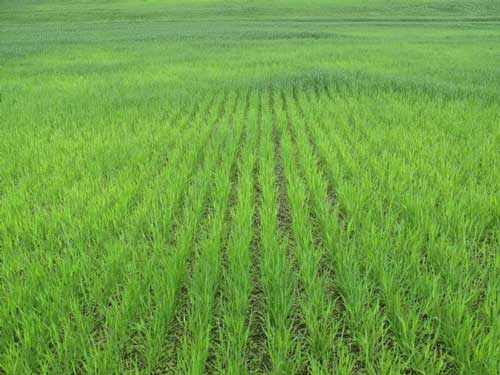
Sulfur deficiency in wheat. Photos by Dorivar Ruiz Diaz, K-State Research and Extension
If your wheat is yellow and before you call the fertilizer applicator, first confirm it is nitrogen and or sulfur and not something else. A key point to nitrogen deficiency is that the cholorsis will be worst on the oldest leafs while new growth is green. If N deficiency is confirmed then figure out how far along your wheat is. If the crop is around hollow stem to Feekes 8, if you can get the N on soon there is a good chance to get your money back plus. Keep in mind with air temps above 60 degrees UAN will burn the tissue so it is best to use streamer nozzles, which will still burn but the tissue damage is lessened. If you do not have access to streamers you can dilute the UAN with water and use flat fan nozzles. Cutting the UAN with water reduce the impact of leaf burn, I typically recommend at least 2 part UAN to 1 part water, but a 1 to 1 is the safest.

Image of wheat with forage burn from UAN applied with streamer nozzles. Application was made two days prior with air temps where above 80 degrees.
If you have any questions or concerns please feel free to email any questions you may have.
Brian Arnall
b.arnall@okstate.edu
On Farm Nitrogen Rate Study Results 18-19.
Vaughn Reed, PhD. Student Precision Nutrient Management|
Brian Arnall Precision Nutrient Management Extension Specialist.
A focal point of the Precision Nutrient Management team is the evaluation of fertilizer timing. Mr. Souza’s research shared in the blog post How Long Can You Wait has shown, with three years of data, that if fertilizer application is delayed until in-season, not only will optimum yield reached but the protein content will be increased. The study below which has just had one year of data will provide additional insight.
While the Sousa work focused on a single rate of nitrogen applied over 12 different application dates at on a few OSU research farms this study evaluated a range of N rates applied both pre-plant and in-season on farmer fields across the state. The rationale for a wide distribution was to achieve the primary goal of the study, which was to add regional specificity to the current sensor based nitrogen rate calculator (SBNRC www.nue.okstate.edu). More on that as the research matures. In order to achieve the range needed to reach the goal small plots were set up in numerous locations throughout the central/western portion of the state and hand harvested at maturity. In Figure 1 below, you can see the sites for the 2018-2019 growing season, as well as the prospective climate zones.

Figure 1. Location of the 2018-19 on farm winter wheat nitrogen response studies. Color shades represent climatic zones.
The trials were set up with four rates (25%, 50%, 75%, 100% of yield potential rate), two timings (pre-plant and in-season application), and a zero N check. Applications were applied using ammonia nitrate as the source, in order to minimize losses due to volatilization. Eight trials were harvested in six counties, and three different climatological zones.
The data from the first year of this trial confirmed the results seen in the Sousa study. In-season application of nitrogen was more efficient in terms of yield and quality than equivalent rates applied pre-plant. Out of the eight locations harvest, only two had a significant grain yield respond to the addition of N fertilizer. However, all eight locations the addition of N had significant positive impact on protein content. When looking at pre-plant versus in-season application, grain yield was not statistically significantly different from each other at any location. Protein content of in-season N was however significantly better than pre-plant application at 5 of the 8 locations.
Figure 2. below is the results from the Byron and Perkins location. At both sites all fertilizer application for this location responded above the check plot (0 N). At Byron we can see an increase in yield up till about 60 bu/ac in both the preplant and topdress application. The proteins increased with the rate of fertilizer applied. In both of the responsive locations while in-season N was never statistically greater than pre-plant N in all cases the in-season application had numerically higher yields and protein.
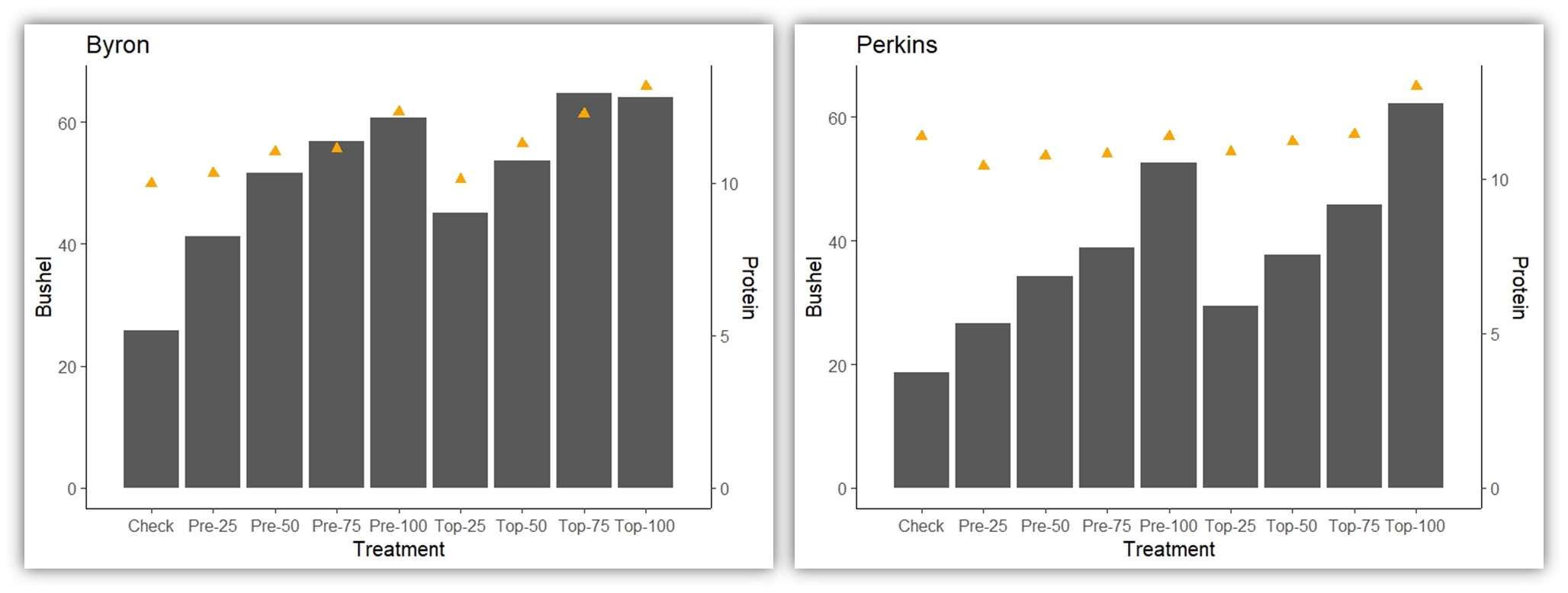
Figure 2. Winter wheat grain yield and protein content results from on farm nitrogen rate studies performed in 2018-19 at Byron Ok, and Perkins Ok.
The next table below is from the Capron location. This location did not yield a significant increase in yield from the application of N across the board, including timings. But even though there was no impact on yield protein increased. In both of these locations the increase due to in-season N was statisically greater then the pre-plant. This response is replicated in three other locations in this trial that did not have yield respond.

Figure 3, Winter wheat grain yield and protein content results from on farm nitrogen rate studies performed in 2018-19 at Capron Ok, and Lahoma Ok.
This is one years data, across eight locations. The trials will be continued this fall (2019) for another growing season, and Mr. Souza is repeating his trial as well. Everything that has done thus far has shown that not only is grain yield not lost by not fertilizing at pre-plant but by delaying all fertilizer applications till in-season , grain yield is maintained if not increases and protein levels are consistently higher.
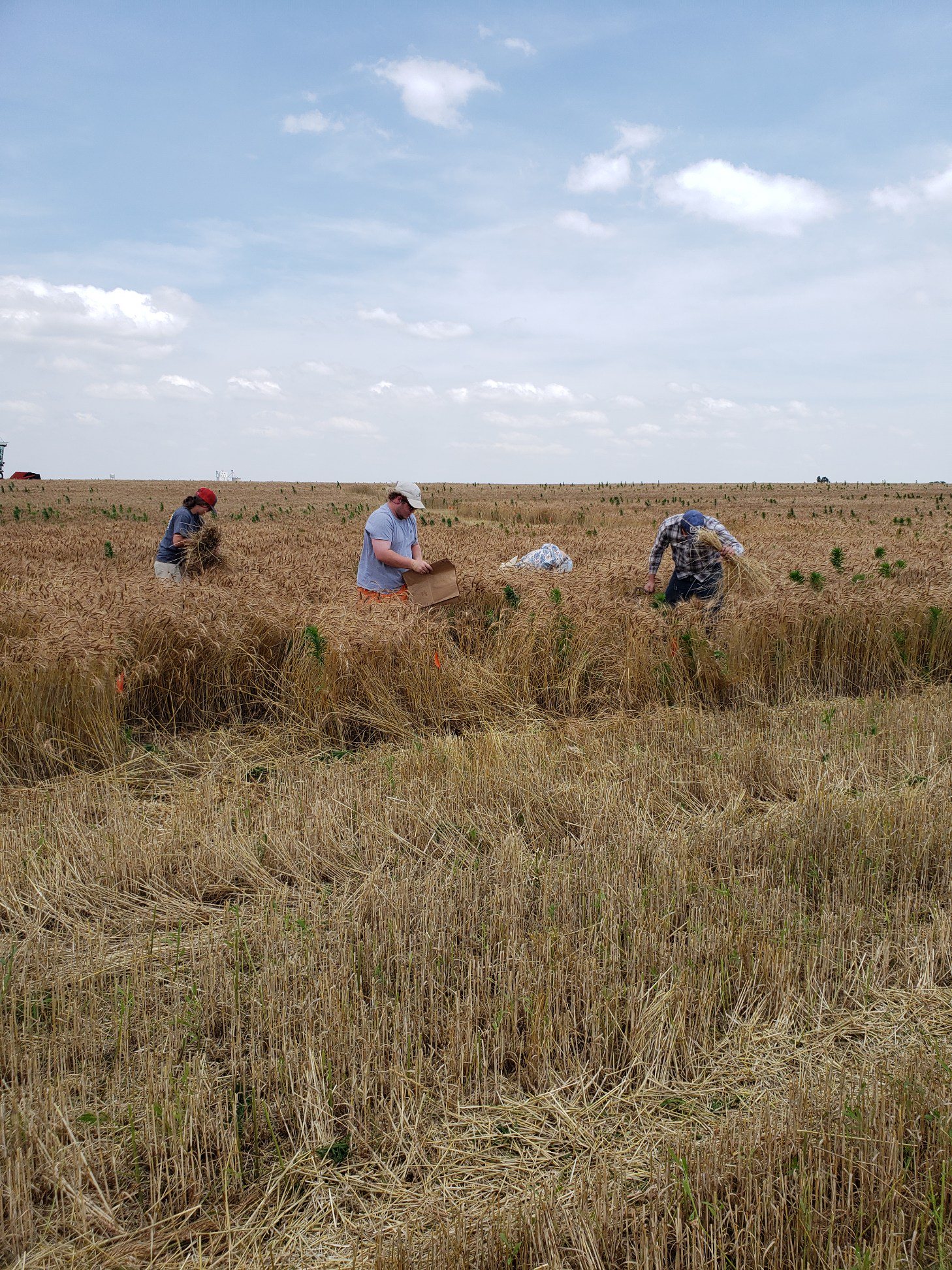
Figure 4. Crew hand harvesting on farm N rate plots. Hand harvest is preferred because A) we are able to harvest at a higher moisture content ahead of the farmers combines B) we do not have to haul the plot combine across the state.
For question, comments, or request for on farm studies please contact.
Brian Arnall
B.arnall@okstate.edu
405-744-1722
Nitrogen rate and timing for a forage wheat crop. Year 1 Results.
Written by
Mr. Bronc Finch, PhD. Student, Precision Nutrient Management.
Dr. Brian Arnall, Precision Nutrient Management Extension Specialist.
In cooperation with Dr. James Rogers, Noble Research Institute.
With the amount of wheat acreage in Oklahoma being utilized for grazing cattle, and much of that land grazed completely instead of harvested for grain, many questions have arose regarding the management of grazed cropland. A major question in the management of a graze-out wheat crop pertains to fertilizer management strategies. A study developed in co-operation with the Noble Research Institute is attempting to answer these questions among others. In 2019 the trial was established at three locations: near Lake Carl Blackwell in Stillwater, OSU South Central Research Station in Chickasha, and Noble Research Dupy farm in Gene Aurty, Oklahoma. Each of these three sites were setup with three nitrogen (N) treatments in Gallagher winter wheat, with 2 pre-plant applications of 60 and 120 pounds per acre, and a 60 pound pre-plant and 60 pound top-dress application. Grazing simulation harvests were taken at two times with the top-dress N being applied after regrowth was noticed following the winter season. The Dupy location was planted late and therefore only had a single harvest at the end of the season. Rising plate meter measurement were collected at feekes 7.5 and represented in the graphs below as Mid-season. The Chickasha location revealed unexpectedly high residual soil N levels, which resulted in no differences in dry matter biomass for the first harvest, which was delayed until early march due to excessive rains. The second harvest at Chickasha did show treatment differences with a 0.4 ton difference between the 60 and 120 lbs preplant N rates and increase of 0.8 ton increase over the 120 lb pre-plant when the additional 60 lbs of N was delayed. LCB had a timely first harvest in December resulting in the 120 lb N application outperforming the 60lb N applications by ≥0.33 tons. The second harvest further showed how the split application of N proves beneficial for biomass production. As the split application increased yields by 1.7 and 2.6 tons over the 120 lb and 60 lb preplant applications, respectively. The Dupy location revealed no significant difference in dry matter biomass yield between N treatments at the time of the rising plate meter measurements or for the final cutting.

Figure 1. Dry matter harvest results for each of the harvest dates from the graze out wheat trials from the Chickasha, Lake Carl Blackwell, and Dupy locations for three fertilizer treatments. 60: 60 lbs of nitrogen applied preplant, 120: 120 lbs of nitrogen applied preplant, 60/60: Split application 60 lbs of nitrogen preplant and 60 lbs applied top-dress. Dupy only had one harvest date, the Mid-season yield is estimated via rise-plate measurements taken at Feekes 7.5.
The Chickasha and Lake Carl Blackwell (LCB) locations produced an increase in total yield with both the increase of applied N and the split application of N. The 60 lb increase in applied N at preplant, 60 lbs vs 120 lbs, produced a 0.7 and 1.2 ton increase in total dry matter harvested at Chickasha and LCB, respectively. As expected an increase in N increased the yield of wheat biomass for grazing production. The top-dress application, which was made as a late season post Feekes 6 (hollow stem), produced more biomass for graze-out wheat production. The split application of 60 lbs of N preplant and 60 lbs of N top-dress increased dry matter by .8 and 1.3 tons over 120 lbs applied preplant at Chickasha and LCB, respectively. Chickasha yielded higher biomass production than the LCB location due to increased residual N.

Figure 2. Total dry matter harvest results for the graze out wheat trials from the Chickasha, Lake Carl Blackwell (LCB), and Dupy locations for three fertilizer treatments. 60: 60 lbs of nitrogen applied preplant, 120: 120 lbs of nitrogen applied preplant, 60/60: Split application 60 lbs of nitrogen preplant and 60 lbs applied top-dress.
For the following discussion remember that protein is determined by N concentration, so that a increase in N uptake is the same as an increase in protein. Evaluation of the N uptake (% N in the biomass x amount of biomass harvested) over the season revealed treatment effects at all locations, which was not seen from biomass yield. Chickasha and LCB revealed a 20% or greater increase in N uptake with the 120 lb application over the 60 lb application of N at pre-plant. The late season top-dress application yielded a 3, 27, and 27 percent increase in uptake for Chickasha, LCB, and Dupy locations, respectively, over the 120 lb pre-plant application. Although, these results are expected from these results, there are a few things we did not expect. The 120 lb N application did not increase the N uptake above that of the 60 lb application. However, the split application of N resulted in an additional >40 lbs uptake, aka increased protein.
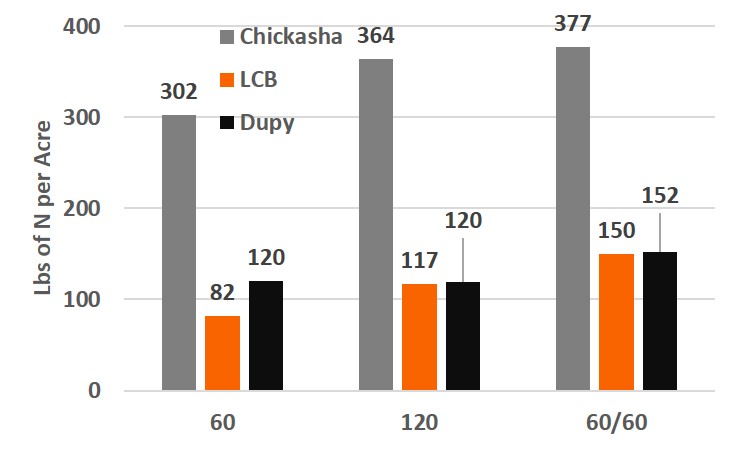
Figure 3. Total nitrogen uptake results for the graze out wheat trials from the Chickasha, Lake Carl Blackwell, and Dupy locations for three fertilizer treatments. 60: 60 lbs of nitrogen applied preplant, 120: 120 lbs of nitrogen applied preplant, 60/60: Split application 60 lbs of nitrogen preplant and 60 lbs applied top-dress.
This study also includes summer forages with and without additional fertilizer. The study will be continued for multiple years on the same locations to evaluate the impact of management on production and soil characteristics. But one surprising note has already been made, in all three locations a greatly delay top-dress still increased N-uptake. In two location it significantly increase yield and protein. This data is falling in line with the grain only data (How late can you wait) showing that an application of N at Feekes 6 (Hollow stem) and even shortly after can provide positive return on investments.
For any questions for comments please contact
Brian Arnall
b.arnall@okstate.edu
405-744-1722
Watch Forage Nitrate Closely on Certain Crops
Nitrate is one of the major nitrogen (N) forms utilized by plants. Excessive nitrate accumulation can occur when the uptake of nitrate exceeds its utilization in plants for protein synthesis due to factors such as over N fertilization and stressful weather conditions. It can be toxic to livestock when too much nitrate is accumulated in the forage crops. Sorghum and millet have been noted as having a high potential for accumulating nitrate. Producers should watch their forage nitrate closely to avoid cattle fatality and to better manage their hay crop since we have seen many high nitrate forage samples every year. Normally, drought stress, cloudy weather and other climatic conditions will enhance nitrate accumulation in the plant. In addition, forage planted in failed wheat fields with high soil residual nitrogen unused by wheat can result in high forage nitrate problem too.

Figure 1. Summary of our laboratory nitrate test results in the past on two major warm season forage crops.
It is considered potentially toxic for all cattle when nitrate in the forage is greater than 10,000 ppm. Producers should avoid grazing or feeding with high nitrate hays. More detailed interpretation can be found from OSU Extension Fact PSS-2903 Nitrate Toxicity in Livestock. The most reliable way to find out nitrate in the hay is to collect a representative sample and have it tested by a laboratory. OSU Extension Fact PSS-2589 Collecting Forage Samples for Analysis highlights the proper techniques to collect forage samples. Samples can be submitted for nitrate and other forage quality analyses to the Soil, Water and Forage Analytical Laboratory in Stillwater through the local county extension office. We normally have the results ready within 24 hours form the time when sample is received by the lab. However, many samples we receive at the lab were not sampled properly. More attention should be paid on sampling standing forage, such as a haygrazer by following the right procedures:
Clip at least 20 representative plants at grazing or harvesting height from the suspected area. Cut the whole plants (include leaves and heads) into 2-3” long pieces, combine and mix well in a bucket.
Fill the cut sample into a forage bag. Use quartering to reduce the amount if there is too much sample to send to a lab.
Put the forage bag into a plastic bag will give you more accurate moisture content, but never put plastic bags inside our forage bags.
There is also a quick screening test using diphenylamine at your county extension office. This video shows how to properly use the test kit: https://www.youtube.com/watch?v=vArUP6KFQFI&feature=youtu.be
Hailin Zhang
Department of Plant and Soil Sciences
DAP in short supply? Revisiting, DAP vs MAP, Source may matter!
From mid August through October, fertilizer applicators and grain drills are running across the southern great plains wheat ground. Di-ammonium Phosphate (DAP 18-46-0) is maybe the most popular form of phosphorous (P) utilized in wheat production today. DAP delivers a high content of nitrogen (N) while efficiently binding the toxic aluminum (Al) ions low pH soils. However due to the flooding that occurred throughout the spring the Ports have been closed and DAP could be in short supply. I have heard that many companies and Co-ops have already sourced Mono-ammonium phosphate (MAP 11-52-0) to supplement the lack of DAP for our early planted wheat crop. With this happening, I wanted to share some points about the two sources. In a broadcast incorporated scenario I do not have much preference for one over the other. It is when producers are applying the fertilizer in-furrow or applying to alleviate Al toxicity that source can matter. As described in the post below, in a soil with a neutral pH DAP and MAP perform equally well. So in this scenario I give MAP a slight edge over DAP if the price is the same. I say this as you can run less material per acre with MAP and refill a little less often. Many worry about the drop in N delivered with MAP versus DAP but in my work I see that is the P in the starter that gives us a good response and not the N, which can be delivered with pre-plant or top-dress. However, DAP wins out in soils with a pH below 5.5. The original blog below shows the results when DAP and MAP are banded in acidic soils using the same rate of P per acre. The reason we see this happen is that when MAP dissolves it forms a slightly acidic solution (approx 4.0) while DAP will dissolve to form a slightly basic solution (approx 7.5). In our work BOTH DAP and MAP increased yield above the check in acidic soils, which goes to show MAP is an affect tool for short term remediation of aluminium toxicity (Band P for Al toxicity Blog). However it might require more MAP per acre to reach the equivalent results. Because of what we saw when comparing the two sources at equivalent rates of P, I would recommend increasing the rate of P2O5 from 30 lbs per acre to 35 or 40. This would be going from 65 lbs of DAP to 67-77 lbs of MAP per acre.
So the take home would be as this wheat season takes off and you find that DAP is hard to locate and you A) Have overall neutral (5.5+) pH levels do not hesitate using MAP. Run the normal amount of material getting a few extra lbs of P or apply less material to get the same amount of phosphate. B) Have a acidic situation and are banding to alleviate aluminum toxicity use the same amount of material or a little bit more. Keep in mind in acidic soils with a low soil test P level you have to apply enough phosphate to take care of the Al and enough to take care of the P deficiency. Note the results of the NPKS wheat response strip (NPKS BLOG)
Original Post Published July 18, 2016
DAP vs MAP, Source may matter!
Historically the two primary sources of phosphorus have had different homes in Oklahoma. In general terms MAP (11-52-0) sales was focused in Panhandle and south west, while DAP (18-46-0) dominated the central plains. Now I see the availability of MAP is increasing in central Oklahoma. For many this is great, with MAP more P can be applied with less material. which can over all reduce the cost per acre. There is a significant amount of good research that documents that source of phosphorus seldom matters. However this said, there is a fairly large subset of the area that needs to watch what they buy and where they apply it.
If you are operating under optimum soil conditions the research shows time and time again source does not matter especially for a starter. In a recent study just completed by OSU multiple sources (dry, liquid, ortho, poly ect ect) of P were evaluated. Regardless of source there was no significant difference in yield. With the exception of the low pH site. The reason DAP was so predominate in central Ok, soil acidity. See an older blog on Banding P in acidic soils.

Figure 1. The cover of an extension brochure distributed in Oklahoma during the 1980s.
When DAP is applied, the soil solution pH surrounding the granule will be alkaline with a pH of 7.8-8.2. This is a two fold win on soil acidity aka aluminum (Al) toxicity. The increase in pH around the prill reduces Al content and extends the life of P, and as the pH comes back down the P ties up Al and allows the plant to keep going. However, the initial pH around the MAP granule ranges from an acid pH of 3.5-4.2. There is short term pH change in the opposite direction of DAP, however the the Al right around the prill becomes more available and in theory ties up P even faster.
Below is a table showing the yield, relative to untreated check, of in-furrow DAP and MAP treatments in winter wheat. The N401 location had a ph 6.1 while Perk (green) has a pH of 4.8. At Perkins in the low pH, both forms of P significantly increased yield, almost 20 bushel on the average. DAP however was 5 bushel per acre better than MAP. At the N40 site the yield difference between the two sources was 1 bushel.

Relative yield winter wheat grain yield MAP and DAP both applied at equal rates of P (32 lbs P2O5 ac) when compared to a untreated check.
In general it can be said that in acid soils DAP will out preform MAP while in calcareous high pH soils MAP can out preform DAP. So regarding the earlier statement about the traditional sales area of MAP or DAP if you look at the soil pH of samples went into the Oklahoma State University Soil, Water, and Forage Analytical lab the distribution makes since.
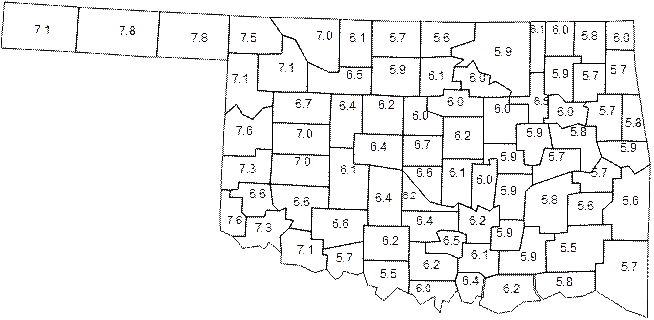
Average soil pH of samples sent into OSU soil water forage analytical lab by county.
In the end game price point and accessibility drives the system. In soils with adequate soil pH levels, from about 5.7 to around 7.0, get the source which is cheapest per lbs of nutrient delivered and easiest to work with. But if you are banding phosphorus in row with your wheat crop because you have soil acidity, DAP should be your primary source.
How long can wheat wait for Nitrogen? One more year of data.
Update to the delayed nitrogen study.
Joao Bigatao Souza, PhD. Student Precision Nutrient Management|
Brian Arnall Precision Nutrient Management Extension Specialist.
Due to the surprising results seen from the delayed N study that was first reported below we repeated the the study for a third year at two locations, the Lake Carl Blackwell Research farm near Perry OK and the Ballagh Research Farm near Newkirk OK. Due to the excessive rain fall the wheat was planted and trials established later than normal and a cool winter and spring and winter the crop green up (end of dormancy) was delayed compared with the two first cropping seasons. For this season we started applications before visual symptom difference between the N-rich Strip (pre-plant) and the rest of the field actually occurred. This can be seen with the pre-plant dates of late Oct-Early Nov and the notation of visual difference above the yield bars. Just as the other two previously crop years, the timing of the application did impact wheat yield and protein. In this season at LCB we see a increase in yield with application of N during the first part of March compared to the preplant with yields dropping off below the preplant when N was applied in mid April. At the Ballagh farm there is no yield benefit from delaying N after preplant but there was steady increase in protein, again at this location yield is lost when N was delayed past mid April. In both of these locations mid April was after the growth stage of Feekes 7. After three cropping seasons with some extremely different weather patterns we saw that in this work, pre-plant N was never better than in-season N applied prior to mid April, Feekes 7. In most cases N applied in-season yields and protein values were greater than that of the pre-plant treatment. My take home message from this project is multi fold; First, pre-plant may be cheaper and easier but it often falls short of in-season applications, Second that there should be no reason to rush putting top-dress nitrogen on. The application window is much wider than most ever expected and the closer we get to peak demand the better the yield and quality will likely be. And third, and final make the application of nitrogen when the conditions are the most conducive to getting the N in the ground and limiting losses.
Note: This trial used ammonium nitrate as its N source to evaluate the plants response and remove potential fertilizer efficiency problems. However while these trials were being conducted mirror studies using Urea as the N source were also being conducted. Those results are currently being compiled right now and we hope to share the results soon.

Grain yield and protein results from the delayed nitrogen study preformed at the Lake Carl Blackwell near Perry in 2018-2019. 11/7/2018 was the pre-plant application date.

Grain yield and protein results from the delayed nitrogen study preformed at the Ballagh research farm near Newkirk in 2018-2019. 10/24/2018 was the pre-plant application date.
Questions for comments feel free to contact me via email at b.arnall@okstate.edu
Original Post made Oct 1, 2018
How long can wheat wait for Nitrogen?
Joao Bigatao Souza, PhD. Student Precision Nutrient Management|
Brian Arnall Precision Nutrient Management Extension Specialist.
The N-rich strip method allows wheat producers a greater window of decision making regarding the application of nitrogen (N) fertilizers. Besides having greater accuracy in N rates than standard methods (based on the SBNRC – OSU) also helps to reduce costs in the production system and to preserve the environment avoiding over N applications.
With the experiments performed in the last two crop seasons (2016/18 and 2017/18), we can now be even more accurate with regard to the best application time to increase the N use efficiency by the crop. The objective of our study was to determine the impact of prolonged nitrogen deficiency on winter wheat grain yield and protein. Eight studies were conducted with 11 N application timings in no-till dryland conditions. A pre-plant treatment of 90 lbs ac-1 of N was broadcast applied as ammonium nitrate (AN). We used AN as our source because we wanted to measure the crops ability to recover and eliminate the impact of source efficiencies. When visual symptom differentiation (VSD) was documented between the pre-plant and the non-fertilized check, i.e the N-Rich Strip showed up, top-dress applications were performed every seven growth days (GDD> 0) (https://www.mesonet.org/index.php) until 63 growth days after VSD at all sites. The only N the treatments received where applied according to treatment structure. No preplant N was applied other than trt 1, and all locations had residual N under 15 lbs 0-6” sample.
The first visual response to fertilizer N ranged from November 11 to February 5 (Table 1). The soil can have residual N from the previous season which can supply the subsequent crop in the beginning of the development what makes the wheat not demonstrate any sign of stress in the early season. For example LCB2017 a and b which were located 100 yards apart but under a different point in the crop rotation (LCBa was wheat after wheat and LCBb wheat after canola) had a 30 day difference in date of first N response. This range in first and last dates allowed us to evaluate N application over a wide range of dates and determine whether the first sign of stress is actually the best indicator of top dress application timing.
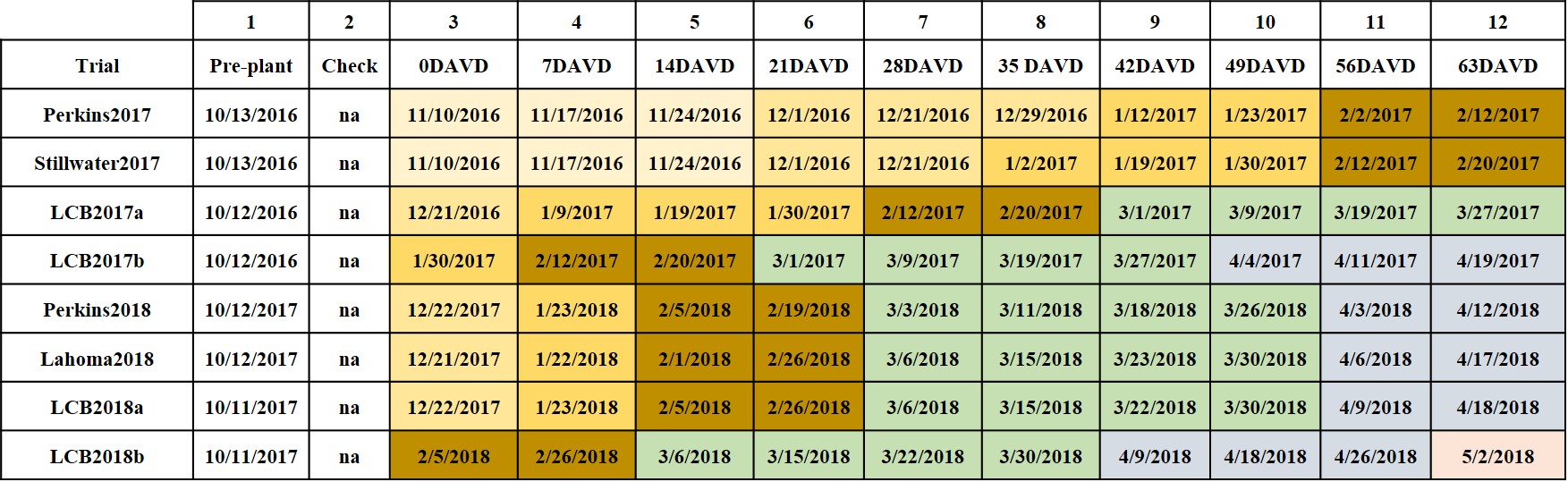
Table 1 shows the planting date, date of first visual difference (0DAVD) and each of the application dates for all locations. Different colors represent individual months. Hollow stem occurred approximately Feb 20 in the 2017 crop and March 10th in the 18 crop.

Image of the 2016-17 Perkins location. Image collected March 21 2017.
As shown in the Tables 2 and 3 below only three of the 78 comparisons made back to the pre-plant application were significantly less in terms of grain yield. All three of these comparisons where from when N application was delayed until late March or April. When the delayed applications were compared to 0DAVD yields only two of the 68 comparisons showed a significant decrease on yield. One was the pre-plant application for LCB2017a while the other were the 63DAVD application for LCB2017b. In most locations applications made in March yields were at the highest point, however when delayed till April yield trends on the downward trend. The 2017 crop reached hollow stem (Feekes 6) around Feb 20th while the 2018 crop reached hollow stem around March 10th.
Grain protein concentration was decreased only once when compared to both the pre-plant and 0DAVD treatments. This one timing, LCB2018b 64DAVD, was the only application made in May. During this time the crop was in the early stages of grain-fill. In all locations delaying N application until February/March increased grain protein content above the check, and in most cases above the 0DAVD trt.

Tables 2-3 shows the winter wheat grain yield and protein concentration, respectively, of all treatments. The colors of the cells represent statistical difference from the Pre-plant treatment. Treatments with cells shaded yellow are equal to the pre-plant, Green is statistically greater than while red is statistically less than the pre-plant treatment.

2016-2017 Delayed nitrogen winter wheat grain yield and protein results. For the locations of Perkins and N40 the Dec-1 application has a higher yield due to a 2x application of N to equal 180 lbs.

2017-2018 Delayed nitrogen winter wheat grain yield and protein results. The Perkins location in 18 was the only location in the study which did not have a statistically significant response to added N.
All the data was combined and plotted by cumulative GDD’s>0 from planting (GDDFP) across all locations to determine a general “best” timing. Using the pre-plant application yield as a base there was no yield loss if the applications was made prior to the 143 GDDFP. When the results were normalized by 0DAVD N there was no yield loss if the applications were made prior to 130 GDDFP. The quadratic model created provides the opportunity to identify the point of highest grain yield, which was approximately 94 GDDFP. In terms of the relationship between the application of N based on GDDFP and % of protein content on the grain, a linear response of N delay application observed for grain protein concentration. Our results suggest that the later the application, the higher the protein % in the grains.

Growing degree days > 0 from planting and equivalent calendar days for all experimental sites (Lake Carl Blackwell, Perkins, Lahoma, Stillwater) utilized in the study evaluating the impact nitrogen fertilizer timing on winter wheat, conducted in north central Oklahoma over the 2016-2017 and 2017-2018 winter wheat growing seasons.
We have concurrent work looking at similar approaches with other sources of N such as Urea and UAN. While all of these studies are being continued the past two years of work have presented some easy take homes.
First: Timing of N application does matter, but yellow wheat does not necessarily mean yield loss.
Second: Two years in a row ALL Nitrogen could be delayed until hollow stem without yield Loss, in fact yields of trts with N applied at this time typically better than that of the pre-plant.
Third: Protein content increased as N applications was delayed.
Fourth: The conclusions of this and other studies support that N-Rich Strip concept does not increase risk of lost yield.
Fifth: Applying the majority of the N at or just after hollow stem maximized grain yield and protein with a single shot.
Sixth and Final: Be more concerned about applying N in an environment conducive to increased utilization and less about applying at the first sign of N stress. Take a look at the wheat N uptake curve by K-State.The crop really doesnt get going in terms of N-uptake until jointing i.e. hollow Stem.

Wheat N-uptake. Figure adapted from Lollato et al.
Questions for comments feel free to contact me via email at b.arnall@okstate.edu
 Down and Dirty with NPK