Home » Posts tagged 'Oklahoma' (Page 4)
Tag Archives: Oklahoma

Management of soybean inoculum
Josh Lofton, Cropping Systems Specialist
Brian Arnall, Precision Nutrient Management Specialist
Soybean, a legume, can form a symbiotic relationship with Bradyrhizobium japonicum (Kirchner, Buchanan) and create their N to supplement crop demands. However, this relationship depends upon these beneficial microorganisms’ presence and persistence in the soil. This specific strain of microorganisms is not native to Oklahoma and thus must be supplemented using inoculum as a seed treatment. However, the use of inoculums alone does not guarantee a successful relationship. Handling, storage, soil conditions, and other factors can impact the ability of these microorganisms to do their job.
Soybean nitrogen demand is high, with most reports indicating that soybeans need 4.5 to 5.0 pounds of nitrogen per bushel of grain yield. This means that a 30-bushel crop requires between 135 and 150 pounds of nitrogen per acre (in comparison, corn and wheat need only 0.8 or1.6 pounds, respectively). This relationship has been shown to supply an equivalent of 89 lbs of N to the soil. In the previous example, these bacteria could fulfill 50-90% of nitrogen demand, reducing input costs significantly.
However, the bacteria associated with soybean inoculum are living organisms. Therefore, the conditions they experience before being applied to the seed and after treatment (including both before and following planting) can significantly impact their relationship with the soybean plant and, thus, their ability to provide N to the plant. By introducing a high concentration of bacteria near the seed and emerging root, this symbiotic relationship is more likely to be established quickly.
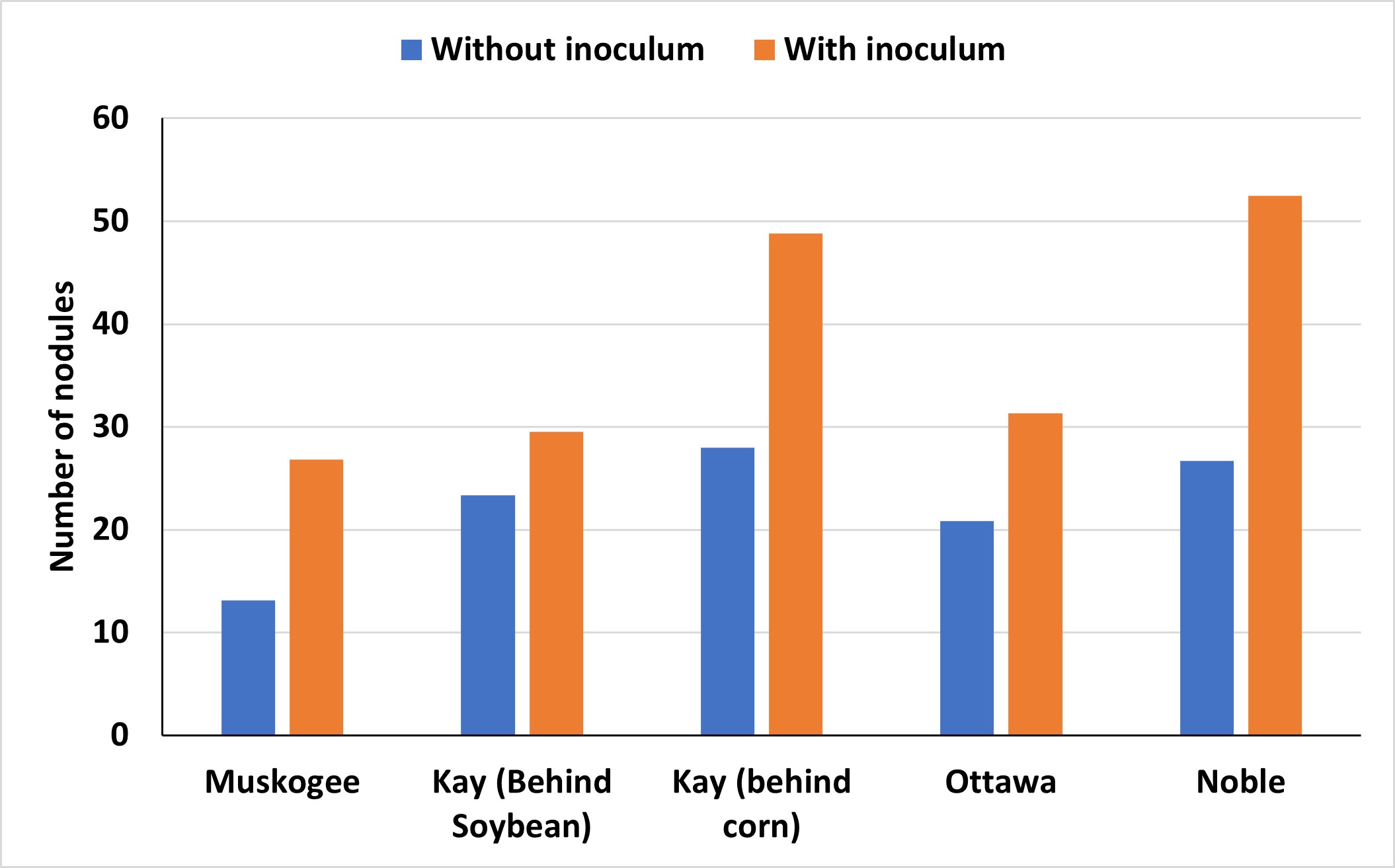
The importance of using inoculum is often debated in Oklahoma, particularly given the fluctuating prices of commodities and inputs. A recent assessment of various soybean-producing areas throughout the state revealed that most fields experienced advantages from incorporating soybean inoculation (Figure 1).
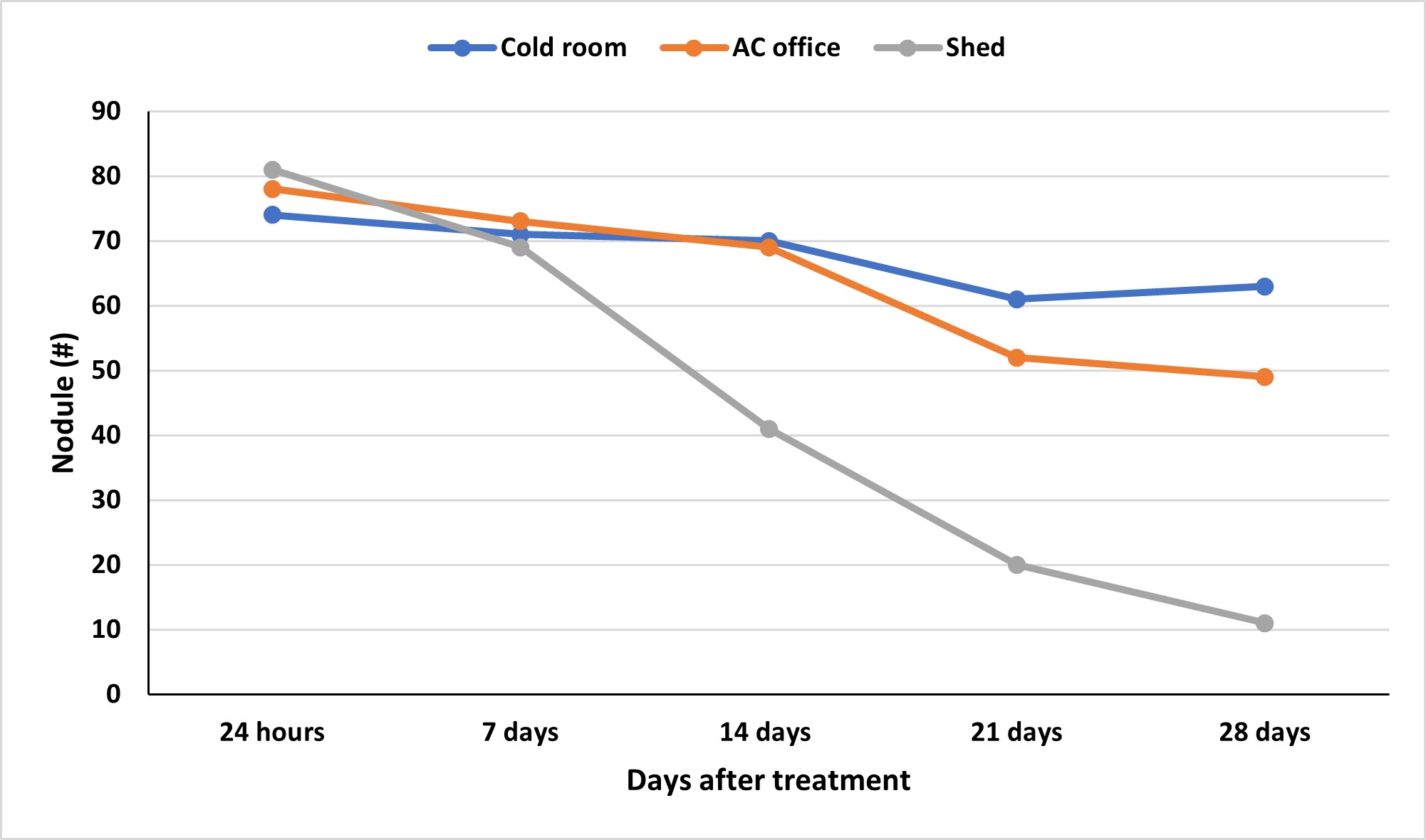
These benefits can be seen when the inoculum maintains viability until it is planted. It is always recommended that the bacteria be stored in a cool, dark environment before application on the seed. These conditions help preserve the survival of these bacteria outside of the host relationship. An evaluation of soybean inoculant after being stored short-term in different conditions found that in as little as 14 days, viability can decrease when kept in non-climate-controlled conditions (Figure 2). Additionally, viability was further reduced at 21 days when stored at room temperature compared to a refrigerated system
However, conditions colder than this, such as the use of a freezer, can compromise survival as well. Storing inoculum in the freezer forms ice crystals within the living cells and damages the cell membranes, making the microorganisms less likely to be alive upon rethawing. Additional chemicals can be added to increase the viability of long-term storage and sub-freezing temperatures. From an application standpoint, a new product should be purchased if additional storage is needed beyond short-term storage.
An additional question frequently arises: “How often should I inoculate my soybean?” As mentioned, these bacteria are not native to Oklahoma. As a result, they are not well adapted to survive in our environment and must outcompete native populations in the soil. Additionally, periods of hot and dry conditions appear to reduce the bacteria’s ability to survive without a host, the soybean roots. These are conditions we often observe in Oklahoma systems. Therefore, inoculation should be applied with every soybean planting to ensure a sufficient population of these bacteria. These bacteria promote root nodulation and nitrogen fixation in the soil.
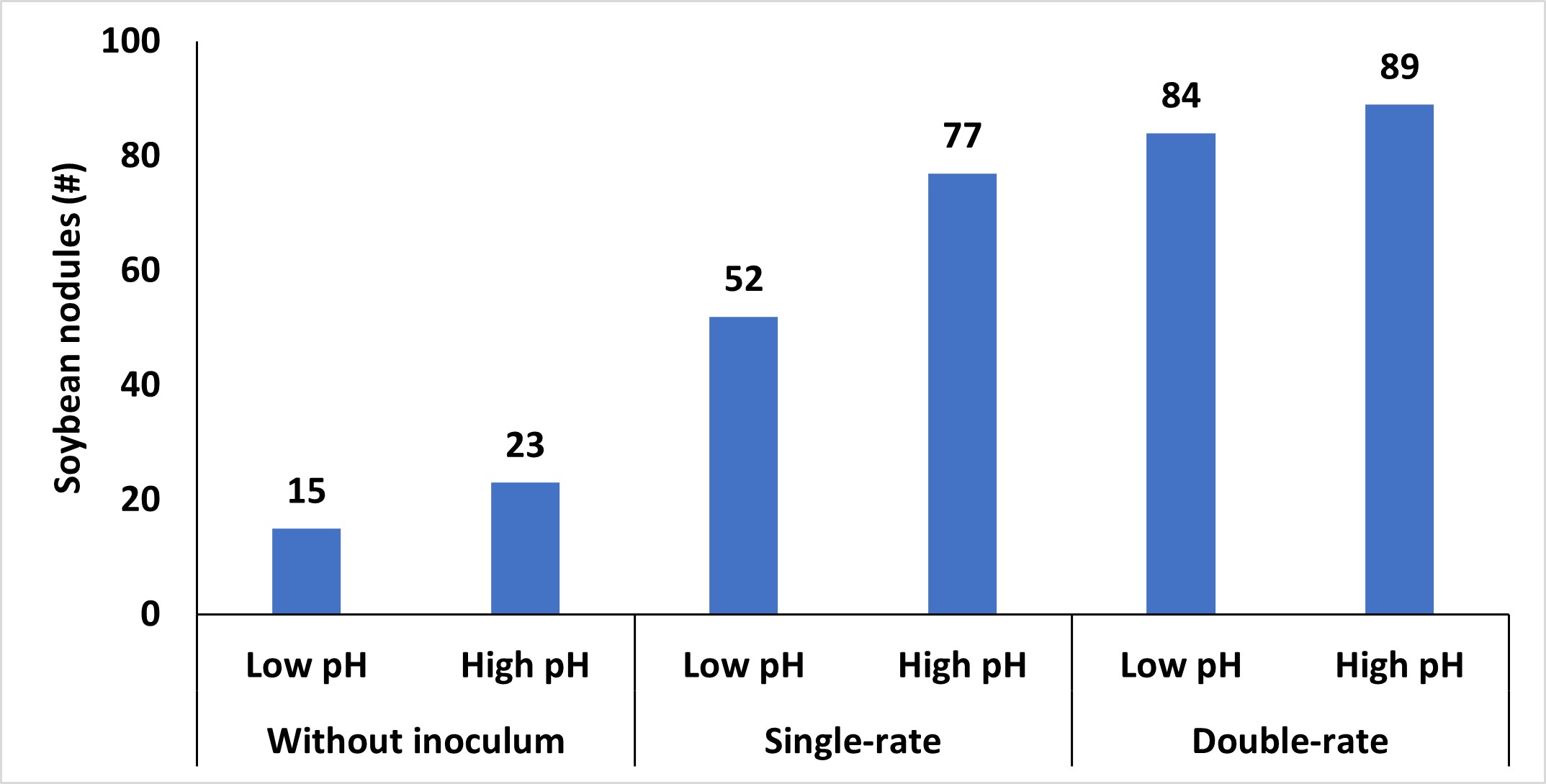
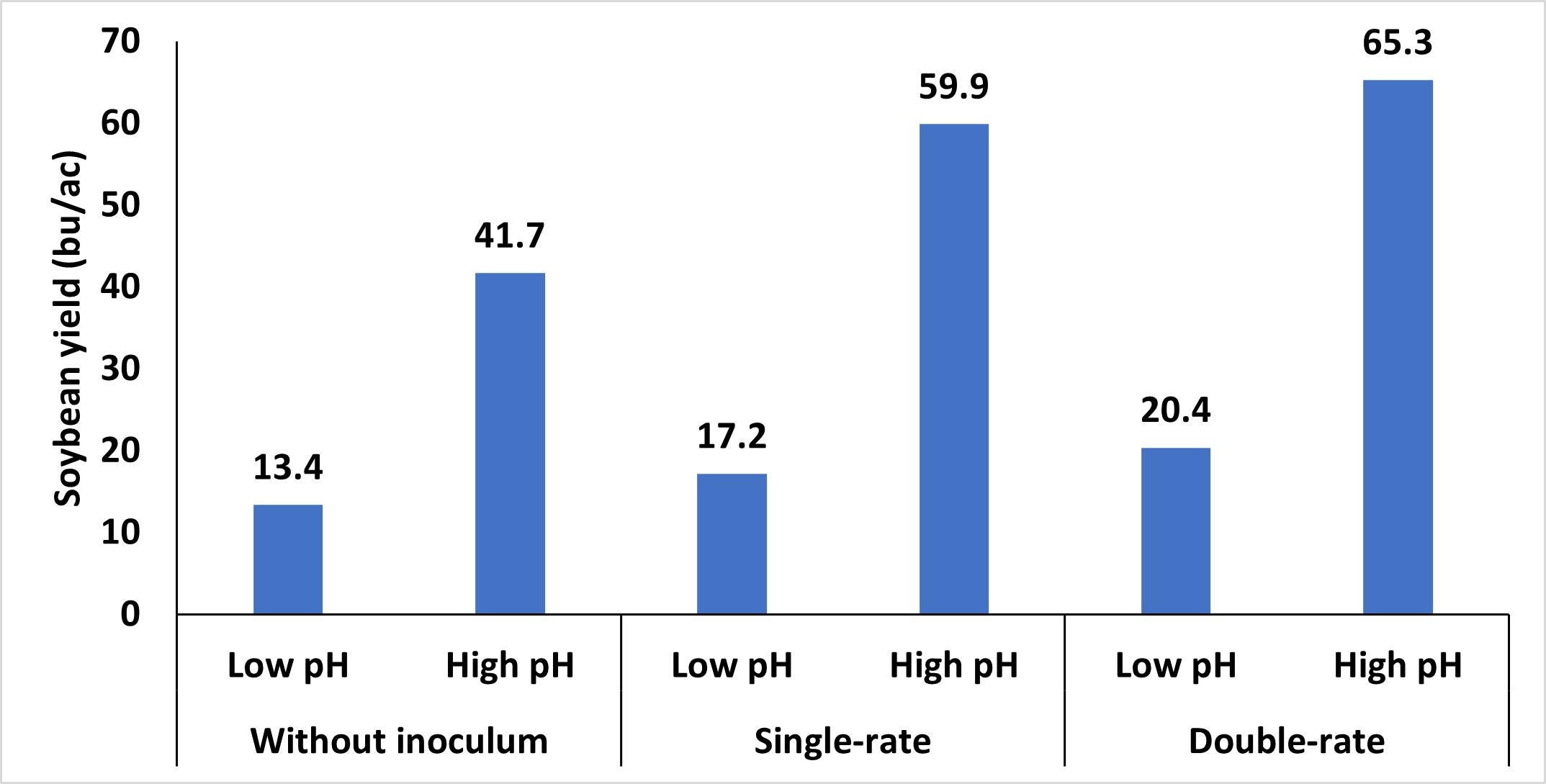
Other soil conditions, such as excessively dry or wet soils, high or low pH, and residual nutrients, can also impact the persistence of these microorganisms. Of these, soil pH has the biggest impact on the survival of these bacteria. High pH is less of a concern to Oklahoma production systems; however, soil with lower pH should be remediated. Like many bacterial systems, these bacteria optimally function at a pH range that closely resembles the ideal pH range for most crops. Lowering the soil pH below a critical threshold reduces the viability of the bacteria, hampers N-fixation processes, and diminishes the capacity of both the bacteria and soybean plants to form and maintain this relationship. While applying inoculum to soybean seeds in these adverse soil conditions can provide some advantages (Figure 3), but it often doesn’t increase yields. Therefore, inoculation with corresponding adjustments to soil pH represents the best approach.
While using inoculum is not a new concept, it is important to highlight the benefits it can provide when utilized correctly. The potential to reduce N input costs is attractive, but the effectiveness depends on proper handling, storage, and soil conditions until it can intercept the host. To maximize benefits, inoculum should be stored in a cool, dark environment and utilized in a timely manner. If there is doubt that there are not enough bacteria, an inoculum should be added. Oklahoma’s climate, particularly hot and dry conditions, can limit bacteria survival, reinforcing the need to treat the inoculum until it is in the ground carefully. Additionally, considering the soil environment is important to sustain the population of bacteria until it can inoculate its host. Emphasis on these small details can have a large impact on the plant’s ability to fix nitrogen and optimize productivity throughout the growing season.
TAKE HOMES
* Soybean requires more lbs of N per bushel than most grain crops.
* Soybeans symbiotic relationship with rhizobia can provide the majority of this nitrogen.
* Soybean rhizobia is not native to Oklahoma soils so should be added to first year soybean fields.
* Inoculum should be treated with care to insure proper nodulation.
* Due to Oklahoma’s climate and existing soil conditions rhizobia may not persist from year to year.
Any questions or comments feel free to contact Dr. Lofton or myself
josh.lofton@okstate.edu
b.arnall@okstate.edu
Appreciation of the Oklahoma Soybean Board for their support of this project.
A comparison of four nitrogen sources in No-till Wheat.
Jolee Derrick, Precision Nutrient Management Masters Student.
Brian Arnall, Precision Nutrient Management Specialist.
Nitrogen (N) fertilizer’s ability to be utilized by a production system is reliant upon the surrounding environment. The state of Oklahoma’s diverse climate presents unique challenges for producers aiming to apply fertilizers effectively and mitigate the adverse effects of unfavorable conditions on nitrogen fertilizers. To lessen the effect that unfavorable environments can have on N fertilizers, chemical additions have been introduced to base fertilizers to give the best possible chance at an impact. With that in mind, a study was conducted to investigate the impact of N sources and application timings on winter wheat grain yield and protein, aiming to identify both the agronomic effects of these sources and how variations in their timing may influence the crop. Included below is a figure of where and when the trials were conducted.

In each of the trials, four N sources (Urea, SuperU, UAN, and UAN + Anvol) were analyzed across a range of timings. The sources were categorized on two criteria: application type, distinguishing between dry and liquid sources, and the presence of additives versus non-additives. The two N sources were Urea and UAN. The other products in this study were SuperU and Anvol. SuperU is a N product that has Dicyandiamide (DCD) and N- (n-butyl) thiophosphoric triamide (NBPT) incorporated into a Urea base. Anvol is an additive product which contains NBPT and Duromide and can be incorporated with dry or liquid N sources.
For additional clarification, N- (n-butyl) thiophosphoric triamide is a urease inhibitor which prevents the conversion of urea to ammonia. Duromide is a molecule which is intended to slow the breakdown of NBPT. DCD is a nitrification inhibitor that slows the conversion of ammonium to nitrate.
Urea is a stable molecule which in the presence of moisture is quickly converted to stable ammonium (NH4), however it can be converted to ammonia gas (NH3) by the enzyme urease beforehand. Additionally, when urea is left on the soil surface and not incorporated via tillage or ½ inch of a precipitation event, the NH4 that was created from urea can be converted back to NH3 and gasses off. So, the use of urease inhibitors is implemented to allow more time for incorporation of the urea into the soil.
Ammonium in the soil is quickly converted to nitrate (NO3) by soil microbes when soil temperature is above 50F°. When N is in the NO3 form it is more susceptible to loss through leaching or denitrification. Therefore, nitrification inhibitors are applied to prevent the conversion of NH4 to NO3.
All treatments were applied at the same rate of 60 lbs of N ac-1, which is well below yield goal rate. A lower N rate was chosen to allow the efficacy of the products to express themselves more clearly, rather than a higher rate that may limit the ability to determine differences between product and rate applied. Furthermore, dry N sources were broadcasted by hand across the plots while liquid sources were applied by backpacking utilizing a handheld boom with streamer nozzles. Application timing dates were analyzed by identifying the growing degree days (GDD) associated with each timing which were correlated with the Feekes physiological growth chart displayed in Figure 3. Over the span of the study, N has been applied over six stages of growth. The range of application dates stems from the fact that it is difficult to get across all the ground exactly when you need to.


Over four years this study was replicated 11 times. Of those 11 site years, three did not show a response to N, so they were removed from further analysis. The graph above shows the average yield of each respective source (across all locations and timings). The data shows there is a statistical difference between SuperU and Urea vs. UAN, but no statistical difference between UAN treated Anvol and any other source. The data indicates that on average, a dry source resulted in a higher yield than when a liquid source was applied. This makes sense considering that in many cases, wheat was planted in heavy residue during cropping seasons that experienced prolonged drought conditions. Therefore, it is thought that a liquid source can get tied up in the residue. This was first reported in a previous blog posting, Its dry and nitrogen cost a lot, what now?, and years later, the same trends in new data indicate the same conclusion.

If we look at all timings and site years averaging together there is no statistical difference between a raw N source and its treated counterpart. This result is not surprising as we would expect that not all environments were conducive to loss pathways that the products prevented. Basically, we would not expect a return on investment in every single site year, and therefore you do not see broad sweeping recommendations. There was a 2-bushel difference between UAN and UAN Anvol. As this was a numerical difference, not a statistical one, I would say that while the yield advantage was not substantial there may be economic environments that would suggest general use.

While the evaluation of the four sources across all timings and locations showed some interesting results, this work was performed to see if there was a timing of application which would have a higher probability of a safened N returning better yields. As you look at the chart above it is good to remember the traditional trend for precipitation in Oklahoma, where we tend to start going dry in November and stay dry through mid-January. Rain fall probability and frequency starts to increase around mid-February, but moisture isn’t consistent until March. This project was performed during some of the dryest winters we have seen in Oklahoma. Also, just a note, since the graph above combines all the sites that have differing application dates the absolute yields are a bit deceiving. For example, the Nov and Feb timings include the locations with our highest yields 80+ bpa per acre, while January and February include our lowest. So, the way this data is represented we should not draw conclusions about best time for N app. For that go read the blogs Impact Nitrogen timing 2021-2022 Version and Is there still time for Nitrogen??


Figure 6a and b. A: The mesonet rainfall totals for Oct -Dec for the Lake Carl Blackwell research station for 2020-2023 A: The mesonet rainfall totals for Jan – April for the Lake Carl Blackwell research station for 2021-2024. The black line on both graphs is the 10 year average.
Now about the source by time. While it’s not always statistical you can see that the dry sources tend to outperform the liquid sources at most timings. Also, while there is never a statistical difference in the raw product and safened, there are trends. SuperU tended to have higher yields than urea when applied in Nov and Dec. It could be hypothesized that the addition of a nitrification inhibitor may have added value, however the UAN + Anvol in November also showed a positive response that would point to the value being derived from urease inhibition. As we move into the period of more consistent rainfall the differences between products start declining, which also makes sense.
The following figures illustrate rainfall events following N application, with the application dates indicated by arrows. Figure 7 corresponds to our trial conducted in 2020-2021, which revealed no statistical differences among the N sources for any timing. However you can see that for the first timing (orange bars) which received 0.7″ of rain two days after application that the yields are uniform than the grey bars with both safened products are numerically greater than the raw product, just makes since as a 0.1″ precipitation event happened 6 days application application and it wasn’t until day 9 that a good incorporating rainfall occurred.

Figure 8 has data the same location one year later, during which we observed statistically significant differences among the dry and liquid N sources. The environmental conditions during 2022 were drier, impacting the incorporation of N applications. The lack incorporating rainfall likely led to tie-up of the UAN on/in the residue, limiting access to plant available N.

It is essential to highlight the environmental conditions encountered throughout this project. From 2020 to 2023, moderate to extreme drought conditions were prevalent. During this period, the influence of a La Niña led to reduced moisture availability. For the first time in an extended period, the 2023-2024 wheat year began under a strong El Niño, which typically results in increased moisture accumulation compared to its La Niña counterpart. Currently, there are indications that a return to a La Niña system may occur by the end of the year, raising the expectation of a potential reversion to drought conditions. Consequently, this research may provide producers with options to consider regarding sources of N application in their production systems.
We plan to update this blog with a deeper analysis of the results seen at each location as soon as possible. But for now, we wanted to share the early look.
At this point the reason for the liquid yield gap is speculation. It could be increased loss via ammonia volatilization or it could be immobilization of the N by microbes. The next step of this process is to understand 1) is the UAN tied up in the residue via immobilization via microbes or is it lost to volatilization. 2) If tied up, what is the time frame between application and immobilization.
Take Home:
- It was observed that during low moisture conditions, dry N sources had significantly better results than liquid counterparts in no-till winter wheat production.
- On average, additive products had no significant impact on grain yield versus base fertilizers, however, when evaluated by location, differences could be found. Responses usually correlated with post-application weather conditions.
- When adequate precipitation was received shortly after application, N sources did not show differences.
Any questions or comments feel free to contact me. b.arnall@okstate.edu

In-Furrow Placement of Urea Products with Wheat Seed
Its that time of year I always get the question of “How much urea can I put in the furrow?”. My answer is always two fold first, I wouldn’t recommend it, its a risky venture. Even though I know some do it. Second, my research shows very little is any value from N in furrow. I like P but N just doesn’t show me any return. So for me the process is high risk, with little or no potential for return. But with blog I turn to our purple friend up north to share what their research has sown.
Brian
Guest Authors Kansas State University
Lucas Haag, Agronomist-in-Charge, Southwest Research-Extension Center, Tribune lhaag@ksu.edu
Alan Schlegel, retired
Dorivar Ruiz Diaz, Nutrient Management Specialist ruizdiaz@ksu.edu
To save time and cost, some wheat producers may be thinking about adding a little extra nitrogen (N) as urea or UAN to their phosphorus fertilizer through the drill with the seed. This would either be in addition to, or instead of, any preplant N applications.
While a minimum preplant N application of 20 to 40 lbs N per acre is often desirable, especially in no till production systems, there are risk involved when placing urea containing fertilizers in direct seed contact. Traditionally, we have suggested that no urea or UAN solution be placed in contact with the seed. With the continued adoption of air-seeders a common question we receive from producers is can urea, or enhanced urea products be placed in-furrow.
Methods of early-season nitrogen applications
If the starter fertilizer can’t be “spiked” with urea to add extra N, how can the necessary 20 to 40 pounds of N be applied? Subsurface banding (knifing) of N as either anhydrous ammonia, liquid UAN, or dry product will result in the greatest N use efficiency by the wheat crop. This is especially true for no-till wheat production.
If knifed N applications are not used, the next best application method would be surface banding (dribbling) of UAN solution in streams on 15- to 18-inch centers. Broadcasting urea, ammonium nitrate, or UAN applications are not generally as efficient as subsurface banding, but they are often the best choice due to equipment, logistics, or weed management considerations. Broadcast applications of N will have the most consistent performance if followed by light incorporation, precipitation, or irrigation.
Direct seed placement of nitrogen
When placing starter fertilizer in direct contact with wheat seed, producers should use the following guidelines:

The problem with placing urea-containing fertilizer with the seed is that urea is initially converted to ammonia and may be toxic to plant roots if the wheat seed is placed in direct contact with the fertilizer. Producers may hear of someone who has placed urea in direct seed contact and seemed to have no problems, but there are also many cases where urea-containing N fertilizers has injured the developing seedling and reduced or delayed emergence significantly. The risk of injury is greater in drier soils, at higher soil pH levels, and at higher N rates. High soil pH favors a higher concentration of ammonia as compared to ammonium as urea hydrolyzes. There is significant risk associated with placing urea-containing fertilizers in direct seed contact.
The chart below shows how soil texture affected the level of wheat germination when urea-N was applied with the seed in a K-State greenhouse study. The wheat was well watered in this study, but urea-N placed with the seed still reduced germination, especially in the sandy soil. The readings shown below were taken after 10 days. With the high rates of urea used in this study, it is possible that more damage to the seedlings would occur with time as the urea continues to hydrolyze into ammonia.

Field studies have also shown reduced wheat stands due to in-furrow placement of urea. Across 5 site years in western Kansas the placement of urea in-furrow has resulted in decreased stands at spring greenup compared to the control (Figure 2).

The stand reduction becomes especially noticeable at higher rate of N. One of the challenges of understanding the risk of seedling injury is that the magnitude of injury varies by field conditions an years. In some years very little reduction may be evident, even at higher rates of N, while in other years, stand reductions (and their associated impact on yield) is very evident. As an example at Tribune in 2017, reduction in stand caused by urea placement with seed, and their effect on yield were quite evident (Figures 3 and 4).

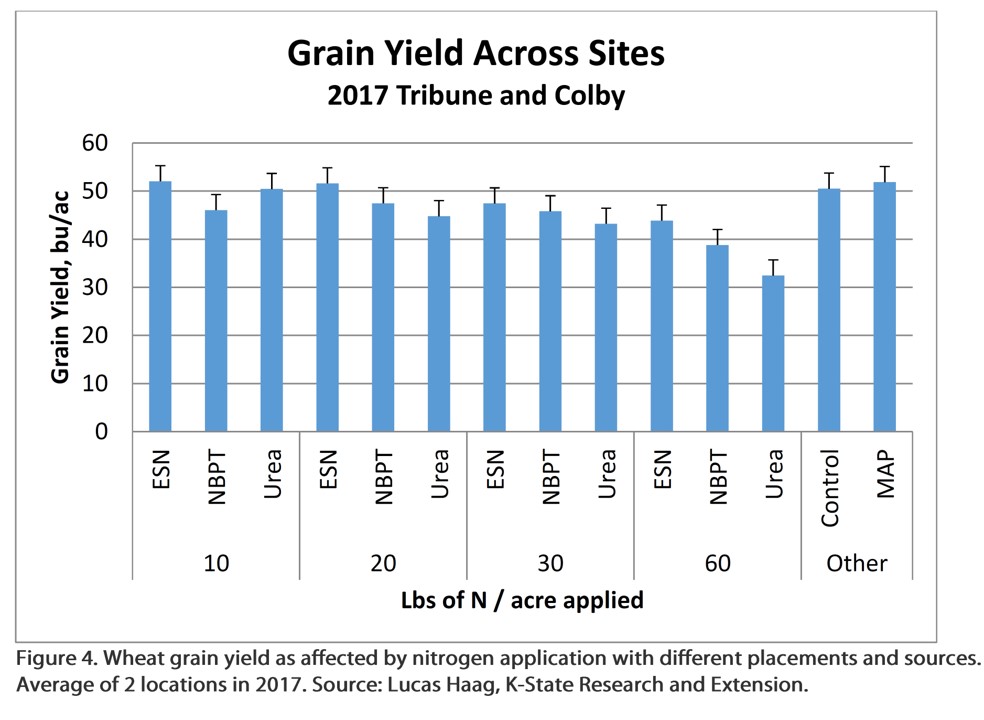
Stands were reduced 32 and 63% compared to the control when 30 and 60 lbs of N as urea were applied in-furrow (Figure 3). This resuled in yield reductions of 14 and 40%, respectively (Figure 4).
If you’d like to apply extra N directly in the seed furrow, one option is to use a controlled-release form of N, such as ESN. As shown in figure 4, at N application rates of 30 lbs/ac and less, where ESN-N was applied in-furrow, wheat yields were essentially the same as where the N was applied pre-plant, and higher compared to the same amount of N applied as urea. At the highest rate of application in the study, 60 lbs/ac, even ESN resulted in stand and grain yield reductions.
Also, air seeders that place the starter fertilizer and seed in a band an inch or two wide, or side band the fertilizer relative to the seed, provide some margin of safety because the concentration of the fertilizer and seed is lower in these diffuse bands. In this scenario, adding a little extra urea containing N fertilizers to the starter less likely to injure the seed – but it is still a risk.
Here is a great video by Dr. Haag.
How do you handle your soil sample….
It’s that time of year where wheat producers are in all stages of prep across the state, the graze out folks are wondering when the rains will hit to get the dusted in wheat up and the grain only folks are prepping grain drills or dealing with summer crop harvest. While this blog is focused on the wheat producers it should be acknowledged as a work of caution for anyone who pulls soil samples in environments where the temps during sampling can be above the mid 80’s.
Following some fantastic work by our Wild Cat Soil Fertility Counterparts (see blog) we dug into the same question of how does soil sample handling post collection impact the results. Dr. Ruiz-Diaz results on the impact of storage on nitrogen values was not surprising. But we wanted to go the next step and add in sample bag type.
Our Project
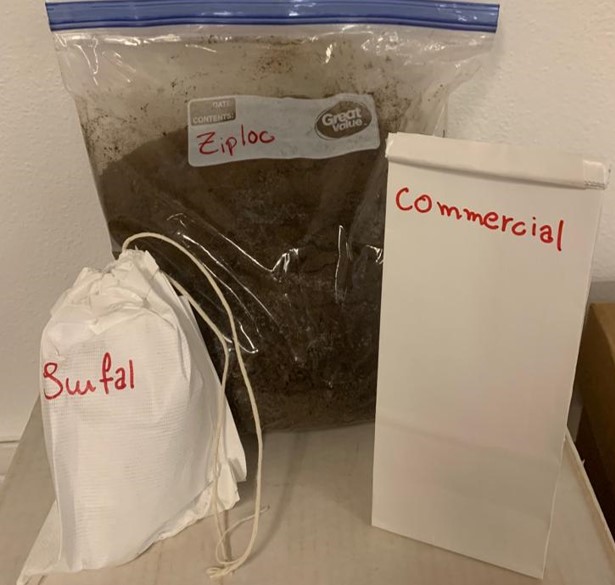
We collected a soil ground and homogenized. Placed in three types of bags Ziploc, Commercial (resin lined paper that is closed) and SWFAL bag (breathable material). Placed samples in a mini-van (Field) and brought a group onto campus (Office). With both sets of samples we had temperature loggers collecting hourly data. Every three days we collected four samples from each location determined moisture content and ran a full spectrum soil analysis including CO2 burst. The soil we used had a OM of 1.1% and soil pH of 6.1
Now let’s back up. Why was the KSU data not surprising. Well for those certified and honorary nitrogen ninjas we understand that the N-cycle processes of mineralization, immobilization, and nitrification are biological reactions which are significantly impacted by soil moisture and soil temperature. But the short and quick version is that the microbes that convert organic N to mineral N (NH4) and convert NH4 to NO3 like warm conditions with good soil moisture. So, when you pull soil samples, hopefully there is some moisture in the soil and then you place it in a bag and seal it. This creates an effective greenhouse environment where moisture cannot escape and is the perfect place for microbes to microbial things. Therefore, you expect the organic cycle and nitrogen cycle to move and move quickly through the processes of mineralization, ammonification, and nitrification.
Back to the data.
First, we have the average daily temperatures from the sitting vehicle and the lab. On days 2-5 the average temp of the van was over 100°, after that the temps dropped. One thing to remember is the temp of the van is an average of a wide-ranging highs and lows between morning and midday while the office temperature being stable throughout the entire day.


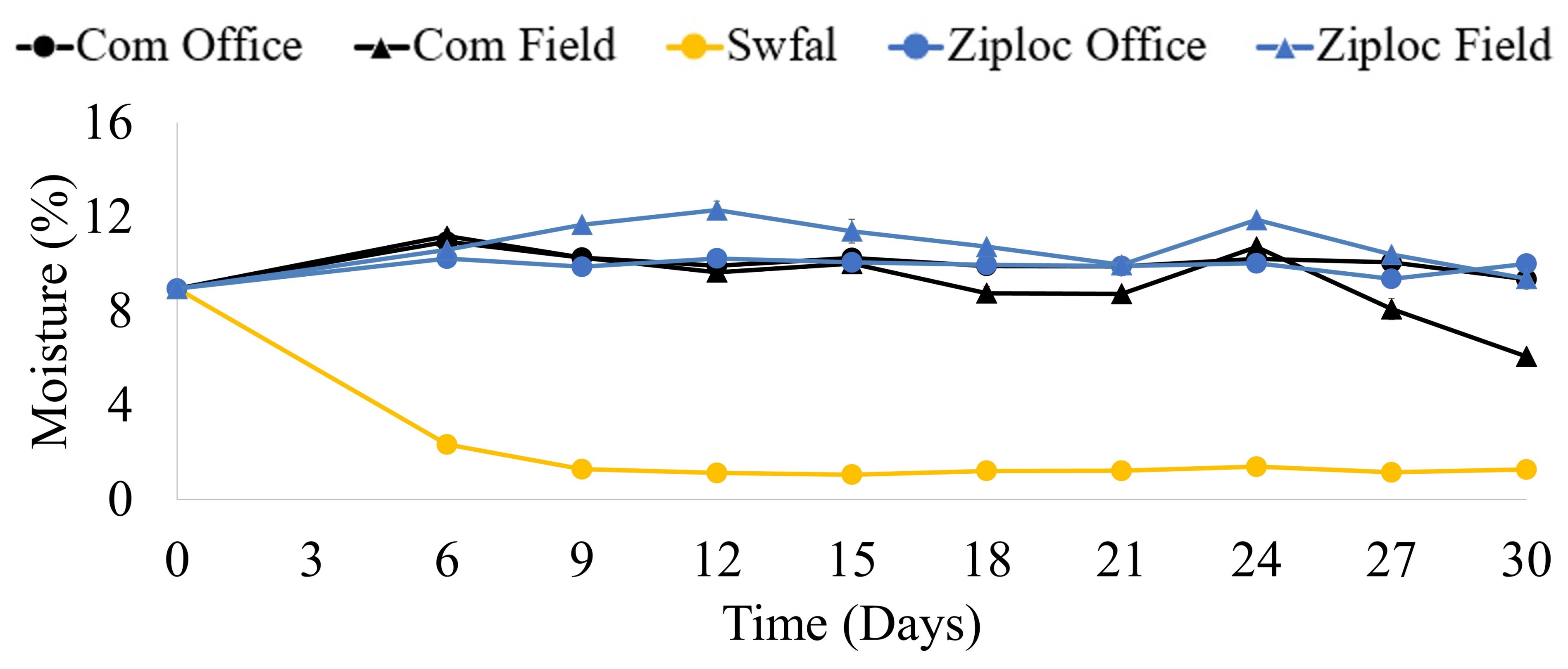
What is the most interesting and revealing data may be the soil moisture of the samples. Unfortunately, day 3 samples went straight to the oven, but you can see by day 6 the SFWAL bags (yellow line) had dried significantly while it wasn’t until day 27 did the Commercial bags in the van (Black line w/ triangle) show signs of drying. It’s also important to note that while there are two lines (Field and Office) for the Commercial bags and Ziploc bags, but only one for the SWFAL bags. That is because for all variables measured there was never a significant difference between the SWFAL Field value and the SWFAL Office value.

We are going to start off with the variable that changed the most, NO3-N. This is also the form of N that is measured in most soil test. With a starting point of 3.4 lbs. N ac-1 (based on a six inch soil sample depth) by day 6 the Field samples had jumped to 15.6 lbs. The office samples had much slower increase in NO3 with it taking 9 days to reach 10 lbs. You can also see that the error bars start showing up in the samples after about two weeks. The bars show the range in the sample results of a treatment. The interesting thing we saw was that the location within the van was significant. We set each replication of samples in a different spot in the van, the front seat, middle seat, and rear. The thermometers set with each replications showed that each area of the van had slightly differing temperature, which in turn affected the samples.

Ammonium (NH4-N), which is only reported by a few labs is also impacted by the storage location and bag type, however not to the sample level as NO3-N. Effectively the SWFAL bags and all samples taken to the office maintained consistent NH4 levels. The Com bag and Ziplocs left in the van however saw a significant increase in NH4 over time, basically a 2 lb per day increase.

Of the other measured parameters such as potassium, sulfur, and CO2 burst data were effected. These will be discussed more in depth in a peer reviewed publication and factsheet.
Take Home’s from the Work
While the majority of the nutrients were relatively un affected by the bag type or storage those that are more heavily influenced by organic matter and biological activity where, this includes many of the soil health parameters. The use of SWFAL soil bags resulted in data that was not impacted by storage or time. While most clients of the OSU lab use these bags, more than one samples been brought into the county via a sealed Ziploc baggie. However the majority of the soil samples collected are placed into the resin lined paper bags and sealed. This data set is also important to those who use laboratories that run the Haney test which includes measures of NO3, NH4, Organic N, CO2 respiration and H2O extracted Organic C. It is critical that when using these type of bags that the samples be brought into climate controlled facilities as soon as possible. Its good to remember when looking at the data that the soil we used had a OM of 1.1%, initial NO3 of 3.4 lbs. and NH4 of 14 lbs. A soil with a higher OM% could have even greater change. Another viable is if the soil sample depth is greater than 6”. If your sample depth is 8” then the value is 33% higher.
Questions or comments feel free to reach out via email or social media.
Brian Arnall, Precision Nutrient Management b.arnall@okstate.edu

Did in-furrow starter products increase yields?
Bronc Finch, Precision Nutrient Management Post-Doctorial Scientist.
Brian Arnall, Precision Nutrient Management Specialist.
As winter wheat planting time approaches this question arises often when fertilizer decisions are being made. There are several products that have been marketed to wheat producers that contain combinations of nitrogen (N), phosphorus (P), and potassium (K) as well as some plant essential micro-nutrients. These products are designed to be placed with the seed as an in-furrow application at planting and provide nutrients earlier in the season than traditional dry spreading methods. While the state of Oklahoma macro-nutrient deficiencies are often corrected with traditional fertilizing methods and micro-nutrient deficiencies are not commonly witnessed in winter wheat; these products are often sold with the expectation yield increases can still occur. This has led to the question can these fertilizer products improve winter wheat yield production regardless of soil analysis results? To answer this Oklahoma State University developed a study evaluating eleven different starter fertilizer options available to producers (Table 1). Of these eleven fertilizer options three are commonly available fertilizers, and eight of them are products available through specific companies. The study was carried out at three locations a year for two years.

To compare the ability of these products to increase yield beyond the recommendation of soil test results, pre-plant soil samples were collected to a 6-inch depth at each of these research sites. Soil analysis of the five-site years used in this evaluation (Table 2) reported no deficiency at the Lake Carl Blackwell research farm. Deficient concentrations of P (< 32.5 ppm) was recorded at the North 40 research site and Perkins research station, along with a low pH (4.8) at the Perkins research station. Acidic soils are of concern for crop production having many detrimental impacts to root production, however there is also influence on nutrient availability. Aluminum concentrations are often higher in low pH soils which will result in root pruning and the binding of applied P, increasing the concerns when soil analysis P concentrations are already deficient.

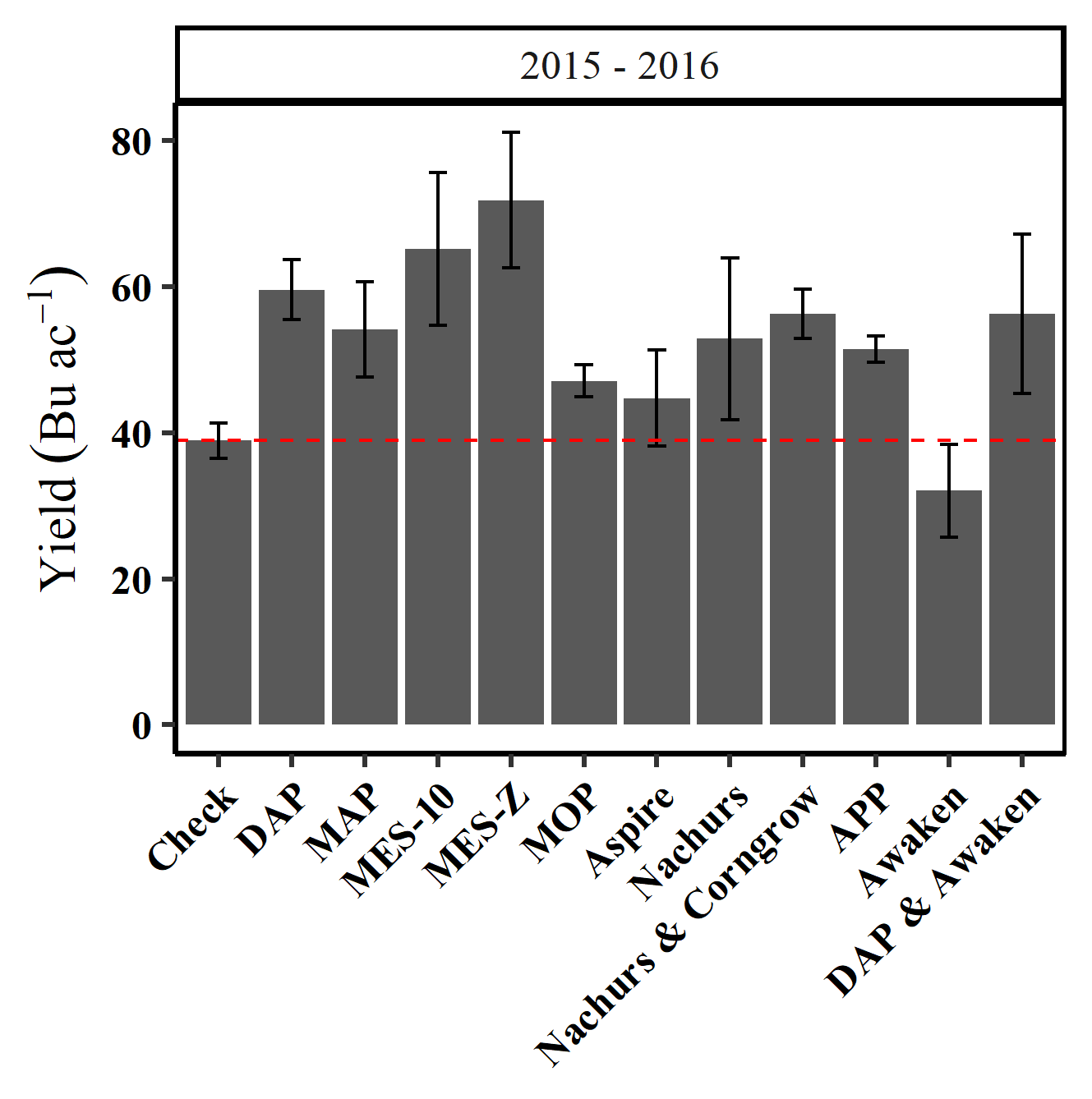
Evaluation of these commercially available products at non-nutrient deficient sites show no influence of any in-furrow placed fertilizer product on winter wheat grain yield compared to an unfertilized check, yielding an average of 52 bu ac-1 in 2014-2015, and 93 bu ac-1 in 2015-2016 (Figure 1). Figure 1, along with the following figures, show the mean and variability of winter wheat grain yield of each of the commercially available starter fertilizer product treatments, as well as the check treatment which received no fertilizer application. The column for each treatment represents the grain yield in bu ac-1 which is the average of three replications the variability of grain yield at an individual treatment can be observed by the error bars which depict the range of grain yields within a specific treatment. The larger the error bar the less consistent the yield and the harder it is to separate out statistical differences in yield.

When the soil test P level was below 32.5 ppm, some P containing starter fertilizers where able to increase winter wheat grain yield in 2014-2015 growing season at North 40. Products containing 40 – 52% P; MAP, DAP + Awaken and MES-Z, improved grain yield by up to 14 bu ac-1 compared to the check. At the North 40 locations APP did not show the same increase in yields as DAP and MAP. The addition of micro-nutrients by Awaken combined with DAP yielded a 20 bu ac-1 increase over Awaken used alone, but no increase compared to DAP or MAP used alone. Similarly, the addition of Zinc by MES-Z yielded similar to the base product, MAP.
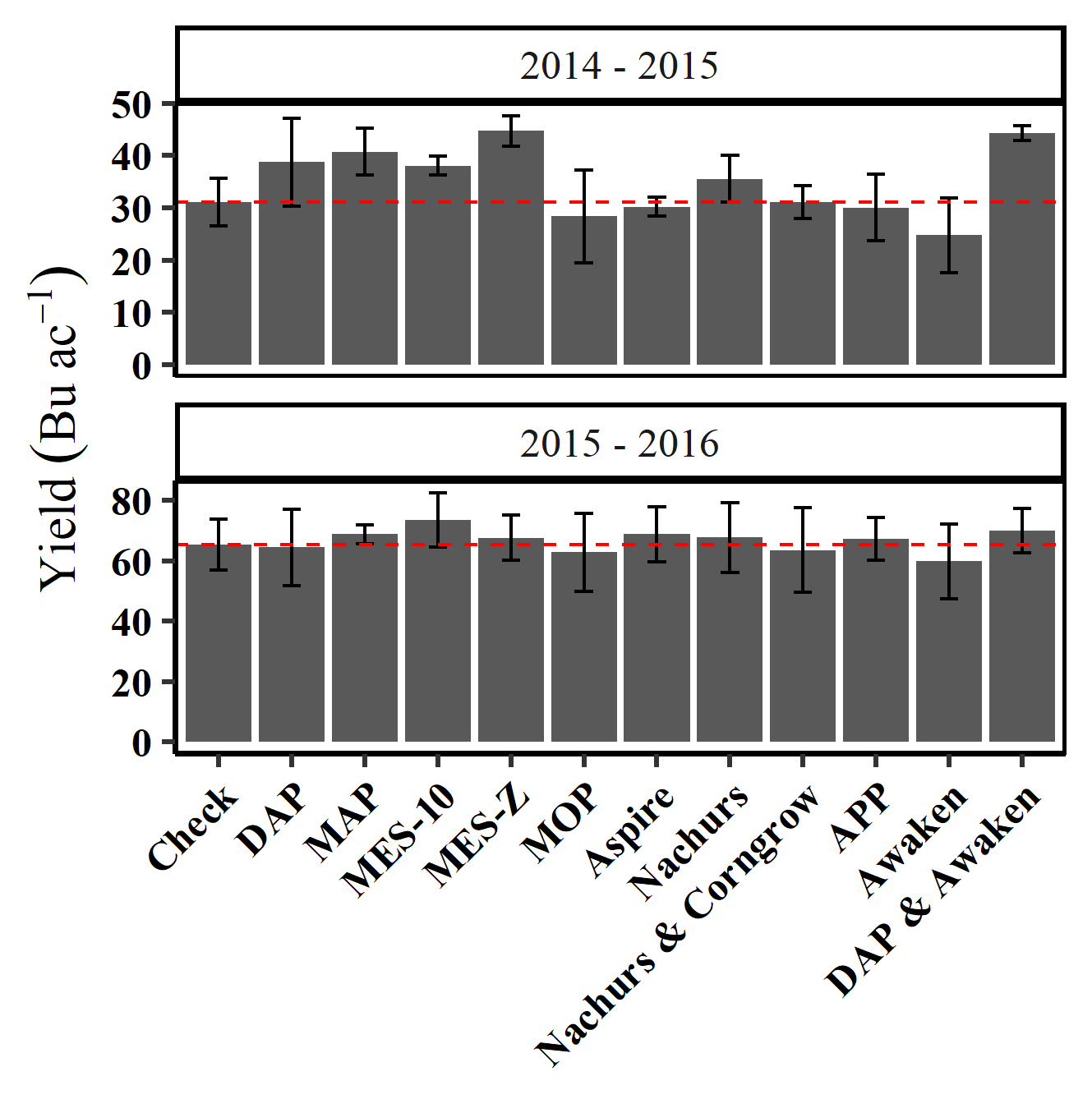
When P deficiency was compounded by a low pH such as observed at Perkins there was response to more in-furrow products. Compared to the check, increases up to 32 bu ac-1 in winter wheat grain yield was found by DAP, MES-10, MES-Z, Nachurs + CornGrow, and DAP + Awaken. Further investigation revealed the source of P fertilizer (DAP, MAP, and APP) reported no difference in yield averaging 55 bu ac-1. The addition of S and K by Nachurs was not different from APP, which is a similar liquid fertilizer, averaging 52 bu ac-1. Micro-nutrient additions by Awaken combined with DAP (56 bu ac-1), and by CornGrow combined with Nachurs (56 bu ac-1) did not increase winter wheat grain yield compared to each other or their respective base products of DAP (59 bu ac-1) and Nachurs (53 bu ac-1). Similarly, additions of S by MES-10 and S and Zn by MES-Z yielded similar to one another with 65 and 72 bu ac-1respectively but produced 14 bu ac-1 more yield on average than the base product MAP. At Perkins, which is a well-drained sandy loam soil, we often see a yield response to S when yield levels so seeing a response to the products that added 7 lbs of S, was not un-expected.
With these results in mind and the current cost of fertilizers, the addition of fertilizer products on non-limiting soils is not expected to result in an increase in winter wheat grain yield. Also, many of these products contain micro-nutrients that are rarely found to be at deficient levels for much of the winter wheat production region in Oklahoma. Therefore, the use of these products on non-nutrient limiting soils would unnecessarily increase the cost of production and decrease the return on investment. However, that is not to say these products should be avoided completely, in the event of a nutrient limiting soils some products show potential benefit for correct soil deficiencies. As observed some P containing products were able to provide adequate P concentrations for increasing yields and overcoming low pH conditions. This work along with previous work evaluating efficient fertilizer management suggest the correction of a nutrient deficient soil to be more important than the source of the nutrients and supports the need for soil testing and following recommendations.
This blog is a summation of Mr. Jonathon Williams thesis which was published in the Journal of Agricultural Sciences. Impact of in-furrow fertilizer on winter wheat grain yield and mineral concentration https://doi.org/10.1017/S0021859622000557
SIDEBAR
So we do small plot research to me in control of as many variables as possible. But all farmers and consultants know that fields are are variable and the results of small plots do not always translate well. I get that 100%, but for me as a scientist I need to understand the little things so that I can apply the knowledge on a large scale. Just last month I wrote a blog about cutting phosphorus rates BLOG. The third major take home of the blog was:
A composite soil sample is an AVERAGE of the field. If your average is right at the ok level (pH of 5.6ish and M3P of 30 ppm), then half of your field is below optimum and will benefit from P.“
That applies to what we learned from the above study. We found if soil test said nutrient was adequate we did not see a response of adding more. However if we combine the two blogs, if your composite soil test comes back just at the optimum level, there is a good chance at least 45% of field is below optimum and may respond.
So guess what my recommendation is. Soil SAMPLE, do it right (proper method and core numbers) and do it at the highest resolution you can afford, at least once.
Finally Do Not Skip on Nutrients when soil test says there is a need.
BA
Any questions or comments feel free to contact me. b.arnall@okstate.edu
Phosphorus decisions, Is it worth cutting P?
With the current conditions and input cost many wheat producers are considering cutting back on inputs. I can’t disagree with the plan, but I would caution against what you cut. If you have read any of my past blogs, or seen me speak, you should know I’m all for cutting back on pre-plant nitrogen (N). Based on some recent trials I would not argue cutting the potassium (K) side, but phosphorus (P) that’s another story that we will walk through in this blog.
First and foremost, soil testing is the key to P management. If your soil test is below the critical threshold for the test you use, 32.5 for Mehlich 3 (M3P), then you need to add phos. We have enough work that shows current recommendations work for P in wheat. Reeds paper Evaluation of incorporated phosphorus fertilizer recommendations on no-till managed winter wheat Link to Paper goes over soil test recommendations in no-till and the recent double crop soybean project Double Crop P and K Blog highlights the importance of P fertility, regardless of yield level. Also if your soil test is below a 5.5 and you haven’t limed (Liming is the best solution, Band-aids not so cheap Blog ), then the next best option is adding additional P to alleviate the aluminum toxicity Band-aids for low pH Blog. In-short if the fields soil test P and or pH is below optimum you should not forgo P application.
But the primary reason I am writing this blog is for those looking at fields with composite soil test that is right around the critical thresholds, and they are trying to make the call on to apply P or not to apply P. Even on fields with soil test values in the good level, I am usually in favor of banding in-furrow fertilizer wheat, but not because of the same reasons I am for corn. With corn you are planting in cool soils and the availability of nutrients like P is lower in cool wet soils. For wheat cold soil isn’t the concern until we reach the end of the planting window. It will serve as a bit of a “pop-up” as the crop comes out of dormancy in the spring. I have also seen little to no value of N applied in furrow. I see same response to DAP (18-46-0), MAP (11-52-0), and TSP (0-46-0) when all applied at same rate of P. Meaning it was the P not N making the difference.
For me the reason I still recommend getting a little phosphate out even when the soil test comes back is that the great majority of fields have a large range of variability. Looking at a set of 650 grid sampled fields across Oklahoma and Kansas it showed on average soil pH 6.0 and M3P was 34 ppm. Both pH and P are at adequate/optimum levels. However, the average is usually somewhere between the low and high point and in this data set and the range of soil pH was 1.8 units and the range in M3P was 67 ppm. That meant on average of the 648 field with pH values the average difference between low pH and high pH was 1.8 units and the difference between low P and high P was 64 ppm.

The field below is from Kingfisher county and was sampled at a resolution of 10 acres per sample. This is a fairly course resolution for grid sampling but provides a great view of how variable our soils can be. The field average pH is 5.3, which is below optimum but our aluminum tolerant wheats would be able to handle fairly well. For the P the average is 22 ppm which needs about 18 lbs of P2O5 to max yields. If the farmer applied a flat rate of 20 lbs there would be significant forage loss on about 65% of the field, for grain only about 45% of the field due to underapplication of P. Note that low P and low pH are not correlated well, meaning the areas low in pH are not always low in P.

Banding P makes it more efficient because it slows the rate of tie. However, we have plenty data that says broadcast applied P is still a great option, even after planting. So what are my take homes from this blog?
First: If you are grazing wheat get down 40-50 lbs of N pre. But I have plenty of data the pre-plant N on grain only wheat is not needed. I have the same amount of data that shows the only value of in-furrow N for grain only is that it forces you to plant more seeds, because it just lowers stand.
Second: When it comes to wheat pay attention to Phosphorus and soil pH. Even our acid tolerant wheats preform better in neutral soil pHs, especially forage wise.
Third: A composite soil sample is an AVERAGE of the field. If your average is right at the ok level (pH of 5.6ish and M3P of 30 ppm), then half of your field is below optimum and will benefit from P.
Fourth: If you can band P great, but if you cant broadcast is still a viable option. Do Not Skip P when soil test says there is a need.
Questions or comments please feel free to reach out.
Brian Arnall b.arnall@okstate.edu
Impact of Nitrogen timing 2021-22 Version
Raedan Sharry, Ph.D. Student Precision Nutrient Management
As wheat planting rapidly approaches for some and gets underway for others, it is without a doubt worth considering the current moisture conditions, the near-term outlook, and how that might influence N management decisions. There is plenty of information located in this blog and many other resources that show the benefits of delayed N management in crops. This is particularly true when considering an extremely long growing season for winter wheat in the southern plains. Given our current soil moisture situation yield expectations given the current soil moisture may be limited until replenishing precipitation occurs. This has many questioning their N management plan.
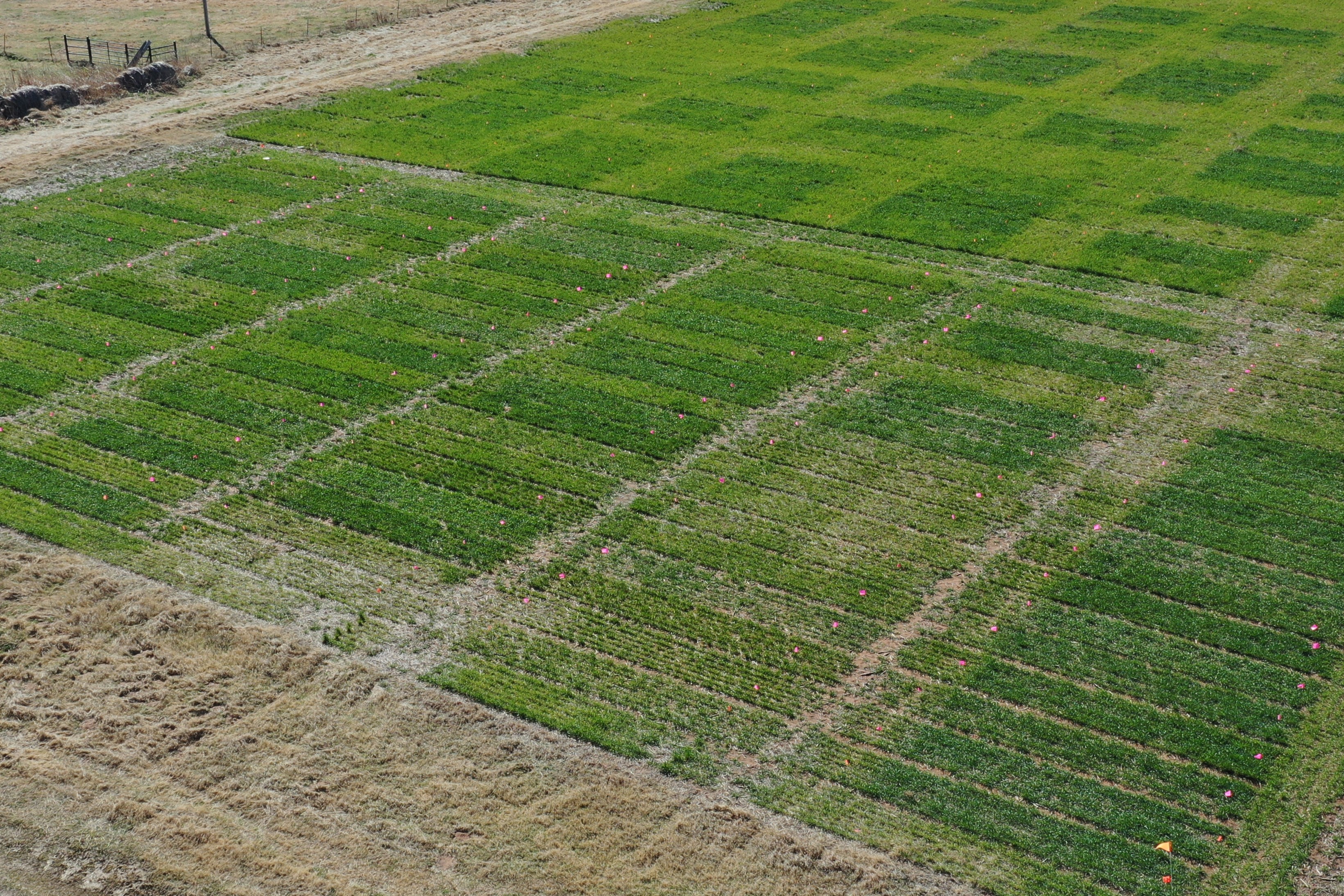
Often when talking about the past N timing results How Late Can You Wait there are comments about the risk of waiting and the crop needing N to get going. Most of the work in the past looked at a single application of N applied at different times and didn’t address split application. But the data from a couple of trials located at Perkins and Perry Oklahoma in the 21-22 season is reinforcing what the past data suggest. These trials consisted of 2 varieties with a 0 N check and 9 combinations of N timings to at 90lbs rate and 3 timings at 140 lbs. of N. Ammonium nitrate (34-0-0) was the N source used in this study to limit the impact of urea volatilization. For both locations we have pre-plant soil test results for the 0-6 and 6-12 inch depths. Both locations at about 30 lbs of total N and OM of 2.0% in the top 6 inches.

The varietal component of this study doesn’t matter in this context so we will leave them unnamed as both cultivars responded very similar to nitrogen timing and rate within each location. The first thing to highlight is both trials were sown in mid-October. October 19th and October 21st to be exact. Both locations received timely rainfall to start the season with approximately 1.5 inches of precipitation falling in half-inch increments between October 25th and November 10th. Top-dress applications in January and March were made on 1/10/22 and 3/24/22 respectively. After the early rainfall events the season was largely dry up until the precipitation in mid-march. So pre-plant fertilizer was incorporated in a fairly timely manner however the January application was applied almost a month before meaningful precipitation occurred. The March application missed the only productive rainfall event until the end of April however this occurred solely due to the application trigger being based on reaching the jointing stage.
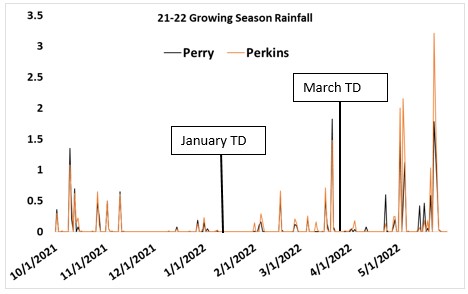
If we take what is stated above into consideration it would be hard to imagine that January applied N would provide a boost over pre-plant. The data says different. At both locations pre-plant N cost us bushels compared to treatments containing fertilizer only in January. Even splitting the application did not produce the same result as treatments that only apply N in-season. At the Perry location at the 90 lb. total rate there was no yield difference between any split applications and the 0-90-0 application making the January application more cost effective. While there were no split application treatments made at the 140 lb. rate the 0-140-0 treatment (140 lbs. applied in January) maximized yield. I also think it is important to note that if the March applications would have been applied prior to the rain event immediately preceding them the March application likely would have AT LEAST been competitive with the other treatments given previous research focusing on delayed N applications. Statistically the 90-0-0 and 0-0-90 were in the same grouping for both cultivars.
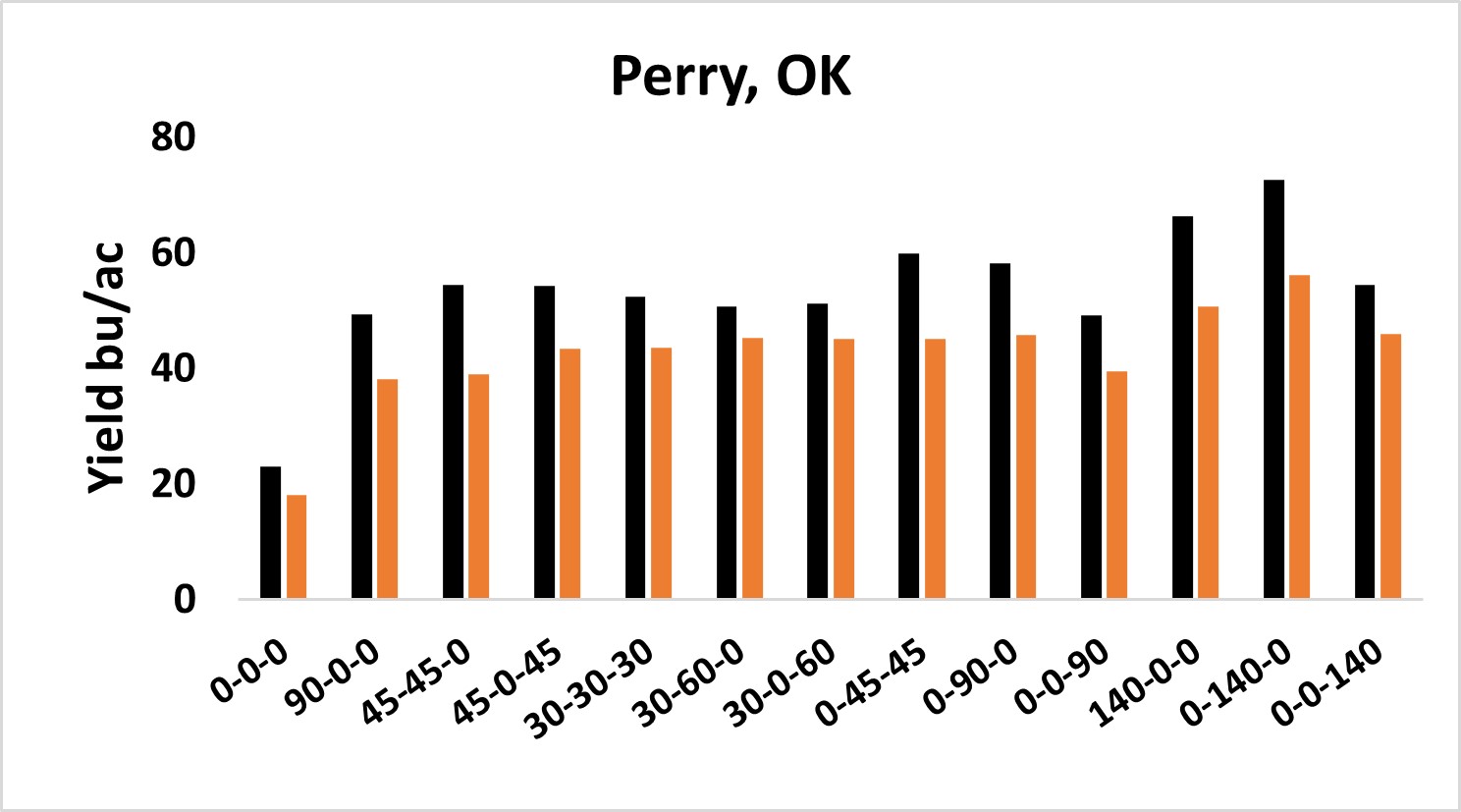
At the Perkins location the results were not much difference as far as impact of timing. In-fact except for Var 1 at Perkins 0-140-0 was statistically better than all other treatments. Also expect for Var 1 at Perry the 0-90-0 and 140-0-0 were statistically the same. In all cases 90-0-0 yielded less than 0-90-0 but it was not statistical for all comparisons.

The timing component is important as it shows that we are perfectly capable of applying N in-season and being successful. In-fact this work, and other work is starting to show that contrary to past beliefs, split application is not providing any benefit over a single well-timed application. The source of N of this project needs to be consider as the January top-dress application sat on the surface for almost a month before finally receiving just under two-tenths of an inch of precipitation. We will have another blog coming out soon looking at the impact of N sources urea versus UAN when applied in Fall, January, or March very soon.
With these results in mind and current moisture conditions it is only reasonable to consider delayed nitrogen application, not only to increase nitrogen use efficiency and possibly increase yields as well as a virtually guaranteed increase in grain protein, but also as a way to hedge your bet against fertilizer application cost. This work and all the past work support that grain only wheat does not benefit from the application of pre-plant N. By applying N fertilizer now there is a chance that it may become a sunk cost with a poor performing or even failed crop. And if it does start raining, well that pre-plant N will be right there ready to be leached. Being efficient is important in the tight years, and by delaying N application until you are sure the crop requires it may save you a pretty penny or more.
Questions or comments please feel free to reach out.
Brian Arnall b.arnall@okstate.edu
Acknowledgements: EDC Ag Products Co LLC for support of this project.
Oklahoma Wheat Commission and Oklahoma Fertilizer Checkoff for Funding.
In-season N application methods for Sorghum
Raedan Sharry, Ph.D. candidate under advisement of B. Arnall
Brian Arnall, Precision Nutrient Management Specialist
The data about to be reported is from the study we have fondly named “Burn Baby Burn”, you will see why soon enough.

Grain Sorghum production continues to be an important component of many growers crop rotations in the Great Plains. However, for many growers who focus primarily on small grains production, equipment restraints may impose limits on in season nitrogen (N) management. When producers are able to delay the application until in-season it helps to ensure that N is available to the crop at the time of increased uptake during the reproductive stages of the crops life. Producers often have access to equipment and technologies that may be used to take advantage of improved N application timing, but may worry about the negative effects that nitrogen can have if the fertilizer is inadvertently applied to plant material. An experiment was initiated in Central Oklahoma to evaluate the yield response of grain sorghum to in-season nitrogen application methods.
Trials were placed at Lake Carl Blackwell near Stillwater, Perkins and Chickasha Oklahoma and included 9 in-season fertilization methods and a 0 nitrogen control. Treatments are listed in Table 1 below.
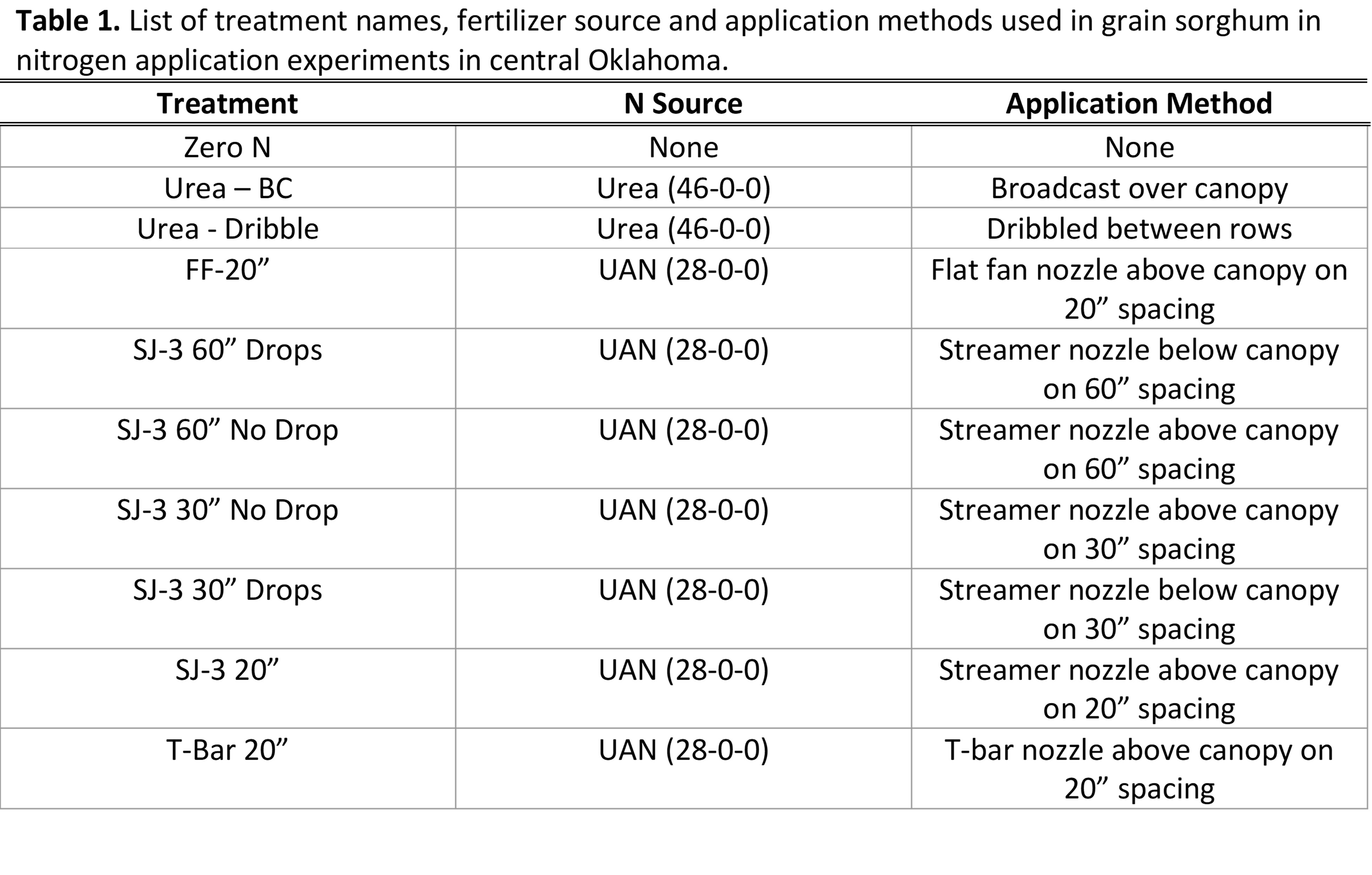
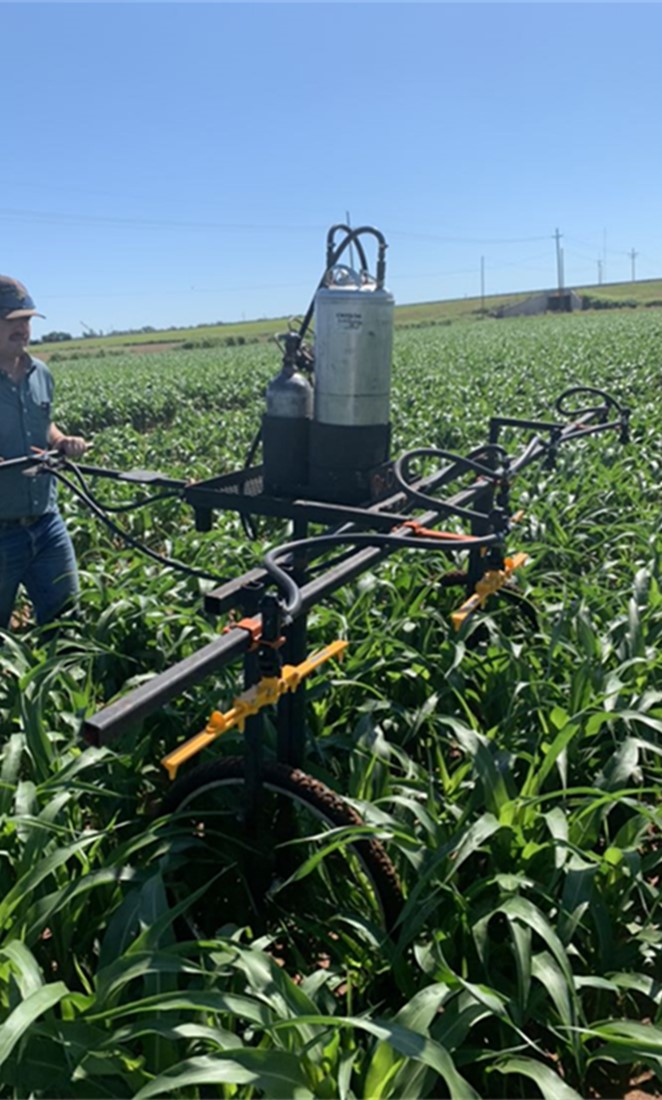
In total 120 lbs of N was applied to all treatments receiving in-season applications. 60 lbs was applied at planting to all treatments including the “Zero N Control”. The remaining 60 lbs. of N was applied according to application method in-season. The urea was applied by hand and the liquid treatments a push cart with adjustable boom height (Figure 1) was used to apply the UAN. Applications were made mid day at V8 growth stage. The temperature at the time of all applications was about 90 F and humidity below 75%. Nozzle position for 30″ and 60″ was set for between rows.
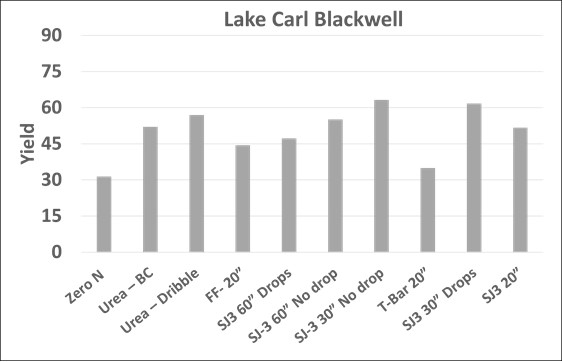
At two of the three locations (Stillwater and Perkins) the addition of 60 lbs. of N in-season increased yield above the control treatment. At the Stillwater (Lake Carl Blackwell) location there were no statistical differences (α=0.05) between in-season fertilized treatments except the T-Bar 20” treatment (Figure 2). The Perkins location (Figure 3) provided a similar result in which again there was no statistical difference between fertilized treatments, excluding the T-Bar 20” treatment.

The Chickasha location differed in that additional in-season nitrogen did not improve yield (Figure 4). While we want a response to applied N, in the case it allows use to solely evaluate the impact of burn associated with N application. The T-bar 20” treatment statistically negatively impacted grain yield and the FlatFan-20″ did at α=0.10, which means we are only 90% confident the yield lose was due to treatment. This response has been consistent across all three locations, on average decreasing yield approximately 21 bu/ac relative to the individual site grain yield average.

Even though it was mentioned for Chickasha, it is also important to note that while it was not statistically significant (α=0.05) the FF- 20” treatment (Flat Fan nozzles above canopy on 20” spacing) trended towards decreasing yields at all 3 locations and is likely detrimental to crop performance. At all locations substantial damage to leaf material was observed, similar to that pictured in Figure 5 below. Several of the treatments damaged leaf material on the plant through burn injury, but most were not negatively impactful on grain yield in the 2021 growing season. Grain sorghum yield did not benefit from moving the application point below the canopy using drop attachments, nor did adjusting nozzle spacing from 30 to 60”. Source was not a significant factor impacting grain yield regardless of it application method.

The observations from this study show that many of the in-season nitrogen application methods that are available to growers will not negatively impact yield. This however does not apply to tools such as the T-Bar. Similar tools that concentrate large amounts of N to leaf material are also likely to produce similar results. It is important to note that the T-bar was used on 20” spacings and not tested otherwise. Moving the spacing of the T-bar may lead to different results.
Growers who are looking to move N applications in their grain sorghum crop to in-season to capture the benefits associated will likely be able to with equipment that is already available to them. While leaf damage may be observed under sub-optimal application methods, damage is unlikely to contribute to significant yield loss. However, growers should keep in mind that environmental conditions may have a significant impact on the results seen from these types of application as growers should always look to limit stress to the plant when possible.
We of course will be putting out a second year of this study and will share the results when we can.
For more information or questions contact
Brian Arnall b.arnall@okstate.edu 405.744.1722
Pre-plant Irrigation
Sumit Sharma, Irrigation Management Extension Specialist.
Jason Warren, Soil and Water Conservation Extension Specialist.
Pre plant-irrigation is a common practice in Western Oklahoma to recharge soil profile before growing season starts. Pre-plant irrigation is useful when the irrigation capacity is not enough to meet peak ET demand. It can also be important to germinate and provide for optimum emergence of the crop. As such, pre-plant irrigation is not useful when the soil profile is already wet, or soil profile is not deep enough to store moisture, or if planting dates are flexible and can wait until rains can recharge soil profile. Pre-plant irrigation becomes an important consideration if the previous crop had extensive rooting systems, which depleted moisture from deep in the profile. The crops in western Oklahoma especially in the Oklahoma Panhandle depend on stored water in the profile to meet ET demand during peak growth period, especially when well capacities are limited. Deep profiles and excellent water holding capacities of soil found in the region make the storage of a considerable amount of moisture possible. While pre-plant irrigation to recharge the whole profile (which can be 6 feet deep) may not be possible or advised, producers can still use certain tools to assess the stored water in the profile and make decisions on pre-plant irrigation.
A soil push probe (Figure 1) can provide a crude estimate of the moisture in a soil profile. For example, if an average person can push the probe to 2 feet, this means that the first 2 feet of the profile has moisture stored in it. The profile beyond 2 feet is considered too dry to push the probe through. This method does not provide the amount of water stored in the profile. For accurate measurements of soil moisture, soil samples could be collected, weighed, dried and weighed again to determine the water content in the soil. An alternative is to install moisture sensors, however this is usually not practical due to potential damage during planting, although some probes that can be permanently buried are becoming available. On average a clay loam soil in western Oklahoma can hold up to 2 inches of plant available water per foot. The approximate water holding capacity of your soil can be found on the websoilsurvey. Your county extension or NRCS personnel should be able to help you navigate this website if necessary. When the water holding capacity of your soil is known, the use of a push probe can provide a preliminary estimate of soil water content. Probing should be done at multiple locations in the field on both bare and covered (with crop residue) spots. The presence of crop residue reduces evaporation and increases infiltration so the first thing you will notice is that it is generally easier to push the probe into the surface where the ground is covered by residue. If the soil water content is near full the probe will be easy to push into the soil and it may even have mud on its tip when you pull it out. In this case you can estimate that the water content to the depth of penetration is near field capacity and that the current water content is equal to the water holding capacity. For example, if you can push the probe 2 ft into a soil with a water holding capacity of 2 inches/ft then we expect to have 4 inches of plant available water. In contrast if it takes some effort to push the rod 2 ft the estimated water content may be reduced.

When pre-irrigation is applied it can be useful to assess the increase in the depth to which the probe can be pushed into the soil after the irrigation event. For example, if 1 inch of irrigation is applied to the soil in the example above, we may expect that after this irrigation event we can push the rode 2.5 ft. However, in some case we may be able to push the rod 3 ft. The reason being that although we could not push the rod beyond 2 ft before the irrigation event, the soil below this depth was not completely dry. Therefore, the 1 inch of water was able to move to a depth of 3 ft. This is useful information, telling us that the soil below the depth we can push the rod contains some water and that each inch we apply may drain a foot into the profile. Generally, we expect the rooting depth of most crops to be able to extract water from at least 4 ft. Although it is certainly possible to extract water from below this depth, we generally don’t want to pre water our soils to full beyond 4 ft. When we fill the profile with pre water, we are increasing success of the following crop by providing the stored moisture that can offset deficits that may occur in the growing season. However, we are reducing our opportunity to capture and utilize spring rainfall. We must consider this when applying pre-irrigation, because if it is followed by rainfall in excess of ET our irrigation efficiency is greatly reduced by the drainage or runoff that can occur.
Its dry and nitrogen cost a lot, what now?
The title says a lot about the primary question I am receiving right now. And the latest long range “forecast” does not make me feel any better about the current situation. But it is what it is and many great plains wheat farmers are having to make a decision.
The current situation in the wheat belt is that we are dry to depth, when the 32 inch PAW is on short supply and this comes from a combination of no rain and above average temperatures.


Fertilizer prices are holding fairly strong, at expensive, and the wheat crop currently seems to be going in reverse. So what is a wheat farmer to do? If we are looking on the bright side the lack of moisture in the surface will help reducing any potential losses through urea volatilization. It does not make the potential for loss zero though. If I am bound and determined to fertilize now, I would be very selective of the source and method of application. The biggest driver, tillage and residue amounts.
- Conventional Till / No residue (plenty of bare soil showing) and small wheat-
- UAN via Streamer nozzles
- Why: With UAN (urea ammonium nitrate) you have a liquid N source that will get onto and into the soil and readily available nitrate. Streaming on will help concentrate the fertilizer and potential reduce any urea volatilization if any dews were to occur. Urea would sit until dissolved and lead to potential losses if the first moisture was heavy dew and not a incorporating rainfall.
- UAN via Streamer nozzles
- No-till / high residue (no bare soil showing)-
- Dry Urea
- Why: If Our residue is dry when the urea is spread the wind will help push it below the residue surface providing protection until a good rain. If UAN is applied to this dry or even slightly damp residue and not washed off with a rainfall in a week or so the amount of N tied up in that residue will likely be significant.
- Dry Urea
- The big wheat (very little bare soil, lots of wheat tissue.
- Urea or UAN Streamer
- Why not Flat fan. At least with the current status the wheat is not growing and bigger wheat has increasing levels of tip die back. So while UAN sprayed on actively growing wheat can be absorbed foliarly, stressed wheat can not do it as well. Plus the UAN that hits dead or damaged tissue will not make it into the plant. The UAN applied via flat fan will need incorporation via rain in a couple days.
- Urea or UAN Streamer
You may have caught in the paragraph above I said, “If I was bound and determined”. If I had the option I am not pulling the trigger until after I have received some good moisture. I fully expect and have already seen rigs running before every decent chance of rain. Unfortunately many of those chances have not panned out and that will remain my concern moving forward. I want to make sure we have some water in the tank before investing in the system.
But now we increase the risk/fear by waiting and the question I get is what if we don’t get good rains or don’t get good incorporating rains. The short answer is, if we don’t get rains the N application is the least of our concerns. If we approach March 15th and we have not had the rains needed to put a little water in the tank and incorporate the N then we are not likely looking at a bumper crop which will need N. What survives in that scenario will be living off deep soil water, and where there is deep soil water there is a good chance of deep N. The shallow soils will be so stressed that nutrient demand will be very little.
Now lets talk waiting and applying N. How late before we just say we are done. To answer I am going to draw from a data set I talk about a lot, the delayed N work by Dr. Souza. This study was started in the fall of 2016 and concluded with the 2020 wheat harvest. In all, twelve trials were established and achieved maturity. This study was designed to evaluate the recovery of winter wheat grain yield and protein after the crop was N stressed. Treatments included an untreated check, pre-plant application and ten in-season treatments. The application of in-season treatments was initiated when N deficiency was confirmed and treatments were applied in progressive order every seven growing days to the point of 63 growing days after visual deficiency (DAVD). A growing degree days is any day that the average daily temperature is at or above 40⁰ F. Ammonium nitrate (NH4NO3) was applied at a rate of 90 lbs N ac-1 for all treatments.
With this data we can answer two questions, first at what point did we lose yield compared to pre-plant and second how late could we apply and still increase yield above the check. So comparing to the pre lets us know how long could we wait with losing yield. Across the trials we lost yield three times by waiting too long, at LCB2017b that was 4/19, Lahoma18 it was around 3/30, and then Newkirk2020 we lost yield by waiting until 4/6. This data is why I am pretty comfortable waiting until mid March when and if needed. Now if we look at the check, that will tell us if things start improving late can we get still get a yield bump with added N. Newkirk 2020 was the only time and place we could increase yield above the zero after the 4/14 additions.


Take Home Message
My recommendation is that if you are not required to take delivery or needing to cover a lot of acres, i.e. time limited, I would not get in a hurry to apply N on this wheat crop. I think if we combine weather by market this a good time to wait and see. Once we get a rain and have some soil moisture it will be time to run the rigs. The crop currently does not need a lot of N so why spend the $. If things don’t improve by mid to late march, consider the wheat a cover and look towards a summer crop with the hopes of rains in April. If you need to take the crop to yield, then you can wait a while longer and still get a return on the N, with hopes the price could come down a bit.
Finally, While I don’t suggest running fertilizer in front of the first chance of rain, I would make sure I had an N-Rich strip on each and every single field. Strips can go out well past green up and serve a great purpose. The N-Rich strip will help you determine if the crop is able to mine any soil N or if the N tank is dry.
Feel free to reach out with questions or comments.
Brian Arnall Precision Nutrient Management Specialist.
b.arnall@okstate.edu
Special thanks to EDC Ag Products Co LLC for suppling NH4NO3 used in the delayed N project.
Relevant past blogs for your reading enjoyment.

