Home » Posts tagged 'wheat' (Page 4)
Tag Archives: wheat

Nitrogen rate and timing for a forage wheat crop. Year 1 Results.
Written by
Mr. Bronc Finch, PhD. Student, Precision Nutrient Management.
Dr. Brian Arnall, Precision Nutrient Management Extension Specialist.
In cooperation with Dr. James Rogers, Noble Research Institute.
With the amount of wheat acreage in Oklahoma being utilized for grazing cattle, and much of that land grazed completely instead of harvested for grain, many questions have arose regarding the management of grazed cropland. A major question in the management of a graze-out wheat crop pertains to fertilizer management strategies. A study developed in co-operation with the Noble Research Institute is attempting to answer these questions among others. In 2019 the trial was established at three locations: near Lake Carl Blackwell in Stillwater, OSU South Central Research Station in Chickasha, and Noble Research Dupy farm in Gene Aurty, Oklahoma. Each of these three sites were setup with three nitrogen (N) treatments in Gallagher winter wheat, with 2 pre-plant applications of 60 and 120 pounds per acre, and a 60 pound pre-plant and 60 pound top-dress application. Grazing simulation harvests were taken at two times with the top-dress N being applied after regrowth was noticed following the winter season. The Dupy location was planted late and therefore only had a single harvest at the end of the season. Rising plate meter measurement were collected at feekes 7.5 and represented in the graphs below as Mid-season. The Chickasha location revealed unexpectedly high residual soil N levels, which resulted in no differences in dry matter biomass for the first harvest, which was delayed until early march due to excessive rains. The second harvest at Chickasha did show treatment differences with a 0.4 ton difference between the 60 and 120 lbs preplant N rates and increase of 0.8 ton increase over the 120 lb pre-plant when the additional 60 lbs of N was delayed. LCB had a timely first harvest in December resulting in the 120 lb N application outperforming the 60lb N applications by ≥0.33 tons. The second harvest further showed how the split application of N proves beneficial for biomass production. As the split application increased yields by 1.7 and 2.6 tons over the 120 lb and 60 lb preplant applications, respectively. The Dupy location revealed no significant difference in dry matter biomass yield between N treatments at the time of the rising plate meter measurements or for the final cutting.

Figure 1. Dry matter harvest results for each of the harvest dates from the graze out wheat trials from the Chickasha, Lake Carl Blackwell, and Dupy locations for three fertilizer treatments. 60: 60 lbs of nitrogen applied preplant, 120: 120 lbs of nitrogen applied preplant, 60/60: Split application 60 lbs of nitrogen preplant and 60 lbs applied top-dress. Dupy only had one harvest date, the Mid-season yield is estimated via rise-plate measurements taken at Feekes 7.5.
The Chickasha and Lake Carl Blackwell (LCB) locations produced an increase in total yield with both the increase of applied N and the split application of N. The 60 lb increase in applied N at preplant, 60 lbs vs 120 lbs, produced a 0.7 and 1.2 ton increase in total dry matter harvested at Chickasha and LCB, respectively. As expected an increase in N increased the yield of wheat biomass for grazing production. The top-dress application, which was made as a late season post Feekes 6 (hollow stem), produced more biomass for graze-out wheat production. The split application of 60 lbs of N preplant and 60 lbs of N top-dress increased dry matter by .8 and 1.3 tons over 120 lbs applied preplant at Chickasha and LCB, respectively. Chickasha yielded higher biomass production than the LCB location due to increased residual N.

Figure 2. Total dry matter harvest results for the graze out wheat trials from the Chickasha, Lake Carl Blackwell (LCB), and Dupy locations for three fertilizer treatments. 60: 60 lbs of nitrogen applied preplant, 120: 120 lbs of nitrogen applied preplant, 60/60: Split application 60 lbs of nitrogen preplant and 60 lbs applied top-dress.
For the following discussion remember that protein is determined by N concentration, so that a increase in N uptake is the same as an increase in protein. Evaluation of the N uptake (% N in the biomass x amount of biomass harvested) over the season revealed treatment effects at all locations, which was not seen from biomass yield. Chickasha and LCB revealed a 20% or greater increase in N uptake with the 120 lb application over the 60 lb application of N at pre-plant. The late season top-dress application yielded a 3, 27, and 27 percent increase in uptake for Chickasha, LCB, and Dupy locations, respectively, over the 120 lb pre-plant application. Although, these results are expected from these results, there are a few things we did not expect. The 120 lb N application did not increase the N uptake above that of the 60 lb application. However, the split application of N resulted in an additional >40 lbs uptake, aka increased protein.
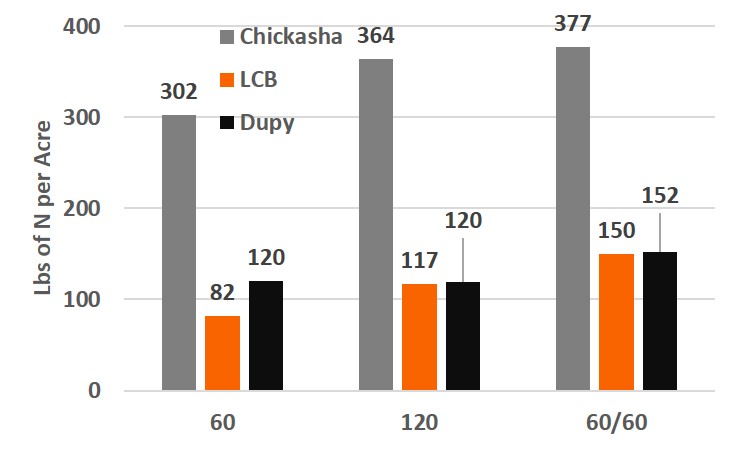
Figure 3. Total nitrogen uptake results for the graze out wheat trials from the Chickasha, Lake Carl Blackwell, and Dupy locations for three fertilizer treatments. 60: 60 lbs of nitrogen applied preplant, 120: 120 lbs of nitrogen applied preplant, 60/60: Split application 60 lbs of nitrogen preplant and 60 lbs applied top-dress.
This study also includes summer forages with and without additional fertilizer. The study will be continued for multiple years on the same locations to evaluate the impact of management on production and soil characteristics. But one surprising note has already been made, in all three locations a greatly delay top-dress still increased N-uptake. In two location it significantly increase yield and protein. This data is falling in line with the grain only data (How late can you wait) showing that an application of N at Feekes 6 (Hollow stem) and even shortly after can provide positive return on investments.
For any questions for comments please contact
Brian Arnall
b.arnall@okstate.edu
405-744-1722
DAP in short supply? Revisiting, DAP vs MAP, Source may matter!
From mid August through October, fertilizer applicators and grain drills are running across the southern great plains wheat ground. Di-ammonium Phosphate (DAP 18-46-0) is maybe the most popular form of phosphorous (P) utilized in wheat production today. DAP delivers a high content of nitrogen (N) while efficiently binding the toxic aluminum (Al) ions low pH soils. However due to the flooding that occurred throughout the spring the Ports have been closed and DAP could be in short supply. I have heard that many companies and Co-ops have already sourced Mono-ammonium phosphate (MAP 11-52-0) to supplement the lack of DAP for our early planted wheat crop. With this happening, I wanted to share some points about the two sources. In a broadcast incorporated scenario I do not have much preference for one over the other. It is when producers are applying the fertilizer in-furrow or applying to alleviate Al toxicity that source can matter. As described in the post below, in a soil with a neutral pH DAP and MAP perform equally well. So in this scenario I give MAP a slight edge over DAP if the price is the same. I say this as you can run less material per acre with MAP and refill a little less often. Many worry about the drop in N delivered with MAP versus DAP but in my work I see that is the P in the starter that gives us a good response and not the N, which can be delivered with pre-plant or top-dress. However, DAP wins out in soils with a pH below 5.5. The original blog below shows the results when DAP and MAP are banded in acidic soils using the same rate of P per acre. The reason we see this happen is that when MAP dissolves it forms a slightly acidic solution (approx 4.0) while DAP will dissolve to form a slightly basic solution (approx 7.5). In our work BOTH DAP and MAP increased yield above the check in acidic soils, which goes to show MAP is an affect tool for short term remediation of aluminium toxicity (Band P for Al toxicity Blog). However it might require more MAP per acre to reach the equivalent results. Because of what we saw when comparing the two sources at equivalent rates of P, I would recommend increasing the rate of P2O5 from 30 lbs per acre to 35 or 40. This would be going from 65 lbs of DAP to 67-77 lbs of MAP per acre.
So the take home would be as this wheat season takes off and you find that DAP is hard to locate and you A) Have overall neutral (5.5+) pH levels do not hesitate using MAP. Run the normal amount of material getting a few extra lbs of P or apply less material to get the same amount of phosphate. B) Have a acidic situation and are banding to alleviate aluminum toxicity use the same amount of material or a little bit more. Keep in mind in acidic soils with a low soil test P level you have to apply enough phosphate to take care of the Al and enough to take care of the P deficiency. Note the results of the NPKS wheat response strip (NPKS BLOG)
Original Post Published July 18, 2016
DAP vs MAP, Source may matter!
Historically the two primary sources of phosphorus have had different homes in Oklahoma. In general terms MAP (11-52-0) sales was focused in Panhandle and south west, while DAP (18-46-0) dominated the central plains. Now I see the availability of MAP is increasing in central Oklahoma. For many this is great, with MAP more P can be applied with less material. which can over all reduce the cost per acre. There is a significant amount of good research that documents that source of phosphorus seldom matters. However this said, there is a fairly large subset of the area that needs to watch what they buy and where they apply it.
If you are operating under optimum soil conditions the research shows time and time again source does not matter especially for a starter. In a recent study just completed by OSU multiple sources (dry, liquid, ortho, poly ect ect) of P were evaluated. Regardless of source there was no significant difference in yield. With the exception of the low pH site. The reason DAP was so predominate in central Ok, soil acidity. See an older blog on Banding P in acidic soils.
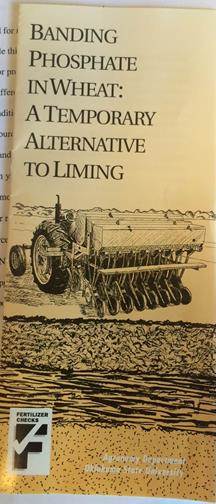
Figure 1. The cover of an extension brochure distributed in Oklahoma during the 1980s.
When DAP is applied, the soil solution pH surrounding the granule will be alkaline with a pH of 7.8-8.2. This is a two fold win on soil acidity aka aluminum (Al) toxicity. The increase in pH around the prill reduces Al content and extends the life of P, and as the pH comes back down the P ties up Al and allows the plant to keep going. However, the initial pH around the MAP granule ranges from an acid pH of 3.5-4.2. There is short term pH change in the opposite direction of DAP, however the the Al right around the prill becomes more available and in theory ties up P even faster.
Below is a table showing the yield, relative to untreated check, of in-furrow DAP and MAP treatments in winter wheat. The N401 location had a ph 6.1 while Perk (green) has a pH of 4.8. At Perkins in the low pH, both forms of P significantly increased yield, almost 20 bushel on the average. DAP however was 5 bushel per acre better than MAP. At the N40 site the yield difference between the two sources was 1 bushel.
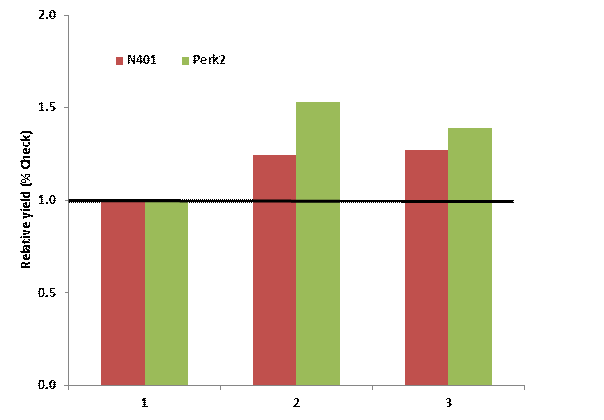
Relative yield winter wheat grain yield MAP and DAP both applied at equal rates of P (32 lbs P2O5 ac) when compared to a untreated check.
In general it can be said that in acid soils DAP will out preform MAP while in calcareous high pH soils MAP can out preform DAP. So regarding the earlier statement about the traditional sales area of MAP or DAP if you look at the soil pH of samples went into the Oklahoma State University Soil, Water, and Forage Analytical lab the distribution makes since.

Average soil pH of samples sent into OSU soil water forage analytical lab by county.
In the end game price point and accessibility drives the system. In soils with adequate soil pH levels, from about 5.7 to around 7.0, get the source which is cheapest per lbs of nutrient delivered and easiest to work with. But if you are banding phosphorus in row with your wheat crop because you have soil acidity, DAP should be your primary source.
How long can wheat wait for Nitrogen? One more year of data.
Update to the delayed nitrogen study.
Joao Bigatao Souza, PhD. Student Precision Nutrient Management|
Brian Arnall Precision Nutrient Management Extension Specialist.
Due to the surprising results seen from the delayed N study that was first reported below we repeated the the study for a third year at two locations, the Lake Carl Blackwell Research farm near Perry OK and the Ballagh Research Farm near Newkirk OK. Due to the excessive rain fall the wheat was planted and trials established later than normal and a cool winter and spring and winter the crop green up (end of dormancy) was delayed compared with the two first cropping seasons. For this season we started applications before visual symptom difference between the N-rich Strip (pre-plant) and the rest of the field actually occurred. This can be seen with the pre-plant dates of late Oct-Early Nov and the notation of visual difference above the yield bars. Just as the other two previously crop years, the timing of the application did impact wheat yield and protein. In this season at LCB we see a increase in yield with application of N during the first part of March compared to the preplant with yields dropping off below the preplant when N was applied in mid April. At the Ballagh farm there is no yield benefit from delaying N after preplant but there was steady increase in protein, again at this location yield is lost when N was delayed past mid April. In both of these locations mid April was after the growth stage of Feekes 7. After three cropping seasons with some extremely different weather patterns we saw that in this work, pre-plant N was never better than in-season N applied prior to mid April, Feekes 7. In most cases N applied in-season yields and protein values were greater than that of the pre-plant treatment. My take home message from this project is multi fold; First, pre-plant may be cheaper and easier but it often falls short of in-season applications, Second that there should be no reason to rush putting top-dress nitrogen on. The application window is much wider than most ever expected and the closer we get to peak demand the better the yield and quality will likely be. And third, and final make the application of nitrogen when the conditions are the most conducive to getting the N in the ground and limiting losses.
Note: This trial used ammonium nitrate as its N source to evaluate the plants response and remove potential fertilizer efficiency problems. However while these trials were being conducted mirror studies using Urea as the N source were also being conducted. Those results are currently being compiled right now and we hope to share the results soon.

Grain yield and protein results from the delayed nitrogen study preformed at the Lake Carl Blackwell near Perry in 2018-2019. 11/7/2018 was the pre-plant application date.

Grain yield and protein results from the delayed nitrogen study preformed at the Ballagh research farm near Newkirk in 2018-2019. 10/24/2018 was the pre-plant application date.
Questions for comments feel free to contact me via email at b.arnall@okstate.edu
Original Post made Oct 1, 2018
How long can wheat wait for Nitrogen?
Joao Bigatao Souza, PhD. Student Precision Nutrient Management|
Brian Arnall Precision Nutrient Management Extension Specialist.
The N-rich strip method allows wheat producers a greater window of decision making regarding the application of nitrogen (N) fertilizers. Besides having greater accuracy in N rates than standard methods (based on the SBNRC – OSU) also helps to reduce costs in the production system and to preserve the environment avoiding over N applications.
With the experiments performed in the last two crop seasons (2016/18 and 2017/18), we can now be even more accurate with regard to the best application time to increase the N use efficiency by the crop. The objective of our study was to determine the impact of prolonged nitrogen deficiency on winter wheat grain yield and protein. Eight studies were conducted with 11 N application timings in no-till dryland conditions. A pre-plant treatment of 90 lbs ac-1 of N was broadcast applied as ammonium nitrate (AN). We used AN as our source because we wanted to measure the crops ability to recover and eliminate the impact of source efficiencies. When visual symptom differentiation (VSD) was documented between the pre-plant and the non-fertilized check, i.e the N-Rich Strip showed up, top-dress applications were performed every seven growth days (GDD> 0) (https://www.mesonet.org/index.php) until 63 growth days after VSD at all sites. The only N the treatments received where applied according to treatment structure. No preplant N was applied other than trt 1, and all locations had residual N under 15 lbs 0-6” sample.
The first visual response to fertilizer N ranged from November 11 to February 5 (Table 1). The soil can have residual N from the previous season which can supply the subsequent crop in the beginning of the development what makes the wheat not demonstrate any sign of stress in the early season. For example LCB2017 a and b which were located 100 yards apart but under a different point in the crop rotation (LCBa was wheat after wheat and LCBb wheat after canola) had a 30 day difference in date of first N response. This range in first and last dates allowed us to evaluate N application over a wide range of dates and determine whether the first sign of stress is actually the best indicator of top dress application timing.
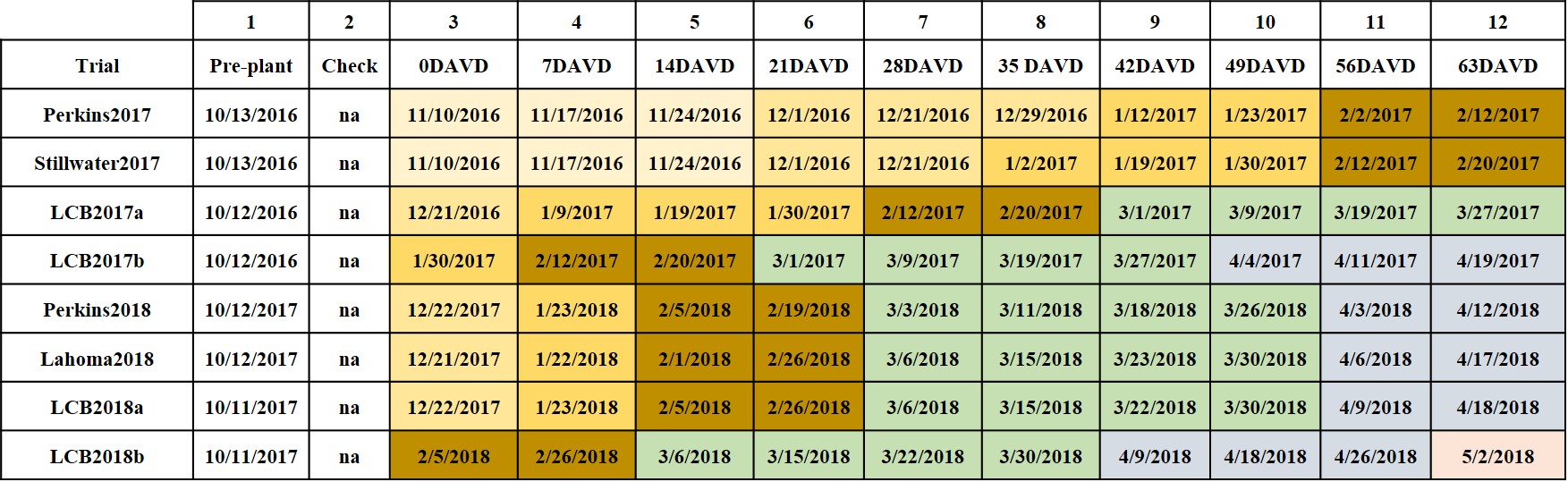
Table 1 shows the planting date, date of first visual difference (0DAVD) and each of the application dates for all locations. Different colors represent individual months. Hollow stem occurred approximately Feb 20 in the 2017 crop and March 10th in the 18 crop.

Image of the 2016-17 Perkins location. Image collected March 21 2017.
As shown in the Tables 2 and 3 below only three of the 78 comparisons made back to the pre-plant application were significantly less in terms of grain yield. All three of these comparisons where from when N application was delayed until late March or April. When the delayed applications were compared to 0DAVD yields only two of the 68 comparisons showed a significant decrease on yield. One was the pre-plant application for LCB2017a while the other were the 63DAVD application for LCB2017b. In most locations applications made in March yields were at the highest point, however when delayed till April yield trends on the downward trend. The 2017 crop reached hollow stem (Feekes 6) around Feb 20th while the 2018 crop reached hollow stem around March 10th.
Grain protein concentration was decreased only once when compared to both the pre-plant and 0DAVD treatments. This one timing, LCB2018b 64DAVD, was the only application made in May. During this time the crop was in the early stages of grain-fill. In all locations delaying N application until February/March increased grain protein content above the check, and in most cases above the 0DAVD trt.

Tables 2-3 shows the winter wheat grain yield and protein concentration, respectively, of all treatments. The colors of the cells represent statistical difference from the Pre-plant treatment. Treatments with cells shaded yellow are equal to the pre-plant, Green is statistically greater than while red is statistically less than the pre-plant treatment.

2016-2017 Delayed nitrogen winter wheat grain yield and protein results. For the locations of Perkins and N40 the Dec-1 application has a higher yield due to a 2x application of N to equal 180 lbs.

2017-2018 Delayed nitrogen winter wheat grain yield and protein results. The Perkins location in 18 was the only location in the study which did not have a statistically significant response to added N.
All the data was combined and plotted by cumulative GDD’s>0 from planting (GDDFP) across all locations to determine a general “best” timing. Using the pre-plant application yield as a base there was no yield loss if the applications was made prior to the 143 GDDFP. When the results were normalized by 0DAVD N there was no yield loss if the applications were made prior to 130 GDDFP. The quadratic model created provides the opportunity to identify the point of highest grain yield, which was approximately 94 GDDFP. In terms of the relationship between the application of N based on GDDFP and % of protein content on the grain, a linear response of N delay application observed for grain protein concentration. Our results suggest that the later the application, the higher the protein % in the grains.

Growing degree days > 0 from planting and equivalent calendar days for all experimental sites (Lake Carl Blackwell, Perkins, Lahoma, Stillwater) utilized in the study evaluating the impact nitrogen fertilizer timing on winter wheat, conducted in north central Oklahoma over the 2016-2017 and 2017-2018 winter wheat growing seasons.
We have concurrent work looking at similar approaches with other sources of N such as Urea and UAN. While all of these studies are being continued the past two years of work have presented some easy take homes.
First: Timing of N application does matter, but yellow wheat does not necessarily mean yield loss.
Second: Two years in a row ALL Nitrogen could be delayed until hollow stem without yield Loss, in fact yields of trts with N applied at this time typically better than that of the pre-plant.
Third: Protein content increased as N applications was delayed.
Fourth: The conclusions of this and other studies support that N-Rich Strip concept does not increase risk of lost yield.
Fifth: Applying the majority of the N at or just after hollow stem maximized grain yield and protein with a single shot.
Sixth and Final: Be more concerned about applying N in an environment conducive to increased utilization and less about applying at the first sign of N stress. Take a look at the wheat N uptake curve by K-State.The crop really doesnt get going in terms of N-uptake until jointing i.e. hollow Stem.

Wheat N-uptake. Figure adapted from Lollato et al.
Questions for comments feel free to contact me via email at b.arnall@okstate.edu
Managing Protein in Hard Red Winter Wheat_Repost and Update.
As I write this on May 5, 2019, the wheat is at or nearing flowering and Stillwater just received another 2.22 inches last night helping the 30 day rain total to be just shy of 9 inches. Its wet, cool, and the wheat has truly gone from rags to riches (the crop not the market). I have been regularly fielding calls on late season N and protein. I thought it would be a good time to repost my previous protein blog and add some thoughts and updates. Since the original post we have more data on nitrogen (N) timing work and one year of data from a trial we call “Protein Progression”. First if you are interested in the timing study the full blog summarizing 2 years of work can be seen here How long can wheat wait for Nitrogen? . But the short short version was that two years in a row delaying the application of ANY nitrogen until very late in the season, past hollow stem, resulted in the best combination of yield and protein. Meaning even when wheat was yellow and stunted yields and quality recovered when N was applied at or shortly after hollowstem. This work is being continued and expanded this year. I have only shared the Protein Progression results in a few presentations, because they do not tell a consistent story. For a few years now I have been giving this advice when asked about late season nitrogen. Based upon the work I have done, this year is my 11th wheat crop in this position and I have always had at least 1 study with late N, that when nitrogen was applied at flag leaf the probability of a positive return on investment was below 50% and closer to 33%. Very seldom did I see the flag leaf applications of nitrogen provide much benefit. At the flag leaf stage when there was a positive benefit it could be yield, protein or both. When it came to anthesis (flowering) applications the probably increased to closer to a 66%-75% chance of positive impacts (Understand these percentages are drawn from my experiential learning across many environments, I have not yet run the data to determine exact values). Late applications in the right environment could increase protein by up to 2% and in the wrong environment, devastate yield due to burn. The weather needs to be cooler and humid to reduce the potential of burn and the rate of nitrogen must high enough to actually impact protein levels. Per each 1% of protein concentration of wheat grain there is 0.1 lbs N per bushel. So to increase to increase the protein content of a 60 bushel wheat crop by 1%, 6 lbs much be converted from fertilizer to protein. To get this amount of nitrogen on the crop without burning it up I have been using UAN (28-0-0) and water at a ratio of 1:1 putting on 20 total gpa. When applied this way I have not seen burn, I do however avoid spraying when its hot, windy with low humidity.
Below are last years results of the Protein Progression study. In this I wanted to look at N application timing pre vs post, the addition of sulfur (many sources state added sulfur increases yield), flag and anthesis application. Last year we had locations near Stillwater (LCB) and Chickasha. Both yielded in the 60 bushel range which was OK but well below the five year average of both sites. At the LCB we saw a great response to N fertilizer. The more it was delayed the better off yields were. We saw a consistent negative impact of S at top-dress, which is a result I can not explain, there was no crop damage due to application. The flag leaf N application significantly increased yields, at flag leaf there was evidence of N deficiency. And the anthesis application of N had no impact on protein. At Chickasha where the none fertilized check yielded 53 bushels, the response to N was reduced. Sulfur had no impact on yield or protein, flag lead N and anthesis N increased protein by about 1%.
What did I learn from those studies, I confirmed the response to late N is not very predictable. The low protein site (LCB average protein of 11.75) did not respond to late N but the high protein location (Chickasha’s average protein content was 15%) did. I was able to see N at flag leaf did impact yield when N deficiency was noted. It also confirmed this study will be continued for multiple years. The more environments we can get data from the better we can predict response/non response.

Results from the 2017-18 Protein Progression Study. The graphic on the left is from Lake Carl Blackwell near Stillwater, the center table is the treatment structure and the graphic on the right includes the yield and protein results from Chickasha. Nitrogen rate (pre + top) was 120 lbs N per acre, top-dress S rate was 10 lbs. The nitrogen rate at flag leaf and anthesis was 24 lbs N per acre, while the anthesis S rate was 10 lbs. N source was UAN for all application and S source was ammonium thiosulfate. For flagleaf and athesis applications water was used as a carrier at a 1 to 1 ratio with the fertilizer.
If you have any questions feel free to send me an email at b.arnall@okstate.edu.
Brian
Original Post Sept 27, 2017
A result of the 2016-17 winter wheat crop was a significant amount of discussion focused on protein levels. For two years running now, the protein levels have been low across the board. Low protein brings in a challenge to sell, could impact local basis, and even more concerning is that low protein is an indicator that nitrogen was limiting during grain fill. Therefore, the field maximum yield potential was not achieved. In this blog, we talk about what protein is, what can be done to maintain a good protein level, and what can be done to increase protein if desired.
First, the definition of protein is any of a class of nitrogenous organic compounds that consist of large molecules composed of one or more long chains of amino acids and are an essential part of all living organisms, especially as structural components of body tissues such as muscle, hair, collagen, etc., and as enzymes and antibodies. Protein is also one of the many attributes that determines end-use quality and marketability of winter wheat. Sunup TV met with Dr. Carver in the baking and milling lab to create a great video discussing wheat quality impact on baking and milling.
We determine protein by measuring the percent of nitrogen in the grain and multiplying by a factor of 5.7. So if the grain has N % of 2.5, the protein content is 14.25. The amount of N in the grain is affected by many variables such as weather during grain fill, yield level, and N availability during grain fill. If weather is conducive to good grain fill and test weight is high, we will often see protein values dip. On the other hand when grain fill conditions are hot and dry and we have light test weight, wheat protein will be higher. Research has shown (Figures 1 and 2) that generally as yields increase protein levels decrease. Of course if N is limited during grain fill, the N available for the grain is reduced, and the plant is forced to get all grain N from re-immobilizing N in the leaf tissue.
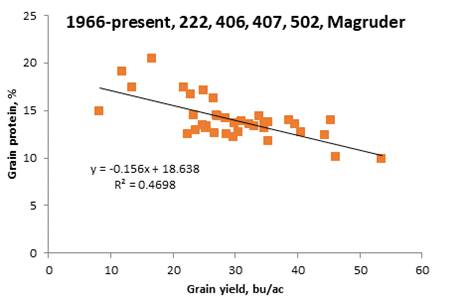
Fig 1, Yield and protein averages from all of the OkState Long Term fertility trials. Data courtesy Dr. Bill Raun.

Fig 2, Grain protein and yield of from intensively managed wheat. Data Courtesy Dr. Romulo Lollato KSU.
Maintaining Protein, and yield.
Managing nitrogen to maintaining protein and maximizing yield comes down to making sure that N is available at critical growth periods. With wheat, the critical uptake stage is typically the time frame between hollow stem and soft dough. The two graphs below show nitrogen uptake in wheat and barley. If the same graph was made for dual purpose wheat, the upward swing would start sooner but would follow the same general trend.

Fig 3, Nutrient Uptake of Wheat found in “Agricultural and Biological Sciences » “Crop Production”, ISBN 978-953-51-1174-0, Chapter 5 By Juan Hirzel and Pablo Undurraga DOI: 10.5772/56095″

Fig 4, Nitrogen uptake in Barley at two nitrogen rates. http://apps.cdfa.ca.gov/frep/docs/N_Barley.html
When it comes to making sure N is available during this time of peak need, the only way we can do that is apply just before it is needed. This means split application. While putting all the nitrogen out pre-plant as anhydrous ammonia is the cheapest method, it is also the method that provides the lowest nitrogen use efficiency and is most likely to show deficiencies late in the season. One of the challenges with 100% preplant N application is that years with good yield potential coincide with years with good/high high rainfall, which means more nitrogen loss. Some interesting results from studies implemented in the 2016-17 cropping season showed the importance of nitrogen application timing. The study is determining how long nitrogen application can be delayed after the N-Rich strip becomes visible (https://osunpk.com/2013/09/19/nitrogen-rich-strips/). For the study, 90 lbs of N was applied on one of the treatments at planting When that plot became visibly greener or bigger than the rest, N application was triggered. After the 0 DAVD (Days after visual difference where the day had growing degree days >0), another treatment was applied every 7 growing days for 63 growing days. Each plot, excluding the zero N check, received 90 lbs as NH4NO3 (we use this to take the variable of volatilization out of the data). In all cases, 90 lbs applied in late January to early February was better than 90 lbs pre-plant. Keep in mind there was 0 N applied at planting for each DAVD application timing; yet, we still hit 50-80 bushel wheat with nothing but in-season N. This is the result of supplying the N when the plant needs it. I should add this is just one year of data, and every year is different. The study is being replicated again this year and will be highlighted at the Lahoma field day.
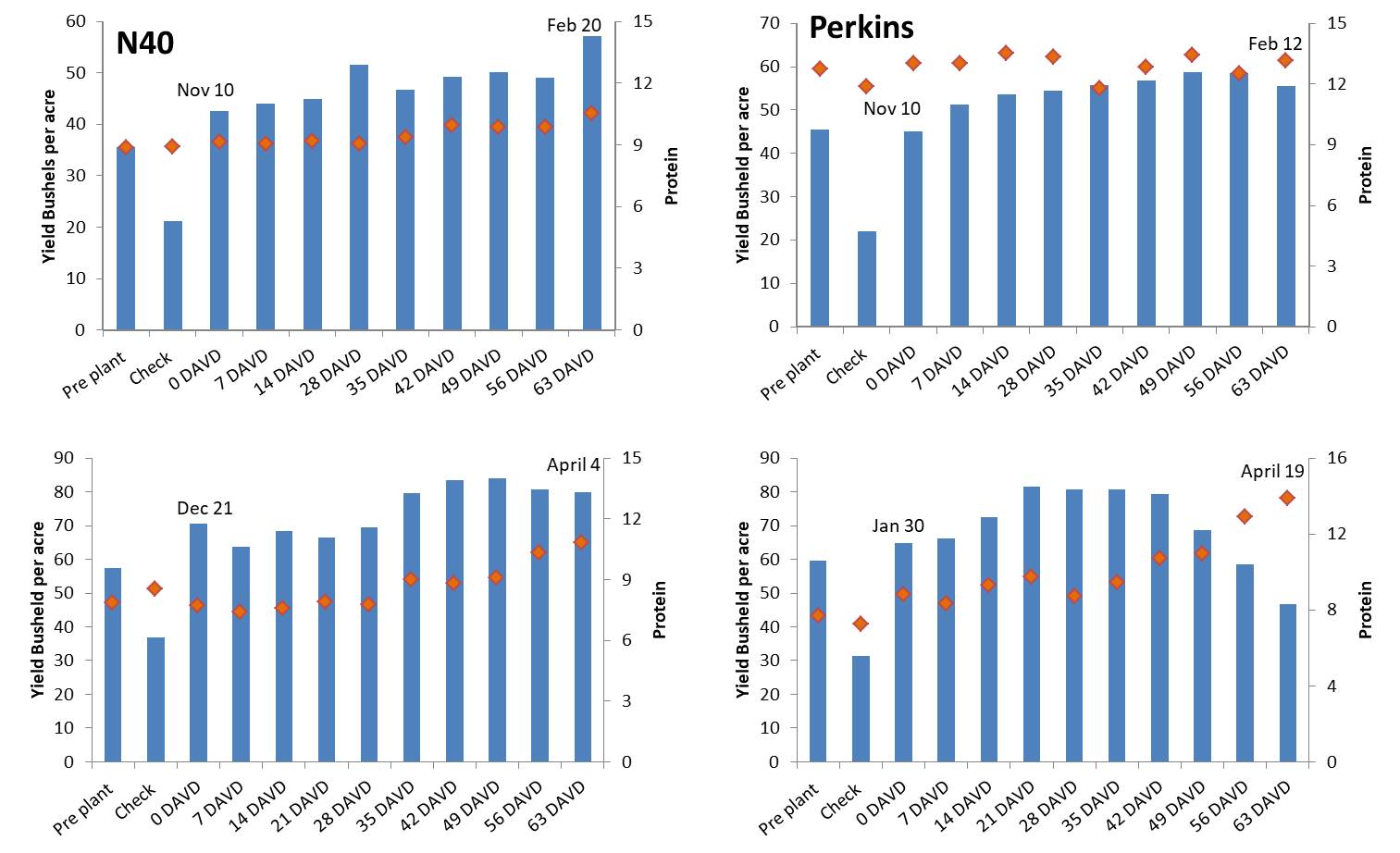
Fig 5, Results from the 2016-2017 delayed nitrogen study led by Mr. Joao Bigato Souza. The trials consisted of a preplant plot, unfertilized check plot, and then a series treatments in which N application was based on days from a visual difference between the pre-plant and check. All fertilized plots received 90 lbs N as NH4NO3. DAVD is days after visual difference. (Error in bottom left graph, the last date should be March 27 not April 4)
For dual-purpose wheat, the total amount of N expected for the forage production needs to be applied pre-plant. Oklahoma State recommends 30 lbs N for every 1,000 lbs of forage expected For grain-only wheat, there needs to be only 20 to 40 lbs of N available to the crop when planted (this includes residual N). The remaining N should be applied at green up or early spring. The only way to ensure that N is applied when the crop needs it is to utilize the N-Rich Strip method. Having a N-Rich strip in your field lets you know when the wheat needs more nitrogen and when it does not.

Fig 6. Nitrogen Rich Strip (N-Rich) showing up in a No-till wheat field.
Two years testing the N-Rich Strip and Sensor based nitrogen rate calculator (SBNRC) from the Texas boarder to the Kansas boarder showed that the SBNRC on average reduced N but maintained yield and protein when compared to standard farmer practice (Table 1).

Table 1. Results from testing the Nitrogen Rick Strip and Sensor Based Calculator Method across Oklahoma wheat fields.
Increasing Protein
Some producers may plan to market high protein for a premium if available. Fortunately, there are opportunities to increase protein via management. While most of the strategies for increasing protein happen later in the growing season, some of the early decisions can be a significant contributing factor. Variety selection and keeping the plant healthy and free of competition (i.e., pest management) throughout the growing season are going to increase the opportunity to produce high protein wheat. After that, the equation goes back to Figures 3 and 4 and making sure the crop has access to nitrogen during peak periods, including grain fill. If you will note, the bottom two graphs of Figure 5 both show significant increases in protein on the later applications. For both locations, this was when N (90 lbs N ac-1) was applied after full flag leaf emergence. There has been a significant amount of work at OSU looking at late application of N stretching back into the 1990s http://nue.okstate.edu/Index_Publications/Foliar_N_Curt.pdf. The focus has been looking at timing, source, and rate. The take home of decades of work can be summarized as such. Yes, protein can be increased with late season application, but not always. Applying N at or after flowering has a significantly greater probability of increasing protein than a application at flag-leaf. Source of N has had little impact if managed properly (UAN, 28-0-0, has to be watered down so that it does not burn the plant). The rate of N does matter quite a bit. Most of the work suggests that for every pound of N applied, the percent grain protein could increase by .05%. So to increase protein from a 12.5% to 13.5%, it would require approximately 20 lbs of N per acre. My work has shown the same trend that a 20 lbs application at post-flowering had more consistent increases in protein than lower rates at the same time or similar rates applied at flag leaf.
This wheat season we are looking to improve our knowledge of management on protein content through multiple studies by continuing the evaluation of varieties and management practices.
If you have any questions for comments please feel free to contact me.
Brian A.
B.arnall@okstate.edu
Rain makes grain, but also washes Nitrogen away.
Precipitation in the southern Great Plains is never something you take for granted. As I write this blog I am just wondering when it will be dry enough for long enough to finishing sowing my wheat, but I also remember just how dry it was last winter. The last three months, Aug-Oct rank as one of wettest in the states recorded history. Below are the 30, 60, and 90 day rain fall totals (as of 10.26.18) from Mesonet. By the 60 day map most the wheat belt is showing double digits and the 90 day maps shows a lot of our graze out wheat regions in the 20+ inch realm.
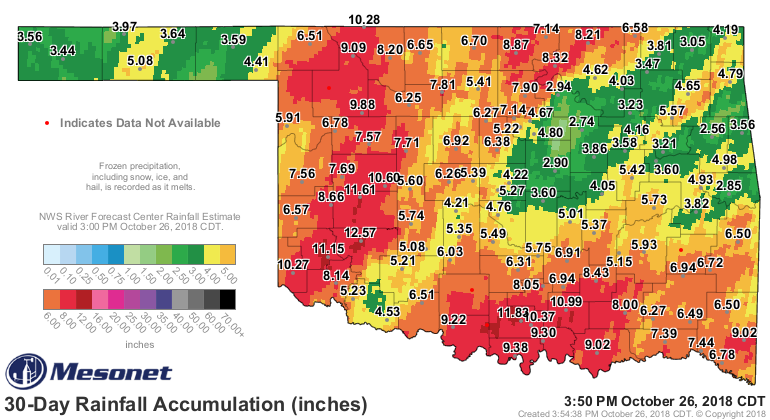
30 Day rainfall totals retrieved from Mesonet on 10.26.18. Putting recording window from Sept 26-Oct 26. http://www.mesonet.org/index.php/weather/category/rainfall

60 Day rainfall totals retrieved from Mesonet on 10.26.18. Putting recording window from Aug 27 – Oct 2 http://www.mesonet.org/index.php/weather/category/rainfall

90 Day rainfall totals retrieved from Mesonet on 10.26.18. Putting recording window from July 28-Oct 26 http://www.mesonet.org/index.php/weather/category/rainfall
I bring up graze-out wheat for a reason, to get as much forage as possible it is planted as early as possible. I know of fields that were seeded in July and early August. And to produce this great quality forage, nitrogen fertilizer is applied pre-plant. It just so happens that this July more fertilizer was sold than any other month since I have been in Extension. In July producers bought nearly 1/3 of totoal tons of fertilizer what is typically sold in a single year. While a portion of this may have been pre-purchased for later delivery, I know a lot of it made it to the field. To see why this matters, lets take a look at the nitrogen cycle.

Complete Nitrogen Cycle. http://psssoil4234.okstate.edu/lecture
The nitrogen cycle is made up of a central component (Organic Matter), three N sinks (Microbial/Plant, Atmosphere, Nitrate {NO3}), four loss pathway (Ammonia Volatilization, Leaching, Plant Loss, Denitrification), and five additions (N2 Fixation, Fertilization, Lightning/Rainfall, Industrial Fixation, Plant/Animal Residues). We are going to spend the next bit talking about what is happening in the bottom right corner and left hand side.
When we put anhydrous ammonia (NH3) in the soil it pulls a hydrogen (H) from water and turns in to ammonium (NH4). Urea goes through a similar process but has to first be converted to NH3 by the enzyme urease. Ammonium is important because it is a positively charged ion (cation) which will be fixed on the cation exchange sites. This means is it not going to move around in soil, but is readily available for plant uptake. However when NH4 is in a soil with temperatures above 50 degrees and in the presence of oxygen the two bacteria nitrosomonas and nitrobacter convert it to NO3. Given warm soils and our good soil moisture levels it very likely that any N applied in July or August would have converted 50% or more of its NH4 into the NO3 form by this point.
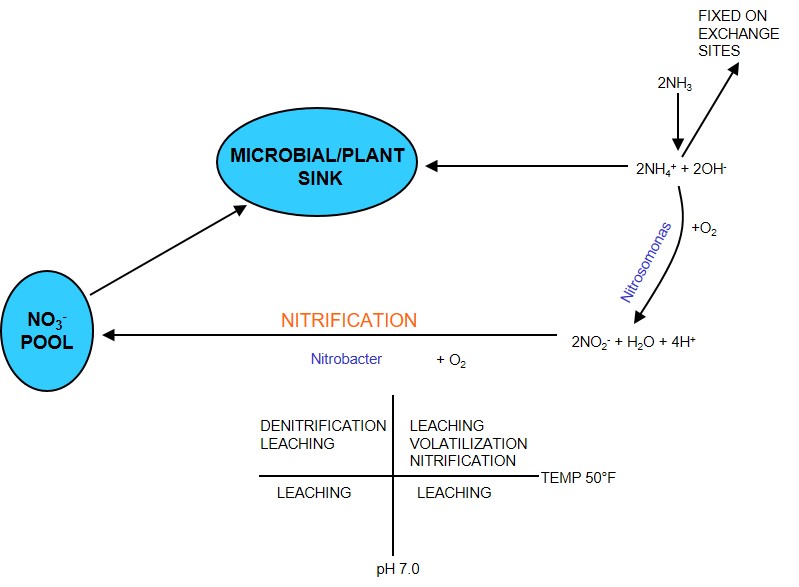
Nitrification portion of the Nitrogen Cycle. Complete Nitrogen Cycle. http://psssoil4234.okstate.edu/lecture
Nitrate is a negatively charged ion (anion) which is repelled from the negatively charged soil. This is beneficial for plants as when they take up water, NO3 is taken up though mass flow. The downside is that since NO3 is in the soil solution, where ever the solution goes so does the NO3, that is called leaching. So in well drained soils the recent rains will have caused a fair amount of leaching. For some areas the NO3 that is leached below the root zone and could potentially be drawn back up as the soils dry. But there are going to more scenarios in which the N is gone, or at least gone elsewhere. In a sloping field the soil water will hit a limiting layer or clay increase layer and move down slope. I have already seen many wheat fields that are showing yellowing on side slopes.
Unfortunately leaching isn’t the only way we are losing N during this wet cycle. Denitrification occurs when the soil is saturated and oxygen (O) levels are depleted. In anaerobic conditions, microbes strip O from NO3 reducing it gaseous forms. Typically it takes about one week of standing water to start seeing high levels of denitrification.

Nitrate loss pathways of the Nitrogen Cycle.
Complete Nitrogen Cycle. http://psssoil4234.okstate.edu/lecture
What does this all mean? Conservative guess is that for July or early August applied N we could be looking at losses of 50% or more. This is a rough guesstimate of course, a fields soil texture, slope, soil type, tillage etc will all impact the loss amount. As the date of application moves closer to Oct there will have been less nitrification and less total rainfall. What I can say with 100% certainty is that if N fertilizer was applied any time from July through early September, N has been lost.
So whats my N manage recommendations? First, foremost, and always This is the perfect scenario where N-Rich Strips will pay off! (Here’s a blog on N-Rich Strips https://osunpk.com/2013/09/19/nitrogen-rich-strips/). The N-rich Strip will allow you to detect N stress early, which for grazers is important. Close attention needs to be paid on fields with wheat being grown for grazing, N deficiencies will reduce forage production and gain. If the N-Rich strip shows up or there are signs of N deficiencies (yellowing of older leaves from the tip toward the collar) its time to be looking at applying N. For grain only fields we have some time. It is important though that as we get closer to spring and hollow stem we are taking care of the crops N needs. Here is a link to a blog on reading the N-Rich Strips to get a N rate rec https://osunpk.com/2014/02/24/sensing-the-n-rich-strip-and-using-the-sbnrc/ and here is a link to one of my latest blogs on Timing of Nitrogen Application for Wheat https://osunpk.com/2018/10/01/how-long-can-wheat-wait-for-nitrogen/.
For more information please contact me at b.arnall@okstate.edu
Below is a Sunup TV video on the subject of Nitrogen Losses with the recent rains.
Re-Post: Sensing the N-Rich Strip and Using the SBNRC
This the recent rains across the dry wheat belt the N-Rich Strips are going to start showing up. Because I am re-posting ans older blog that walks users through the sensing process and inputting data in to SBNRC. But since post we have also release a iOS version of the Online Calculator. iOS N-Rate Calc
Original Post:
With the significant swing in temperature over the last few weeks many are chomping at the bit to get outside. The wheat is starting to respond to the good weather and N-Rich Strips are showing up around the state. Over the past week I have had several calls concerning the impact of the cold weather on the N-Rich Strips. Many of the fields either are still small due to limited days of warm weather and growth or may have a good deal of damage to the foliage. If the field of concern has only a little or no damage and the strip is visible, the time to go is NOW, but if you cannot see the strip and your field has tissue damage or is small, similar to the first two images, then you will need to wait a week or two for sensor based recommendations. Another situation fits with the third image, the field has freeze damage but the N-Rich Strip is also visible. In this case the predicted yield level would be reduced do to the dead tissue making the N rate recommendation a little off. I still however recommend using the sensor and online SBNRC (http://www.soiltesting.okstate.edu/SBNRC/SBNRC.php) to make or base top-dress N rate. Even if the recommendation is a little off it will still be much more accurate than just guessing. However you must look at the SBNRC and ensure that it makes agronomic sense, if it does not consult your county educator or myself. This is discussed in more detail in my earlier blog about freeze damage. Keep in mind no matter what, if you can see the N-Rich Strip, everything outside of the strip is suffering from nitrogen deficiency. Decisions and fertilizer applications need to be made soon, to maximize yield.
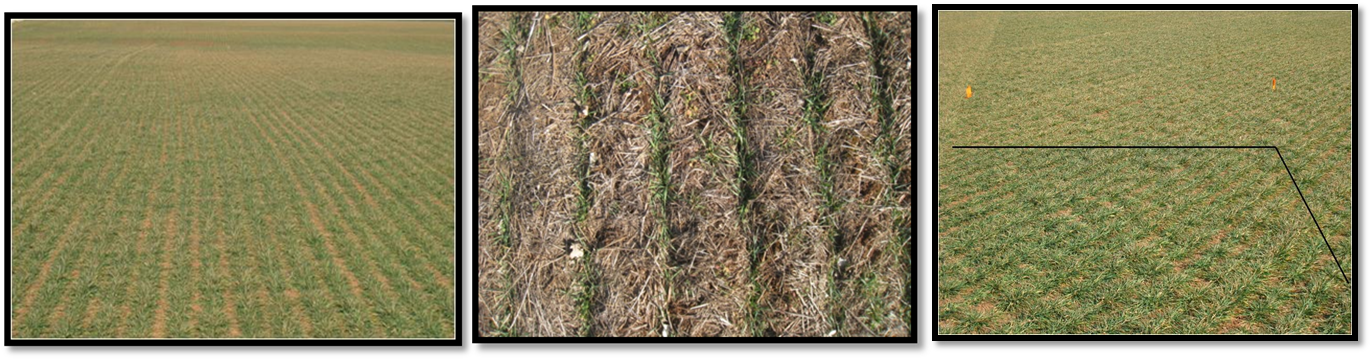
Winter Wheat and Nitrogen Rich Strips.
Regardless of whether or not the strip is visible you should be planning to sense with the GreenSeeker Handheld very soon. Remember the sensor has the ability to detect differences before your eyes can. To sense the N-Rich Strip and Farmer Practice the user should carry the sensor approximately 30 to 40 inches above the crop canopy while holding the sensor level over the crop. While you are walking the two area the trigger should be held the entire time. I recommend walking at minimum 100 paces for each. The average NDVI value seen on the screen will only stay on the screen for a few seconds. Therefore it is critical you have a method of recording the number for later use. The sensor has limited memory so it will time out is the trigger is held for an extended period of time. If you wish to collect more NDVI readings just do it in multiple trigger pulls recording each. Once you have the average NDVI for the N-Rich Strip and Farmer Practice you can go to the SBNRC site mentioned above to retrieve the N rate recommendation. Once in the calculator, for those in Oklahoma, choose the “within Oklahoma” option in the bottom left hand corner of the screen. This will allow the calculator to access the Oklahoma Mesonet to determine growing degree days. After the location is picked from the options you will need to enter Planting Date and Date Prior to Sensing. Additional information requested is the expected grain and fertilizer prices. While these inputs will provide some economic evaluations they will not impact recommended N rate.

GreenSeeker HandHeld NDVI Sensor
Below is a YouTube video in which I describe how to use the GreenSeeker to collect NDVI readings, describe the data needed to complete the online calculator, and how to interrupt the calculators output.
Managing Protein in Hard Red Winter Wheat.
A result of the 2016-17 winter wheat crop was a significant amount of discussion focused on protein levels. For two years running now, the protein levels have been low across the board. Low protein brings in a challenge to sell, could impact local basis, and even more concerning is that low protein is an indicator that nitrogen was limiting during grain fill. Therefore, the field maximum yield potential was not achieved. In this blog, we talk about what protein is, what can be done to maintain a good protein level, and what can be done to increase protein if desired.
First, the definition of protein is any of a class of nitrogenous organic compounds that consist of large molecules composed of one or more long chains of amino acids and are an essential part of all living organisms, especially as structural components of body tissues such as muscle, hair, collagen, etc., and as enzymes and antibodies. Protein is also one of the many attributes that determines end-use quality and marketability of winter wheat. Sunup TV met with Dr. Carver in the baking and milling lab to create a great video discussing wheat quality impact on baking and milling.
We determine protein by measuring the percent of nitrogen in the grain and multiplying by a factor of 5.7. So if the grain has N % of 2.5, the protein content is 14.25. The amount of N in the grain is affected by many variables such as weather during grain fill, yield level, and N availability during grain fill. If weather is conducive to good grain fill and test weight is high, we will often see protein values dip. On the other hand when grain fill conditions are hot and dry and we have light test weight, wheat protein will be higher. Research has shown (Figures 1 and 2) that generally as yields increase protein levels decrease. Of course if N is limited during grain fill, the N available for the grain is reduced, and the plant is forced to get all grain N from re-immobilizing N in the leaf tissue.
Fig 1, Yield and protein averages from all of the OkState Long Term fertility trials. Data courtesy Dr. Bill Raun.
Fig 2, Grain protein and yield of from intensively managed wheat. Data Courtesy Dr. Romulo Lollato KSU.
Maintaining Protein, and yield.
Managing nitrogen to maintaining protein and maximizing yield comes down to making sure that N is available at critical growth periods. With wheat, the critical uptake stage is typically the time frame between hollow stem and soft dough. The two graphs below show nitrogen uptake in wheat and barley. If the same graph was made for dual purpose wheat, the upward swing would start sooner but would follow the same general trend.
Fig 3, Nutrient Uptake of Wheat found in “Agricultural and Biological Sciences » “Crop Production”, ISBN 978-953-51-1174-0, Chapter 5 By Juan Hirzel and Pablo Undurraga DOI: 10.5772/56095″
Fig 4, Nitrogen uptake in Barley at two nitrogen rates. http://apps.cdfa.ca.gov/frep/docs/N_Barley.html
When it comes to making sure N is available during this time of peak need, the only way we can do that is apply just before it is needed. This means split application. While putting all the nitrogen out pre-plant as anhydrous ammonia is the cheapest method, it is also the method that provides the lowest nitrogen use efficiency and is most likely to show deficiencies late in the season. One of the challenges with 100% preplant N application is that years with good yield potential coincide with years with good/high high rainfall, which means more nitrogen loss. Some interesting results from studies implemented in the 2016-17 cropping season showed the importance of nitrogen application timing. The study is determining how long nitrogen application can be delayed after the N-Rich strip becomes visible (https://osunpk.com/2013/09/19/nitrogen-rich-strips/). For the study, 90 lbs of N was applied on one of the treatments at planting When that plot became visibly greener or bigger than the rest, N application was triggered. After the 0 DAVD (Days after visual difference where the day had growing degree days >0), another treatment was applied every 7 growing days for 63 growing days. Each plot, excluding the zero N check, received 90 lbs as NH4NO3 (we use this to take the variable of volatilization out of the data). In all cases, 90 lbs applied in late January to early February was better than 90 lbs pre-plant. Keep in mind there was 0 N applied at planting for each DAVD application timing; yet, we still hit 50-80 bushel wheat with nothing but in-season N. This is the result of supplying the N when the plant needs it. I should add this is just one year of data, and every year is different. The study is being replicated again this year and will be highlighted at the Lahoma field day.
Fig 5, Results from the 2016-2017 delayed nitrogen study led by Mr. Joao Bigato Souza. The trials consisted of a preplant plot, unfertilized check plot, and then a series treatments in which N application was based on days from a visual difference between the pre-plant and check. All fertilized plots received 90 lbs N as NH4NO3. DAVD is days after visual difference. (Error in bottom left graph, the last date should be March 27 not April 4)
For dual-purpose wheat, the total amount of N expected for the forage production needs to be applied pre-plant. Oklahoma State recommends 30 lbs N for every 1,000 lbs of forage expected For grain-only wheat, there needs to be only 20 to 40 lbs of N available to the crop when planted (this includes residual N). The remaining N should be applied at green up or early spring. The only way to ensure that N is applied when the crop needs it is to utilize the N-Rich Strip method. Having a N-Rich strip in your field lets you know when the wheat needs more nitrogen and when it does not.
Fig 6. Nitrogen Rich Strip (N-Rich) showing up in a No-till wheat field.
Two years testing the N-Rich Strip and Sensor based nitrogen rate calculator (SBNRC) from the Texas boarder to the Kansas boarder showed that the SBNRC on average reduced N but maintained yield and protein when compared to standard farmer practice (Table 1).
Table 1. Results from testing the Nitrogen Rick Strip and Sensor Based Calculator Method across Oklahoma wheat fields.
Increasing Protein
Some producers may plan to market high protein for a premium if available. Fortunately, there are opportunities to increase protein via management. While most of the strategies for increasing protein happen later in the growing season, some of the early decisions can be a significant contributing factor. Variety selection and keeping the plant healthy and free of competition (i.e., pest management) throughout the growing season are going to increase the opportunity to produce high protein wheat. After that, the equation goes back to Figures 3 and 4 and making sure the crop has access to nitrogen during peak periods, including grain fill. If you will note, the bottom two graphs of Figure 5 both show significant increases in protein on the later applications. For both locations, this was when N (90 lbs N ac-1) was applied after full flag leaf emergence. There has been a significant amount of work at OSU looking at late application of N stretching back into the 1990s http://nue.okstate.edu/Index_Publications/Foliar_N_Curt.pdf. The focus has been looking at timing, source, and rate. The take home of decades of work can be summarized as such. Yes, protein can be increased with late season application, but not always. Applying N at or after flowering has a significantly greater probability of increasing protein than a application at flag-leaf. Source of N has had little impact if managed properly (UAN, 28-0-0, has to be watered down so that it does not burn the plant). The rate of N does matter quite a bit. Most of the work suggests that for every pound of N applied, the percent grain protein could increase by .05%. So to increase protein from a 12.5% to 13.5%, it would require approximately 20 lbs of N per acre. My work has shown the same trend that a 20 lbs application at post-flowering had more consistent increases in protein than lower rates at the same time or similar rates applied at flag leaf.
This wheat season we are looking to improve our knowledge of management on protein content through multiple studies by continuing the evaluation of varieties and management practices.
If you have any questions for comments please feel free to contact me.
Brian A.
B.arnall@okstate.edu
2017-18 Wheat, Nitrogen Outlook
Its that time of year and I wanted to share my thoughts on nitrogen (N) management in the up and coming winter wheat crop. This season is already shaping up to present certain challenges and opportunities. This blog will highlight many of the topics that were brought up in a recent Sunup TV shoot, video below.
This summer the price of Anhydrous Ammonia (NH3) dropped and producers made a run on NH3 for graze out and dual purpose ground. Currently the price of N is still lower than it has been than it has been in a while and producers are are taking advantage. All things are lining up for this fall to be a good forage year, nitrogen prices are low and we are going into September with a decent soil moisture profile across the wheat belt. If producers can get into the field in a timely manner and we keep getting timely rains it will make a great forage crop. But here is my cautionary statement, if this is a good forage year we are shaping up to be short on N by spring. First the market place over the past two years has overall reduced the amount of inputs into the wheat crops and I would say across the board a lot of the wheat ground is starting out this season with very little residual N. Secondly and more importantly everything which makes for a good forage year makes for a good N loss year, for Oklahoma good rain usually makes good forage. While NH3 does immediately convert to the non mobile ammonium (NH4) form, when soils are warm and moist it does not take long to convert to the mobile and leachable nitrate (NO3) of N. In a recent study looking at N applied at planting in corn, the majority of the NH4 had converted to NO3 by V4, which is usually four to five weeks after planting. Which means NH3 applied in August is likely completely converted to NO3 by September and susceptible to leaching (Since starting this blog in August we have seen a dry down, note the soil moisture on 9.7.17, and abundance of army worms). As the story line has been the low protein wheat of the 2016 and 2017 harvest attention needs to be paid to the crop going into spring.

The 1-day Average 16-inch Plant Available Water map from http://www.mesonet.org. Accessed 8.28.17
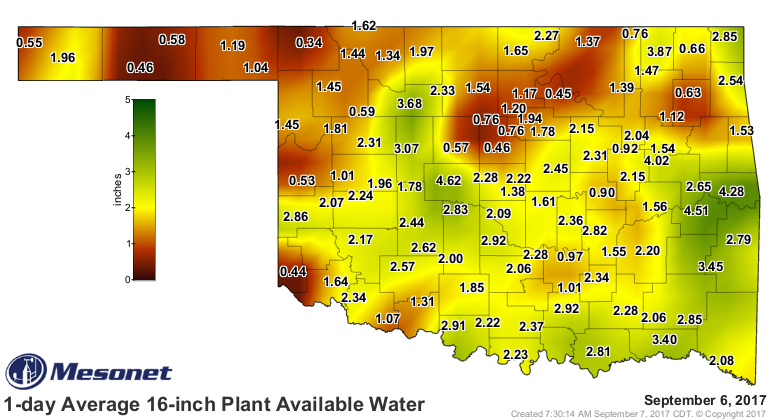
The 1-day Average 16-inch Plant Available Water map from http://www.mesonet.org. Accessed 9.07.17
At Minimum MASS BALANCE the system for dual purpose.
The most simplistic approach to nitrogen management this year is the evaluate what has been made for beef gain and what will be needed for wheat grain yield come the spring. The general rule of thumb is that is takes 1000 lbs of forage to produce 100 lbs of beef gain and depending on the N concentration 1000 lbs of wheat forage will have about 20 lbs N tied up in it. As I talk about on a regular basis, nitrogen use efficiency is not 100% so OSUs rec is 30 lbs of N for each 100 lbs of gain/ 60 lbs of N per ton of forage. On the grain side the standard rule of thumb is 2 lbs of N per bushel. So if the producer applied 100 lbs of NH3 (82 lbs of N) pre-plant and in the spring the average gain is 200 lbs per acre there is only 22 lbs left over for the grain. At that point if we use the field historic average grain yield, lets assume 30 bushel, there needs to be about 38 lbs of N added.
22 lbs (left from pre) / 2 = 11 bushels. 30 – 11 = 19. 2 lbs N per bushel * 19 bushel = 38 lbs of N.
Grain Only Systems
More and more of the grain only producers I am working with are using a 3 pass fertility approach. The approach works this way, No pre-plant N is applied except for what goes down with the seed. In all scenarios this is 40-80 lbs of 18-46-0 which delivers 7 to 14 lbs of N above what is already in the soil (residual N). The second pass comes in winter to early spring before green-up where they are typically applying about 60+ lbs of N. The third pass happens prior to hollow stem. At this point the producers are taking stock of their crop. If the stand is good and soil moisture is good the final application tops them off for the rest of the season. This system is really aided by the application of an N-Rich strip https://osunpk.com/2013/09/19/nitrogen-rich-strips/ . The strip allows the producers to observe the system and know exactly when nitrogen is limited and applications need to be made. Utilizing the Sensor Based Nitrogen Rate Calculator https://osunpk.com/2014/02/24/sensing-the-n-rich-strip-and-using-the-sbnrc/ provides an exact value to the nitrogen needed.
The approach of putting on nitrogen in-season will not only increase the efficiency of the N applied but will help in producing a wheat crop with a good final protein value.
For those wanting to go with the more traditional N application approach of 2 passes I prefer to have no more than 50% of the planned N down at pre-plant. This will allow for a spring green up based upon yield goal. If using the N-Rich strip in a two pass approach I like to see about 30-40 lbs down at pre-plant and then use the N-Rich Strip and SBNRC to fine tune your top-dress which will take place in the spring. Using this technique the research from OSU shows the we can both maximize yield and nitrogen use efficiency.
For the Full Story watch the Sunup TV YouTube video below.

N-Rich Strip Applicator. Push Spreader that can be purchased at any local hardware store.
Using a Grain Drill Grain Box for Fertilizer, Results and a Calibration guide.
For the last few years I have been challenging people to “Think Out Side the Box” when applying fertilizer. One of these application methods is to use a grain drill to put Nitrogen fertilizer into the soil. Just the act of getting N into the soil will immediately decrease the opportunity for losses. While it seems crazy many picked up on the idea of using grain drills for N applicators. The first year of a two-year study looking at documenting the practice is in the books. With data coming in from three locations, utilizing two drill types (double disk conventional and single disk no-till), the results are quite promising. The biggest take home from year one was a 2 parter: 1) if conditions are conducive to nitrogen loss from urea volatilization, applying urea with a grain drill in the spring improved efficiency. Conversely if loss potential was low, there was no difference. 2) in some soil conditions the double disk drill could not close the furrow and this reduced the positive impact of using the drill. The two tables below show the impact application and environment on yield. Each of the treatments had 60 lbs of nitrogen (as Urea) applied per acre. At Chickasha the first application was made while it was fairly dry and then it rained, but the second application was made during a period in which there was no rain but a fairly significant dew each morning. This can be seen as the small effect volatilization played on the yields of the first application timing. At Lahoma, it was the early applications that had a higher risk of loss with no difference seen later.

Partial year one results from the topdress N with a grain drill at Chickasha OK. Timing 1 was late January and timing 2 was late February.

Partial year one results from the topdress N with a grain drill at Lahoma Ok. Timing 1 was early January and timing 2 was mid February, and timing 3 was early March.
With the results from the first year of the top-dressed drilled nitrogen studies in the books, the interest has been increasing. One question keeps popping up: for grain drills without a fertilizer box, what do we put our grain box on to apply fertilizer. At one point the number of inquires hit a critical mass and I sent out my crew to find grain drills and create calibration curves for DAP (18-46-0) and Urea (46-0-0). The crew did just that.
Now please consider what is presented below is a general calibration. Much like the chart on your grain drills, it will hopefully get you close but the best-case scenario is that each drill is calibrate prior to running. As request are made we will try to add more drills to this list.
To create the following charts the guys located several different makes of drills around the OSU experiment stations. They were instructed to choose setting based on the manufacture seed rate charts in the range of 60, 90, 120 etc. For each setting they caught a couple of row units for both Urea (46-0-0) and DAP (18-46-0). They caught each setting multiple times to get a good average.
If you look at the tables you can see the Landol 5211, Great Plains 1006NT, and International 5100 are fairly similar, with the John Deere 1560 being a little lower and the John Deere 450 significantly lower at the lower rates. To use the tables below, consider what kind of grain drill you have and choose to follow one of the drills listed or the average of all five. If you use the average value I would expect most to find they applied a bit more than planned. To make it even simpler, but less accurate, you can use the % wheat value. To do this for DAP take your target rate and divide by .88, this value is what you want to set your drill to. For example for a target rate of 100 lbs DAP per acre use the following formula: 100/.88 = 114. Choose the manufacturer recommended settings 114 lbs wheat seed per acre. If you are wanting to apply Urea take your target rate of urea and divide by 0.71.
DAP 18-46-0
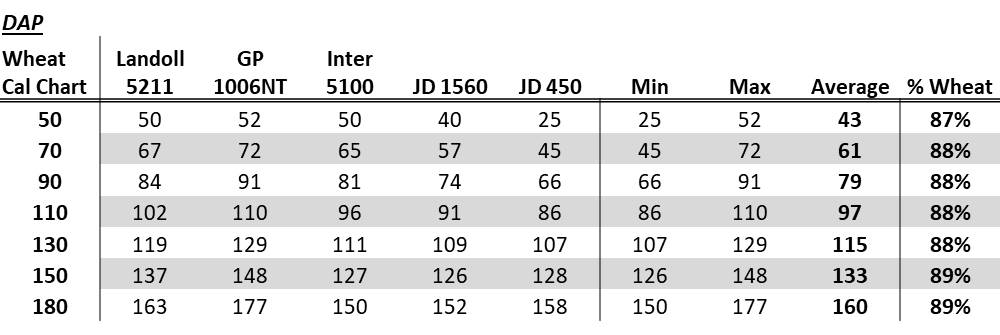
Table showing the manufacturer wheat rate setting and the resulting amount of DAP 18-46-0.

Graph documenting the manufacturer wheat rate setting and the resulting amount of DAP 18-46-0.
UREA 46-0-0

Table documenting the manufacturer wheat rate setting and the resulting amount of Urea 46-0-0.

Graph documenting the manufacturer wheat rate setting and the resulting amount of Urea 46-0-0.
Again, I cannot state this enough, this is a general guide, each drill even of the same manufacture and model will likely be different. The only way to be certain of the rate applied is to calibrate each drill individually.
Questions or comments please email me at b.arnall@okstate.edu or call 405.744.1722
Using the GreenSeeker after Freeze Damage
After discussions with producers in southern Kansas I felt the need to bring back this past blog. It seems that much of (not all) the early planted wheat lost a significant amount of biomass during the winter and the N-Rich Strip GreenSeeker approach is producing what looks to be low yield potentials and N-Rate recommendations. This should be treated much like we do grazed wheat and the planting date should be adjusted, see below. It is also important to note that in the past year a new wheat calculator was added to the NUE Site. http://nue.okstate.edu/SBNRC/mesonet.php. Number 1 is the original OSU SBNRC but the #2 is calculator produced by a KSU/OSU cooperative project. This is the SBNRC I recommend for use in Kansas and much of the norther tier of counties in OK.
Original Blog on Freeze Damage and the GreenSeeker.
Dr. Jeff Edwards “OSUWheat” wrote about winter wheat freeze injury in a receive blog on World of Wheat, http://osuwheat.com/2013/12/19/freeze-injury/. As Dr. Edwards notes injury at this stage rarely impact yield, therefore the fertility requirements of the crop has not significantly changed. What will be impacted is how the N-Rich Strip and GreenSeeker™ sensor will be used. This not suggesting abandoning the technology in fact time has shown it can be just as accurate after tissue damage. It should be noted GreenSeeker™ NDVI readings should not be collected on a field that has recently been damaged.
A producer using the N-Rich Strip, GreenSeeker™, Sensor Based N-Rate Calculator approach on a field with freeze damage will need to consider a few points. First there need to be a recovery period after significant tissue damage; this may be one to two weeks of good growth. Sense areas that have had the same degree of damage as elevation and landscape position often impacts the level of damage. It would be misleading to sense a area in the N-Rich strip that was not significantly damaged but an area in the Farmer Practice that took a great deal of tissue loss.
Finally we must consider how the SBNRC, available online at http://nue.okstate.edu/SBNRC/mesonet.php, works. The calculator uses NDVI to estimate wheat biomass, which is directly related to grain yield. This predicted grain yield is then used to calculate nitrogen (N) rate. So if biomass is reduced, yield potential is reduced and N rate reduced. The same issue is seen in dual purpose whet production. So the approach that I recommend for the dual purpose guys is the same that I will recommend for those who experienced significant freeze damage. This should not be used for wheat with just minimal tip burn.
To account for the loss of biomass, but not yield, planting date needs to be adjusted to “trick” the calculator into thinking the crop is younger and has greater potential. Planting date should be move forward 7 or 14 days dependent For example the first screen shot shows what the SBNRC would recommend using the real planting date. In this case the potential yield is significantly underestimated.
The second and third screen shots show the impact of moving the planting date forward by 7 and 14 days respectively. Note the increase in yield potential, which is the agronomically correct potential for field considering soil and plant condition, and increase in recommended N-rate recommendation. Adjust the planting date, within the 7 to 14 day window, so that the yield potential YPN is at a level suitable to the field the yield condition and environment. The number of days adjusted is related to the size and amount of loss. The larger the wheat and or greater the biomass loss the further forward the planting date should be moved. In the example below YPN goes from 37 bu ac on the true planting date to 45 bu ac with a 14 day correction. The N-rate changes from 31 lbs to 38 lbs, this change may not be as much as you might expect. That is because YP0, yield without additional N, also increases from 26 to 32 bushel.
 Image 1. Planting date 9/1/2013. YPN 37 bu ac-1 and N-Rec 31 lbs ac-1.
 Image 2. Planting date 9/8/2013. YPN 40 bu ac-1 and N-Rec 34 lbs ac-1.
 Image 3. Planting date 9/15/2013. YPN 45 bu ac-1 and N-Rec 38 lbs ac-1.
This adjustment is only to be made when tissue has been lost or removed, not when you disagree with the yield potential. If you have any questions about N-Rich Strips, the GreenSeeker™, or the online SBNRC please feel free to contact me at b.arnall@okstate.edu or 405.744.1722.
 Down and Dirty with NPK