Home » Posts tagged 'environment'
Tag Archives: environment

Soil Your Undies: When a Great Demo Gets Asked to Do Too Much
I often say that in K–12 education we teach a lot of things in black and white. Students first need to understand the basic concepts: plants need nutrients, microorganisms decompose organic matter, and soils are biologically active. Then somewhere through a bachelor’s degree, or simply through enough years of experience, we learn that agriculture is rarely that black and white. There are a lot of shades of gray. Keep studying, researching, farming, or advising long enough and you eventually realize there aren’t just 256 shades of gray. There is also ROYGBIV. There is a whole spectrum of interactions and conditions that determine what happens in the soil.
I think the “Soil Your Undies” demonstration fits that progression perfectly. It is a great black and white teaching tool. Bury a pair of 100% cotton underwear, wait several weeks, and dig them back up. Sometimes there isn’t much left besides the elastic waistband. Students can see that something happened belowground, and that opens the door to conversations about microorganisms, decomposition, carbon cycling, and the fact that soil is a living system. As a teaching demonstration, that is hard to beat.
Where I become more cautious is when we take that intentionally simple lesson and make a much more complicated conclusion: the pair with less cotton remaining came from the healthier soil or represents the better management practice. That is where we need to move beyond black and white.

To begin with we must know what the microbes are eating.
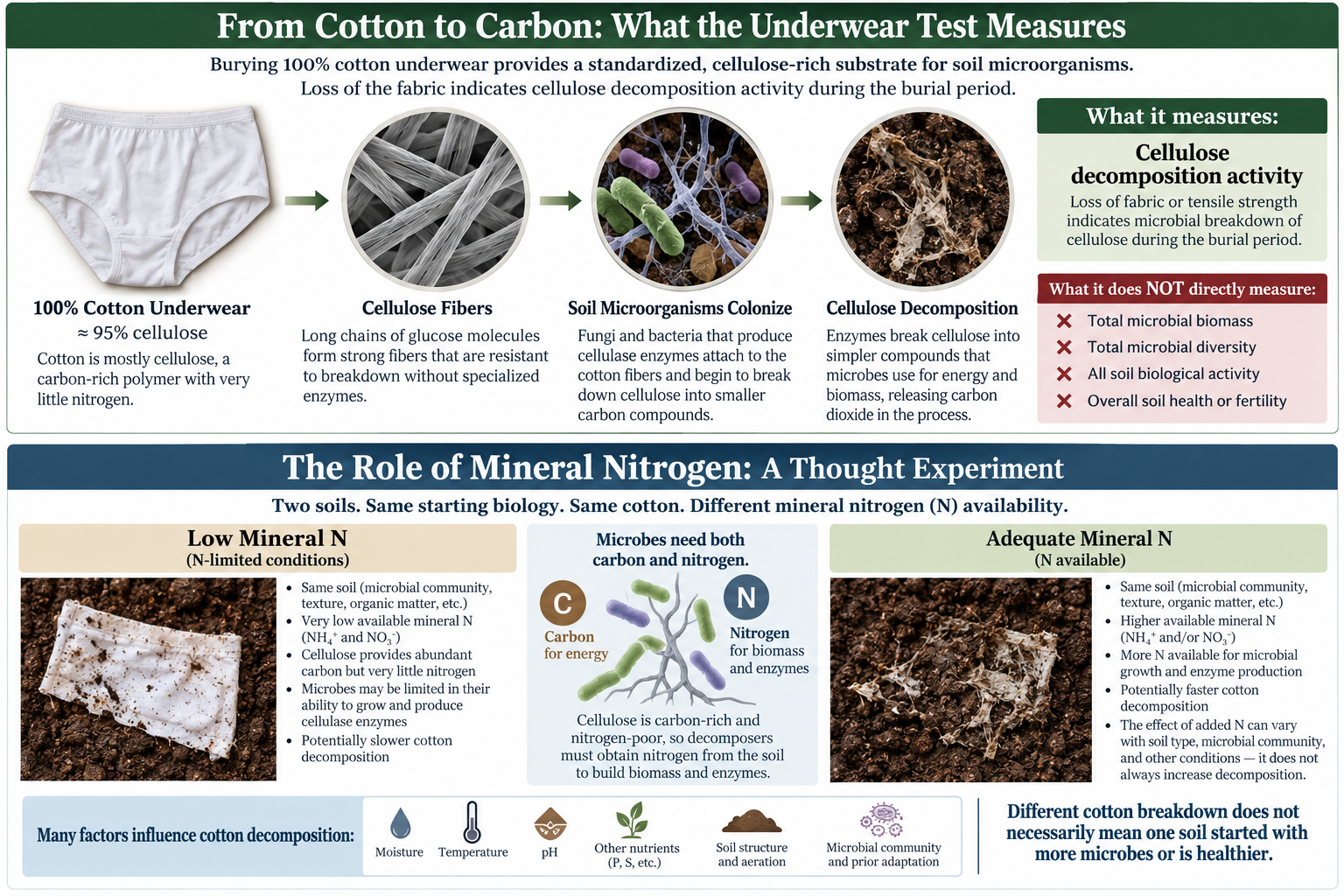
Cotton fiber itself gives us the first clue about what this test measures. Cotton is approximately 95% cellulose, and standardized cotton strips have been used by soil scientists for decades specifically as an index of cellulose decomposition (Latter et al., 1988; Tiegs et al., 2013). Cellulose is a long chain of glucose molecules and one of the major structural components of plant material. Its decomposition depends on organisms capable of producing cellulolytic enzymes that break those chains into smaller compounds that microorganisms can use.
Therefore, when cotton underwear disappears, we can make a scientifically defensible statement: the soil environment supported cellulose decomposition during the time the underwear was buried. That is useful information but notice how specific that statement is. We did not measure the total number of microorganisms, microbial diversity, or every biological process occurring in that soil, and we certainly did not measure everything encompassed by the much broader term soil health. Research comparing cotton-strip decomposition with microbial biomass illustrates that distinction. Walton and Allsopp (2007) found a relatively poor relationship between cotton-strip measurements and microbial biomass measured by substrate-induced respiration (r² = 0.26). They recommended using cotton strips alongside other physical and chemical soil indicators rather than as a stand-alone biological measurement. Soil can contain a substantial microbial population without necessarily destroying a pair of underwear quickly.
Is breaking down cellulose what the soil needs to be doing?
Cellulose decomposition is important. Crop residues contain cellulose, and their decomposition is part of carbon and nutrient cycling. But agriculture does not necessarily need every microbial process operating at its maximum rate all the time. Depending on the production system, time of year, and management objective, we may be more interested in nutrient mineralization or immobilization, aggregate formation, disease suppression, nitrogen transformations, carbon stabilization, or simply keeping residue on the soil surface. Faster cellulose decomposition is therefore not automatically better; it tells us that this specific biological process was occurring more rapidly under those conditions. This does not make the cotton test wrong. It means we need to be precise about the question it answers.
The scientific cotton-strip assay has successfully detected differences in cellulose decomposition among soils and management systems. Nachimuthu et al. (2022), for example, found differences in cotton-strip degradation among long-term crop rotation and tillage treatments. That supports the conclusion that management can affect cellulose decomposition. It does not automatically establish that the management practice producing the fastest cellulose decomposition created the healthiest soil. Margenot and Wade (2023) raised a similar concern about the interpretation of soil enzyme activities, cautioning against taking a measurement of a specific biological process and assuming that it scales directly to broader soil functions or outcomes. Measuring a process and determining what that process means for the functioning of the soil are two different questions.
Now add some gray: nitrogen
This is where the soil fertility specialist in me starts asking questions. Cotton provides microorganisms with a lot of carbon but almost no nitrogen. Yet microorganisms cannot live on carbon alone. They need nitrogen to produce proteins and enzymes and to build new microbial biomass. The microorganisms colonizing that cotton therefore must obtain much of what they need from the surrounding soil. Imagine taking one soil and thoroughly mixing it. We start with the same microbial community, organic matter, texture, pH, temperature, and water content. Divide it into two treatments and bury identical pieces of cotton. The only major difference is mineral nitrogen: one treatment has very little available NH₄-N and NO₃-N, while the other has an adequate supply. Would the underwear necessarily decompose at the same rate? There is good reason to believe it may not.
Nottingham et al. (2018) examined nutrient limitation during cellulose decomposition by adding cellulose and individual nutrients to soils. Nitrogen addition produced the largest fungal growth response associated with cellulose, and the researchers concluded that nitrogen was an important limitation to fungal growth and cellulose decomposition in the soils they studied. The implication for our underwear is important. Cotton in the higher N soil could potentially disappear faster without that soil starting with more microorganisms or a “healthier” microbial community. The organisms capable of decomposing cellulose may simply have better access to the nitrogen required to grow and produce the enzymes needed to exploit this large carbon source. That does not mean adding nitrogen fertilizer will always make underwear disappear faster. Microbial responses to N depend on the soil, microbial community, nutrient status, substrate, and environment. Other nutrients may become limiting, and long-term N additions can alter microbial communities and decomposition processes in ways that are very different from a short-term response to available N. That complexity is exactly the point: we started with a black-and-white demonstration of biological activity, but bringing in the mineral N conversation now add many shades of gray.
Then comes pH—and more color
Soil pH adds another layer because it does more than simply make microbes “more” or “less” active. It can change which groups of microorganisms are most active. I have plenty of work discussing how quickly soil pH can change across landscape and how much our management also significantly impacts soil pH. Across agricultural soils, bacterial growth and diversity generally increase as strongly acidic soils approach neutral conditions, while fungi tend to become relatively more important as pH declines. Rousk et al. (2009, 2010), working across soils ranging from approximately pH 4 to 8, documented substantial shifts in bacterial and fungal growth and in the fungal relationship across the pH gradient. That distinction matters for an underwear test because both bacteria and fungi participate in cellulose decomposition. A lower-pH soil may have reduced bacterial growth while maintaining a comparatively greater fungal contribution. At a higher pH, the balance can shift toward bacteria. The microbial community doing the work can therefore change substantially without a corresponding black-and-white change from “poor biology” to “good biology.”
There is also evidence that pH can affect cellulose decomposition itself. Work with volcanic soils found that cellulose decomposition potential was related to both soil pH and microbial N availability, rather than simply to the amount of microbial biomass present. This creates an interesting possibility for the underwear demonstration: two soils could contain similar amounts of microbial biomass but decompose cotton at different rates because one provides a more favorable chemical and nutritional environment for the organisms capable of using cellulose. I would also be careful about turning that into another simple rule such as “higher pH equals faster cotton decomposition.” As soils move from strongly acidic conditions toward the range where many agricultural crops are grown, bacterial activity generally increases, but fungi, bacteria, extracellular enzymes, nutrient availability, and cellulose decomposition do not all respond to pH in exactly the same way. Very acidic conditions can suppress some processes while favoring organisms better adapted to acidity. That is a much more interesting biological story than simply labeling one soil as having more microbial activity than another.
Then comes ROYGBIV
Nitrogen and pH are only two variables. Soil moisture determines whether microorganisms can remain active and whether substrates and nutrients can move through the soil. Texture influences water retention, aeration, nutrient availability, aggregation, and microbial habitat, so identical cotton buried in a sandy soil and a clay soil is not necessarily experiencing the same environment. Phosphorus, sulfur, or another nutrient can limit microbial growth even when carbon and nitrogen are abundant. Finally, the microbial community itself matters because different bacterial and fungal populations differ in their ability to produce the enzymes needed to attack cellulose.
What we see when we dig up the underwear is therefore the integrated result of microbial community × substrate × nitrogen × other nutrients × moisture × pH × texture × time, along with interactions among them. A difference in cotton decomposition is real, but the underwear alone cannot tell us which of those factors produced the difference. More importantly, it cannot tell us whether the difference represents better or worse management. That distinction between a soil health indicator and the soil function or outcome it is intended to represent is increasingly being emphasized in the soil health literature (Maharjan et al., 2024).
That is no longer black and white. That is ROYGBIV.
Keep burying the underwear
None of this is an argument to stop Soil Your Undies. Keep doing it. Use it in classrooms, bury underwear at field days, have students predict what will happen, and put underwear in contrasting soils so they can see that decomposition happens below ground. It makes an invisible biological process visible, and that makes it a great teaching tool.
Where I think we need to be more careful is when we turning that demonstration into a scorecard for soil health or management practices. A producer should not dig up two pairs of underwear and conclude that the field with less cotton remaining necessarily has more microorganisms, better management, greater fertility, or healthier soil. Too many biological, chemical, and environmental factors influence cellulose decomposition for the underwear alone to support those conclusions.
Perhaps that distinction provides an even better way to use the demonstration. With younger students, Soil Your Undies can teach the black and white: microorganisms live in soil and decompose organic materials. With more advanced students, farmers and agronomists, the same demonstration can teach the gray by asking, why did these two pieces of cotton decompose differently? Once we start asking about water, nitrogen, pH, texture, nutrients, microbial communities, and all of the possible interactions, we get to ROYGBIV.
This distinction becomes especially important when the demonstration is used with students or audiences without an agricultural or soil science background. If two management systems are compared and the one with less cotton remaining is presented as the “better” practice, we may be teaching a conclusion the test cannot support. Those audiences may not yet have the background to recognize the effects of moisture, nitrogen, pH, texture, or microbial community on cellulose decomposition. The demonstration can then unintentionally introduce bias toward management practice rather than teach how complex soil biological processes really are.
So, keep burying the underwear. Just don’t ask it to answer more than it can.
References
- Chew, I., Obbard, J.P., & Stanforth, R.R. 2001. Microbial cellulose decomposition in soils from a rifle range contaminated with heavy metals. Environmental Pollution 111:367–375. doi:10.1016/S0269-7491(00)00094-4.
- Latter, P.M., Bancroft, G., & Gillespie, J. 1988. Technical aspects of the cotton strip assay in soils. International Biodeterioration 24:25–47. doi:10.1016/0265-3036(88)90073-5.
- Maharjan, B., Das, S., Thapa, V.R., & Sharma Acharya, B. 2024. Soil health cycle. Agrosystems, Geosciences & Environment 7:e20504. doi:10.1002/agg2.20504.
- Margenot, A.J., & Wade, J. 2023. Getting the basics right on soil enzyme activities: A comment on Sainju et al. (2022). Agrosystems, Geosciences & Environment 6:e20405. doi:10.1002/agg2.20405.
- Nachimuthu, G., Hundt, A., Palmer, B., Schwenke, G.D., & Knox, O.G.G. 2022. Cotton strip assay detects soil microbial degradation differences among crop rotation and tillage experiments on Vertisols. Journal of Microbiological Methods 200:106558. doi:10.1016/j.mimet.2022.106558.
- Nottingham, A.T., Hicks, L.C., Ccahuana, A.J.Q., Salinas, N., Bååth, E., & Meir, P. 2018. Nutrient limitations to bacterial and fungal growth during cellulose decomposition in tropical forest soils. Biology and Fertility of Soils 54:219–228. doi:10.1007/s00374-017-1247-4.
- Rousk, J., Brookes, P.C., & Bååth, E. 2009. Contrasting soil pH effects on fungal and bacterial growth suggest functional redundancy in carbon mineralization. Applied and Environmental Microbiology 75:1589–1596.
- Rousk, J., Bååth, E., Brookes, P.C., Lauber, C.L., Lozupone, C., Caporaso, J.G., Knight, R., & Fierer, N. 2010. Soil bacterial and fungal communities across a pH gradient in an arable soil. ISME Journal 4:1340–1351.
- Tiegs, S.D., Clapcott, J.E., Griffiths, N.A., & Boulton, A.J. 2013. A standardized cotton-strip assay for measuring organic-matter decomposition in streams. Ecological Indicators 32:131–139. doi:10.1016/j.ecolind.2013.03.013.
- Walton, N.G., & Allsopp, D. 2007. Comparison of methods for measuring soil microbial activity using cotton strips and a respirometer. Journal of Microbiological Methods 69:322–329.
The Mechanics of Soil Fertility: Use of Sugar in Field Crops
Jolee Derrick, Precision Nutrient Management Ph. D. Student
Grace Williams, Soil Microbiology Ph. D. Candidate
Brian Arnall, Precision Nutrient Management Specialist
Recently, there has been increased interest in adding sugar to spray tank mixes, whether for post-emergence weed control or foliar nutrient applications. While there is limited work on impact of sugar inclusion in herbicide applications, some papers have posed potential enhancement (Devine and Hall, 1990). But since this is coming from a soil science group, we will only focus on soil impact. Following up the last blog, unlike humic substances, which represent more complex and relatively stable carbon forms, sugar is a highly labile carbon source. This rapid utilization of simple carbon sources is well documented to stimulate microbial activity and growth (Kuzyakov and Blagodatskaya, 2015). The general idea of utilizing sugar applications is that sugar has the capacity to improve spray performance, stimulate biological activity, increase organic matter mineralization, and ultimately result in improved yields.
Sugar additions can influence soil processes differently depending on system conditions. In systems with higher residual nitrogen and organic matter, responses may differ from those observed in Oklahoma production environments, where soils are typically lower in organic matter and microbial activity can occur for much of the year. Understanding how sugar functions in these systems requires a basic discussion of carbon dynamics. Sugar itself is almost entirely carbon and is readily consumed by microbes. It’s a simple molecule, which allows it to dissolve easily in water and be quickly utilized in the soil system. Crop residues, like wheat straw, are also carbon-rich but much more complex. They contain cellulose, hemicellulose, and lignin which are long carbon chains that take time to break down because microbes need specialized enzymes to access them.
For the sake of simplicity, we can group carbon into two key pools: labile carbon and particulate organic matter (POM). Labile carbon includes easily decomposed materials, which include the previously mentioned simple sugars that microbes can metabolize rapidly. These pools differ in turnover time and microbial accessibility, with labile carbon driving short-term microbial responses (Cotrufo et al. 2013). POM breaks down more slowly and serves as a longer-term nitrogen source through residue breakdown.
Soil microorganisms require both carbon and nitrogen to grow and maintain biomass, typically at a ratio of approximately 24 parts carbon to 1 part nitrogen. When readily available carbon is abundant, but nitrogen is limited, microbes increase their nitrogen demand and begin scavenging nitrogen from the surrounding soil. This process, better known as nitrogen immobilization, temporarily reduces nitrogen availability to crops. Additions of readily available carbon sources have consistently been shown to increase microbial nitrogen immobilization in soil systems (Recous et al. 1990).
In systems where sufficient nitrogen is present, microbial populations can expand rapidly. Fast-growing microbial species may dominate, continuing to immobilize nitrogen within their biomass. Eventually, when nitrogen becomes limiting, microbial populations decline to levels the system can support. This boom-and-bust cycle can disrupt nitrogen availability during critical stages of crop growth. These rapid shifts in microbial population and activity following carbon inputs are commonly observed in soil systems receiving easily decomposable substrates (Blagodatskaya and Kuzyakov, 2008).
This dynamic becomes especially relevant when considering residue management practices common in Oklahoma. Under no-till or limited-tillage systems, the crop residues have wide carbon-to-nitrogen (C:N) ratios, creating conditions where nitrogen immobilization can occur during the growing season.
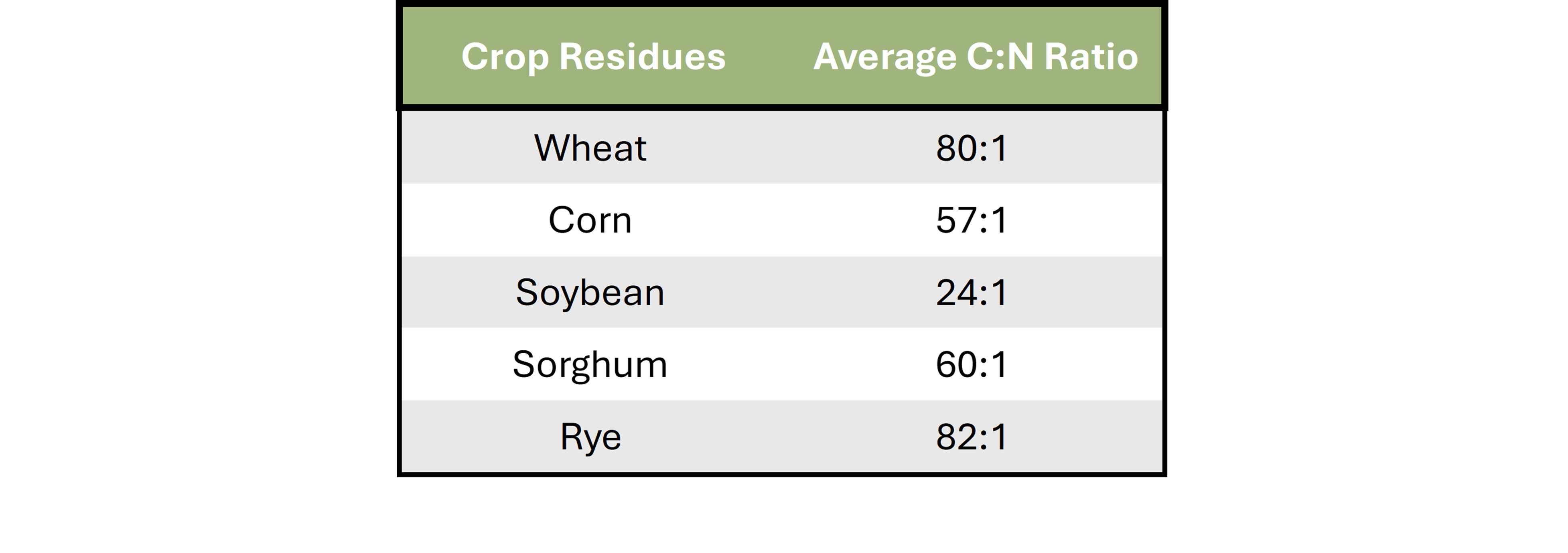
Table 1 provides approximate C:N ratios for several crops commonly grown in Oklahoma. When additional carbon is introduced into these systems without accompanying nitrogen, the likelihood of microbial immobilization increases. While immobilization is not bad, it does create a question mark as Oklahoma’s variable climate means the following release of nutrients will be unpredictable.
Table 1. Table depicting the range of C:N ratios for residues of commonly utilized crops in Oklahoma. Ratios were obtained from Brady, N. C., & Weil, R. R. (2017). The Nature and Properties of Soils (15th ed.)
Now consider conventional tillage systems. In Oklahoma, no-till systems typically contain 2 to 3 percent organic matter, which is relatively high given our climate and extended periods of microbial activity. Conventional tillage systems often fall between 0.75 and 2.25 percent organic matter. Because soil organic matter is approximately 58 percent carbon, this represents a substantial difference in the soil carbon pool.
Tillage can temporarily enhance microbial access to both previously mentioned carbon pools. When tillage exposes previously protected carbon, microbial activity increases rapidly. This initial flush can temporarily increase nitrogen mineralization as organic nitrogen is converted to plant-available forms. However, this phase is short-lived. As microbial populations expand, nitrogen demand increases, leading to immobilization and reduced nitrogen availability.
Hypothetically, increased microbial growth and activity would rapidly mineralize organic matter, trigger a surge in NO₃⁻, deplete soil organic matter, and as resources become limiting and the environment can no longer sustain elevated microbial populations, this boom would be followed by a population crash. This relationship is ultimately driven by the soil C:N ratio, which introduces an interesting additional complexity of residue. Different residues bring very different carbon-to-nitrogen balances into the system, and microbes respond accordingly. High carbon residues give microbes plenty of energy but very little nitrogen, so they pull N out of the soil to meet their needs. Residues with lower C:N ratios (soybean, alfalfa, etc.) do opposite, releasing nitrogen as they break down. Now the real question becomes where the critical point sits, and when does management push the system from the threshold of immobilization and mineralization.
These hypotheses form the foundation for new research currently underway through the Precision Nutrient Management Program. Initial proof-of-concept work has already been completed, providing a necessary steppingstone to address these questions.
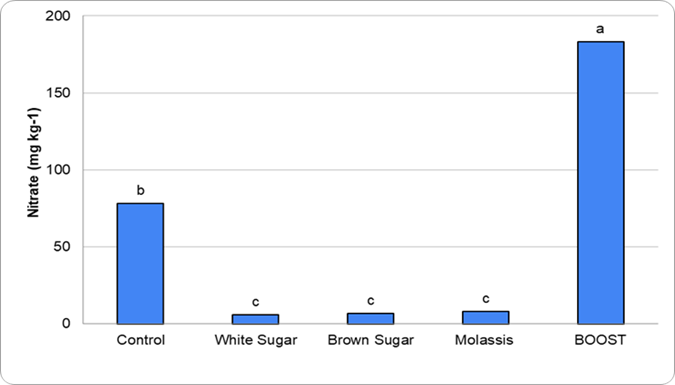
Figure 1. Graph depicting the different concentrations of nitrate leached corresponding to applied treatments in the proof-of-concept work
The preliminary work (Figure 1) evaluated different sugar sources applied alongside a high-nitrogen product to assess the extent of nitrogen immobilization. Although these studies were conducted using potting soils, clear trends were apparent. Treatments containing sugar consistently showed greater nitrogen immobilization compared to treatments without sugar. This response is consistent with studies showing that additions of simple carbon substrates stimulate microbial growth and increase nitrogen immobilization (Dendooven et al. 2006). Building on this work, an active field-based research project is underway to evaluate how sugar additions influence nitrogen availability and microbial dynamics under real-world Oklahoma production conditions.
From an agronomic standpoint, sugar functions primarily as a readily available carbon source that stimulates microbial growth. In nitrogen-limited systems, this response increases the likelihood that nitrogen will be incorporated into microbial biomass rather than remaining immediately available for crop uptake.
Finally, we conclude with a conceptual consideration. If increased OM mineralization leads to greater plant biomass, this process may partially offset losses of OM. Greater biomass production could return more residues to the soil, contributing to the OM pool in the upper soil profile. Therefore, the system may compensate for OM mineralization through the rebuilding of organic matter via plant inputs. However, the stabilization of this carbon depends on microbial processing and physical protection within the soil matrix (Cotrufo et al. 2015)
However, while the underlying logic is sound, this concept has not been extensively studied within Oklahoma cropping systems. This blog does not address the impact of sugar applications on residue breakdown, and the potential impact of such. Future research through the Precision Nutrient Management Program will further investigate the mineralization process to better understand carbon dynamics within these systems.
Take Home:
- Oklahoma production systems generally have lower residual N and high carbon residues, creating conditions conducive to N immobilization
- Adding sugar increases microbial growth, creating population booms that will momentarily increase mineralization, but then immediately immobilize residual nitrogen.
- Tillage can amplify the negative effects of sugar by exposing more carbon and reducing soil organic matter
- Proof-of-concept work shows sugar triggered a net nitrogen immobilization in a carbon heavy environment
- Proof-of-concept work also suggests that when additional nitrogen is present, sugar additions may shift the system toward net mineralization rather than immobilization.
Work Cited:
Blagodatskaya, E., & Kuzyakov, Y. (2008). Mechanisms of real and apparent priming effects. Biology and Fertility of Soils, 45, 115–131.
Brady, N. C., and R. R. Weil. “The Nature and Properties of Soils, 15th Edn (eBook).” (2017).
Cotrufo, M. F., Wallenstein, M. D., Boot, C. M., Denef, K., & Paul, E. (2013). The Microbial Efficiency-Matrix Stabilization (MEMS) framework. Global Change Biology, 19, 988–995.
Cotrufo, M. F., Soong, J. L., Horton, A. J., Campbell, E. E., Haddix, M. L., Wall, D. H., & Parton, W. J. (2015). Formation of soil organic matter via biochemical and physical pathways of litter mass loss. Nature Geoscience, 8(10), 776–779.
Dendooven, L., Verhulst, N., Luna-Guido, M., & Ceballos-Ramírez, J. M. (2006). Dynamics of inorganic nitrogen in nitrate- and glucose-amended alkaline–saline soil. Plant and Soil, 283(1–2), 321–333.
Devine, M. D., & Hall, L. M. (1990). Implications of sucrose transport mechanisms for the translocation of herbicides. Weed Science, 38(3), 299–304.
Kuzyakov, Y., & Blagodatskaya, E. (2015). Microbial hotspots and hot moments in soil: Concept & review. Soil Biology and Biochemistry, 83, 184–199.
Recous, S., Mary, B., & Faurie, G. (1990). Microbial immobilization of ammonium and nitrate in cultivated soils. Soil Biology and Biochemistry, 22, 913–922.
Mechanics of Soil Fertility: Understanding Humic and Fulvic Acids
Brian Arnall, Oklahoma State University, Precision Nutrient Management Extension Specialist
Oliver Li, Oklahoma State University, Soil Chemistry
Interest in humic and fulvic acid products has increased substantially in agricultural production systems during the past two decades. These materials are frequently promoted as tools for improving soil biology, increasing nutrient availability, enhancing fertilizer efficiency, and stimulating plant growth. Because humic substances are known to be important components of soil organic matter, it is reasonable to ask whether adding humic or fulvic products to soil can meaningfully influence soil fertility.
As with many soil fertility questions, the answer depends on understanding two key factors: the mechanism involved and the magnitude of that mechanism relative to the soil system. Soil processes operate within large natural pools of organic matter, nutrients, and microbial activity. Therefore, evaluating the potential effects of humic products requires examining both how these compounds function chemically and biologically and how their application rates compare with the soils organic matter.
What Are Humic and Fulvic Acids?
Humic substances are heterogeneous organic compounds formed during the decomposition and transformation of plant and microbial residues. Historically, soil scientists have divided these materials into three operational fractions based on their solubility behavior: humic acid, fulvic acid, and humin (Stevenson, 1994; Tan, 2014). Humic acids are relatively large molecules that are insoluble under acidic conditions but dissolve in alkaline solutions. Fulvic acids are smaller molecules that remain soluble across the entire pH range, which allows them to move more freely in soil solution.
Both humic and fulvic acids contain numerous functional groups, particularly carboxyl and phenolic groups, which carry negative charge. These functional groups allow humic substances to interact with metal ions and nutrient cations and contribute to several important soil properties, including cation exchange capacity, buffering capacity, and metal complexation (Stevenson, 1994; Lehmann and Kleber, 2015). Because these materials originate from decomposed organic residues, they represent one portion of the complex mixture that collectively makes up soil organic matter. The distribution of the soil organic matter fractions varies among soil types and land uses, but fulvic acids and humic acids are each typically estimated to comprise approximately 10–35% of total soil organic matter (Guimarães et al., 2013).
Nutrient Retention and the Role of Cation Exchange
One of the most commonly cited mechanisms associated with humic substances is their ability to retain nutrients through cation exchange. The negatively charged functional groups present on humic molecules attract positively charged ions in soil solution. Through this electrostatic attraction, humic materials can retain several plant nutrients, including ammonium, potassium, calcium, magnesium, and certain micronutrients such as zinc and copper (Stevenson, 1994; Tan, 2014). This mechanism functions in the same manner as cation exchange on clay minerals. Of course, negatively charged surfaces do not retain negatively charged ions. As a result, nutrients such as nitrate are not held by humic substances and remain mobile in soil solution.
Laboratory measurements indicate that humic materials may possess relatively high cation exchange capacity on a mass basis. Reported values commonly range from approximately 300 to 600 cmolc kg⁻¹ depending on the source material and extraction method (Stevenson, 1994; Tan, 2014). These values demonstrate that humic substances can retain a large amount of cationic nutrients. A question that can be posed, however, is how this capacity compares with the nutrient retention already provided by soil organic matter.
Understanding the magnitude of humic additions requires comparing product application rates with the organic matter already present in soil. Calculations based on typical cation exchange values suggest that one pound of humic material with a CEC of 300–600 cmolc kg⁻¹ could theoretically retain approximately 0.04 to 0.08 pounds of ammonium-nitrogen. When viewed in isolation this number may appear meaningful. However, agricultural soils already contain large quantities of organic matter. An acre furrow slice, representing approximately the upper six inches of soil, weighs roughly two million pounds. Soil containing one percent organic matter therefore contains about 20,000 pounds of organic material per acre (Brady and Weil, 2016). Humified organic matter typically has cation exchange capacities ranging between 150 and 300 cmolc kg⁻¹ (Stevenson, 1994), meaning that the exchange capacity associated with native soil organic matter is already substantial. To put this into perspective, one pound of humic material can retain roughly 0.04 to 0.08 pounds of cation charge. Ammonium and potassium carry a single positive charge, while calcium carries two, meaning two ammoniums can be held for every two calcium. To provide contrast to the application of a humic substance, increasing soil organic matter by just 0.1% equivalent to about 2,000 pounds of additional organic material per acre can provide the capacity to retain approximately 40 to 80 pounds of cation charge or 40 to 80 pounds of ammonium.
The key point is not that humic materials cannot retain nutrients. They clearly can. Rather, the scale of material already present in soil is extremely large compared with the few ounces or pounds of humic products typically applied in agricultural systems. Consequently, the nutrient retention capacity associated with soil organic matter overwhelmingly dominates the soil system.
Micronutrient Complexation
Humic and fulvic substances are also known to interact with micronutrients through metal complexation reactions (also known as ‘chelation’). Carboxyl and phenolic functional groups can coordinate with metal ions such as iron, zinc, copper, and manganese to form organic complexes (Stevenson, 1994; Tan, 2014). These complexes can influence micronutrient mobility and availability in soils.
Fulvic acids are particularly effective at forming soluble complexes because they remain dissolved across the full range of soil pH. In some cases, these complexes may increase micronutrient mobility and transport within the soil solution. This mechanism has been well documented in soil chemistry research and may explain some responses observed in systems where micronutrient availability is limited.
Effects on Plant Physiology
In addition to soil chemical interactions, humic substances may influence plant growth through physiological mechanisms occurring in the rhizosphere. Several studies have shown that humic substances can stimulate root development, including increases in root elongation, lateral root formation, and root hair production (Nardi et al., 2002; Canellas and Olivares, 2014).
Research suggests that these responses may involve interactions with plant hormonal pathways and membrane transport processes. Humic substances have been shown to activate plasma membrane H⁺-ATPase enzymes, which are involved in proton pumping and nutrient uptake across root membranes (Canellas et al., 2002; Trevisan et al., 2010). Activation of these transport systems can enhance nutrient absorption and influence root architecture.
These physiological effects appear to occur primarily at the root–soil interface, where dissolved organic molecules interact directly with plant tissues. As a result, the responses observed in plant growth experiments are often attributed to rhizosphere signaling processes rather than large changes in bulk soil fertility.
Microbial Responses to Humic and Fulvic Compounds
Soil microorganisms respond strongly to carbon availability, and different carbon sources can produce very different microbial responses. Simple carbohydrates such as glucose and sucrose are readily metabolized by soil microbes and therefore produce rapid increases in microbial respiration and biomass. Humic substances, in contrast, consist of chemically complex and partially oxidized organic compounds that decompose much more slowly (Lehmann and Kleber, 2015).
Experimental studies comparing carbon sources consistently show that microbial respiration increases dramatically when simple sugars are added to soil, whereas humic substances produce smaller responses (Blagodatskaya and Kuzyakov, 2008). This difference reflects the relative degradability of these compounds as microbial energy sources.
Carbon Inputs from Humic Products Compared with Natural Soil Carbon
Soil microbial activity is largely driven by carbon supplied from plants through root exudation, residue decomposition, and organic matter turnover. The carbon pools already present in soil are therefore important for understanding the potential influence of humic product additions. A soil containing one percent organic matter holds approximately 11,600 pounds of carbon per acre (Brady and Weil, 2016).
Research on plant–soil carbon cycling indicates that living roots release significant quantities of organic carbon into soil each growing season through root exudation and rhizodeposition (Kuzyakov and Domanski, 2000). These plant-derived carbon inputs commonly amount to hundreds of pounds of carbon per acre and serve as a major energy source for soil microbial communities. Viewed in this context, humic product applications represent extremely small additions to the soil carbon pool. Consequently, microbial stimulation in agricultural soils is dominated by carbon inputs from plant residues and root exudates rather than by small additions of humic materials.
Building Organic Matter in the Central Plains
Increasing soil OM in the central Great Plains is achievable, but the magnitude of change is governed primarily by carbon inputs and water availability rather than any single management practice. Systems that combine no-till, increased residue return, diversified crop rotations, and where feasible cover crops or manure inputs are the most effective because they simultaneously increase carbon inputs and reduce decomposition losses (Lyon et al., 2007; Mikha et al., 2013; Nielsen et al., 2016). In semi-arid systems, realistic rates of OM increase are modest: over a 5-year period, changes are often small, approximately +0.05 to 0.1% OM, but significant in relation to the system which is often at total OM levels between 0.7 and 1.25 prior to establishment of conservation practices. The increase is confined to the top inch of the soil surface (Mikha et al., 2013; Saha et al., 2024). Mechanistically, these gains occur through greater residue and root-derived carbon inputs, reduced soil disturbance which slows microbial oxidation, and improved aggregation that physically protects organic matter from decomposition (Six et al., 2002; Lehmann and Kleber, 2015). However, as emphasized throughout this discussion, the scale of change is small relative to the large existing organic matter pool, and meaningful increases require long-term, system-level management focused on maximizing biomass production rather than relying on small external carbon additions such as commercial products.
Take-Home Points
- Humic and fulvic acids can retain cations, chelate micronutrients, and influence plant and microbial processes.
- Typical application rates are small relative to existing soil organic matter, so whole-soil impacts are limited.
- Most observed effects are localized in the rhizosphere, not broad changes in soil fertility.
- Evaluating both mechanism and scale is key to understanding their role in nutrient management.
References
Blagodatskaya, E., & Kuzyakov, Y. (2008). Mechanisms of real and apparent priming effects and their dependence on soil microbial biomass and community structure. Biology and Fertility of Soils, 45(2), 115–131.
Brady, N. C., & Weil, R. R. (2016). The nature and properties of soils (15th ed.). Pearson.
Canellas, L. P., Olivares, F. L., Okorokova-Façanha, A. L., & Façanha, A. R. (2002). Humic acids isolated from earthworm compost enhance root elongation and lateral root emergence in maize. Plant Physiology, 130(4), 1951–1957.
Canellas, L. P., & Olivares, F. L. (2014). Physiological responses to humic substances as plant growth promoters. Chemical and Biological Technologies in Agriculture, 1, 3.
Guimarães, D. V., Gonzaga, M. I. S., Silva, T. O., Silva, T. L., Dias, N. S., & Matias, M. I. S. (2013). Soil organic matter pools and carbon fractions in soil under different land uses. Soil and Tillage Research, 126, 177–182.
Kuzyakov, Y., & Domanski, G. (2000). Carbon input by plants into the soil: Review. Journal of Plant Nutrition and Soil Science, 163(4), 421–431.
Lehmann, J., & Kleber, M. (2015). The contentious nature of soil organic matter. Nature, 528(7580), 60–68.
Lovley, D. R., Coates, J. D., Blunt-Harris, E. L., Phillips, E. J. P., & Woodward, J. C. (1996). Humic substances as electron acceptors for microbial respiration. Nature, 382, 445–448.
Lyon, D. J., Stroup, W. W., & Brown, R. E. (2007). Crop production and soil water storage in long-term winter wheat–fallow tillage experiments. Soil and Tillage Research, 94(2), 387–397.
Mikha, M. M., Vigil, M. F., Benjamin, J. G., & Sauer, T. J. (2013). Cropping system influences on soil carbon and nitrogen stocks in the Central Great Plains. Soil Science Society of America Journal, 77(2), 702–710.
Nardi, S., Pizzeghello, D., Muscolo, A., & Vianello, A. (2002). Physiological effects of humic substances on higher plants. Soil Biology and Biochemistry, 34(11), 1527–1536.
Nielsen, D. C., Lyon, D. J., Hergert, G. W., Higgins, R. K., Calderón, F. J., & Vigil, M. F. (2016). Cover crop mixtures do not use water differently than single-species plantings. Agronomy Journal, 108(3), 1025–1038.
Saha, D., Kukal, S. S., & Bawa, S. S. (2024). Long-term impacts of conservation agriculture practices on soil organic carbon and aggregation. Soil Science Society of America Journal.
Six, J., Conant, R. T., Paul, E. A., & Paustian, K. (2002). Stabilization mechanisms of soil organic matter: Implications for C saturation of soils. Plant and Soil, 241(2), 155–176.
Stevenson, F. J. (1994). Humus chemistry: Genesis, composition, reactions (2nd ed.). Wiley.
Tan, K. H. (2014). Humic matter in soil and the environment. CRC Press.
Trevisan, S., Francioso, O., Quaggiotti, S., & Nardi, S. (2010). Humic substances biological activity at the plant–soil interface. Plant Signaling & Behavior, 5(6), 635–643.
For any questions or commments please feel free to reach out to Brian Anrall, b.arnall@okstate.edu

