Home » Posts tagged 'Agronomy'
Tag Archives: Agronomy

Thoughts from an Agronomist- 1 Management of the Primordia
Josh Lofton, Cropping Systems Specialist
Many crop management recommendations emphasize actions that must be taken well before a crop reaches what we often call “critical growth stages.” Management this early can seem counterintuitive when the crop still looks small, healthy, or unchanged aboveground. However, much of a crop’s yield potential is determined early in the season at a level we cannot see in the field. Long before flowers, tassels, or heads (or any reproductive structure) appear, the plant is already making developmental decisions that shape its final yield potential. Understanding this “behind the scenes” process helps explain why timely, early-season management is often more effective than trying to correct problems later.
At the center of this process is the shoot apical meristem, commonly referred to as the growing point. This tissue produces leaf and reproductive primordia, which are the earliest developmental stages of future everything in the plant. These primordia form well before the corresponding plant parts are visible. Once these structures initiate—or if they fail to begin due to stress—the outcome is permanent. The plant cannot later in the season go back and recreate leaf number, leaf size, or reproductive capacity. As a result, early environmental conditions and management decisions play a disproportionate role in determining yield potential.
Corn is a good example of how early development influences final yield. By the time corn reaches the V4 growth stage, the plant only has four visible leaves with collars, yet internally it is far more advanced. Most of the total leaf primordia that will eventually form the full canopy have already begun, and the potential size of the ear is starting to be established. During this stage, the growing point is still below the soil surface and somewhat protected from some stressors but highly susceptible to others. Nitrogen deficiency, cold temperatures, moisture stress, compaction, or herbicide injury at or before V4 can reduce leaf number and limit leaf expansion. Even if growing conditions improve later, the plant cannot replace leaf primordia that were never formed, which reduces its ability to intercept sunlight and support high yields.
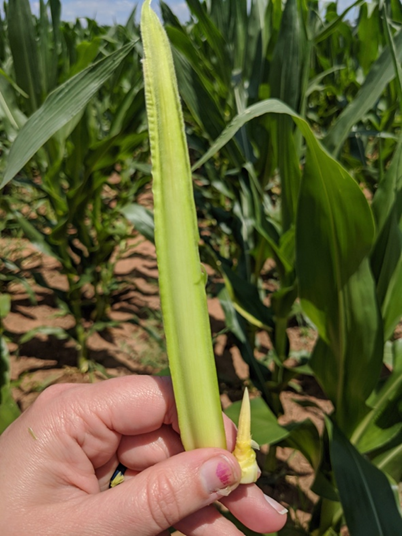
As corn approaches tasseling (VT), the crop enters a stage that is visually and physiologically important. Pollination, fertilization, and early kernel development occur at this time, and stress can have a critical impact on kernel set. However, by VT, the plant has already completed leaf formation, and much of the ear size potential has already been determined several growth stages earlier. Management at VT is therefore focused on protecting yield rather than creating it. Late-season nutrient applications may improve plant appearance or maintain green leaf area, but they cannot increase leaf number or rebuild ear potential lost due to early-season stress. This distinction helps explain why some late inputs show limited yield response even when the crop looks responsive.
Grain sorghum provides another clear example of why early management is emphasized. Although sorghum often grows slowly early in the season and may appear unimportant during the first few weeks after emergence, the first 30 days are among the most critical periods in its development. During this time, the growing point is actively producing leaf primordia and transitioning from vegetative growth toward reproductive development. Head size potential is primarily established during this early window, and the plant’s capacity to support tillers is influenced by early nutrient availability and moisture conditions. Stress from nitrogen deficiency, drought, weed competition, or restricted rooting during the first 30 days can reduce head size and kernel number long before visible symptoms appear.
Once sorghum reaches later vegetative and reproductive stages, much like corn at VT, management shifts from building yield potential to protecting what has already been determined. Improving conditions later in the season can help maintain plant health and grain fill, but it cannot fully compensate for early limitations imposed at the primordial level. This is why early fertility placement, timely weed control, and moisture conservation are consistently emphasized in sorghum production systems.
Across crops, a typical pattern emerges: the growth stages we observe in the field often reflect decisions the plant made weeks earlier. When agronomists stress early-season management, they are responding to plant biology rather than simply following tradition. By the time visible “critical stages” arrive, the plant has already established many of the components that define yield potential.
The key takeaway is that effective crop management must be proactive rather than reactive. Early-season decisions support the crop while it is still determining how many leaves it can produce, how large its reproductive structures can become, and how much yield it can ultimately support. Waiting until stress becomes visible often means responding after the plant has already adjusted its potential downward. Recognizing what is happening at the primordial level helps explain why management ahead of critical stages consistently delivers the greatest return, even when the crop appears small and unaffected aboveground.
For questions or comments reach out to Dr. Josh Lofton
josh.lofton@okstate.edu
Agriculture Apps, 200 strong and growing
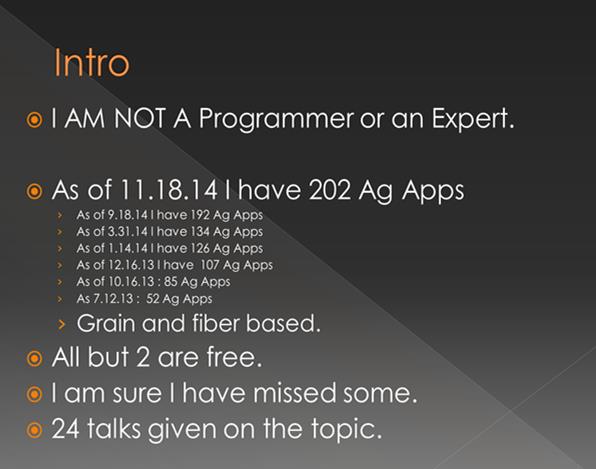
It was just 11 months ago when I wrote my last blog on Ag apps. Since that time I have presented on the topic several times, added nearly 100 new apps, have filmed several designated segment on sunup featuring apps (these can be seen at http://www.youtube.com/osunpk), and released two (soon to be three) apps myself. Below is the introductory slide I have been using in all of my app talks, on this slide you can see how the number of apps have been increasing overtime. In this update I wanted to share some of the new sections I have added to manage the vast number apps and go through some of my favorite apps in each of the sections.
Finding the right app has not changed as I still just give an app 3 minutes before a keep or drop decision is made, however since a year ago some of the key words are now less useful. For example a search for wheat will bring up droves of gluten free diet apps. None of these fit the bill for what I am looking for. Though out the blog you can click on pictures screenshots to get a better view of the app buttons.
Ag News and Weather

Still a very large section with little change for my recommendations, just go with what suits you in layout and reporting. I personally use RonOnRON (Ron Hays, the voice of Oklahoma Agriculture), DTN/PF, AG/Web, and AgWired.
Ag Resources

This includes peer review publications, resource guides and extension materials.
Calculators
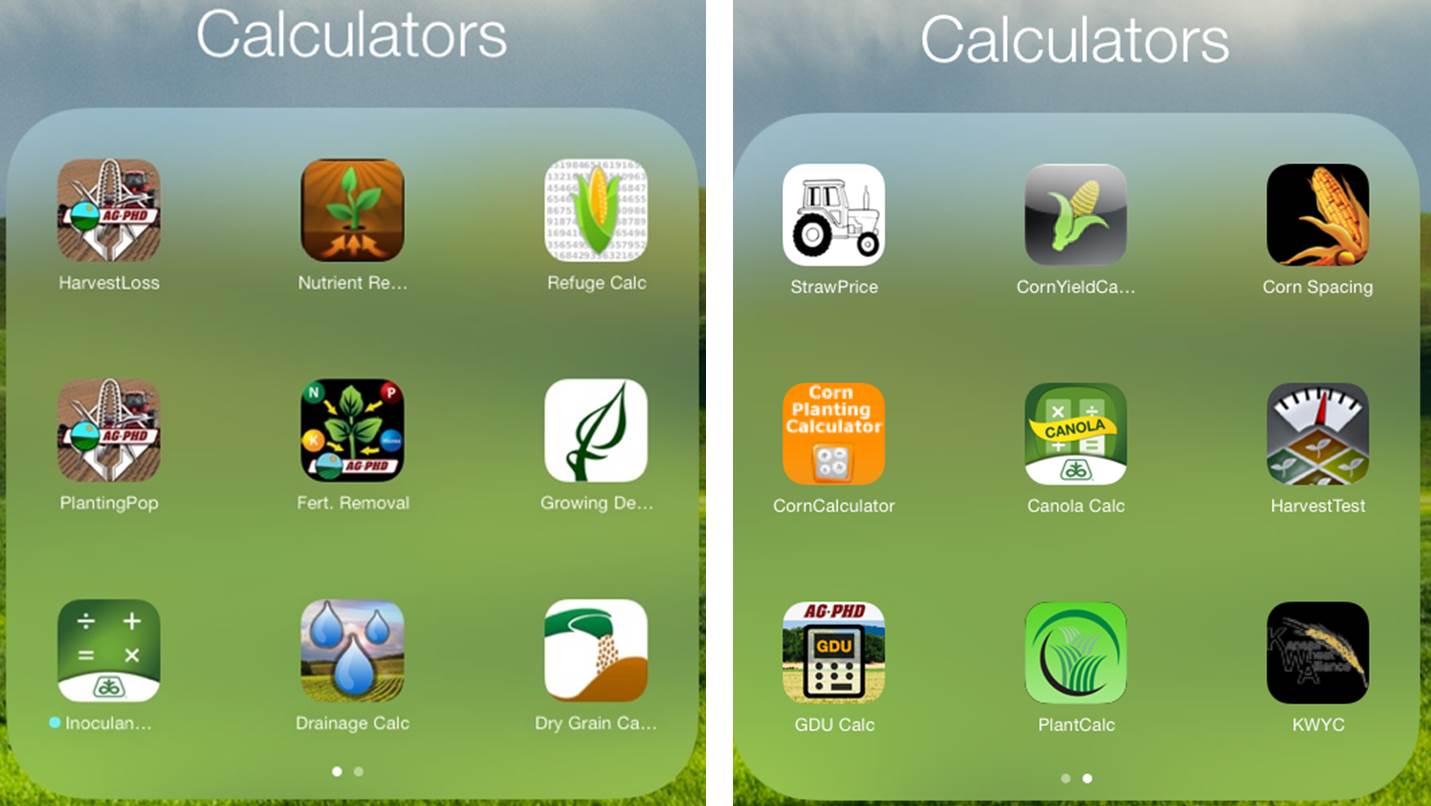
The majority of the Calculator apps preform relatively simple functions without the need of cellular or wifi connectivity. The Ag PhDs have two apps in the section I want to highlight, HarvestLoss and Fert. Removal. Both apps are useful tools in making management decisions. HarvestLoss allows the user to calculate the economic loss of a poorly set combine while Fert. Removal allows the user to select from a wide range of crops and see an exit ate of nutrient removal based upon selected yield level. Other useful apps are Growing Degree which allows the user to see cumulative heat units a crop has received anywhere in the US, Corn Yield Calc estimates corn yield based on ear girth and length, Canola Calc is a great apps produced by Pioneer which calculates the proper planting rate of canola based upon several factors and the Kansas Wheat Yield Calculator KWYC, uses growth stage stalk counts, height and/or NDVI to estimate potential grain yield.
Crop Tools

This section is filled with University Extension handbooks such as Purdue’s Field Guide ($12.99), University of Arkansas Corn Advisor, University of Kentucky Corn Production, and one private groups MFA Agronomy. Each of these guides are quality apps and should be chosen based upon geography or personal preference. The university apps mirror their respective hard copies however UK’s app added a nice update section highlighting local Ag news. MFA’s app is strong in pesticides with good herbicide performance data.
Fertilizer

For any producer who regularly applies animal waste the Manure Calc by the University of Nebraska is a great tool. The University of Wisconsin has a nice app in N Price Calculator and the Saskatchewan Soil Conservation association (SSCA) has created a nice fertilizer blend app. Oklahoma State University has Ammonia Loss Calculator which uses soil pH and environmental conditions to estimate N losses from surface applied urea.
OSUNPK
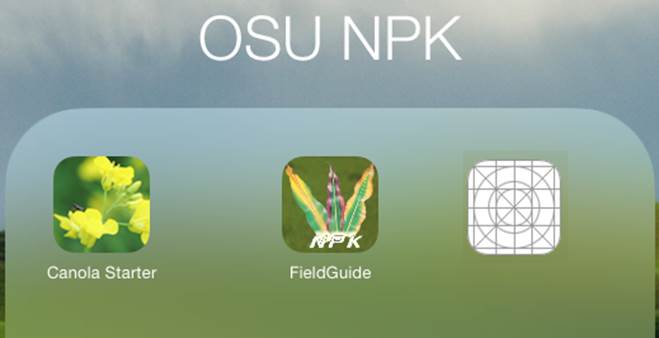
I am also getting into the app game with two recently released apps the Canola Starter and Field Guide. Canola Starter provides a recommendation for safe starter rates based on row width and fertilizer source. Field Guide is app version of my Nutrient Management Field Guide, this app includes a nutrient removal calculator, nutrient deficiency ID tool, and fertilizer rate calculators. Along with these I have several in the wings with titles like Crop Nutrients in Irrigation, GDDs>0, and Wildlife FoodPlot.
ID Tools
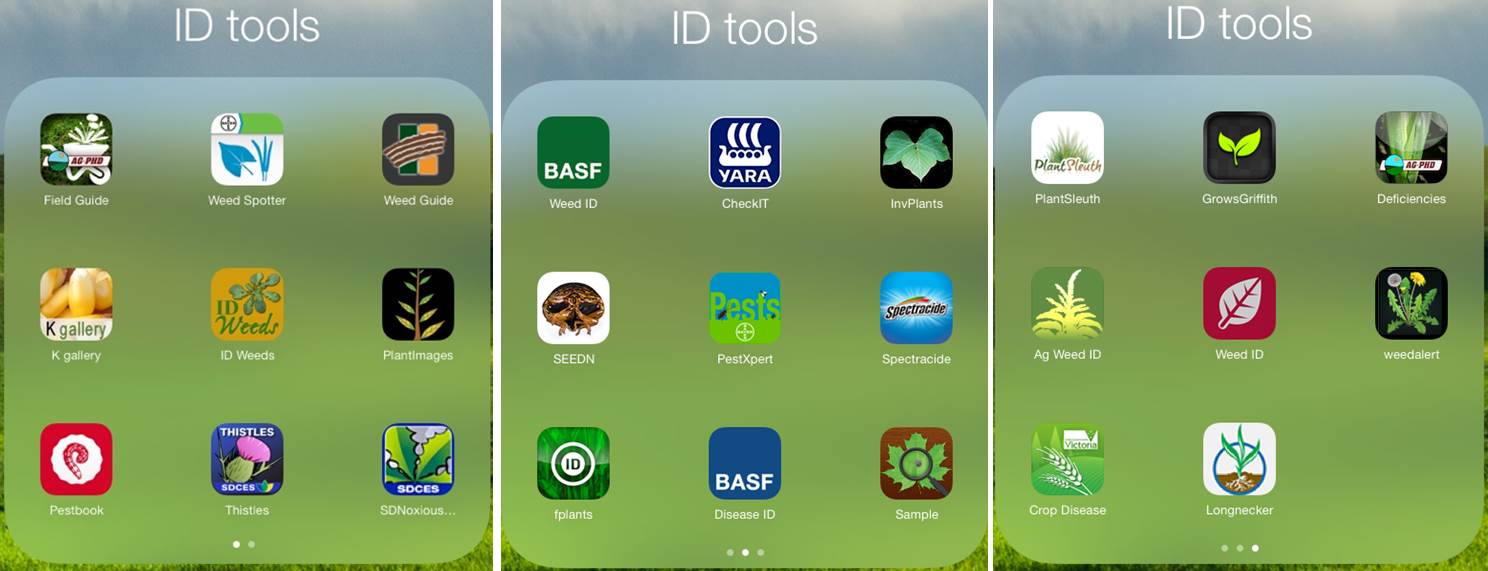
As mentioned in my first two blogs the University of Missouri’s IDWeeds app was the first taxonomy based weed identification tool. I still use it regularly but both BASF and Monsanto have brought products to the table, both named WeedID, that are very user friendly and effective. Plant Images ($5.00) is a library of nutrient deficiency photos from a large selection of crops. Years and Ag PhDs also have apps available with deficiency images named Yara Checkit and Crop Nutrient Deficiencies. Cereal Disease ID app by BASF is intended for the UK and DuPonts Pestbook for Australian cotton farmers but I find that both can be very useful even in Oklahoma.
Pay to Play, Registrations
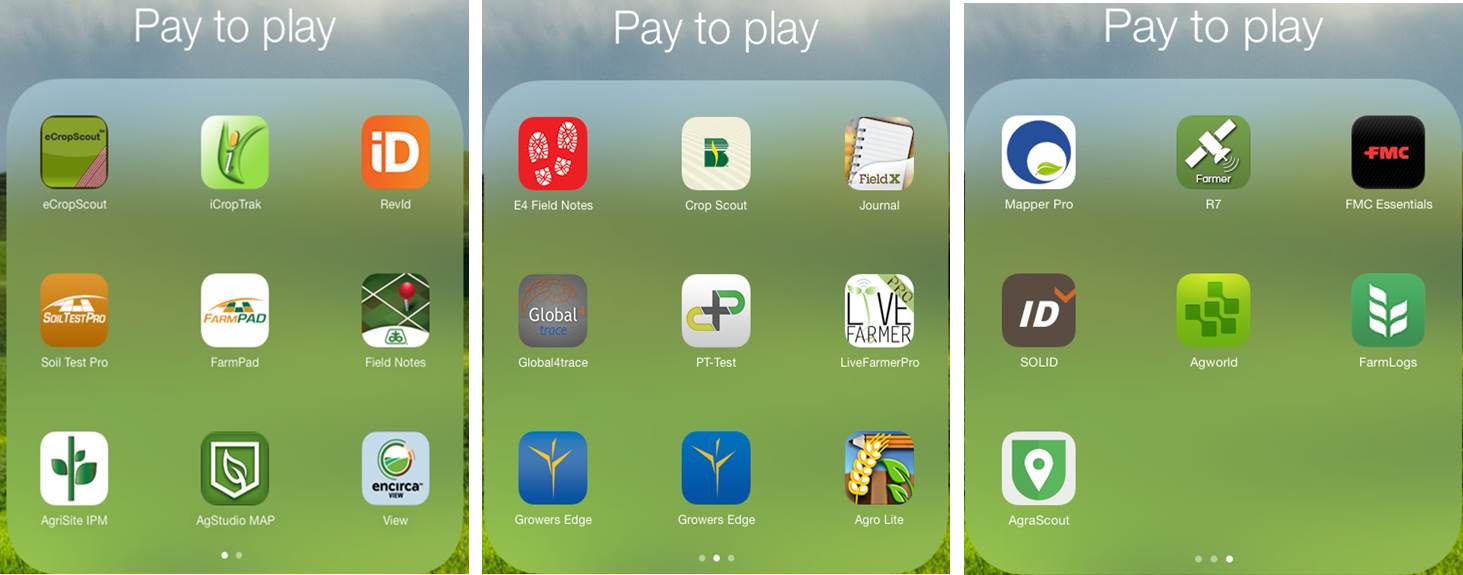
I have heard several good things about many of these apps. However they reguire the user to either be an employee or patron of the company or online registration. In a pay to pay app I would expect an all inclusive tool that could replace several free apps and preform record keeping duties.
Records
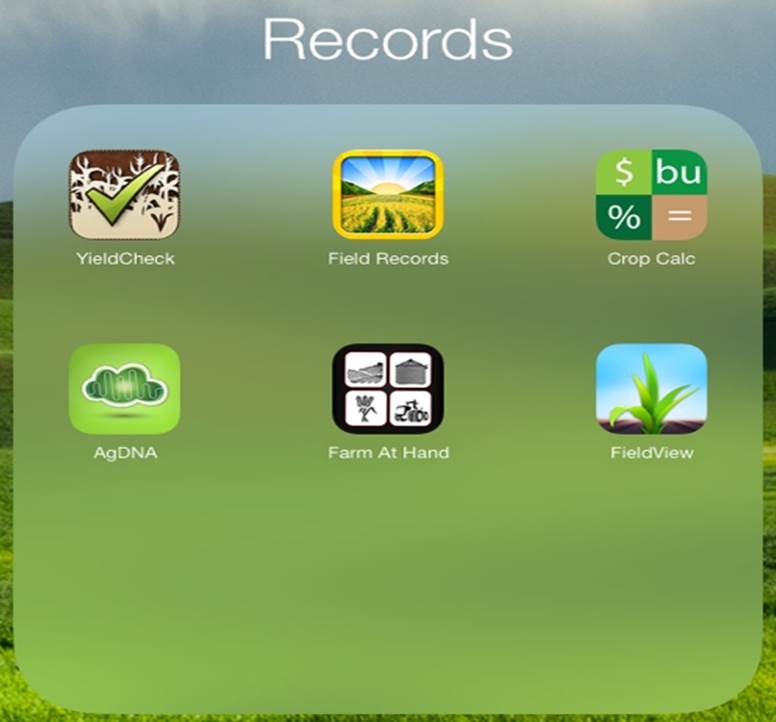
To be honest this is not a section I use much as I do not have an operation to maintain records on. However just by walking through the apps Crop Calculator by the University of Wisconsin and Pesticide Recordkeeping (PeRK) by University of Nebraska.
Scouting/Mapping

This section has apps that I classify as decision aid tools that could be used by someone scouting crops and apps that can be used to map and or collect field notes. South Dakota State has two great tools in Soy Diseases and NPIPM Soybean Guide. Scout and Sirrus.
Seed Select

Company based, Pioneers app products are some of the best with Plantability and Estimator
Sprayer Chemical

Some things haven’t changed I still use Tank Mix Calc and Spray Select on a very regular basis. But over the past year a few companies have added product finders and Clemson University has released a very nice sprayer calibration app named Calibrate.
Weather

The last two apps are Mesonet and Climate Corp Basic. You will notice the background on the screen shot is slightly different. That is because neither of these apps is kept Ina folder, both are on my home screen. Whether it is rain, temp, or wind weather impacts all aspects of agriculture therefore these two apps are always within one tap. For any producer in Oklahoma the Mesonet is an amazing system with 120 automated weather stations spread evenly across the state. This app just provides this data with just a few swipes of the finger. For those outside of Ok Climate Basic allows producers to first save field of interest and then monitor rainfall and environmental conditions of each field. While not extremely accurate it is defiantly close enough for those with a wide territory to be a very handy app.
For more information and some screen shots of the apps in action either visit my website http://npk.okstate.edu/presentations or my YouTube site http://www.youtube.com/osunpk under the playlist OSU_NPK on Sunup.
 Down and Dirty with NPK