
The challenge of collecting a representative soil sample
Guest Author, Dorivar Ruiz Diaz, Nutrient Management Specialist Kansas State University
At first glance, soil sampling would seem to be a relatively easy task. However, when you consider the variability that likely exists within a field because of inherent soil formation factors and past production practices, the collection of a representative soil sample becomes more of a challenge.
Before heading to the field to take the sample, be sure to have your objective clearly in mind. For instance, if all you want to learn is the average fertility level of a field to make a uniform maintenance application of P or K, then the sampling approach would be different than sampling for pH when establishing a new alfalfa seeding or sampling to develop a variable rate P application map.
In some cases, sampling procedures are predetermined and simply must be followed. For example, soil tests may be required for compliance with a nutrient management plan or environmental regulations associated with confined animal feeding operations. Sampling procedures for regulatory compliance are set by the regulatory agency and their sampling instructions must be followed exactly. Likewise, when collecting grid samples to use with a spatial statistics package for drawing nutrient maps, sampling procedures specific to that program should be followed.

Figure 1. The level of accuracy of the results of a soil test will depend, in part, on how many subsamples were taken to create the composite sample. In general, a composite sample should consist of 15 or more subsamples. For better accuracy, 20-30 cores, or subsamples, should be taken and combined into a representative sample. F
Regardless of the sampling objectives or requirements, some sampling practices should be followed:
- A soil sample should be a composite of many cores to minimize the effects of soil variability. Take a minimum of 12 to 15 cores from a relatively small area (two to four acres). Taking 20-30 cores will provide results that are more accurate. Take a greater number of cores on larger fields than smaller fields, but not necessarily in direct proportion to the greater acreage. A single core is not an acceptable sample.
- Use a consistent sampling depth for all cores because pH, organic matter, and nutrient levels often change with depth. Match sampling depth to sampling objectives. K-State recommendations call for a sampling depth of two feet for the mobile nutrients – nitrogen, sulfur, and chloride. A six-inch depth is suggested for routine tests of pH, organic matter, phosphorus (P), potassium (K), and zinc (Zn) (Figure 2).
- When sampling a specific area, a zigzag pattern across the field is better than following planting/tillage pattern to minimize any past non-uniform fertilizer application/tillage effects. With a GPS system available, recording of core locations is possible. This allows future samples to be taken from the same locations in the field.
- When sampling grid points for making variable rate nutrient application maps, collecting cores in a 5-10 foot radius around the center point of the grid is preferred for many spatial statistical software packages.
- Avoid unusual spots obvious by plant growth and/or visual soil color/texture differences. If information on these unusual areas is desired, collect a separate composite sample from these spots.
- If banded fertilizer has been used on the previous crop (such as strip tillage), then it is suggested that the number of cores taken should be increased to minimize the effect of an individual core on the composite sample results, and to obtain a better estimate of the average fertility for the field.
- For permanent sod or long-term no-till fields where nitrogen fertilizer has been broadcast on the surface, a three- or four-inch sampling depth would be advisable to monitor surface soil pH
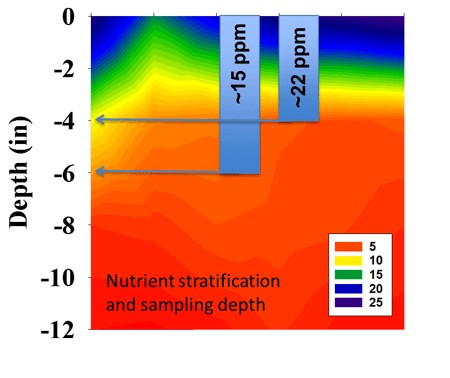
Figure 2. Consistency is sampling depth is particularly important for immobile nutrients like P. Stratification of nutrients and pH can be accentuated under reduced tillage.
Soil test results for organic matter, pH, and non-mobile nutrients (P, K, and Zn) change relatively slowly over time, making it possible to monitor changes if soil samples are collected from the same field following the same sampling procedures. However, there can be some seasonal variability and previous crop effects. Therefore, soil samples should be collected at the same time of year and after the same crop.
Soil test results for organic matter, pH, and non-mobile nutrients (P, K, and Zn) change relatively slowly over time, making it possible to monitor changes if soil samples are collected from the same field following the same sampling procedures. However, there can be some seasonal variability and previous crop effects. Therefore, soil samples should be collected at the same time of year and after the same crop.
Soil testing should be the first step for a good nutrient management program, but it all starts with the proper sample collection procedure. After harvest in the fall is good time for soil sampling for most limiting nutrients in Kansas.
For instructions on submitting soil samples to the K-State Soil Testing Lab, please see the accompanying article “Fall soil sampling: Sample collection and submission to K-State Soil Testing Lab” found in this eUpdate issue.
For any questions Contact.
Dorivar Ruiz Diaz, Nutrient Management Specialist
ruizdiaz@ksu.edu
How Does Soil pH impact Herbicides?
Misha Manuchehri and Brian Arnall
There are many factors that influence the persistence and uptake of a herbicide that has soil activity. One of those factors is soil pH or the amount of hydrogen (H) ions present in the soil solution. Some herbicides will persist for an extended amount of time or rapidly degrade when outside the pH window of 6.0-7.0.
The triazines (atrazine, simazine, etc.) and sulfonylureas (chlorsulfuron, metsulfuron, etc.) are two herbicide chemical families that are especially affected by soil pH (Table 1). The dinitroanilines, and the active ingredient clomazone also can be affected by low and high soil pH; however, degradation by light and/or volatility are more important when it comes to the activity of these herbicides. Generally, the triazines and sulfonylureas persist longer and are more available for plant uptake in higher pH soils (>7.0) while the opposite is true for imidazolinone herbicides (imazamox, imazapic, imazethapyr, etc.). Imidazolinones persist and are more available for plant uptake in lower pH soils (<6.0). The persistence of the triazines and sulfonylureas in high pH soils is a result of a decrease in chemical and microbial breakdown, a trend that is often observed in high pH soils where neutral herbicide molecules are loosely adsorbed to the soil and are more available for plant uptake. Conversely, in low pH soils, triazine and sulfonylurea herbicides become charged and are more tightly adsorbed to the soil where they are more susceptible to breakdown.
A key management factor that must be considered when evaluating a field’s soil pH is whether or not the field is no-till and for how long it has been in no-till. Tillage will impact how deep you should take soil samples to determine soil pH. In no-till and minimum tillage fields, the traditional method of 0-6 inch or 0-8 inch soil cores may not be adequate. Instead, a 0-2 inch core depth and a 2-6 inch core depth may be needed, since application of limestone to the surface may increase surface pH more than expected or application of nitrogen fertilizer to the surface may cause a drop in pH at the surface. In many long term no-till fields with historic surface applications of N and no lime applications, soil pHs in the low 4s have been observed while the 3-6” depth will be at a 6.0. Since herbicides with a soil residual are affecting plants just below the soil surface, this is the soil zone we are the most interested in.
Oklahoma and Kansas production fields can have a wide range of soil pH from field to field and within field. In a dataset of over 300 grid sampled fields from Oklahoma (259 fields) and Kansas (47 fields), the average field pH was a nice 6.0. However, the average range in the lowest and highest soil pH within the fields was 1.9. This means the average field had a pH range from 5.0 to 7.0. It should be noted that more than 25% of the fields had a pH range of 3.0 units. This range of highs and lows has helped explain the presence of spotty herbicide issues on several fields in the past and should be taken into account when planning crop rotations.
It is extremely important to know and understand the pH of your soils and the herbicides you plan to use and how they will react. Soil testing is the only way to know your soil pH and reading your herbicide label is a great way to learn if soil pH affects the herbicide you are applying.
Table 1. Herbicide chemical families or selected herbicides that are most affected by soil pH.
|
Herbicide chemical family or active ingredient |
Common name (trade name) examples |
Importance of soil pH |
Soil pH considerations |
|
Sulfonylureas |
Chlorsolfuron + metsulfuron (Finesse C & F), metsulfuron (Ally XP) |
Extremely |
pH > 7a – persist longer and are more available for plant uptake |
|
Triazines |
Atrazine (AAtrex), simazine (prince) |
Extremely |
pH > 7 – persist longer and are more available for plant uptake |
|
Imidazolinones |
Imazamox (Beyond), imazapic (Plateau), imazethapyr (Pursuit) |
Somewhat |
pH < 6 – persist longer and are more available for plant uptake |
aAcidic Soils < 5.5, Basic Soils > 7.5
Ag Apps, 5 Years Later
As I write this it does not seem possible that my first Ag App Blog was written over five years ago. https://osunpk.com/2013/07/30/agriculture-app-for-the-ipad-and-iphone/. When I wrote that first blog I had 76 apps on my iPad a year later I had over 200 apps on the same iPad posted the third app focused blog https://osunpk.com/2014/12/09/agriculture-apps-200-strong-and-growing/.
Today I still enjoy looking for apps and I am also having a lot of fun developing apps. With a team of computer science students we have released twenty eight apps in both iOS and Andriod platforms http://www.dasnr.okstate.edu/apps. After I had picked up a few new apps, broke the 300+ mark, I found that my five year old iPad 2 was not quite as quick as it used to be and I had to upgrade prior to doing my Scouting App Review https://osunpk.com/2017/08/03/scouting-app-review/.
Even after 300+ apps I still have a few of the same original suggestions, like the general rule of thumb “If I cannot figure it out in 3 minutes it’s GONE. An app should be intuitive, easy to use and have a purpose. They only exception to the 3 minute rule is the Scouting and Mapping Apps. Because of their complexity I allow them 5 minutes, and then I am done. Any app with GIS in its name gets much more time”. As far as searching for apps terms such as Corn, Soybean, and Wheat return more games and dietary apps than useful ag apps. Multiple key work searchers is important. If you find a good app go into iTunes or Google Play and check out the other apps created by the developer. Chances are if the developer has made one app you like there will be other well suited to your needs.

App Information page in iTunes or Google Play

See a list of all apps created by the developer.
But to be honest as you can expect of those 300+ apps 95% only get opened when I have to give a talk. Recently I have had request to update my list of apps but instead of spending the countless hours organizing my thoughts on the 300+, I decided on just sharing with you those apps which have made their way onto my cell phone because I do use them. Many of these are on my original blog 5 years ago.

Tank Mix Calculator by Farm Logic
Tank Mix is a handy app that allows the user to create chemical inventories, plan spray jobs, share the details and save for later. Minus wading through the list of chemical this is a very intuitive app and provides a great deal of information. The ability to create a library of chemical and application really streamlines the systems.
SPRAY SELECT Apple

Spray Select by TeeJet
Spray Select was the first app I downloaded. While over the years it has had its fair share of bugs, in my line of work this app is a gem. In a day I may go from spray a contact, to a fertilizer, to a systemic. Not to mention the wide range of GPAs I run at. Being able to to select my speed and GPA then have a list of tips and droplet sizes makes this app critical for my project. I primarily use TeeJet but if you use Hypro check out AgPhDs SprayTipGuide, if you use Greenleaf download NozzleCalc, JohnDeere has an app for their nozzles also.

FertRemoval by AgPhD
I have two Nutrient Removal Calculators on my iPhone the Fert Removal from AgPhD and Nutrient Removal from IPNI. I give Fert Removal the leg up because it provides nutrient values for more than just the macro nutrients.
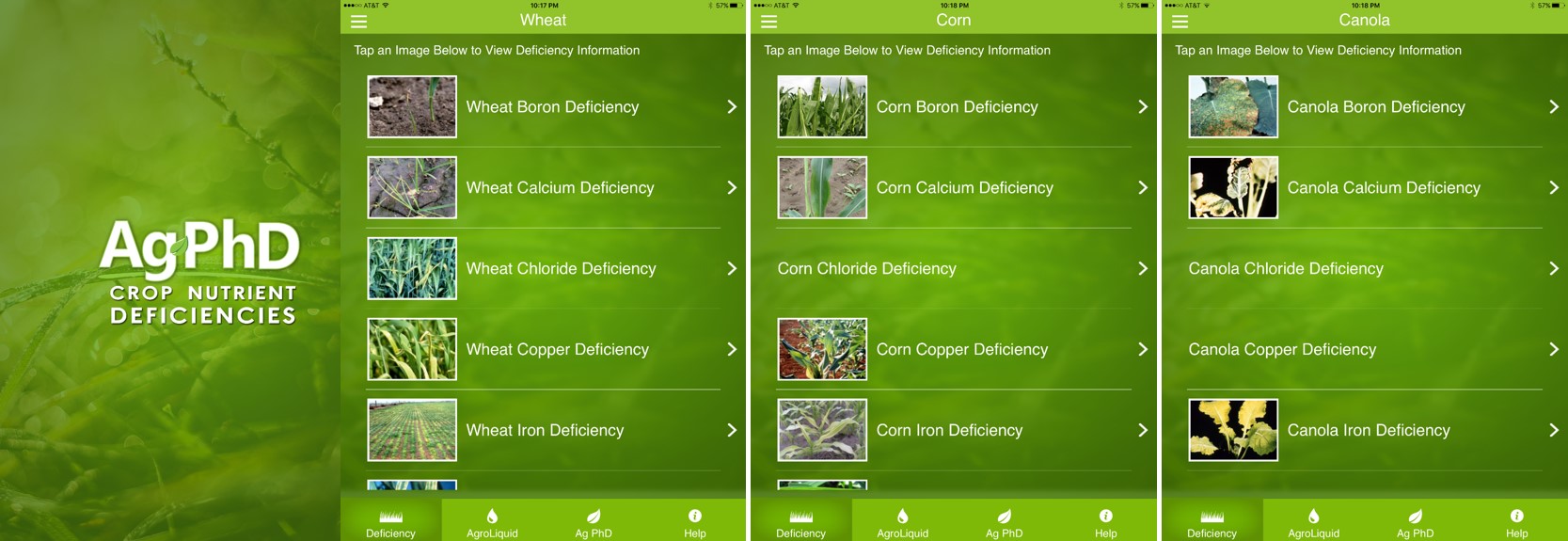
Deficiencies by AgPhD
The AgPhDs put out another nice app in Deficiencies. Nice funcitonality but image library is a bit limited. It is my hopes that they are adding to this over time. Much like with the nutrient removal tools I give second runner up in this group to the IPNI PlantImages app. It has a larger image data base but at the time of this blog it needs updating and is not functioning on all platforms. Both apps are on my phone and are great tools for someone new in the field, or someone who has been around a while but who’s client needs to a see a second opinion.
CORNYIELDCAL Apple Andriod Crop Calculators Apple Andriod
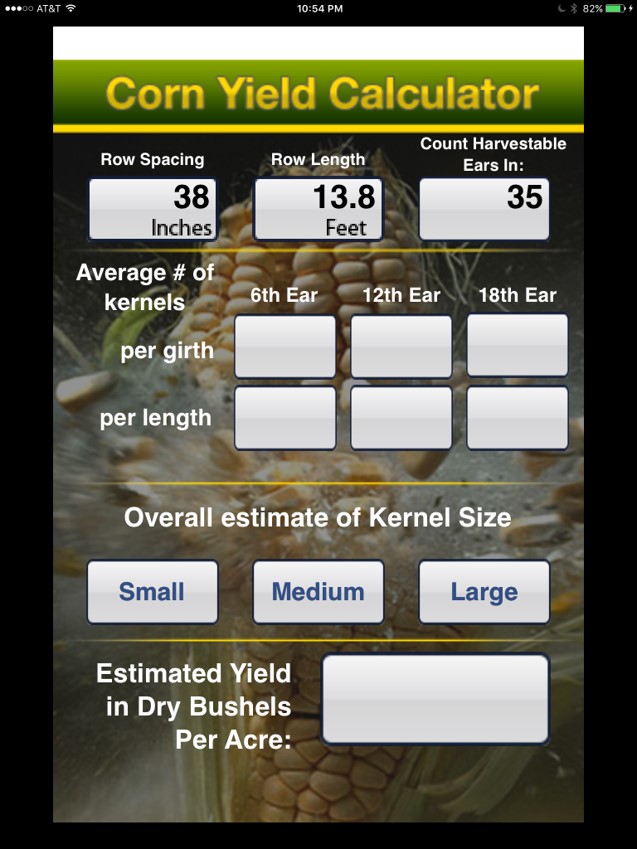
Corn Yield Calculator by Kinetic Thoughts
I like the easy of use for of the Corn Yield Calculator. It is a quick, easy, and clean way to estimate yield. However when I pulled the links for this app it seems as though since I first downloaded the app, a fee has been added, $2.99. For some of you it may be worth the charge. However University of Wisconsin has a nice app named Crop Calculators. It has several functions but the UI (user interface) is not as clean.
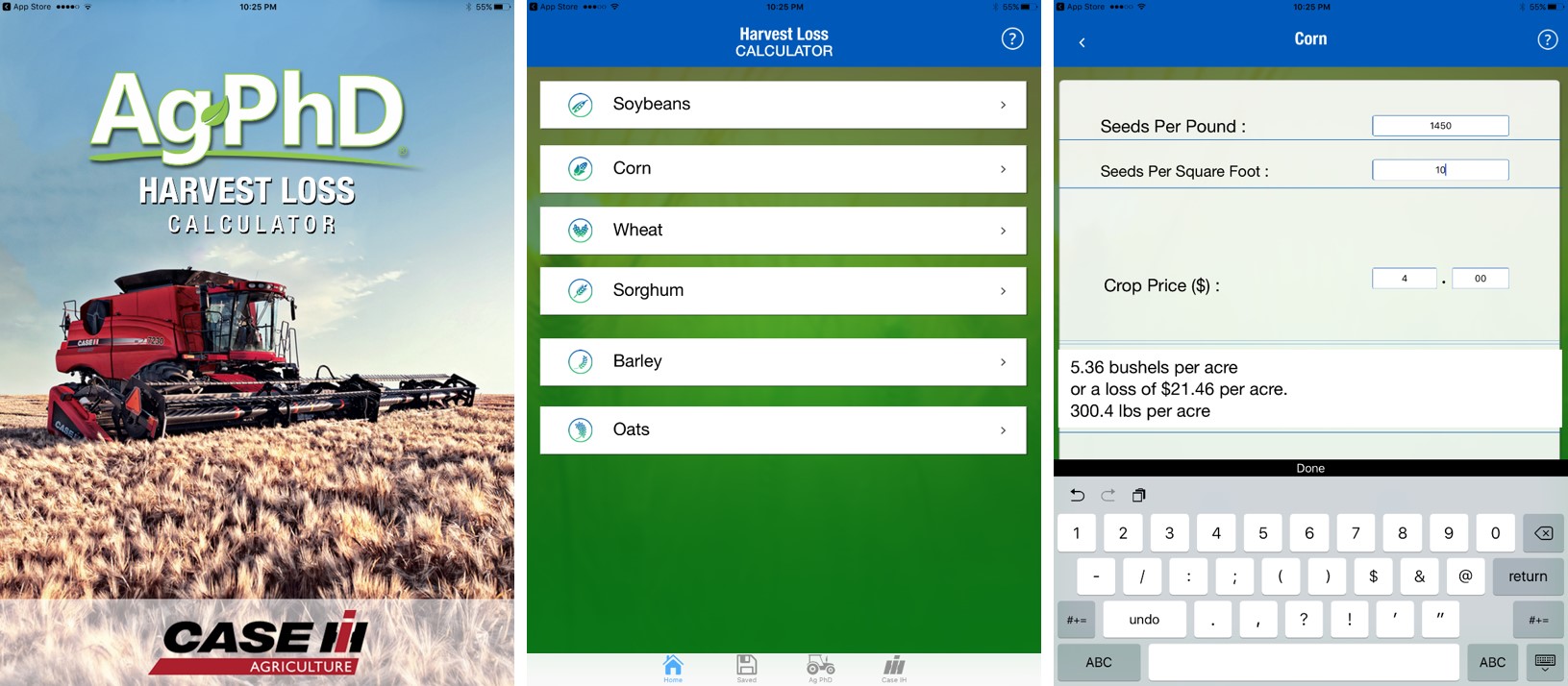
Harvest Loss by AgPhD
Another app by the Ag PhDs is on my list. For me the Harvest Loss App is what I use as an example for the perfect “app”. Harvest loss allows the user to choose the commodity and current price. Then the number of grains found in a square foot after harvest is counted. This provides an economic value to properly setting a combine. What more powerful tool than money lost is there to impact change.
IDWEEDS UM Apple Andriod WeedID Monsanto Apple Andriod
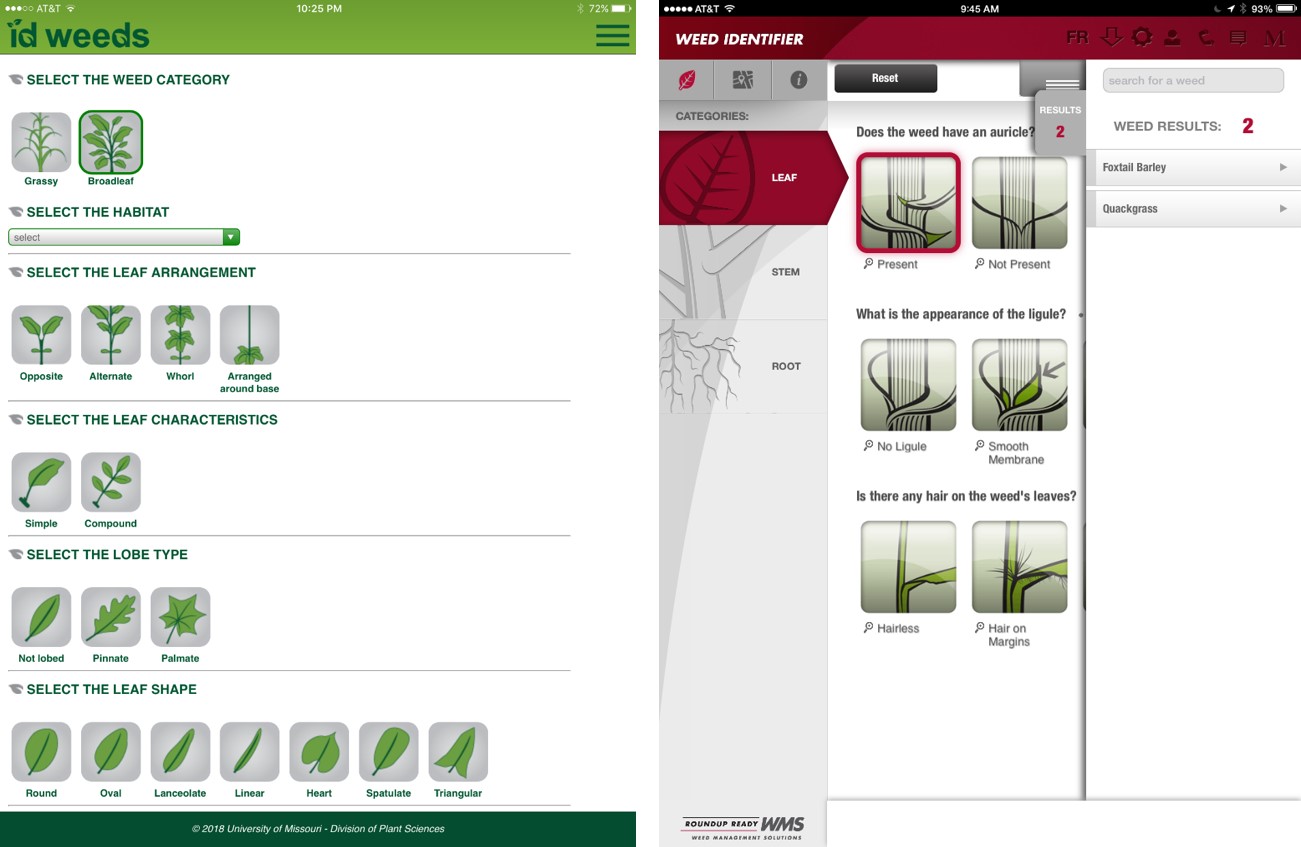
ID Weeds by University of Missouri and Monsanto
These are not the only Weed Identification apps, but they are my favorite. University of Missouri’s IDWeeds was the first of its kind and has made some fantastic improvements over the years. Monsanto’s WeedID app is, IMHO, one of the cleanest and nicest user interfaces available. Both function similarly, the user selects grass or broadleaf, then chooses the appropriate physiological features of the weed in question. A list of weeds fitting the description is compiled. Pictures and more in-depth descriptions are available.
DISEASEID Apple
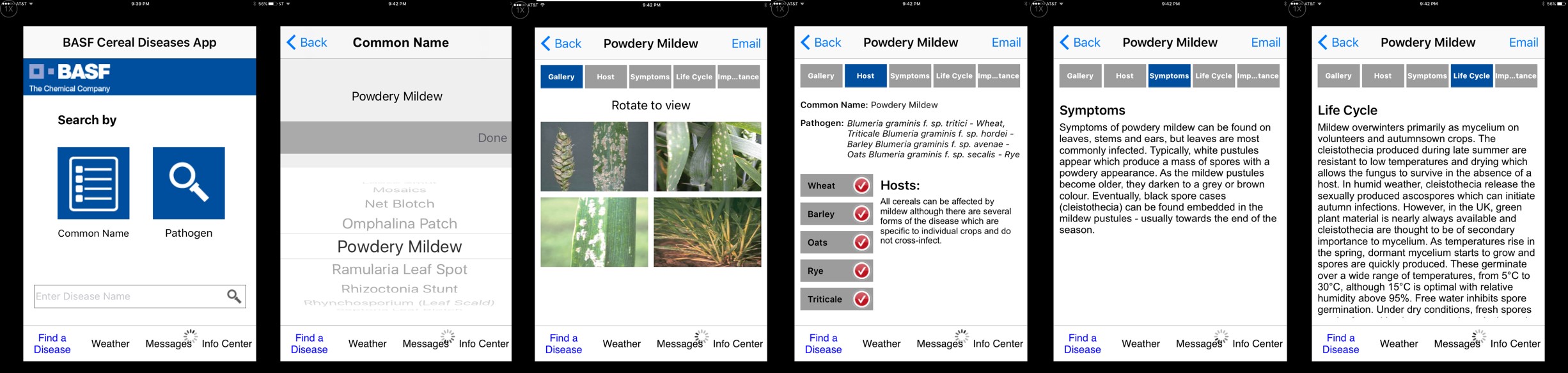
Disease ID BASF
While this app is built for the UK, being in the southern Great Plains wheat is king and this is a very useful app when it comes to cereal disease. While it does not have a good ID tool it has a great list of diseases, images and very in-depth descriptions.
COWPOOPANALYZER Apple
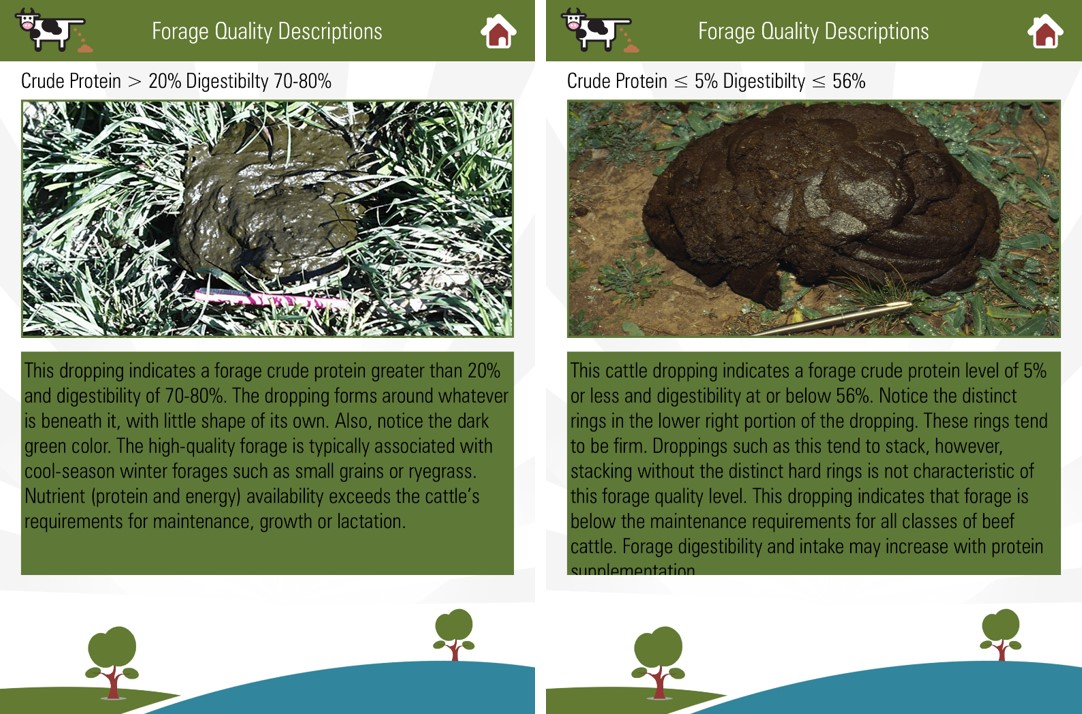
Cow Poop Analyzer by Texas A&M AgriLife Extension Service
This app just makes me smile. But it really does have some great features and could be quite useful or any cattle producer. By considering the consistency of the pile the quality of the forage/feed can be estimated.
SHAMELESS PLUG

Apps released by OkState Division of Ag and Natural Resources. See full list at http://www.dasnr.okstate.edu/apps
Of course I have all of the OSUNPK apps on my phone but here are a few that I think were homeruns. The full list can be found at http://www.dasnr.okstate.edu/apps
CANOPEO
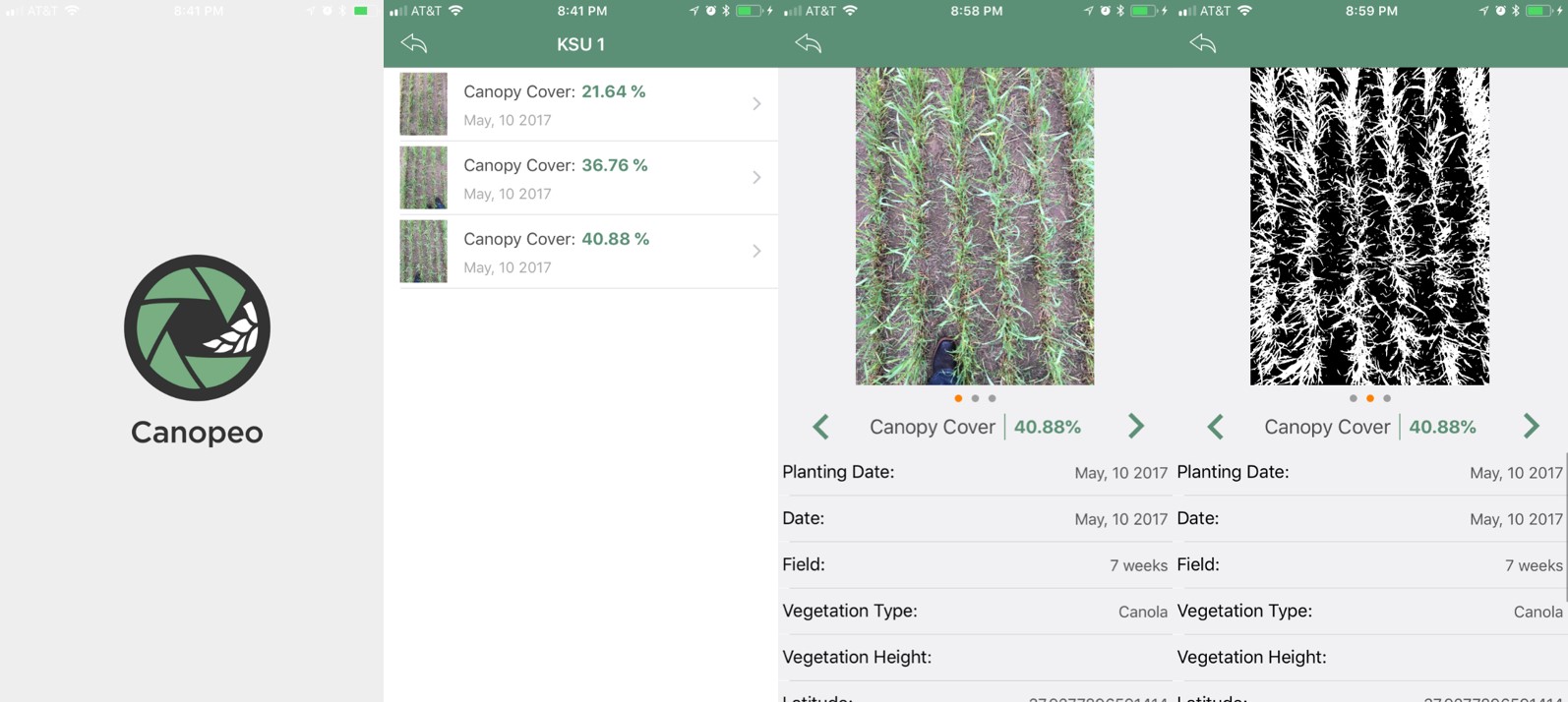
Canopeo
While Canopeo is not mine its the best thing since sliced bread. This app uses the camera on your phone or tablet to get a % canopy cover. The Android version even has a video version. The applications for this app are endless.
OKSTATE SOIL SAMPLE

OKState Soil Sample App
Designed for individuals who send samples to the OSU Soil, Water, and Forage Testing Labs (SWFAL). User can collect the GPS location of a sample, add notes, and tie it to your lab ID and sample number via a barcode. I know some who just use this app to get Lat Longs from sample points. At this point the app is not tied to the Lab system. But a file can be emailed with all of the saved data.
IRRIGATION
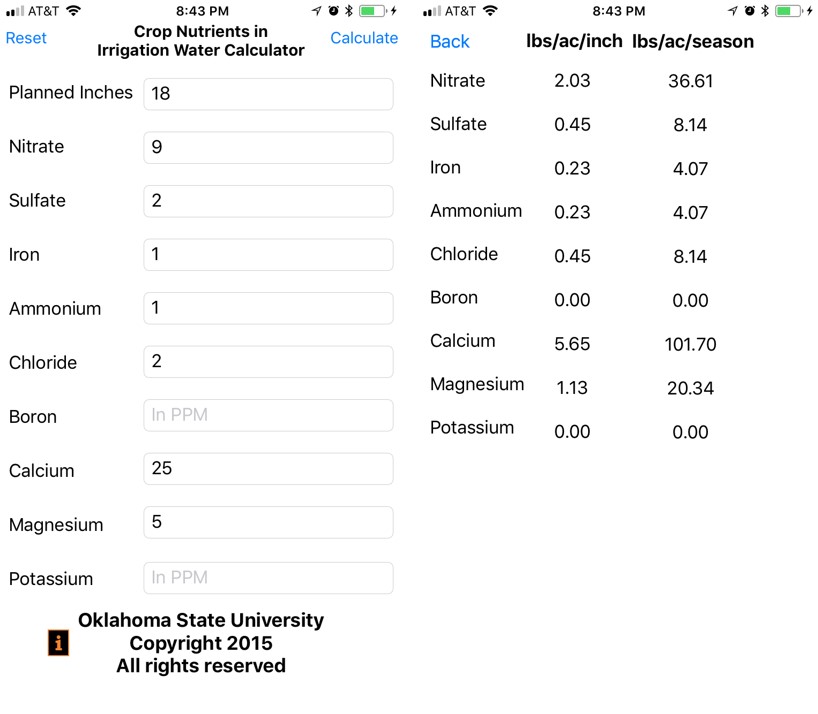
Crop Nutrients in Irrigation Water Calculator
Simple calculator that will calculate annual nutrient additions when you have a irrigation water test.
GRAINDRILLCALC

Grain Drill and Planter Calibration Calculator
Handy app built to help calibrate grain drills to sow canola with the added function of determining rates of other grains and fertilizers.
FOODPLOTS

Wildlife Food Plot Apps
Non Ag but extremely popular app designed for a DIY food plot. Pick your species of interest and planting window and a list of applicable plants and their agronomic recommendations are provided. Lists can be saved and shared.
PLOTCALC

Plot Calculator
Built to help graduate students prep fertilizer for plot application. The app also has a unit conversation calculator.
If you are free in the middle of July, make your way to InfoAg in St Louis (July 17-19, 2018). I will be going through these app and many more in a app review and demonstration. For more info on InfoAg check out their website. https://infoag.org/
Questions for comments fill free to contact me via email at b.arnall@okstate.edu
Soil sampling for pH and liming in continuous no-till fields
Quest Author, Dorivar Ruiz Diaz, Nutrient Management Specialist Kansas State University
One question that commonly comes up with continuous no-till operations is: “How deep should I sample soils for pH?” Another common question is: “How should the lime be applied if the soil is acidic and the field needs lime?”.
Sampling depth in continuous no-till
Our standard recommendation for pH is to take one set of samples to a 0-6 inch depth. On continuous no-till fields where most or all of the nitrogen (N) is surface applied, we recommend taking a second sample to a 0-3-inch depth. We make the same recommendation for long-term pasture or grass hayfields, such as a bromegrass field that has been fertilized with urea annually for several years.
Nitrogen fertilizer is the primary driving force in lowering soil pH levels, so N application rates and methods must be considered when determining how deep to sample for pH. In no-till, the effects of N fertilizer on lowering pH are most pronounced in the area where the fertilizer is actually applied. In a tilled system, the applied N or acid produced through nitrification is mixed in through the action of tillage and distributed throughout the tilled area.
Where N sources such as urea or liquid UAN solutions are broadcast on the surface in no-till system, the pH effects of the acid formed by nitrification of the ammonium will be confined to the surface few inches of soil. Initially this may be just the top 1 to 2 inches but over time, and as N rates increase, the effect of acidity become more pronounced, and the pH drops at deeper depths (Figure 1). How deep and how quickly the acidity develops over time is primarily a function of N rate and soil CEC (cation exchange capacity), or buffering capacity.
Where anhydrous ammonia is applied, or liquid UAN banded with the strip-till below the surface, an acid zone will develop deeper in the soil. As with long-term surface applications, these bands will expand over time as more and more N fertilizer is placed in the same general area. The graphic below (Figure 1) illustrates the effect of repeated nitrogen and phosphorus application with strip-till in the same area in the row middle on a high CEC soil for more than 12 years.

Figure 1. Soil pH stratification after 25 years of no-till and surface nitrogen fertilizer application, and the effect of repeated fertilizer application with strip-till in the same area after 12 years.
Liming application methods in continuous no-till
Where do you place the lime in continuous no-till?
If you surface apply N, then surface apply the lime. That’s a simple but effective rule. But remember that surface-applied lime will likely only neutralize the acidity in the top 2-3 inches of soil. So if a producer hasn’t limed for 20 years of continuous no-till and has applied 100 to 150 pounds of N per year, there will probably be a 4-5 inch thick acid zone, and the bottom half of that zone may not be neutralized from surface-applied lime. So, if a producer is only able to neutralize the top 3 inches of a 5-inch deep surface zone of acid soil, would that suggest he needs to incorporate lime? Not really. Research has shown that as long as the surface is in an appropriate range and the remainder of the acid soil is above pH 5, crops will do fine.
Liming benefits crop production in large part by reducing toxic aluminum, supplying calcium and magnesium, and enhancing the activity of some herbicides. Aluminum toxicity doesn’t occur until the soil pH is normally below about 5.2 to 5.5 and KCl-extractable (free aluminum) levels are greater than 25 parts per million (ppm). At that pH the Al in soil solution begins to increase dramatically as pH declines further. Aluminum is toxic to plant roots, and at worse the roots would not grow well in the remaining acid zone.
This implies that the acid zones from ammonia or banded UAN are probably not a major problem. We have monitored ammonia bands in the row middles of long-term no-till for many years and while the pH dropped very low, we never saw any adverse impacts on the crop that would justify liming and using tillage to incorporate the lime. In fact, some nutrients such as zinc, manganese, and iron can become more available at low pH, which can be an advantage at times.
Yield enhancement is not the only concern with low-pH soils, however. Herbicide effectiveness must also be considered. The most commonly used soil-applied herbicide impacted by pH is atrazine. As pH goes down, activity and performance goes down. So in acidic soils, weed control may be impacted. We do see that happen in corn and sorghum production.
Liming products for no-till
When choosing a liming product, is there any value to using dolomitic lime (which contains a large percentage of magnesium in addition to calcium) over a purely calcium-based lime product?
Most Kansas soils have high magnesium content. So as long as we maintain a reasonable soil pH, there normally is enough magnesium present to supply the needs of a crop. Calcium content is normally significantly higher than magnesium, so calcium deficiency is very, very rare in Kansas. The soil pH would need to be below 4.5 before calcium deficiency would become an issue. Before calcium deficiency would occur, aluminum toxicity or manganese toxicity would be severely impacting crop growth. So producers really don’t have to worry about a deficiency of calcium or magnesium on most Kansas soils.
What about the use of pelletized lime as a pH management tool on no-till fields?
The idea has been around for a while to use pel-lime in low doses to neutralize the acidity created from nitrogen and prevent acid zones from developing. . Pel-lime is a very high-quality product, normally having 1800 to 2000 pounds of effective calcium carbonate (ECC) per ton, and can be blended with fertilizers such as MAP or DAP or potash easily. Therefore, if you apply enough product this can be an excellent source of lime. Lime can be from various sources and with different qualities. Consecutively, to ensure a standardized unit of soil-acidity neutralizing potential, we use units of ECC.
Summary
Applying N fertilizer to soil will cause the soil to become acidic over time. Placement of the applied N and the level of soil mixing done through tillage determine where the acid zones will develop. Make sure your soil testing program is focused on the area in the soil becoming acidic, and apply the lime accordingly.
For any questions Contact.
Dorivar Ruiz Diaz, Nutrient Management Specialist
ruizdiaz@ksu.edu
PELLETIZED LIME – HOW QUICKLY DOES IT REACT
Each year the question comes in about lime source and rate. To help provide some answers I along with several county educators will be establishing both large scale strip demonstrations and small plot trails on producers fields across Oklahoma. Data collected from these project over the next four to six years will provide a great basis for future recommendations. But until we have more data I would like to share this article written by Dr. Lloyd Murdock. Dr. Murdock does a fantastic job describing the impact of source and rate on soil pH. Below Dr. Murdock contact is a list of relevant fact sheets and publications produced by Oklahoma State University.
Article written by: Lloyd W. Murdock, Retired Extension Soils Specialist
Pelletized lime is made by granulating finely ground agricultural (ag) lime. It may be dolomitic or calcitic depending on the nature of the original limestone. The fine lime particles are bonded together with lignosulfonates during the pelletizing process. In general, the pelletized lime contains about 9% lignosulfonates. Pelletized limestone is a product that has been on the market for many years. The price of the material on a per ton basis is considerably higher than bulk ag lime, so its use has mainly been confined to specialty markets, with little use in production agriculture. However, the product is becoming more commonly used in production agriculture. Some questions have been raised about recommended rates of this material and the speed at which it reacts compared to standard ag lime.
How Much Can the Rates be Reduced for Pelletized Lime?
The recommended rates and the effect on soil pH of any agriculture lime product is related to the neutralizing value of the lime, which is a combination of the purity (calcium carbonate equivalent) and the fineness of grind (particle size). As these two properties of lime change, so does the recommended rate of lime and its effect on soil pH. The finer the lime particles and the higher the calcium carbonate equivalent, the more effective the lime and the lower the rate of lime needed to make the desired pH change.
Bulk ag lime sold in Kentucky has an average neutralizing value of 67% when averaged for all quarries. All lime recommendations in Kentucky are based on this value. Therefore, if the neutralizing value of pelletized lime is substantially higher than 67%, then the recommendation should be lower. The information to calculate the neutralizing value should be on the pelletized lime bag, and the method to calculate the neutralizing value can be found in publication AGR-106,University of Kentucky College of Agriculture. For example, a high quality pelletized lime source may have a neutralizing value of 85. If this is the case, the lime rate can be reduced to 78% of what would be recommended for bulk ag lime. This is calculated by dividing the average neutralizing value of ag lime by the neutralizing value of the pelletized lime being used (67 ”85= 0.78). In this case, 1560 lbs/ac of pelletized would be required to equal one ton of ag lime. If less than this amount of pelletized lime is used, the expected soil pH change will probably not be obtained. As can be seen from this example, the recommended rates of pelletized lime cannot be greatly reduced as compared to bulk ag lime.
How Fast Will Pelletized Lime React?
The speed of reaction (rate at which the lime will change the soil pH) is mainly a function of surface area of the lime particles and their contact with the soil. The finer the grind of lime, the more the surface area, and the faster the reaction. Since pelletized lime is pelleted from finely ground lime, it is easy to assume that it will be faster reacting than bulk spread ag lime which has some larger, non-reactive particles as a part of its composition. However, this is not true. Based on research from several states, it appears that the pelletized lime reacts no faster to raise the soil pH than good quality ag lime applied at recommended rates. In fact, incubation studies at Michigan State University found the pelletized lime to have a slower rate of reaction. Field research from other states indicate the rate of reaction is about equal to ag lime.
The slower than expected reaction of pelletized lime is probably due to two things: 1) the lignosulfonate binding, and 2) the distribution pattern. The lignosulfonate binding must break down by solubilization or microbial action before the lime is released to neutralize the soil acidity, which would delay the speed of reaction. When the pelletized lime is spread, it is distributed on the soil in pellets and results in small concentrated zones (spots) of lime after the binder dissolves. The fine, reactive particles of ag lime, in contrast, are spread as more of a dust so that the lime is better distributed and not in concentrated spots. The bulk spreading method will allow the ag lime to contact a larger amount of the soil.
Summary
Pelletized lime is an excellent source of high quality lime. Its use in agriculture has been limited due to the price. The recommended rate of pelletized lime should be based on the neutralizing value of the lime and will probably be about 75 to 80% of that for average-quality bulk ag lime. Contrary to popular belief, the speed of reaction of pelletized lime is no faster than that of bulk ag lime. Thus, when comparing the two materials, less pelletized lime is needed to raise the soil pH to the desired level, but the increase in pH is no faster than with ag lime if both are applied on the basis of their neutralizing values.
Lloyd Murdock
Professor Emeritus
lmurdock@uky.edu
Phone (859) 257-9503 x207
Fax (270) 365-2667
Princeton Research & Education Center
1205 Hopkinsville St.,
Princeton, KY 42445-0469
OkState FactSheets.
PSS-2225 Soil Test Interpretations
PSS-2239 Causes and Effects of Soil Acidity
PSS-2240 Managing Acid Soils for Wheat Production
PT 2000-10 Liming Raises Soil pH and Increases Winter Wheat Forage Yields
PT 2002-15 The Risk of Not Liming
PT 2003-8 Lime Acid Soils: What You Should and Should not Expect
Nitrogen Management Report Card
During January and February I spent a lot of time on the road giving precision ag and wheat yield / protein talks. One thing about giving the same talk multiple times and spending countless hours on the road, about 70, is the time you have to think about the little things in your talk. This time around it was the slide below. The graph is from the 502 Long Term Fertility study located in Lahoma OK. When I first put the slide together in 2016 the purpose was to show how the yield and optimum fertilizer rate is extremely varied. I went in to the 55 plus years of yield data and pulled out the past ten years and identified the nitrogen treatment, only those with full P and K fertility, that economically maximized yield each year. With the graph I was able to show how the nitrogen rate required to maximize yield changes dramatically each year and where the amount of N was not directly correlated with yield. But after showing this graph a few times I thought that added lbs of N per bushel would help me highlight the point about changing N demand. That’s the blue numbers below each year. And of course out of curiosity I averaged the numbers. The ten year average was 1.5 lbs of N, which would suggest over a ten year period you would need to apply 120% of the N removed to optimize profit.
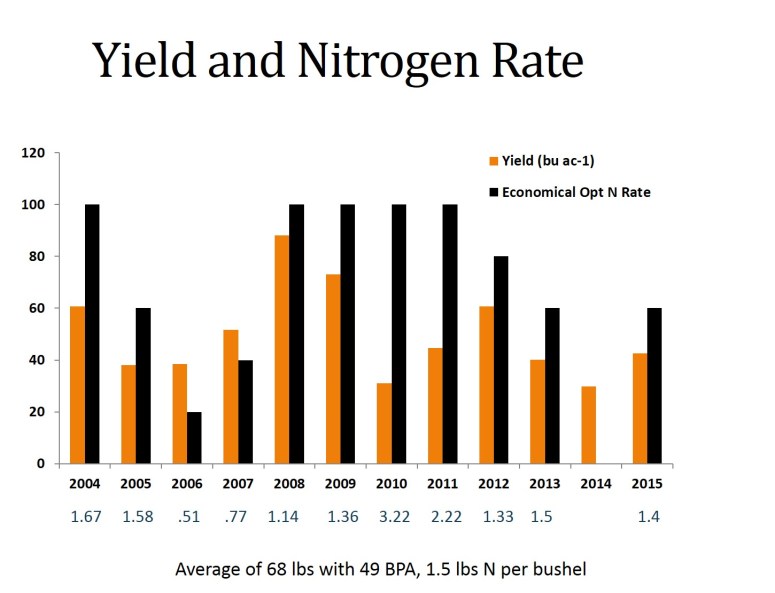
Selected data from the long term winter wheat study locate in Lahoma, Oklahoma. Study consist of a range of nitrogen, phosphorus, and potassium rates and combinations. The orange bar the grain yield of the plot with the economic optimum yield and the black bar is the N rate associated with the yield. The blue values on the bottom is the lbs of N required per bushel.
The 1.5 lbs per bushel over time was an important number. Not long before I had reached out to half of dozen producers that I have spent at least 5 years with working on their N management. My question to them, what was your average yield and average N rate over all your fields and years. Turns out that most of these producers who were using N-Rich strips and making 2 or 3 trips over the field were averaging 1.5-1.6 lbs N per bushel of wheat produced across a farm. Of course when they told me this I was excited, that’s such an improvement over 2.0 lbs of N per bushel.
The real thought came with me combining these two independent tid bits. Can we provide a Nitrogen Management Report Card if we look at several years of yield history? Let me preface what is presented below is not a scientifically tested or proved concept, yet. The more I think about it the more I am beginning to think that YES we can do a beneficial postmortem analysis. This is not a 1 year analysis, in fact based on the long term data I have been looking at there needs to be 5 years of data per field evaluated. I also strongly contend that this is a by field process. This will provide the opportunity to look at management over a broad spectrum of soil types and weather.
The calculation for lbs of N per bushel is not tough. In a continuous grain only winter wheat system you would add up the amount of nitrogen applied per acre over the period you are evaluating. Sum up the annual average grain yield and multiple that value by 1.3. Divide the total N applied by the total N removed per acre. This will be a decimal value, to compare with the tables below multiple by 100 to get a percent. Based on the long-term trials there needs to be at minimum five years of data. But the more the better.
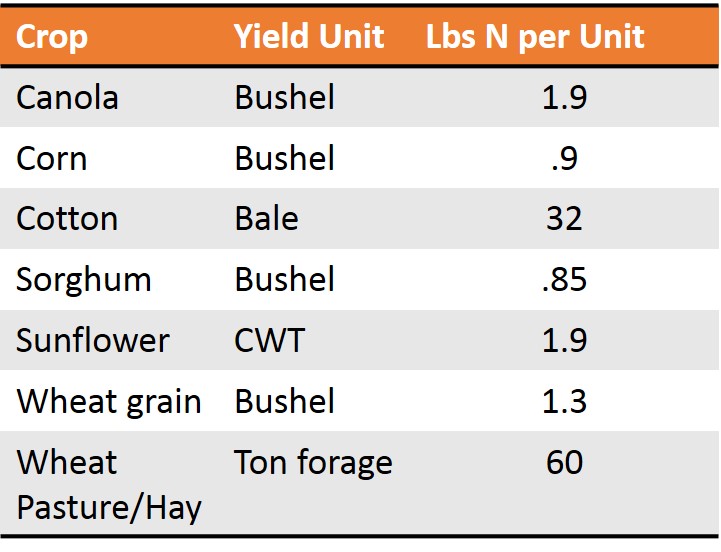
Pounds of nitrogen removed per one unit of yield harvested. These values are generalized averages and can change based on environment, management, and cultivar.
I would like to reiterate the grades provided below were not developed from any given data set. The report comments are of my own opinion. I do hope in the near future to utilize the Oklahoma State University long-term fertility studies to refine these tables.
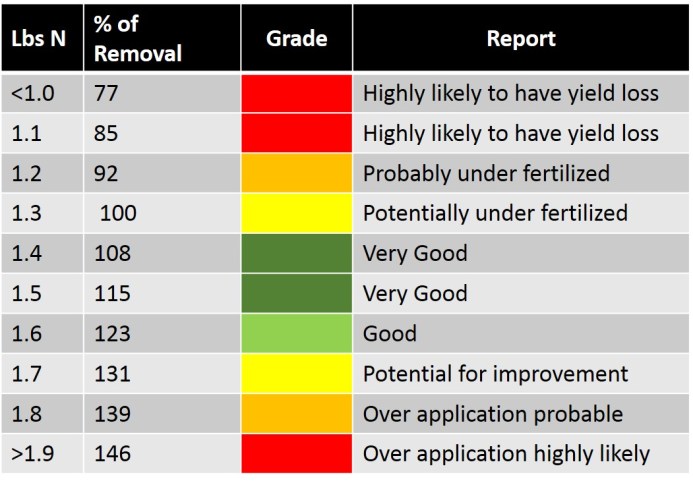
The Nitrogen Management Report Card for a continuous winter wheat grain only system. The first column is lbs of N per bushel, the second column is the percent of nitrogen applied per pound removed. The last column is the report on your nitrogen management strategy.
For a field with a crop rotation the way to calculate is the same you will just need to go into each harvest and multiple yield by the N in the crop, then sum up those values.
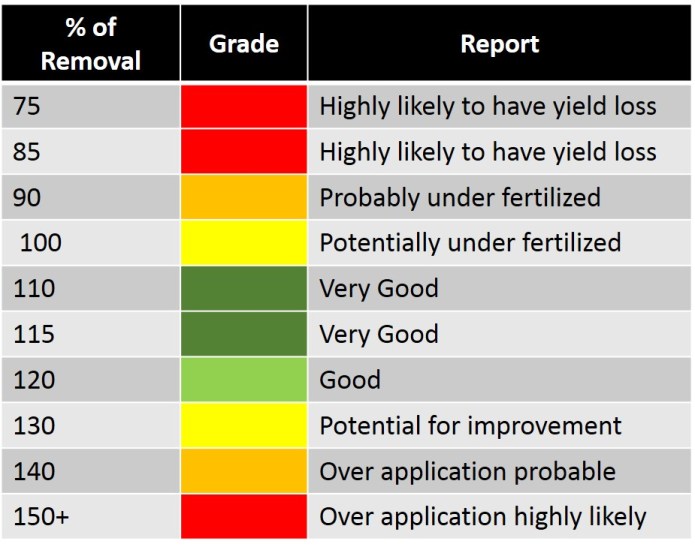
The Nitrogen Management Report Card for a Crop Rotation that does not include a legume. The first column is the percent of nitrogen applied per pound removed. The last column is the report on your nitrogen management strategy.
For a field with a crop rotation with legume (or cover crop), I have adjusted the grade scale with the assumption less total N will be needed due to the addition of N fixed by the legumes.

The Nitrogen Management Report Card for a Crop Rotation including a Legume. Legume nitrogen removal is not accounted for however grades are changed assuming some level of nitrogen fixation. The first column is the percent of nitrogen applied per pound removed. The last column is the report on your nitrogen management strategy.
Hopefully with concept will give you a different way to evaluate your N management strategies. This will not and cannot tell you what you need to apply next year. I mean just look at the data from Lahoma, from 2011 to 2015 optimum N rate ranged from 0 to 100 lbs N pre acre and N per bushel grown ranged from 0 to 2.2. Also as you look at the charts, understand that if you follow the old rule of thumbs 2.0 lbs N per bushel winter wheat and 1.2 lbs N per bushel for corn and sorghum, you are likely in the RED. These values are not that wrong for yield goal, 100% preplant application nitrogen management strategy. It is just with today technology, equipment, and agronomic practices we can do a lot better.
My final recommendations/comments would be:
1) If you are in the greens and yellows you are overall doing well. However there is always room for improvement. Are you currently accounting for the temporal variability in N demand, how about the spatial variability?
2) If you are in the orange and reds on the low side, are you there because you are underestimating yield or you are applying less because of grain prices?
There is likely money to be made by increasing yields with a little more nitrogen in these fields.
3) If you are in the orange and reds on the high side, are you there because you are consistently overestimating yield? Perhaps your yield estimation is not off but your lbs of N per bushel value is too high? Are you applying all of your N pre-plant. This practice is the most inefficient way, in terms of N use efficiency, to fertilize.
Questions or comments?
Please feel free to reach out to me via email or phone.
b.arnall@okstate.edu 405-744-1722
Re-Post: Sensing the N-Rich Strip and Using the SBNRC
This the recent rains across the dry wheat belt the N-Rich Strips are going to start showing up. Because I am re-posting ans older blog that walks users through the sensing process and inputting data in to SBNRC. But since post we have also release a iOS version of the Online Calculator. iOS N-Rate Calc
Original Post:
With the significant swing in temperature over the last few weeks many are chomping at the bit to get outside. The wheat is starting to respond to the good weather and N-Rich Strips are showing up around the state. Over the past week I have had several calls concerning the impact of the cold weather on the N-Rich Strips. Many of the fields either are still small due to limited days of warm weather and growth or may have a good deal of damage to the foliage. If the field of concern has only a little or no damage and the strip is visible, the time to go is NOW, but if you cannot see the strip and your field has tissue damage or is small, similar to the first two images, then you will need to wait a week or two for sensor based recommendations. Another situation fits with the third image, the field has freeze damage but the N-Rich Strip is also visible. In this case the predicted yield level would be reduced do to the dead tissue making the N rate recommendation a little off. I still however recommend using the sensor and online SBNRC (http://www.soiltesting.okstate.edu/SBNRC/SBNRC.php) to make or base top-dress N rate. Even if the recommendation is a little off it will still be much more accurate than just guessing. However you must look at the SBNRC and ensure that it makes agronomic sense, if it does not consult your county educator or myself. This is discussed in more detail in my earlier blog about freeze damage. Keep in mind no matter what, if you can see the N-Rich Strip, everything outside of the strip is suffering from nitrogen deficiency. Decisions and fertilizer applications need to be made soon, to maximize yield.
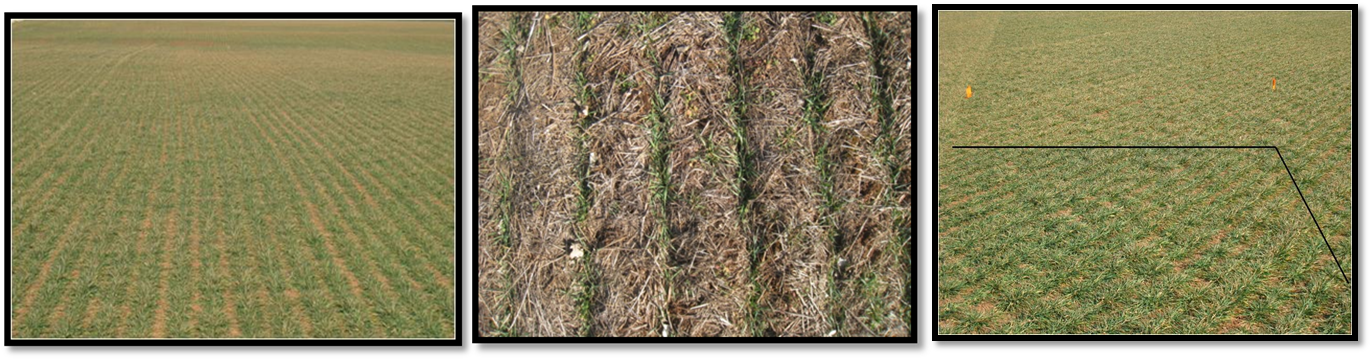
Winter Wheat and Nitrogen Rich Strips.
Regardless of whether or not the strip is visible you should be planning to sense with the GreenSeeker Handheld very soon. Remember the sensor has the ability to detect differences before your eyes can. To sense the N-Rich Strip and Farmer Practice the user should carry the sensor approximately 30 to 40 inches above the crop canopy while holding the sensor level over the crop. While you are walking the two area the trigger should be held the entire time. I recommend walking at minimum 100 paces for each. The average NDVI value seen on the screen will only stay on the screen for a few seconds. Therefore it is critical you have a method of recording the number for later use. The sensor has limited memory so it will time out is the trigger is held for an extended period of time. If you wish to collect more NDVI readings just do it in multiple trigger pulls recording each. Once you have the average NDVI for the N-Rich Strip and Farmer Practice you can go to the SBNRC site mentioned above to retrieve the N rate recommendation. Once in the calculator, for those in Oklahoma, choose the “within Oklahoma” option in the bottom left hand corner of the screen. This will allow the calculator to access the Oklahoma Mesonet to determine growing degree days. After the location is picked from the options you will need to enter Planting Date and Date Prior to Sensing. Additional information requested is the expected grain and fertilizer prices. While these inputs will provide some economic evaluations they will not impact recommended N rate.
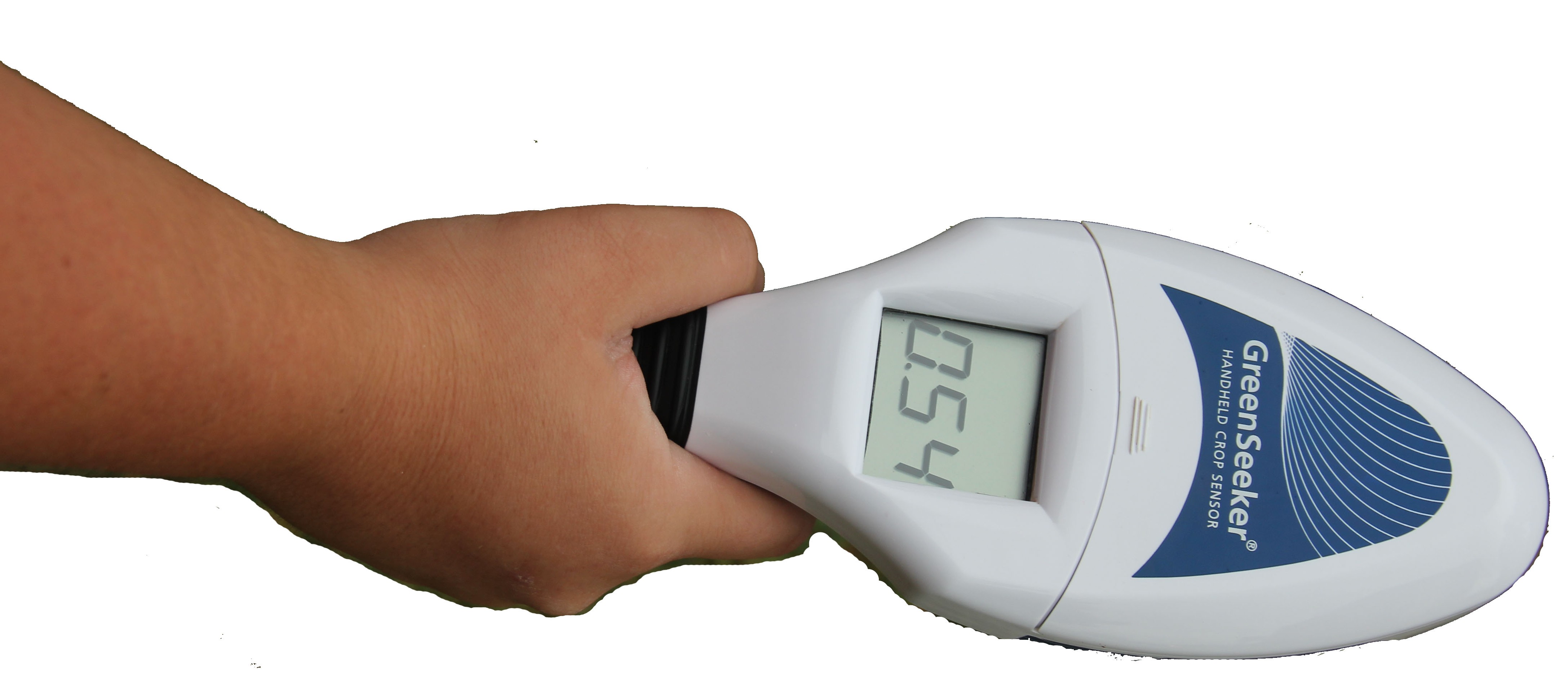
GreenSeeker HandHeld NDVI Sensor
Below is a YouTube video in which I describe how to use the GreenSeeker to collect NDVI readings, describe the data needed to complete the online calculator, and how to interrupt the calculators output.
Poly versus Ortho another year of data from Iowa
Guest Author, Dr. Jake Vossenkemper; OkState Grad and Agronomy Lead, Liquid Grow Fertilizer
Updated Research Comparing Ortho/Poly-Phosphate Ratios for In-Furrow Seed Safe Starter Fertilizers. Last years post Link
Article Summary
- Ortho-phosphates are 100% plant available, but a high percentage of poly-phosphates in starter fertilizers convert to ortho-phosphate within just two days of application.
- This quick conversion from poly- to ortho-phosphate suggests expensive “high” ortho starter fertilizers are not likely to result in increased corn yields compared to seed-safe fluid starters containing a higher percentage of poly-phosphate.
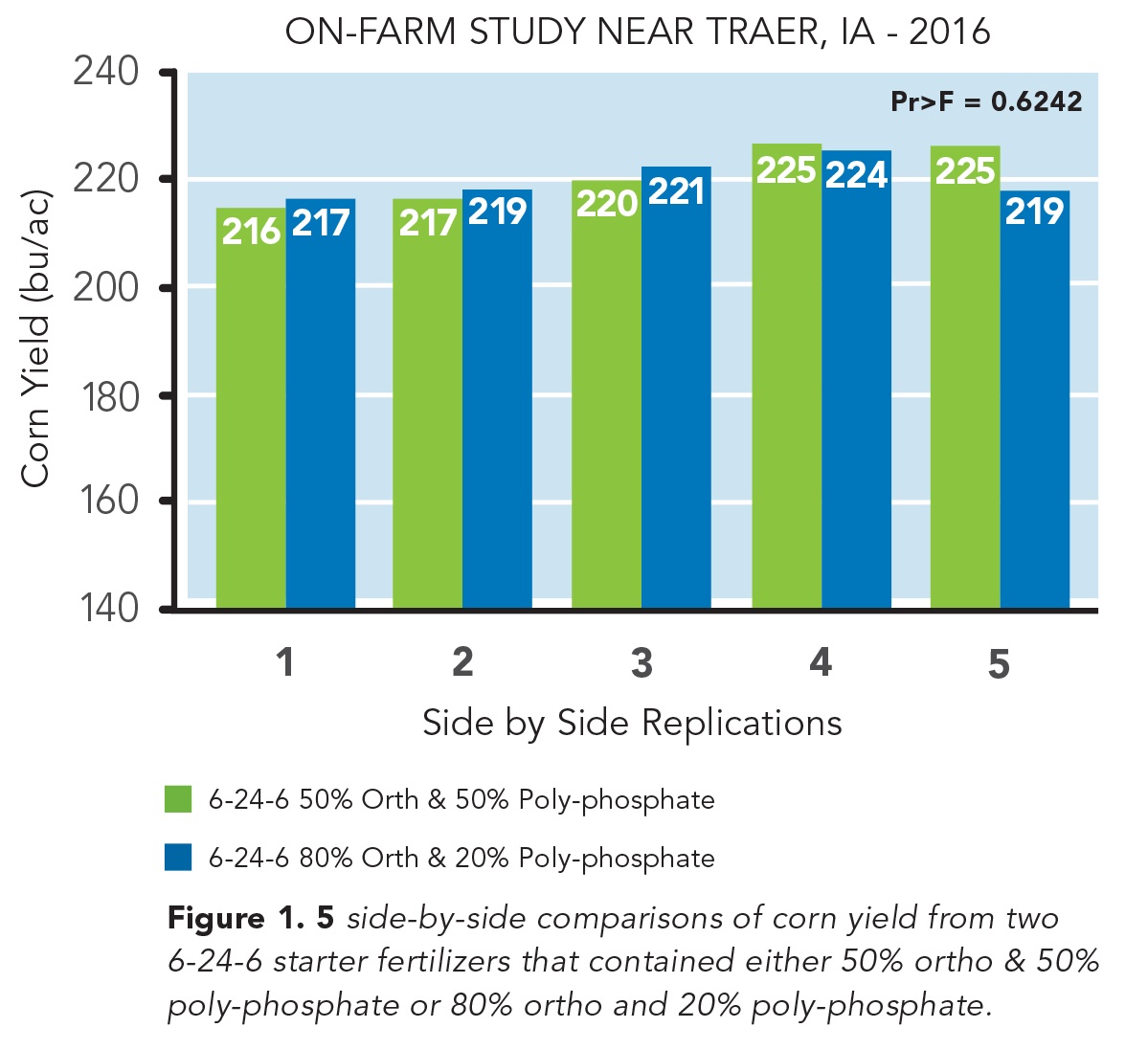
- On-farm field studies conducted near Traer, IA in the 2016 and 2017 growing season found no statistical difference (Pr > 0.05) in corn yield between conventional and high ortho-phosphate starters in either year.
- High ortho starters cost more per acer than 50/50 ortho:poly starters, but do not increase corn grain yields.
Polyphosphates Rapidly Convert to Plant available Orthophosphates
Given polyphosphates are not immediately plant available and orthophosphates are immediately plant available, this gives the promoters of “high” orthophosphate starters ample opportunity to muddy the waters. Nevertheless, the facts are, polyphosphates are rather rapidly hydrolyzed (converted to) into orthophosphates once applied to soils, and this hydrolysis process generally takes just 48 hours or so to complete.
In September of 2015, we posted a blog discussing some of the more technical reasons why the ratio of ortho to polyphosphates in starter fertilizers should have no impact on corn yields. For those that are interested in the more technical details, we encourage you to follow this link to the September 2015 blog post.
While we was relatively certain that the ratio of ortho to polyphosphates in liquid starters should have no effect on corn yields, we decided to “test” this idea with on-farm field trials located near Traer, IA in the 2016 and 2017 growing seasons.
How the Field Trial Was Conducted
In these field trials, we used two starters applied in-furrow at 6 gal/ac. Each starter had an NPK nutrient analysis of 6-24-6. The only difference between these two starters was the ratio of ortho to polyphosphates. One of these starters contained 80% orthophosphate and the other contained just 50% orthophosphate. With the remainder of the phosphorus source in each of these two starters being polyphosphate. Each plot was planted with a 24-row planter (Picture 1) and was nearly 2400 ft long. In both the 2016 and 2017 growing seasons the experimental design used was a randomized complete block with 4 or 5 replications.

Field Trial Results
Averaged over the side-by-side replications there was less than 1 bu/ac difference in corn grain yield between the high ortho and low ortho polyphosphate starters in both the 2016 and 2017 growing seasons. In addition to finding no differences in grain yield between these two starters, the high ortho starters generally cost about $1 more per/gal (so the $6/ac difference in price at a 6 gal/ac rate) than the low ortho starters. So the more expensive high ortho starter clearly did not “pay” its way in our multi-year field trials.
More Trials Planned for 2018
While our findings agree with other research-comparing ortho and polyphosphate starter fertilizers (Frazen and Gerwing. 1997), we want to be absolutely certain that our fertilizer offerings are the most economically viable products on the market. Therefore, we have decided to run this same field trial at one location in northern, IL in 2018, and at one location in central, IA in 2018. Stay tuned for those research results next fall.
References
Franzen D. and J. Gerwing. 2007. Effectiveness of using low rates of plant nutrients. North Central regional research publication No. 341. http://www.extension.umn.edu/agriculture/nutrient-management/fertilizer-management/docs/Feb-97-1.pdf (accessed 8 of Sept 2015).
A big Thank You to Dr. Vossenkemper for sharing this article with us.
The original article and his contact can be found at Link
Its Dry and its Time to Top-dress.
Normally the alarm for beginning wheat topdressing gets sounded right away in early January. However, it might be understatement to say this year has been dry so far – “drier than a popcorn fart” may be a better description. At the time of writing this blog, a significant portion of the Oklahoma wheat belt has now gone 90+ days with less than 0.25” of rain. The great folks at Mesonet reminded us on January 18 that the long term forecast is not providing us much hope either.

The Oklahoma Mesonet tweet from Jan 18th the current lack of rain status and the impending lack of more rain. 1.18.2018
Because it has been dry and no significant rain is in the current forecast, the question is what do we do now about topdressing? This is a tough question to answer as there is not a really “good” option at the moment to be honest. Here are some thoughts to consider:
- In the parts of the state where it is dry and dry deeper than the majority of the rooting zone (> 6”), we should not worry about filling up the nitrogen tank as long as the water tank is empty. As it stands currently, the best option is to hold off for now and wait to apply topdress N right in front of a real chance of rain. The good news is we still have some time yet to get N applied and not limit yield potential if we do get that rain. Ideally, we need the N down in the rooting zone just prior to jointing. Several things, including the number of potential grain sites, are determined just prior to jointing, and it is imperative that the plant has the fuel it needs to complete these tasks. Jointing occurs around the end of February in southern OK and around the second week of March in northern OK. Jointing also marks the beginning of rapid nitrogen uptake by the plant which is used to build new leaves, stem, and the developing grain head. The nitrogen stored in these plant parts will be used to fill the grain later in the season, and the plant is dependent on this stored nitrogen to complete grain fill. And while it does seem like it right now, we still have the potential to make a decent crop if we can get rain before we break winter dormancy. If we do not get the rain though soon as it is appearing, we will not have spent as much money on this crop by holding off on topdress N, and the likelihood of getting the return on our N investment goes down as our yield potential goes down.
- What we can and should do right now is apply N-rich strips. An N-rich strip can help put your mind more at ease by taking the guesswork out of knowing if nitrogen needs to be applied and how much should be applied. The N-rich strip can be as simple as using a small lawn fertilizer spreader with a bag of urea. You local county extension educator can also provide more information on N-rich strips and even has access to lending small fertilizer spreaders!
For those producers who have too much ground and cannot cover all of it just prior to a rain or for those who want to apply now as they are worried about nitrogen being limited after it does start raining, here are few more considerations:
- For conventional-tilled fields that have limited to no residue, applying UAN through streamer nozzles is an okay option. Why? With UAN, there is a very high percentage of soil-fertilizer contact. This immediately improves the efficiency compared to urea. In fields with crop residue, flat fan nozzles are not recommended right now as the likelihood up of N tie-up is too high.
- For no-till fields, the two big concerns are ammonia (NH3) volatilization with dry urea and tie-up on the residue with liquid UAN. Picking the best option in this scenario is a much tougher decision with not a real good conclusion. So, here it goes. If there is tall standing stubble with dry soil below, the dry urea gets the edge. Why? If the stubble is not in a mat, the urea prill can work its way down towards the soil surface. If it can get there, it is out of the high winds, and it will remain there until we get a rain, heavy dew, or increase in humidity. Is there still a chance for loss due to volatilization? Absolutely. Again, it goes back to whether there is any chance that you can wait to apply?
- There have been some questions about using urease inhibitors with broadcasting urea. That is a good question, but it is hard to make an argument for their use until we get a good chance of rain in the 10-day forecast. Typically, these products do not have the life span to hold off urease (i.e., the enzyme that breaks urea into NH3) for more than 10-12 days.
The latter points also apply to those who use the local co-op or ag retailer for application. Some of these groups require 30 days or more to cover all of the acres they service.
Since it is dry and we still have some time yet to apply N, this may turn out to be the perfect year to topdress urea with a grain drill. For those interested in this method, you can find research results from last year on this topic, as well as a calibration guide, by clicking here . More information about nitrogen applications that are “thinking outside the box” can be found by clicking here.

Using a 3pt Conventional double disk tye drill to apply urea in-season
For more information contact Brian Arnall or David Marburger.
Managing Protein in Hard Red Winter Wheat.
A result of the 2016-17 winter wheat crop was a significant amount of discussion focused on protein levels. For two years running now, the protein levels have been low across the board. Low protein brings in a challenge to sell, could impact local basis, and even more concerning is that low protein is an indicator that nitrogen was limiting during grain fill. Therefore, the field maximum yield potential was not achieved. In this blog, we talk about what protein is, what can be done to maintain a good protein level, and what can be done to increase protein if desired.
First, the definition of protein is any of a class of nitrogenous organic compounds that consist of large molecules composed of one or more long chains of amino acids and are an essential part of all living organisms, especially as structural components of body tissues such as muscle, hair, collagen, etc., and as enzymes and antibodies. Protein is also one of the many attributes that determines end-use quality and marketability of winter wheat. Sunup TV met with Dr. Carver in the baking and milling lab to create a great video discussing wheat quality impact on baking and milling.
We determine protein by measuring the percent of nitrogen in the grain and multiplying by a factor of 5.7. So if the grain has N % of 2.5, the protein content is 14.25. The amount of N in the grain is affected by many variables such as weather during grain fill, yield level, and N availability during grain fill. If weather is conducive to good grain fill and test weight is high, we will often see protein values dip. On the other hand when grain fill conditions are hot and dry and we have light test weight, wheat protein will be higher. Research has shown (Figures 1 and 2) that generally as yields increase protein levels decrease. Of course if N is limited during grain fill, the N available for the grain is reduced, and the plant is forced to get all grain N from re-immobilizing N in the leaf tissue.
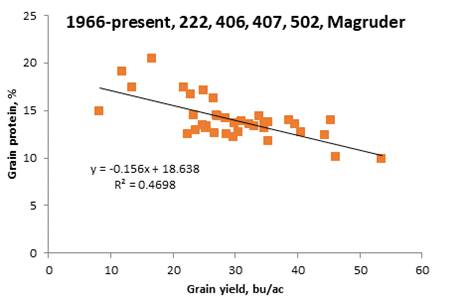
Fig 1, Yield and protein averages from all of the OkState Long Term fertility trials. Data courtesy Dr. Bill Raun.

Fig 2, Grain protein and yield of from intensively managed wheat. Data Courtesy Dr. Romulo Lollato KSU.
Maintaining Protein, and yield.
Managing nitrogen to maintaining protein and maximizing yield comes down to making sure that N is available at critical growth periods. With wheat, the critical uptake stage is typically the time frame between hollow stem and soft dough. The two graphs below show nitrogen uptake in wheat and barley. If the same graph was made for dual purpose wheat, the upward swing would start sooner but would follow the same general trend.

Fig 3, Nutrient Uptake of Wheat found in “Agricultural and Biological Sciences » “Crop Production”, ISBN 978-953-51-1174-0, Chapter 5 By Juan Hirzel and Pablo Undurraga DOI: 10.5772/56095″

Fig 4, Nitrogen uptake in Barley at two nitrogen rates. http://apps.cdfa.ca.gov/frep/docs/N_Barley.html
When it comes to making sure N is available during this time of peak need, the only way we can do that is apply just before it is needed. This means split application. While putting all the nitrogen out pre-plant as anhydrous ammonia is the cheapest method, it is also the method that provides the lowest nitrogen use efficiency and is most likely to show deficiencies late in the season. One of the challenges with 100% preplant N application is that years with good yield potential coincide with years with good/high high rainfall, which means more nitrogen loss. Some interesting results from studies implemented in the 2016-17 cropping season showed the importance of nitrogen application timing. The study is determining how long nitrogen application can be delayed after the N-Rich strip becomes visible (https://osunpk.com/2013/09/19/nitrogen-rich-strips/). For the study, 90 lbs of N was applied on one of the treatments at planting When that plot became visibly greener or bigger than the rest, N application was triggered. After the 0 DAVD (Days after visual difference where the day had growing degree days >0), another treatment was applied every 7 growing days for 63 growing days. Each plot, excluding the zero N check, received 90 lbs as NH4NO3 (we use this to take the variable of volatilization out of the data). In all cases, 90 lbs applied in late January to early February was better than 90 lbs pre-plant. Keep in mind there was 0 N applied at planting for each DAVD application timing; yet, we still hit 50-80 bushel wheat with nothing but in-season N. This is the result of supplying the N when the plant needs it. I should add this is just one year of data, and every year is different. The study is being replicated again this year and will be highlighted at the Lahoma field day.
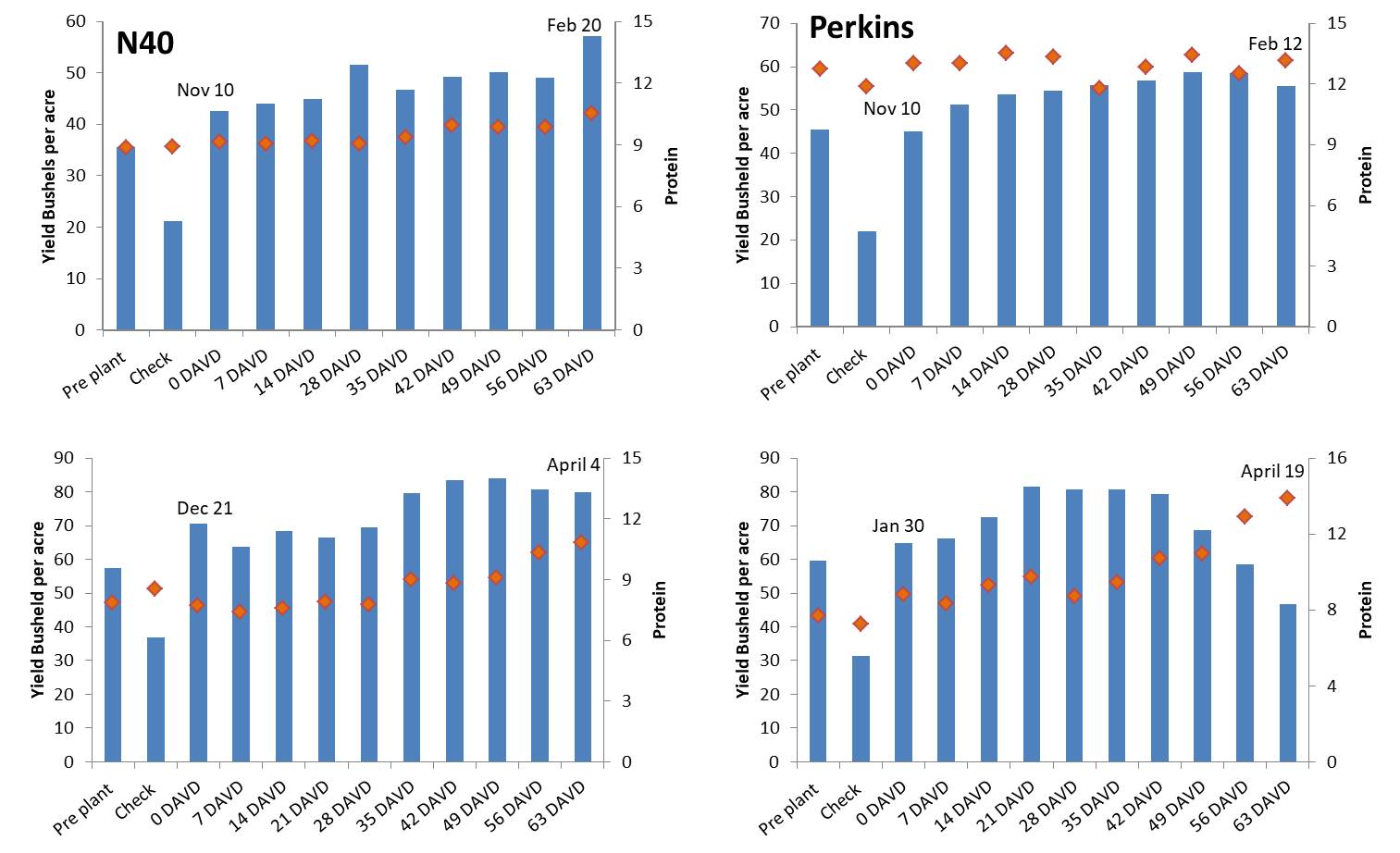
Fig 5, Results from the 2016-2017 delayed nitrogen study led by Mr. Joao Bigato Souza. The trials consisted of a preplant plot, unfertilized check plot, and then a series treatments in which N application was based on days from a visual difference between the pre-plant and check. All fertilized plots received 90 lbs N as NH4NO3. DAVD is days after visual difference. (Error in bottom left graph, the last date should be March 27 not April 4)
For dual-purpose wheat, the total amount of N expected for the forage production needs to be applied pre-plant. Oklahoma State recommends 30 lbs N for every 1,000 lbs of forage expected For grain-only wheat, there needs to be only 20 to 40 lbs of N available to the crop when planted (this includes residual N). The remaining N should be applied at green up or early spring. The only way to ensure that N is applied when the crop needs it is to utilize the N-Rich Strip method. Having a N-Rich strip in your field lets you know when the wheat needs more nitrogen and when it does not.

Fig 6. Nitrogen Rich Strip (N-Rich) showing up in a No-till wheat field.
Two years testing the N-Rich Strip and Sensor based nitrogen rate calculator (SBNRC) from the Texas boarder to the Kansas boarder showed that the SBNRC on average reduced N but maintained yield and protein when compared to standard farmer practice (Table 1).

Table 1. Results from testing the Nitrogen Rick Strip and Sensor Based Calculator Method across Oklahoma wheat fields.
Increasing Protein
Some producers may plan to market high protein for a premium if available. Fortunately, there are opportunities to increase protein via management. While most of the strategies for increasing protein happen later in the growing season, some of the early decisions can be a significant contributing factor. Variety selection and keeping the plant healthy and free of competition (i.e., pest management) throughout the growing season are going to increase the opportunity to produce high protein wheat. After that, the equation goes back to Figures 3 and 4 and making sure the crop has access to nitrogen during peak periods, including grain fill. If you will note, the bottom two graphs of Figure 5 both show significant increases in protein on the later applications. For both locations, this was when N (90 lbs N ac-1) was applied after full flag leaf emergence. There has been a significant amount of work at OSU looking at late application of N stretching back into the 1990s http://nue.okstate.edu/Index_Publications/Foliar_N_Curt.pdf. The focus has been looking at timing, source, and rate. The take home of decades of work can be summarized as such. Yes, protein can be increased with late season application, but not always. Applying N at or after flowering has a significantly greater probability of increasing protein than a application at flag-leaf. Source of N has had little impact if managed properly (UAN, 28-0-0, has to be watered down so that it does not burn the plant). The rate of N does matter quite a bit. Most of the work suggests that for every pound of N applied, the percent grain protein could increase by .05%. So to increase protein from a 12.5% to 13.5%, it would require approximately 20 lbs of N per acre. My work has shown the same trend that a 20 lbs application at post-flowering had more consistent increases in protein than lower rates at the same time or similar rates applied at flag leaf.
This wheat season we are looking to improve our knowledge of management on protein content through multiple studies by continuing the evaluation of varieties and management practices.
If you have any questions for comments please feel free to contact me.
Brian A.
B.arnall@okstate.edu

