Home » Posts tagged 'wheat'
Tag Archives: wheat

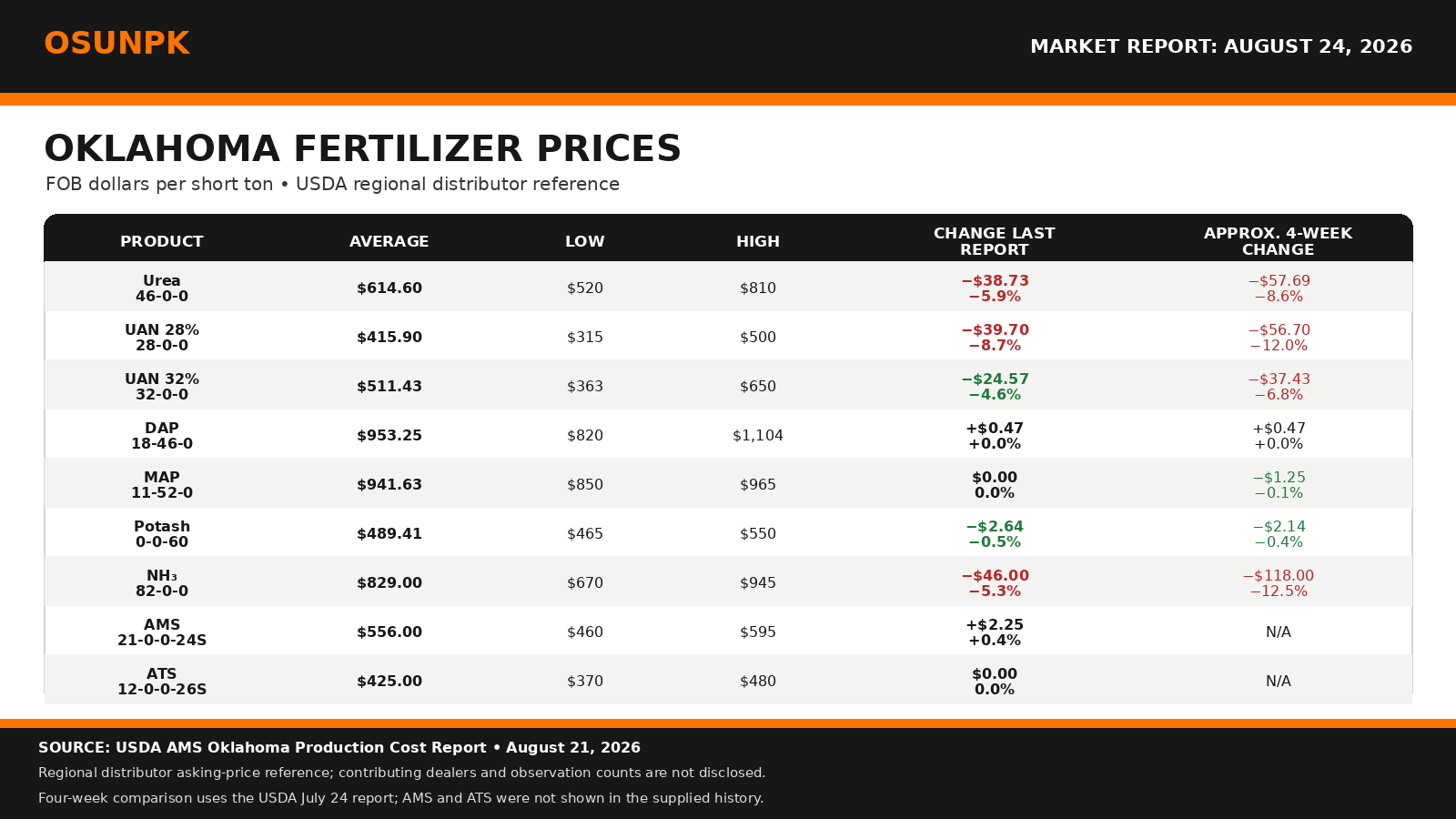
OSUNPK Fertilizer Market Outlook: Local Nitrogen Prices Break Lower 8.24.26
The most important movement of the past two weeks is the decline in Oklahoma nitrogen references. From August 7 to August 21, UAN 28% fell $39.70 per ton, urea fell $38.73, and anhydrous ammonia fell $46.00. USDA attributes the weakness to reduced demand as persistent heat and limited rainfall constrain field activity across the state.
Price-source note: The accompanying graphic’s Oklahoma average, minimum, and maximum come from the USDA Agricultural Marketing Service Oklahoma Production Cost Report. USDA does not identify its contributing dealers. Named public dealer cash quotes, including Two Rivers Cooperative, are monitored separately and are not blended into the USDA statistics.
The local decline does not mean that global nitrogen risk has disappeared. StoneX reported August 19 that India secured about 1.7 million metric tons in its latest urea tender with ample offers, including an expected contribution from China. That supply response eased immediate pressure, but attention now shifts toward Brazil’s September-through-December import window. Brazil needs granular urea, while much of China’s available export supply is prilled, so timing, product form, and destination still matter.
Josh Linville’s August 12 market commentary likewise described a well-supplied Indian tender and a weaker NOLA urea market, while cautioning that UAN and ammonia manufacturers held strong forward sales books. That distinction matters in Oklahoma: a softer urea benchmark can move faster than UAN or ammonia when producers have already covered substantial forward demand. Local weather can amplify the difference by weakening spot demand even while manufacturer positions remain supported.
Phosphate prices were nearly unchanged in the Oklahoma report, but their cost structure remains exposed to ammonia and sulfur. CoBank noted August 13 that Middle East disruptions and Russian supply constraints have affected ammonia production and sulfur availability, while China’s phosphate exports remain sharply restricted. Linville also highlighted sulfur as a bottleneck because a large share of globally traded sulfur normally moves through the Strait of Hormuz. Those pressures can raise the cost of producing DAP and MAP even when local posted values are temporarily steady. They also deserve attention for AMS and ATS, although Oklahoma’s reported averages changed little this period.
Potash remains the quietest major nutrient. Its production base is less directly tied to Middle East natural gas and sulfur, although ocean freight and broader logistics can still affect delivered replacement costs.
Over the next several weeks, watch Oklahoma rainfall and fall field demand, Brazil’s urea buying pace, the mix of Chinese exports, further Indian tenders, phosphate operating rates, sulfur availability, and freight. These forces point in different directions, so the current local nitrogen decline should be read as a market development rather than a definitive forecast.
For Oklahoma producers and dealers, the practical step is to compare current cash quotes on the same pickup or FOB basis and separate material price from delivery and application. Soil-test needs and product fit should remain central; price movement alone does not determine the best nutrient plan.
Fertilizer markets, local prices, and availability can change quickly. Confirm current prices and terms with local dealers before making purchasing decisions.
Market Sources
- USDA Agricultural Marketing Service. “Oklahoma Production Cost Report,” August 21, 2026. https://www.ams.usda.gov/mnreports/ams_3621.pdf
- StoneX. “Brazil’s Urea Import Window Now Decides Where Global Tonnes Land Next,” August 19, 2026. https://www.stonex.com/en/insights/brazil-s-urea-import-window-now-decides-where-global-tonnes-land-next/
- Hoosier Ag Today. “Josh Linville: Fertilizer Markets,” August 12, 2026. https://www.hoosieragtoday.com/2026/08/12/josh-linville-fertilizer-markets/
- CoBank Knowledge Exchange. “Why Higher Fertilizer Prices Are Here to Stay,” August 13, 2026. https://www.cobank.com/knowledge-exchange/why-higher-fertilizer-prices-are-here-to-stay
This report is produced via Chat GPT Plus Work, with review by Brian Arnall.
Sulfur Fertilizer in Wheat: Is It a Have-To?
Brian Arnall, Precision Nutrient Management Extension Specialist.
Sulfur has become a much bigger part of the fertility conversation over the last several years, and for good reason. We are producing higher-yielding crops, removing more nutrients from our fields, and receiving less sulfur from atmospheric deposition than we did several decades ago. But that does not mean sulfur fertilizer has become a “have-to” application for every wheat field.

Ms. Kelby Linn’s research provides a good example of why soil testing still matters. Across the environments in this study, sulfur fertilizer did not increase wheat grain yield. The soil was able to supply enough sulfur to meet the yield demand of the crop. When fertilizer margins are tight, that is important. Applying a nutrient that is already present in sufficient amounts is an expense without a yield return. At the same time, these results should not be interpreted to mean that sulfur fertilizer is unnecessary. Sulfur management is ultimately a mass-balance issue. Every bushel we harvest removes nutrients from the field. As yields increase, nutrient removal increases. If we continually remove more sulfur than the soil and other sources can supply, at some point we have to replace it.
That is why I am more concerned about sulfur in intensive, high-yield production systems, particularly on sandier soils and soils with lower organic matter. These soils generally have less capacity to supply sulfur, while a high-yielding crop is removing more of it. That combination increases the likelihood of sulfur becoming limiting. This is where soil testing becomes a valuable management tool. Rather than treating sulfur as something wheat either “always needs” or “never needs,” we should identify the fields where soil supply is unlikely to meet crop demand and put our fertilizer dollars there.
It is also important not to carry the wheat results presented here across every cropping system. Our ongoing work in corn has shown more response to sulfur fertilizer than we have observed in wheat. That fits the larger nutrient-removal discussion, particularly as we push corn yields higher. We will share two years of data after this year’s corn harvest.
Kelby’s research also raises another interesting question. If the soil already contains enough sulfur to maximize wheat grain yield, does additional sulfur do anything? His work suggests that it can. The response may not be additional bushels, but changes in how nitrogen is used and, ultimately, the quality and functionality of the grain.
Understanding Sulfur’s Role Beyond Grain Yield
Kelby Linn and Brian Arnall
Why Nitrogen and Sulfur Must Work Together
Nitrogen (N) has long been recognized as the most important nutrient for winter wheat production. It is a primary driver of vegetative growth, grain yield, and grain protein concentration, making N management the focus of most wheat fertility programs across Oklahoma. Sulfur (S) plays a different but complementary role. Nitrogen supplies the building blocks needed to produce proteins, while S is needed to form sulfur-containing amino acids such as cysteine and methionine. These amino acids contribute to the bonds that strengthen gluten proteins and influence dough strength, elasticity, and overall baking performance. When S becomes limiting, wheat may continue to take up N but may be less efficient at incorporating that N into functional storage proteins. Therefore, the relationship between N and S may become increasingly important as N rates and yield potential increase. The literature suggest that relationship can be wrong in both directions were N is in excess and S is deficient can cause yield loss but also where S is in excess and N is deficient we can experience loss.
Understanding the System
To better understand how S behaves under different N environments, field trials were conducted across north-central Oklahoma and south-central Kansas during the 2023–2025 growing seasons. The objective was to determine whether S responses differed when N was limiting compared with a high-N production environment.
Two N fertilizer rates were evaluated using ammonium sulfate (AMS) and urea:
- 60 lb N/ac, representing a sub-optimal or N-limited environment
- 140 lb N/ac, representing a high-N environment where S could have greater potential to become limiting
Each N rate was combined with five S rates supplied as AMS: 0, 5, 10, 20, and 30 lb S/ac.
Sulfur was applied before jointing, between Feekes 4 and 6, with the top-dresss N application, when wheat nutrient uptake is increasing and the crop is transitioning toward reproductive development. This allowed us to evaluate the influence of S on grain production, N utilization, and grain quality under both N-limited and high-N conditions.
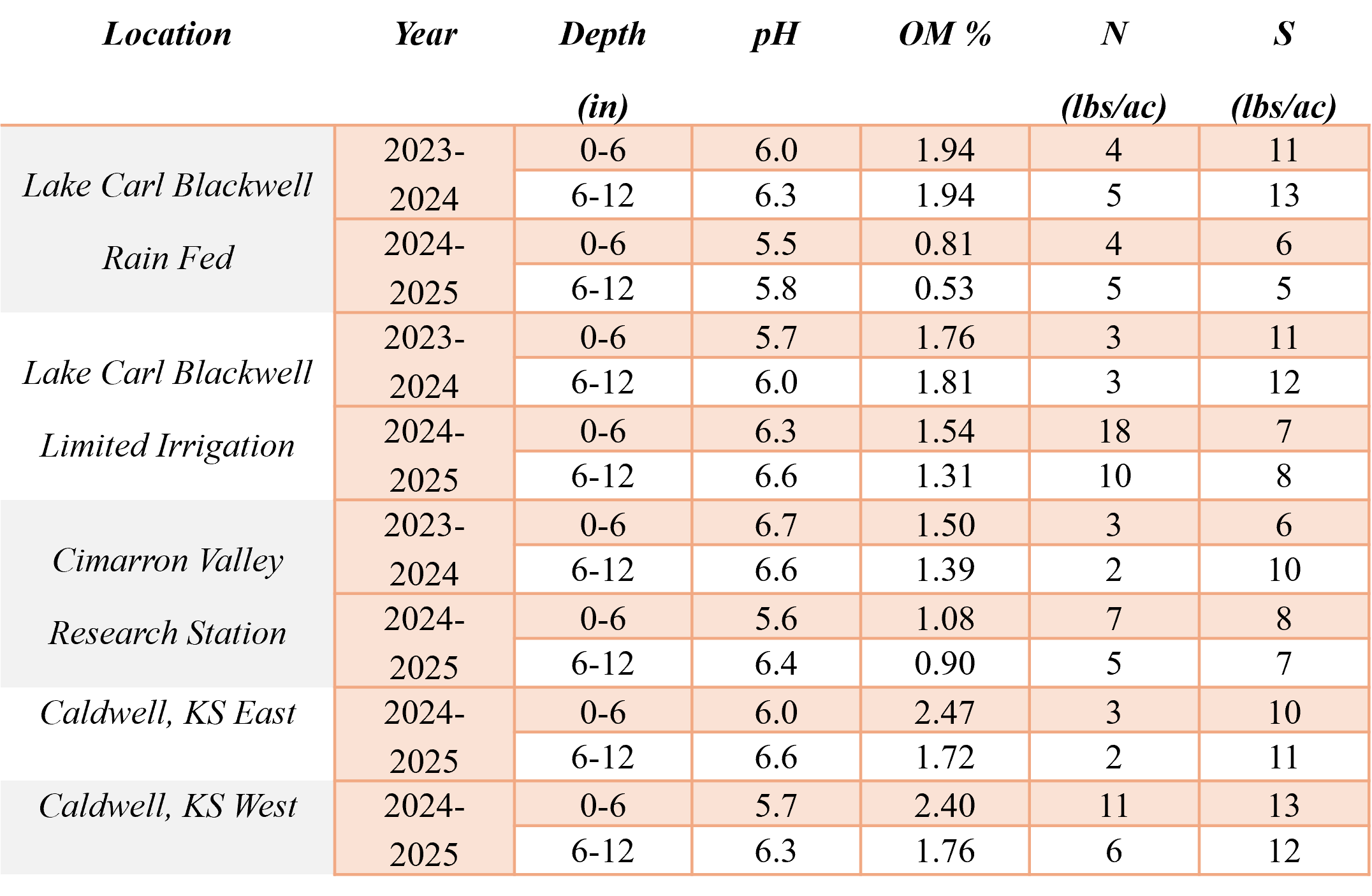
Soil testing was an important part of interpreting the results. Across the locations, sulfate-S was present in the soil profile before fertilizer application. Soil test S varied among sites and depths, reinforcing that the amount of S already available to the crop can differ considerably among fields.
Table 1. Average composite soil sample results of pH, organic matter (OM), nitrate, and SO4 for all locations of the S interaction study.
First, What Happened to Yield?
Nitrogen remained the dominant factor controlling grain yield. Across environments, average wheat yield increased from 46 bu/ac with the lower N rate to 56 bu/ac with the higher N rate. Sulfur, however, did not significantly increase grain yield. Soil tests indicated that the sites generally contained measurable sulfate-S, which correctly predicted the lack of a yield response. If grain yield had been our only measurement, the story could have ended there. But the addition of S affected several characteristics related to how the grain performed during milling and dough development, particularly under the high-N treatment.
Why Wheat Quality Matters
Most Oklahoma wheat producers market wheat based primarily on grain yield and protein concentration. Once wheat moves farther through the grain chain, however, millers and commercial bakeries evaluate additional characteristics that determine how the flour performs. Hard red winter wheat is valued for its ability to produce strong bread flour. That ability depends not only on the amount of protein in the grain but also on the structure and functionality of those proteins. Nitrogen applications generally increases grain protein concentration, while S can influence the composition of those proteins. Adequate S promotes the formation of S-containing proteins involved in strong gluten networks. As a result, two wheat samples with similar protein concentrations can potentially behave differently during milling and baking.
Looking Beyond Grain Protein
Several measurements were used to evaluate wheat and flour quality. Grain protein represents the total protein concentration of the kernel and remains an important factor in wheat marketing. Flour protein measures the protein concentration after the bran and other components have been removed during milling. Other measurements tell us more about milling and baking performance. Milling yield describes how much usable flour can be produced from the grain, while flour ash is an indicator of the amount of mineral material remaining in the flour and can help evaluate milling efficiency. Falling number provides information about alpha-amylase activity and potential preharvest sprouting. Gluten index is particularly useful for evaluating gluten strength. A higher gluten index generally indicates stronger gluten that can better maintain dough structure during mixing and fermentation.
What Happened When We Made Dough?
One of the unique aspects of this study was evaluating flour with DoughLAB analysis. Rather than measuring only grain or flour composition, DoughLAB measures how flour behaves during mixing. Development time measures how long the dough must be mixed to reach optimum consistency. Dough stability measures how long the dough maintains that consistency before beginning to break down. Mixing tolerance index, or MTI, measures how rapidly the dough weakens after optimum development. Water absorption measures the amount of water required to produce dough at a standard consistency.
Of these measurements, dough stability provided one of the more interesting S responses. Under the high-N treatment, average dough stability increased from approximately 6 minutes without S to nearly 15 minutes at the highest S rate. Greater dough stability indicates that the gluten network was able to withstand mixing for a longer period before breaking down. For commercial baking, this can be important because stronger, more stable dough generally provides greater tolerance during mixing and more consistent performance during processing.
What Did We Learn?
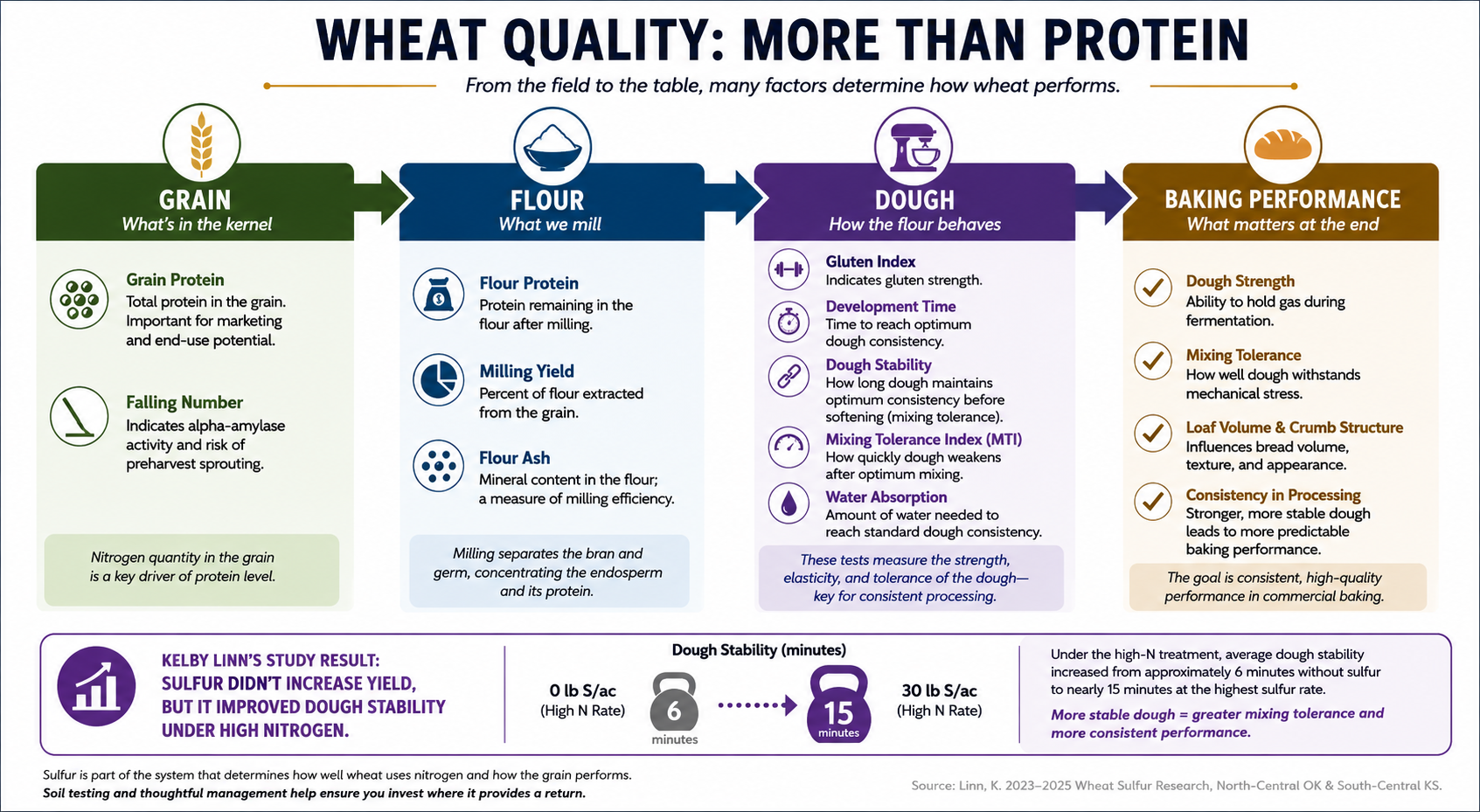
Across these environments, N remained the primary factor controlling grain yield. Increasing N increased average yield, while adding S did not provide a significant yield response. However, the absence of a yield response did not mean S had no effect on the wheat. Under high-N conditions, S improved several measurements associated with grain and dough functionality, including gluten strength, dough development, and dough stability.
These results help separate two questions that are sometimes treated as the same question: Does the crop need S to produce more grain, and does S influence what happens inside the grain?
At the locations included in this study, the answer to the first question was no. The soils supplied enough S that additional fertilizer did not increase yield. The second question was more complicated. Sulfur influenced characteristics associated with protein functionality and end-use quality, particularly when N supply was high. That does not mean S should be applied routinely to improve wheat quality. For producers, the first fertilizer decision should still be based on whether the crop is likely to become S deficient. Soil testing, soil texture, organic matter, yield potential, and production history all provide information that can help make that decision. The larger lesson from this work is that S has a role in wheat beyond simply producing more bushels. Understanding that role helps us make better fertilizer decisions while continuing to put fertilizer where it is most likely to provide a return.
Data drawn from The Influence of Sulfur Under Nitrogen Extremes in Winter Wheat.
Linn, Kelby DeeAnn. Oklahoma State University ProQuest Dissertations & Theses, 2026. 32668685.
Stop the March: Starting Your Wheat Season Off Right with Fall Armyworm Management
Ashleigh M. Faris, State Specialist for Cropping Systems Entomology
As Oklahoma summer crops are winding down, we are seeing an increase in fall armyworm reports. Fall armyworms are posing a significant risk of economic damage to our upcoming winter wheat crop. These summer crops and weeds have supported lush vegetation, creating highly attractive habitats for female moths to lay eggs, which can subsequently move into newly planted wheat.
Here is what wheat producers need to know to identify, manage, and prevent fall armyworm infestations this planting season.
Fall Armyworm (FAW) Identification and Life Cycle
Fall armyworms have a distinct, broad, white inverted “Y” present on the front of their head capsule (Fig. 1). Their body varies from light tan to green to dark brown or nearly black in color with three widely separated narrow, yellowish-white stripes down their back (Fig. 2). There are four distinct black dots arranged in a square on the top of the 8th abdominal segment.
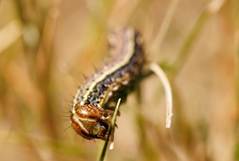
Fig. 1 Fall armyworm. Note the white inverted “Y” on the head capsule. Credit: Mitchell Alcala, OSU Agriculture.
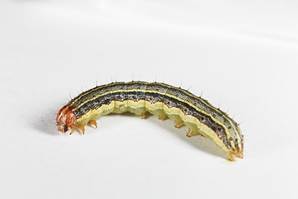
Fig. 2. Fall armyworm. Credit: Pat Porter, Texas A&M AgriLife Extension.
The adult moth will lay their eggs that hatch as caterpillars (the damaging stage). Adult moths migrate from Mexico and Texas to Oklahoma usually by late June. Eggs are laid in clusters on host plants and appear pale yellow but darken as they age turning black just before hatching (Fig. 3). Larvae will feed on foliage for 2-3 weeks, increasing with size as they progress through 6 larval instars, then dig into the soil to pupate. A new generation of moths emerge about 2 weeks later. Because there are several overlapping generations in Oklahoma, extending into October and November, protecting wheat stands and monitoring for FAW can be critical for crop establishment. Keep in mind that FAW do not overwinter in Oklahoma; the first killing frost of the season should eradicate the population.
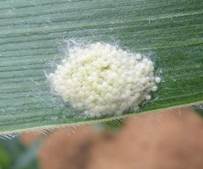
Fig. 3. Fall armyworm eggs laid on grass. The fuzzy appearance is due to scales that are deposited between and over the eggs. Credit: Desiree van Heerden, Syngenta.
Signs of FAW Damage, Scouting, and Economic Threshold
The earliest sign of infestation is “windowpane” damage, where tiny, newly hatched FAW larvae chew off a single layer of leaf tissue, leaving behind transparent patches (Fig. 4). Within a few days, the growing FAW caterpillars can consume entire leaves. Because 90% of crop damage happens during the insect’s final two growth stages, FAW can quickly decimate seedling stands, sometimes forcing producers to completely replant their winter wheat.
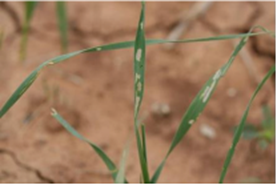
Fig. 4. Small FAW larvae will scrape off the top layer of leaf tissue when they feed, leaving behind a “windowpane” appearance. Credit: Lanie Hale, Wheeler Bros.
To scout for FAW, check your fields regularly (e.g., every other day in the evenings), looking closely at the base of newly emerged seedlings. Focus on field borders and edges near grassy or weedy areas where FAW often start. During the day FAW will hide under residue and at the base of the plant, scouting early morning or in the evenings is the best time for spotting FAW in the crop canopy. Look closely and carefully for early instars, as these are very small (Fig. 5).

Fig. 5. Small, early instar FAW can be difficult to see against wheat and residue, especially when scouting in full sun. Red circles highlight the FAW hiding in this image. Credit: Dr. Amanda Silva, OSU Small Grains Extension Specialist.
The economic threshold for FAW in winter wheat is 3 – 4 larvae per linear foot of row alongside visible feeding damage. Alternatively, treat when there are 4 or more larvae (1 inch or longer) per square foot threatening the stand. If 25-30% of plants show window-pane injury, monitor the field daily and treat immediately if the stand is in danger.
Planting Practices: Cultural Control & Insecticide Seed Treatments
Keeping your field and its surrounding borders completely weed-free, in additional to removal of volunteer wheat for at least two weeks before planting is one way to make sure your wheat season starts off on the right foot. This removes early food sources and makes the area less attractive for egg-laying female moths.
Another way to get your season off on the right foot is to consider using an insecticide seed treatment but make sure it is specifically labeled for FAW. This is because not all insecticides are effective against FAW. Seed treatments containing the active ingredient Chlorantraniliprole (Group 28), such as Cedocor CPL and Lumivia, are effective options labeled to control or suppress FAW. These products also provide protection against wireworms, cutworms, and grasshoppers. Insecticide seed treatments can provide protection for four to six weeks.
How do you know if you should invest in a seed treatment? Consider your planting timing and intended use for your wheat. Planting wheat early for use as a dual-purpose crop significantly increases the prevalence of several diseases and damage caused by viruses, fungi, and by insect pests compared to planting wheat later for grain-only. You should also consider the history of the field. If you have seen issues in a particular field, then it may be worth planting treated seed. If you don’t know the history of the field, work with your local agronomist to determine what insects are likely an issue in those fields.
If you are using treated seed, remember that combinations of some fungicidal and insecticidal seed treatments can be toxic to the seed. Read the label carefully before mixing insecticides with fungicides. Also be sure to follow required grazing restrictions and intervals listed on the label. Equipment such as augers and trucks to deliver grain should not be contaminated by treated grain.
Foliar Chemical Control Options
It is critical to treat fields while FAW caterpillars are on the small side meaning less than half an inch long; larger caterpillars do the most damage and can be highly resilient to insecticides. Effective foliar products typically include active ingredients like chlorantraniliprole, lambda-cyhalothrin, spinetoram, or cyfluthrin. Options labeled for FAW control include Coragen eVo, Tombstone, Warrior II, Mustang Maxx, Besiege, and Radiant SC. When selecting an insecticide, it is important to consider if the option is broad spectrum. Broad spectrum insecticides can reduce natural control such as lacewing and syrphid larvae, as well as lady beetles that may be keeping other pests like aphids under threshold. Always read and follow all label instructions to ensure you are applying at the correct rate and adhering to the required pre-harvest and grazing intervals.
This fall, the OSU Cropping Systems Entomology team will be conducting field trials to evaluate the efficacy of insecticide seed treatments and foliar insecticides on FAW in hard red winter wheat. These trials are made possible through support from industry partners and the Oklahoma Wheat Commission. Trial results will be shared at future OSU Field Days and grower meetings.

Cheap Nitrogen is not always the best Nitrogen, Timing matters
Brian Arnall: Precision Nutrient Management Extension Specialist, Oklahoma State University
In 2020, we published a summary of four OSU trial series comparing pre-plant nitrogen (N) to in-season N in grain-only winter wheat. https://osunpk.com/2020/09/10/value-of-in-season-application-for-grain-only-wheat-production/ Since then, three of those trial series have made it through peer review, and additional analyses have added considerably more data to the story. From both historic data from Dr. Raun’s program and new work. All together, these studies now represent more than 90 Oklahoma site-years across a wide range of environments, N rates, and application timings. So, after several more years of research, has the conclusion changed?
Does waiting to apply nitrogen cost wheat yield?
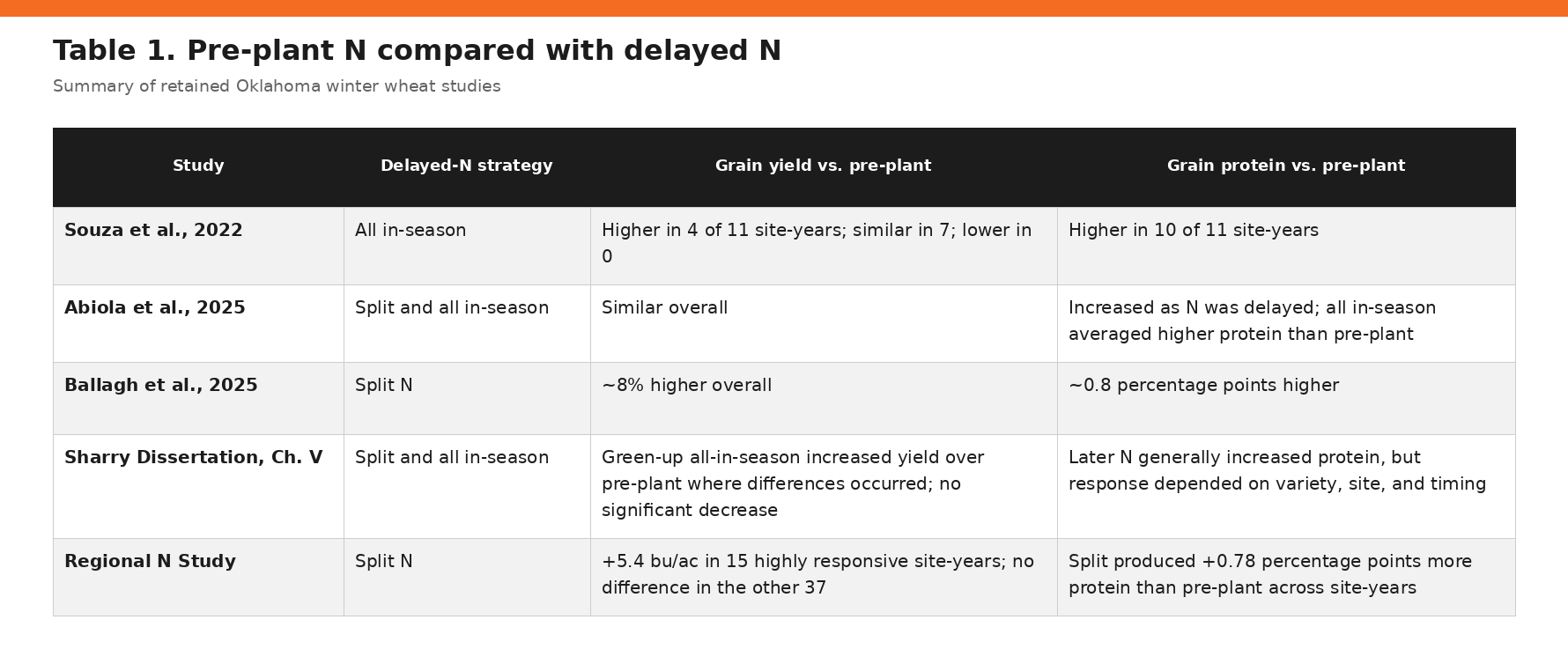
Across these studies, moving N from pre-plant to a properly timed in-season application generally maintained or increased grain yield. How often in-season N increased yield varied among datasets. Souza et al. found that winter wheat could recover from early N stress without sacrificing yield over a surprisingly wide application window. In other studies, in-season N was statistically similar to pre-plant N. The important point is that delaying N did not automatically mean giving up yield.
The Regional N study started by Dr. Raun 2in 2009, adds an important environmental piece to the story. Split N out yielded pre-plant N in approximately 29% of the 52 site-years, specifically those classified as highly responsive to N. These years tend to be wetter environments with greater yield potential. In the remaining 71%, split and pre-plant N produced statistically similar yields. Across all 52 site-years, splitting N never resulted in a significant yield loss compared with pre-plant N.
When a yield advantage with in-season N occurred, it could be meaningful. One study found a single in-season application produced approximately 8% greater yield than a full-rate pre-plant application. Sharry’s Gallagher/Green Hammer study found a single Feekes 4 (spring green up) application averaging approximately 11% greater yield than a single pre-plant application across two varieties and four site-years. The Regional N analysis found an approximately 5.4 bu/ac, or 14%, advantage for split N over pre-plant N in highly N-responsive environments, while there was no difference in the remaining environments. The message isn’t that in-season N always produces more wheat. It doesn’t. Properly timed in-season N generally maintained yield, and about 58% of the time increased it.
Protein Tells an Even More Consistent Story
Protein responded more consistently to N timing than yield. Later N increased grain protein across nearly every dataset. In the Regional N study, split N increased protein by 0.8 percentage points above the pre-plant compared with a 1.1-point increase from all N applied in-season. That advantage occurred across every environmental response category. In the end yield response to delayed N depends heavily on environment. The protein response is considerably more consistent.
If In-Season N Works, Is There a Reason to Split It?
Once the decision is made to move N away from a full pre-plant application, another question follows: should some N still go out pre-plant and the remainder in-season, or can the entire rate wait until the growing season? Two datasets tested that question directly, and neither found a consistent yield advantage to splitting N over a single, well-timed in-season application.
Sharry’s study found that a single green up application out-yielded both two-way and three-way splits by approximately 4.4 to 9.4 bu/ac at the site-years where treatments differed. At no site-year did a split application out-yield the single in-season timing. Abiola (2025) reached essentially the same conclusion. A single in-season application matched or exceeded a 50/50 pre-plant/in-season split across the timings evaluated. There was, however, an important exception. As the single in-season application was pushed into late March and April, having some N already applied reduced the potential downside.
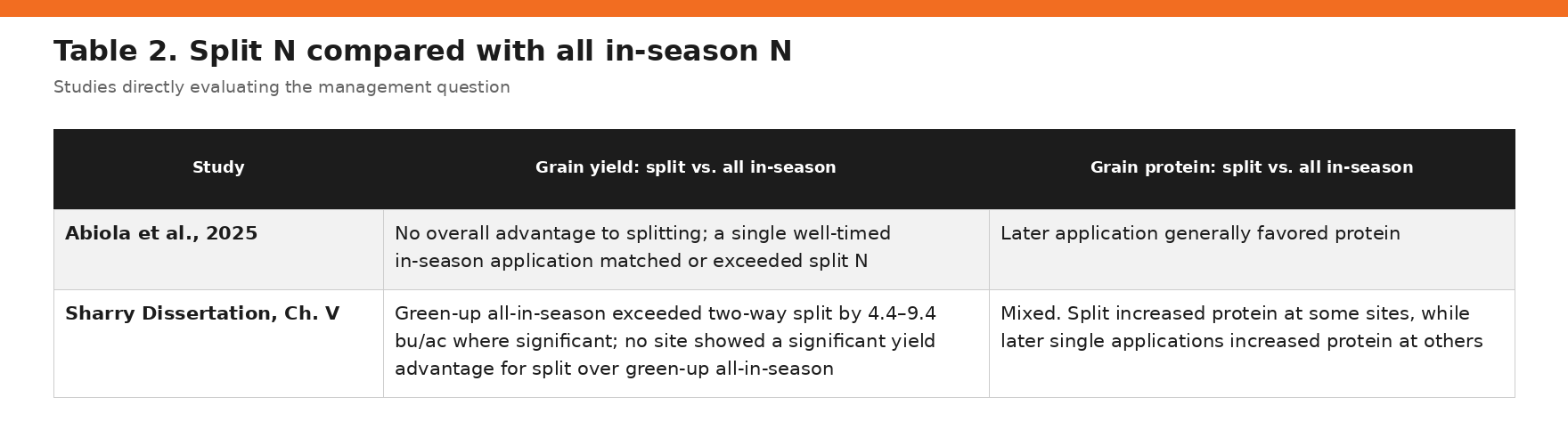
Splitting N appears to be more about risk management than yield management.
Putting some N out early provides insurance against weather, field conditions, equipment problems, or other factors that prevent the planned in-season application from being made on time. If a single in-season application can be made at the proper time, however, these data provide little evidence that splitting N improves yield. So, in the end you reduce the “risk” but double application cost.
Timing Still Matters
None of this should be interpreted as saying N can be applied whenever it is convenient. The window for applying N to grain-only winter wheat is wider than many growers assume, but it isn’t unlimited. As application moves later, the opportunity for unfavorable weather to interfere with N availability becomes increasingly important.
The Regional N study provides a good example. For post top-dress applied N rainfall alone explained 27% of the site-to-site variation in how much the crop responded to N. The environments where split N increased yield over pre-plant N were generally the wetter, higher-yielding environments.
Waiting on N is a management strategy. Waiting too long is not.
Moving N in-season allows the rate decision to be made when considerably more is known about stand, growing conditions, and yield potential. But that flexibility only has value if the application is made while the crop can still effectively use the N. The data shows that the most risk adverse timing falls in the January to mid-March time frame.
What About Fertilizer Price?
Agronomy is only part of the decision. Anhydrous ammonia can provide a substantial cost-per-pound-of-N advantage over fertilizer sources typically used for in-season applications. When that price gap becomes large, the in-season strategy needs to create enough additional value through yield, protein, improved N-rate decisions, or reduced N loss to pay for the more expensive source.
The break-even calculation is straightforward: Additional N cost per acre ÷ wheat price = additional bushels needed to break even. At a 100 lb N/ac rate, every $0.10/lb difference in N price represents $10/ac in fertilizer cost.
For example, if the in-season N source costs $0.30/lb N more, that is a $30/ac disadvantage before the crop is planted. At $4.00 wheat, in-season N needs to produce 7.5 additional bu/ac to cover that difference. At $5.00 wheat, it needs 6 bu/ac, and at $6.00 wheat, it needs 5 bu/ac.
The range becomes fairly large as the difference in N price changes. At a 100 lb N/ac rate and wheat prices between $4 and $6/bu, a $0.20/lb N-price difference requires roughly 3 to 5 additional bu/ac, while a $0.50/lb difference requires roughly 8 to 13 additional bu/ac.
That doesn’t make either strategy automatically more profitable. In environments where yield is the same, the cheaper N source has the economic advantage. Where in-season N increases yield or protein, the economics can move in the other direction. There is also another economic benefit to waiting that is harder to put into a simple table: by waiting, the producer can adjust the N rate to the yield potential that is there rather than the yield potential hoped for before planting.
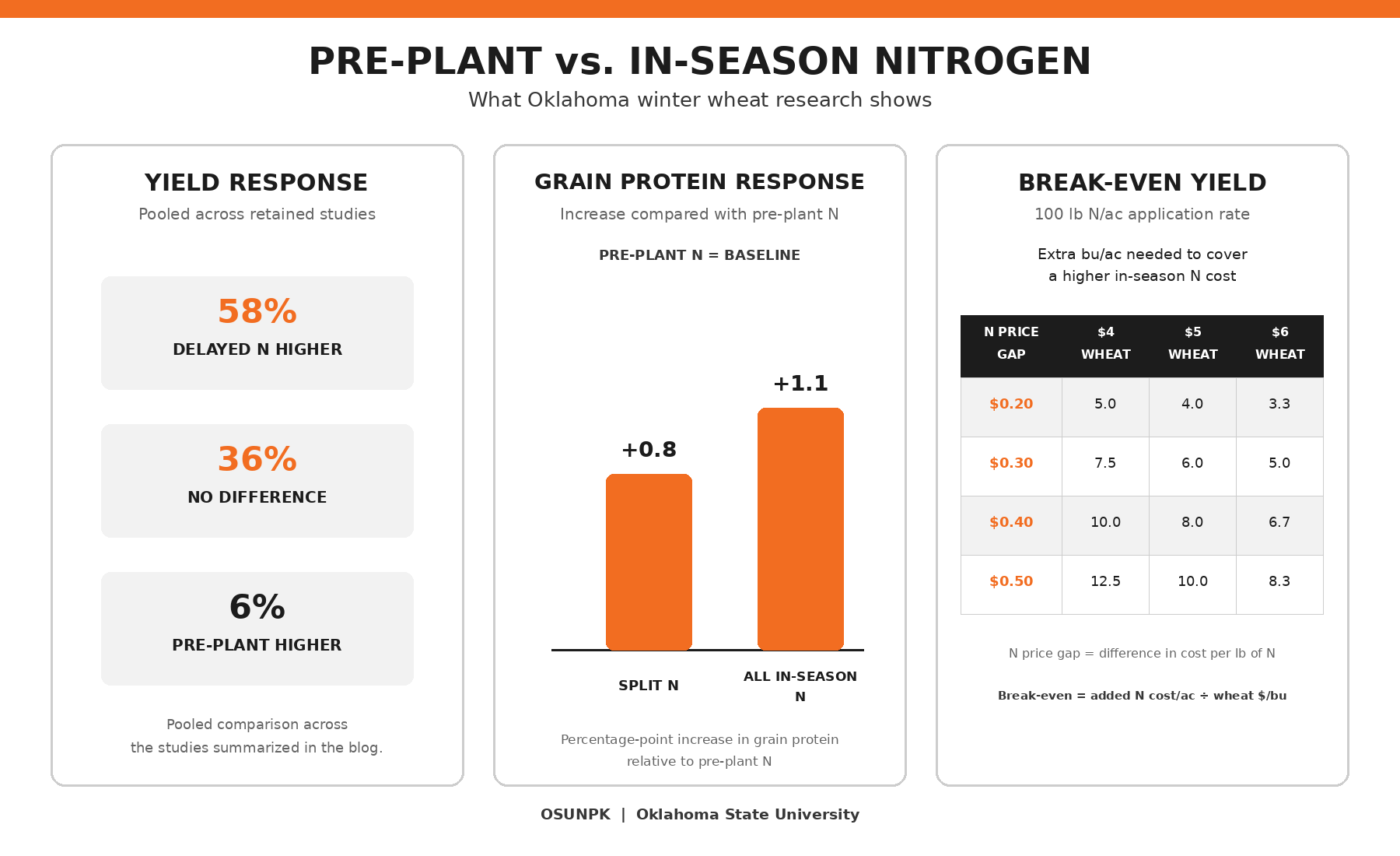
So fertilizer price adds another question to the N-timing decision: How much is the flexibility of waiting worth this year?
After more than 90 Oklahoma site-years, there is little evidence that grain-only winter wheat inherently benefits from having the entire N requirement available before planting. A properly timed in-season application generally maintains yield and can increase yield under responsive conditions. The opportunity to increase grain protein is even more consistent. Waiting also allows the final N decision to be made when the producer knows considerably more about the crop, weather, and realistic yield potential.
Splitting N does not appear to provide an additional yield benefit over a single, properly timed in-season application. Its primary value is insurance against missing that application window. But fertilizer price matters. When anhydrous or another pre-plant source provides N substantially cheaper than the available in-season source, those savings have real value and should be weighed against the potential benefits of waiting. There isn’t one N-timing strategy that wins every year. The goal isn’t simply to maximize yield or minimize fertilizer cost. It is to choose the N source, rate, and timing combination that provides the best economic return for the conditions in front of you.
These conclusions apply to grain-only winter wheat. Dual-purpose wheat requires sufficient fall growth for forage production and has a different early-season N requirement.
If you have any questions or comments, please feel free to reach out.
Brian Arnall
b.arnall@okstate.edu
Sources
Souza, J.L.B., Antonangelo, J.A., Silva, A.O., Reed, V., and Arnall, B. 2022. Recovery of Grain Yield and Protein with Fertilizer Application Post Nitrogen Stress in Winter Wheat (Triticum aestivum L.). Agronomy 12:2024.
Abiola, S.O., Souza, J.L.B., Sharry, R., Derrick, J.R., Maatougui, M., and Arnall, D.B. 2025. Split nitrogen applications provide no benefit over a single well timed application in rainfed winter wheat. Frontiers in Plant Science 16:1698494.
Ballagh, B., Ballagh, A., Bushong, J., and Arnall, D.B. The Effect of Nitrogen Fertilizer Placement and Timing on Winter Wheat Grain Yield and Protein Concentration.
Sharry, R. 2025. Response to nitrogen timing of varying winter wheat genotypes Dissertation, https://hdl.handle.net/20.500.14446/344867
Regional N study. 52 Oklahoma site-years, 2009–2023, Okstate Soil Fertility data unpublished.
How Much Nitrogen Does Double Crop Corn Need in Oklahoma?
Kelby Linn, MS Precision Nutrient Management
Emily Staton, MS Precision Nutrient Management
Josh Lofton, Cropping Systems Management
Brian Arnall, Precision Nutrient Management
Double crop (DC) corn is gaining attention in Oklahoma as producers look for opportunities to increase productivity following wheat harvest. While DC soybeans and sorghum remain common options, corn can serve as an alternative when planting windows are missed or when producers want to diversify their rotation. In Oklahoma systems, it is suggested DC corn is followed by a full season soybean crop the next year. This allows producers to maintain an intensive cropping system while maximizing land use. However, managing fertility in DC corn can be challenging because the crop is grown under a different environment than full season corn. One of the questions producers ask is how much nitrogen (N) is needed to maximize returns. Nitrogen is typically the largest fertilizer expense in corn production, but applying more N does not always result in higher yields. Recent Oklahoma research suggests DC corn may require less N than many would expect.
Understanding the System
To evaluate N requirements under Oklahoma DC conditions, field trials were conducted across 11 site years during the 2024 and 2025 growing seasons (Table 1). Corn was planted directly into wheat residue following harvest, creating a true DC production system. Nitrogen was applied as urea (46-0-0) at 13 rates ranging from 0 to 180 lbs N/acre in 15 lb N increments. The following data was collected: biomass production, grain yield, and grain quality responses across environments. The goal was to identify how much N is needed to maximize yield and profitability in Oklahoma DC corn.
Table 1. Field study locations for the 2024 and 2025 double crop corn trials in Oklahoma. Each location is listed with respective planting dates, corn varieties, planting populations and harvest date.
| Location | Planting | Variety | Population | Harvest |
| Perkins | 6/28/2024 | DK119-30 | 20k | 11/9/2024 |
| 7/11/2025 | DKC117-27RIB | 20k | 11/14/2025 | |
| Stillwater | 6/30/2024 | DK119-30 | 20k | 11/11/2024 |
| 7/12/2025 | DKC117-27RIB | 20k | 11/13/2025 | |
| Perry | 6/28/2024 | DK119-30 | 20k | 11/16/2024 |
| 7/7/2025 | DKC117-27RIB | 20k | 11/12/2025 | |
| Perry (Irrigated) | 7/7/2025 | DKC117-27RIB | 28K | 11/12/2025 |
| Lahoma | 7/9/2025 | DKC117-27RIB | 20k | 11/18/2025 |
| Fort Cobb (Irrigated) | 7/2/2025 | DKC117-27RIB | 28K | 11/15/2025 |
Yield Response: Nitrogen Helped, But Only to a Point
Across all harvested site years, N applications significantly influenced grain yield when environment was not the limiting factor. Average yields ranged from 40 to 94 bu/ac, demonstrating how variable DC corn performance can be from year to year and field to field (Staton, 2026) (Figure 1). While some locations responded positively to N fertilizer, others showed little response even when rates reached 180 lbs N/ac. The consistent finding was yield responses often plateaued around 60 lbs N/ac. Once this point was reached, additional fertilizer rarely produced enough additional grain to justify the added cost. Across two Oklahoma studies representing 11 site-years, unfertilized double-crop corn averaged approximately 52 bu/ac. That finding highlights just how much nitrogen can be supplied by the soil through residual nitrate and mineralization before fertilizer is applied. These results suggesting existing soil N and nutrient mineralization contributed significantly to crop demand (Staton, 2026).
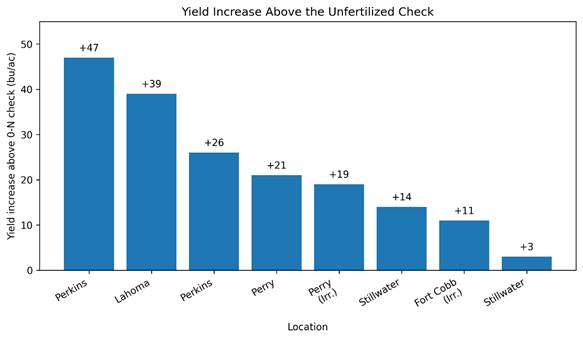
Figure 1. Increase in yield of the highest yielding treatment as compared to the non-fertilized check yields of each location. Adapted from Staton (2026)
The Real Story: Return on Investment
While producers naturally focus on maximizing yield, these fertilizer decisions should be based on profitability. Average economic return peaked near 60 lb N/ac. Beyond that rate, additional fertilizer consistently reduced profit (Figure 2). Although individual economic returns varied among environments, the agronomic data suggest producers should approach DC corn fertility programs with realistic yield expectations. Unlike high yielding full season corn, DC systems often encounter environmental limitations that reduce the return on additional fertilizer investment.
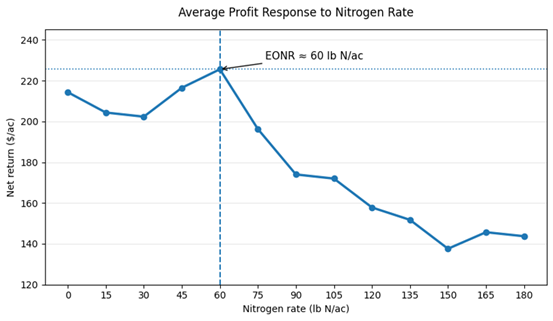
Figure 2. Average profit response to nitrogen rate in US dollars (USD)/ac. Adapted from Staton (2026).
What This Means for Oklahoma Producers
The results from this study closely align with previous Oklahoma research evaluating N response in DC corn. Wyma (2022) reported approximately one additional bushel of grain for every 1.8 lbs N applied above the unfertilized control, similar to Staton (2026) who observed one additional bushel for every 1.7 lbs N in responsive environments. Together these studies suggest Oklahoma DC corn requires approximately 1.75 lbs N for every additional bushel of expected yield above 50 bu ac-1.
The goal of nitrogen management is not to apply the most fertilizer, it is to apply the right amount. Two independent Oklahoma studies now indicate that double-crop corn often requires substantially less N than full-season corn. Matching N rates to realistic yield potential can improve profitability while reducing unnecessary fertilizer costs.
Take Home
- Double crop corn is a economically viable option in Oklahoma.
- Use lower total N rates than full-season corn.
- Across two independent studies’, the unfertilized corn averaged about 50 bushels per acre.
- 1.75 lb N per expected additional bushel above the unfertilized expectation.
- Base final N rates on realistic yield potential and expected moisture.
- Consider residual soil nitrate following wheat before increasing fertilizer rates.
- Avoid applying N beyond expected crop demand.
References
Alcoz, Mercedes M., Frank M. Hons, and Vincent A. Haby. 1993. “Nitrogen Fertilization Timing Effect on Wheat Production, Nitrogen Uptake Efficiency, and Residual Soil Nitrogen.” Agronomy Journal 85(6):1198–1203. doi:10.2134/agronj1993.00021962008500060020x.
Chang, Jen-Hu. 1981. “Corn Yield in Relation to Photoperiod, Night Temperature, and Solar Radiation.” Agricultural Meteorology 24:253–62. doi:10.1016/0002-1571(81)90049-2.
Kravchenko, Anatoliy G., and Kurt D. Thelen. 2007. “Effect of Winter Wheat Crop Residue on No-Till Corn Growth and Development.” Agronomy Journal 99(2):549–55. doi:10.2134/agronj2006.0192.
Liu, Zheng, Jia Gao, Fei Gao, Shuting Dong, Peng Liu, Bin Zhao, and Jiwang Zhang. 2018. “Integrated Agronomic Practices Management Improve Yield and Nitrogen Balance in Double Cropping of Winter Wheat-Summer Maize.” Field Crops Research 221:196–206. doi:10.1016/j.fcr.2018.03.001.
Staton, Emily. 2026. “Nitrogen Management in Double Crop Corn” M.S., Oklahoma State University, United States — Oklahoma.
Wyma, Rhiannon Nichole. 2022. “Corn Grain Yield Response to Nitrogen Rate and Plant Population in Full and Double-Crop Systems.” M.S., Oklahoma State University, United States — Oklahoma.
Banding P for Acidic Soils: Its not the time to be paying for poor practice.
I am bringing this topic back to the surface now with the current outlook on phosphorus fertilizer. If you have heard its not only becoming more expensive but the supply is short and will likely stay short through summer into the fall, which wont help prices. So this year’s wheat crop, we need to be prepared to be smart with Phosphorus, and applying an extra 30lbs to band aid for soil acidity should not be in the cards. Look at it this way, if the phosphorus was at $0.66 a lb that $20 that could be spent on a ton of lime. That lime will last 3-5 years, while that P needs to be added every year. Not only that, but the lime will help root growth (better when we dry up), produce significantly more biomass, and make the phosphorus you’ve applied in the past available again for plant uptake. So make the plans now to soil sample as soon as this crop is off, you can get a soil test recommendation and plan for the lime trucks. This is also not the year to just apply phosphorus for the sake of applying. Soil tests are inexpensive relative to buying excess fertilizer.
Current quotes on 4.24.26 are at $0.54 + per lbs P2O5 with DAP at $830 a ton.
Quick Fertilizer Price Calculation:
Urea at $860 a ton means N is $0.93 a lbs.
DAP at $830 has $334 worth of $0.93 nitrogen and $495 of phosphorus at $0.54 a lb.
Banding P as a band-aid for soil acidity, not so cheap now.
Original Blog Posted in 2021
Whoi Cho, PhD student Ag Economics advised by Dr. Wade Brorsen
Raedan Sharry, PhD Student Soil Science advised by Dr. Brian Arnall
Brian Arnall, Precision Nutrient Management Extension.
In 2014 I wrote the blog Banding P as a Band-Aid for low-pH soils. Banding phosphate to alleviate soil acidity has been a long practiced approach in the southern Great Plains. The blog that follows is a summary of a recent publication that re-evaluated this practices economic viability.
Many Oklahoma wheat fields are impacted by soil acidity and the associated aluminum (Al) toxicity that comes with the low soil pH. The increased availability of the toxic AL3+ leads to reduced grain and forage yields by impacting the ability of the plant to reach important nutrients and moisture by inhibiting root growth. Aluminum can also tie up phosphorus in the soil, further intensifying the negative effects of soil acidity. More on the causes and implication of soil acidity can be found in factsheet PSS-2239 or here (https://extension.okstate.edu/fact-sheets/cause-and-effects-of-soil-acidity.html). The acidification of many of Oklahoma’s fields has left producers with important choices on how to best manage their fields to maximize profit.

Two specific management strategies are widely utilized in Oklahoma to counter the negative impacts of soil acidification: Lime application and banding phosphorus (P) fertilizer with seed. While banding P with seed ties up Al allowing the crop to grow, this effect is only temporary, and application will be required every year. The effects of liming are longer lasting and corrects soil acidity instead of just relieving Al toxicity. Historically banding P has been a popular alternative to liming largely due to the much lower initial cost of application. However, as P fertilizers continue to increase in cost the choice between banding P and liming needed to be reconsidered.
A recent study by Cho et al.,2020 compared the profitability of liming versus banding P in a continuous wheat system considering the impacts that lime cost, wheat price and yield goal has on the comparison. This work compared the net present value (NPV) of lime and banded P. The study considered yield goal level (40 and 60 bu/ac) as well as the price of P2O5 fertilizer and Ag Lime. The price of P2O5 used in this study was $0.43 lb-1 while lime price was dictated by distance from quarry, close to quarry being approximately $43 ton-1 and far being $81 ton-1. For all intents and purposes these lime values are equivalent to total lime cost including application. Wheat prices utilized in the study were $5.10 bu-1 and $7.91 bu-1. It is important to note that baseline yield level was not considered sustainable under banded P management in this analysis. This resulted in a decrease in yield of approximately 3.2 bu ac-1 per year. This is attributable to the expected continued decline in pH when banding P is the management technique of choice.
The analysis in this work showed that lime application is cost prohibitive in the short term (1 year) when compared with banding P regardless of lime cost, yield goal level, and wheat value (within the scope of this study). This same result can be seen over a two-year span when yield is at the lower level (40 bu ac-1). While in the short-term banding P was shown to be a viable alternative to liming, as producers are able to control ground longer lime application becomes the more appealing option, especially when producers can plan for more than 3 years of future production. In fact, under no set of circumstances did banding P provide greater economic return than liming regardless of crop value, yield, or liming cost when more than 3 years of production were considered and only under one scenario did banded P provide a higher NPV in a 3-year planning horizon.
While historically banding P was a profitable alternative to lime application for many wheat producers the situation has likely drastically changed. At the time of writing this blog (09/17/2021) Diammonium Phosphate (DAP) at the Two Rivers Cooperative was priced at $0.78 lb-1. of P2O5. This is a drastic increase in P cost over the last year or so since Cho et al. was published in 2020. With P fertilizer prices remaining high it will be important for producers to continue to consider the value of liming compared to banded P. This is particularly crucial for those producers who can make plans over a longer time frame, especially those more than 3 years.
Addendum: As fertilizer prices have continued to rise a quick analysis utilizing the $0.78 lb-1 of P2O5was completed to consider the higher P fertilizer cost. Under this analysis an estimated decrease in NPV of approximately $38 an acre for P banding occurred. When considering this change in NPV, lime application becomes the more profitable option for alleviation of soil acidity symptoms even in the short term (assuming lime price values are equivalent to the previous analysis). This underlines the fact that it is imperative to consider the impact on profitability of the liming vs. banding P decision in the current economic climate for agricultural inputs.
Link to the Open Access Peer Reviewed publication “Banding of phosphorus as an alternative to lime for wheat in acid soil” https://doi.org/10.1002/agg2.20071
Protect Your Emerging Stands: True Armyworm Movement from Maturing Wheat to Summer Crops
Ashleigh M. Faris, Cropping Systems Extension Entomologist & IPM Coordinator
As the Oklahoma winter wheat crop reaches maturity, producers and crop consultants should prepare for the annual migration of true armyworm larvae. While true armyworms are a common fixture in small grains, their movement out of maturing wheat and into newly emerged corn, soybeans, and sorghum can lead to stand thinning or loss if not monitored closely.
True Armyworm Migration Timeline
True armyworm moths typically migrate into Oklahoma from the south in early spring with infestations typically occurring in late April through the first two weeks of May. The first generation is typically laid in winter wheat. Once the larvae currently finish their development in wheat, they will soon seek new food sources as the wheat crop dries down. This transition period is the most critical time for scouting summer crops, especially those adjacent to wheat fields.
True Armyworm Life Cycle and Identification
Armyworms overwinter as pupae or as mature larvae which pupate in the spring. Moths emerge in the spring, mate, and lay eggs in masses on hosts plants (mostly in the grass family). Female moths deposit their eggs in low-lying areas on wheat or pasture ground, as well as field margins or fields with dense, grassy weeds like Johnson grass. Larvae feed for about 4 weeks but do most of their damage during the last 10 days of this period. They then pupate in the soil. A new generation of moths emerges about 1 week later. There are 4 generations per year in Oklahoma.
True armyworms have a smooth body and can be variable in color, ranging from green, tan, orange, and black, with distinct pale orange or reddish stripes running along the sides (Figure 1). A key identifier is a dark diagonal band on each of the abdominal prolegs; there are four pairs of prolegs (Figure 2). The head capsule is light brown with a distinct “net-like” or honeycomb pattern of dark lines (Figure 2).
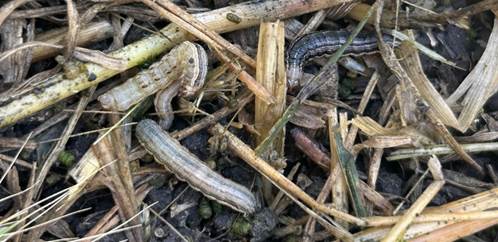
Figure 1. Four true armyworm larvae. One is dark (right) and three are light colored (left). Photo by Ashley Dean, Iowa State University Extension.
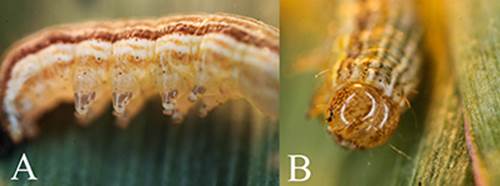
Figure 2. True armyworm. A) Dark band on prolegs. B) Orange head capsule with dark net-like pattern. Photos by Adam Varenhorst, Iowa State University Extension.
True Armyworm Management Cutoff in Wheat
A common question during this window is whether to treat armyworms in maturing wheat. Once wheat reaches the soft dough stage, the crop has generally accumulated its yield. Unless larvae are actively head-clipping (cutting the wheat heads off the stems), chemical control is rarely economical at this stage. Instead of treating the wheat, focus on young stands of summer crops. As wheat turns brown, larvae will move toward the nearest green tissue—often your emerging corn or sorghum.
Scouting, Damage, and Economic Thresholds for Summer Crops
Armyworms are whorl feeders in grass crops like corn and sorghum and will also feed on soybean leaves. True armyworms hide in the soil, crop residue, or whorls during the heat of the day and feed at in the early morning, evening or late when it is cool outside. When it is warm, larvae will hide in the soil, crop residue, or the whorl of corn plants. Large larvae consume more tissue but will generally be done feeding in a few days. Insecticides should target young, small larvae that will be feeding for a long time; however, you may see a range of larval sizes in a single field.
Corn, Sorghum, and Soybean Damage
True armyworm feeding typically begins at the leaf edges, leaving ragged holes and edges (Figure 3). As this leaf tissue is removed, the larvae will move to the upper leaves and continue feeding. True armyworms do not tunnel into the stalk and generally do not feed on the growing point of larger corn and sorghum plants. While not the preferred host, true armyworms will move into soybeans if no grasses are available. Larvae typically cause defoliation (Figure 4); however, soybeans are quite resilient to early-season leaf loss, but scout for stand-thinning if larvae are clipping seedlings.
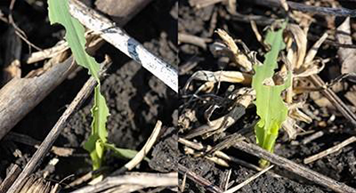
Figure 3. True armyworm feeding on young corn plant. Photo by Adam Varenhorst, Iowa State University Extension.
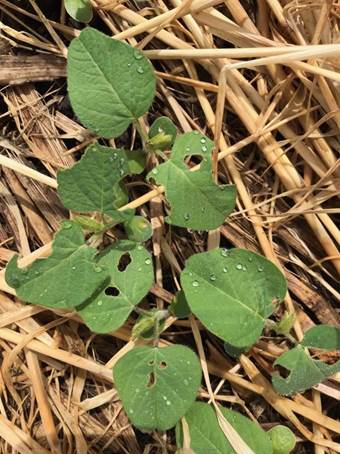
Figure 4. Soybean leaves with true armyworm feeding damage. Photo by Meaghan Anderson, Iowa State University Extension.
Corn Threshold: Small plants typically recover from true armyworm feeding and outgrow the defoliation. Per Kansas State Extension, treatment is justified only when larvae are less than 1.25 inches long and present on 30% of plants with 5 – 6 extended leaves, or when 75% of plants have one or more larva per plant. There is risk of yield loss if defoliation during reproductive stages approaches the ear zone before hard dent. Lower thresholds may apply if the plants are subject to additional stresses.
Sorghum Threshold: Sorghum is very tolerant of defoliation, so insecticide control is rarely justified. For early infestations (5-7 leaf stage, prior to panicle development) at the vegetative stages where true armyworms may be in the whorl, do not initiate controls unless 40% or more of the plants in a field are infested. Because the worms are only defoliating at this point in the sorghum plant’s development, economic damage is not a concern and there would likely be no return on investment for spraying before panicle development.
Soybean Threshold: Once grasses are fed upon or harvested, true armyworms can turn tobroadleaf crops, including soybean. While soybean is not a preferred host, the growing point is exposed early in the season, making them susceptible to stand loss. Management is suggested if soybean defoliation is greater than 35% – 40% during the vegetative stages.
True Armyworm Insecticide Management Options for Summer Crops
True armyworm is generally easier to control with pyrethroids than fall armyworm. Ensure high-volume water (10-15 GPA ground) is used to get the product into the whorl or canopy where the larvae hide. Remember that most insecticides work via contact; if true armyworm larvae are feeding or hiding under dense residue, insecticides are unlikely to make contact and are ineffective. Target applications when larvae are actively feeding on foliage to ensure good contact. Follow all instructions on the insecticide label to ensure good control.
For a complete list of recommended insecticides and rates for these crops, please consult the following OSU Fact Sheets: CR-7167: Management of Insect and Mite Pests in Corn and Sorghum and CR-7115: Management of Insect and Mite Pests in Soybean.
The information given herein is for educational purposes only. Reference to commercial products or trade names is made with the understanding that no discrimination is intended and no endorsement by the Cooperative Extension Service is implied.
Mechanisms of Soil Fertility: Looking at Biologicals and MOA
Brian Arnall, Oklahoma State University Precision Nutrient Management
The use of biological products in commercial agriculture has expanded rapidly, with large corporations entering a space once dominated by smaller groups. This has created an arms race, with nearly every company offering a biological product. Over the past twenty years, I have had the opportunity to test products from the biggest groups with billions in backing, to solutions raised in stock tanks delivered in Braums milk jugs. It is critical to understand what is in the jug and the biological function it is expected to perform. Like herbicides, knowing the mode of action determines whether the product fits the intended purpose. No different than herbicides and knowing mode of actions. It’s important to know and understand that if you are trying to kill ryegrass 2.4-D, a broadleaf herbicide is not the right answer.
So what are we working with that’s in these products?
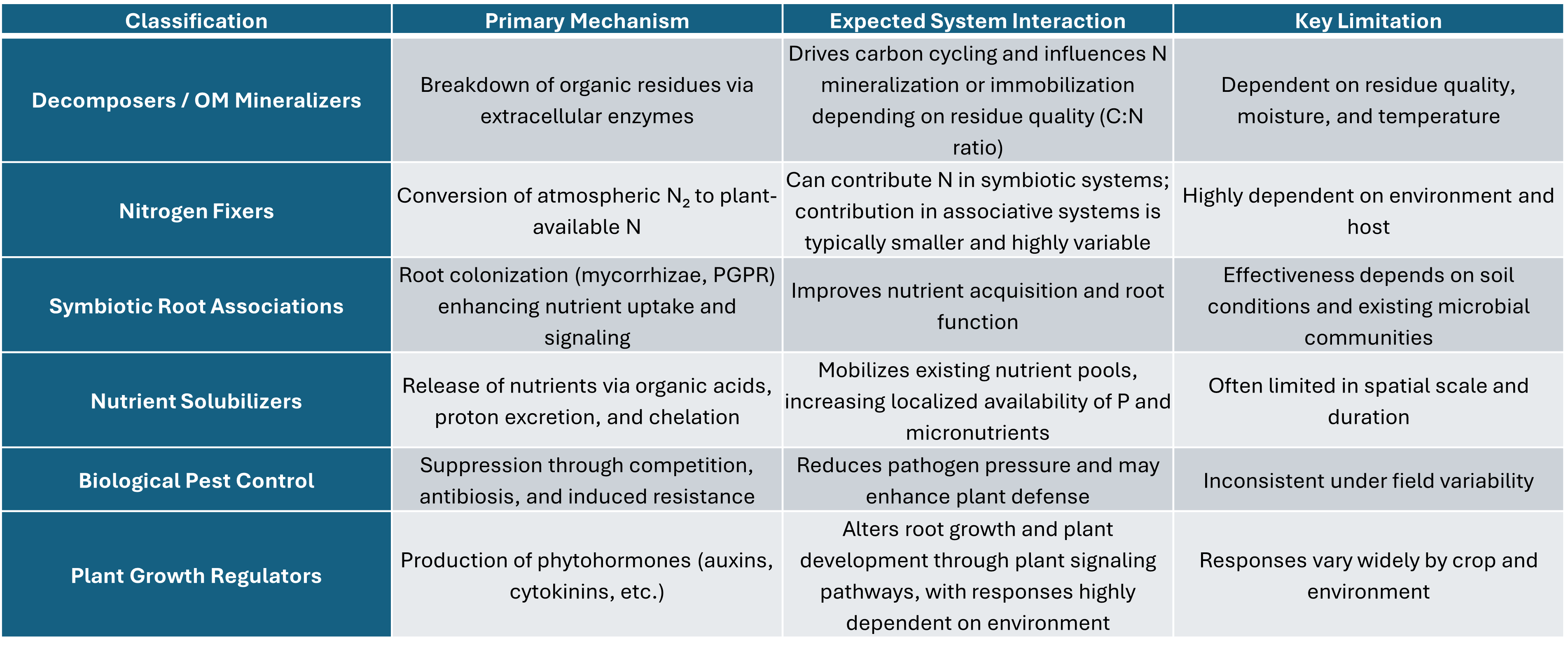
My approach has been to classify the products by operation not by species or genre. Doing so I have grouped products into five biological classifications and a sixth group, which is often in concluded in conversations.
Decomposers / Organic Matter Mineralizers
Nitrogen Fixers (Symbiotic and Associative)
Symbiotic Root Associations (Mycorrhizae, PGPR)
Nutrient Solubilizers
Biological Pest Control
Plant Growth Regulators (Hormonal Effects)
So, let’s dig into each of the mechanisms.
Decomposers / Organic Matter Mineralizers
Decomposition is carried out by a diverse group of organisms including fungi (e.g., Trichoderma, Aspergillus), bacteria (e.g., Bacillus, Pseudomonas), and actinomycetes (e.g., Streptomyces), each contributing to the breakdown of organic materials through different enzymatic pathways. This process of decomposing organic matter releases the nutrients tied up into plant available forms. The release of nitrogen is usually first thought, but this process adds significant amounts of potassium, calcium, and magnesium.
The process occurs both in the soil and on the soil surface. While it seems simple in application though this is a complex process. Let’s start with the soil pool, triggering decomposition of a system where the previous crop was wheat is significantly different than following corn. Following wheat, the carbon nitrogen ratio will be very high (see sugar blog), so while decomposition will release cations such as potassium and calcium, it is very likely to immobilize and residual nitrogen in the system. However, in fields that previously had corn the carbon to nitrogen ratio is much closer and the probability of seeing nitrogen release is much higher (Kuzyakov & Blagodatskaya, 2015). The process is similar for surface residues, but the rate is heavily controlled by rainfall. While both the soil and surface systems require moisture for the process to progress, the surface moisture is much more dynamic with frequent wetting and drying. Rain or irrigation is also needed to move the nutrients into the root zone.
One aspect of increasing decomposition of OM that I do not have a handle on is the long-term impact of expediting OM breakdown in and on the soil, especially in the central plains. As mentioned in the sugar blog, you would hope that the increase in nutrients from OM decomposition would increase plant growth enough to replenish the OM that was burned up. One caveat to this is that the decomposition would have to add nutrients that are deficient. Otherwise, there is no increase in plant growth and hypothetically the system is not net negative on OM. When it comes to decomposing surface residue, I have always been a bit hesitant in Oklahoma as I see having surface coverage to preserve soil moisture typically has a greater value than the nutrients from the residue.
Nitrogen Fixers (Symbiotic and Associative)
Nitrogen fixation is carried out by both symbiotic organisms such as Rhizobium and Bradyrhizobium, which form nodules on plant roots and supply significant nitrogen, and associative organisms such as Azospirillum and Azotobacter, which reside in the rhizosphere and contribute smaller, more variable amounts of nitrogen. Symbiotic nitrogen fixation, such as we have come to expect from legumes, is tightly regulated by the plant, with carbon supplied to the microbe in exchange for fixed nitrogen, making it one of the most efficient biological nitrogen inputs in agriculture.
Associative nitrogen fixation is not directly coupled to plant demand, and nitrogen contributions are typically limited by carbon availability and environmental conditions (Kennedy et al., 2004). While these organisms possess the ability to fix atmospheric nitrogen, the magnitude of nitrogen contribution, particularly from non-symbiotic systems, is highly variable and often limited under field conditions. We know that in soybean nodulation is greatly reduced when excess nitrogen is present in the soil, basically the plant does not need rhizobia, so it does not trigger symbiosis. I expect that as we move symbiotic fixation out of legumes that this mechanism does not change. Finally fixed N is no different than fertilizer N, if you add more then the crop needs, its lost. Therefore, if I am planning to use a N fixer, I would significantly reduce the amount of fertilizer N apply well below crop demand. Otherwise, the money spent on the N fixer is a waste. The only argument I have heard for this is the security blanket, making sure that if more is needed than normally the system is covered. But I circle back to the question about a system with high levels of residual N and rhizobium nodulation.
Symbiotic Root Associations (Mycorrhizae, PGPR)
Symbiotic root associations include arbuscular mycorrhizal fungi (e.g., Rhizophagus, Funneliformis) that extend the effective root system and improve nutrient uptake, particularly phosphorus, as well as plant growth-promoting rhizobacteria (e.g., Pseudomonas, Bacillus) that influence root development and plant signaling through multiple biochemical pathways (Smith & Read, 2008). In my visits with soil microbiologist, I have been left with the understanding that these relationships are not generic, but quite specific. There is significant influence of genotype and environment. And even more interesting is that the majority expect that the plant needs to signal for this relationship to happen.
The effectiveness of these associations is highly dependent on soil conditions, existing microbial communities, and nutrient availability, with responses often diminishing in systems where nutrients are not limited or where native populations are already established. I was able to follow along with some work down at OSU a few years back that was working with sorghum looking for symbiotic relationships to improve water and nutrient uptake specifically phosphorus. The work was successful, the researchers were able to identify a AMF that created a symbiotic relationship with sorghum, with a few caveats. First land race cultivars had a much higher incidence of symbiosis. For the landraces it worked well in extremely nutrient depleted soils and any additions of N or P reduced forage yield over the none. In the end the researchers were able to show improved the grain yield in landraces above fertilized, but these yields did equal fertilized hybrids. This work had great impact on small holders in developing counties with limited resources.
Nutrient Solubilizers
Nutrient solubilization is carried out by organisms such as Bacillus, Pseudomonas, and Aspergillus, which increase nutrient availability through mechanisms including organic acid production, proton release, and chelation, allowing nutrients like phosphorus and micronutrients to become more accessible in the rhizosphere.
Phosphorus-solubilizing fungi, such as Aspergillus and Penicillium, function similarly to bacterial solubilizers but are often more effective at producing strong organic acids. These acids can lower pH in localized zones and release phosphorus from mineral-bound forms, particularly in soils with high fixation capacity. Fungal systems can operate across a wider range of environmental conditions and may play a larger role in longer-term phosphorus cycling. However, as with bacterial systems, these effects are generally localized and dependent on soil chemistry (Richardson et al., 2009). I tend to see these having the greatest benefits in systems that have historically received manures or long-term applications of fertilizer P. I do not believe this is a good fit for soils with limited available phosphorus, as it is trying to focus the soil into something, it does not want to do or have too spare.
Potassium-solubilizing organisms, including species such as Bacillus mucilaginosus and Frateuria aurantia, contribute to the release of potassium from primary minerals like feldspars and micas. These microbes facilitate mineral weathering through acidification and chelation processes that slowly break down mineral structures. While the mechanism is well understood, the rate of potassium release is typically slow relative to crop demand. As a result, these organisms are more influential in long-term soil development than in short-term fertility management (Sheng & He, 2006).
Micronutrient-mobilizing organisms, particularly Pseudomonas and Bacillus species, enhance availability through the production of siderophores and other chelating compounds. These molecules bind metals such as iron and zinc, increasing their solubility and facilitating uptake in the rhizosphere. This process is especially important in soils where micronutrients are present but not readily available due to chemical constraints. However, the impact is typically limited to the immediate root zone and depends on both microbial activity and soil conditions (Ahmed & Holmström, 2014).
Biological Pest Control
Biological pest control organisms, including species such as Bacillus, Pseudomonas, and Trichoderma, function by suppressing pathogens through several well-documented mechanisms. These include the production of inhibitory compounds, competition for space and nutrients, direct antagonism of pathogens, and the activation of plant defense systems through induced systemic resistance. While these mechanisms are well established under controlled conditions, their effectiveness in field environments is highly dependent on environmental conditions, pathogen pressure, and the ability of the organism to persist and colonize the soil or plant surface (Lugtenberg & Kamilova, 2009).
I’ve been working with a lot of folks from Brazil who historically make four to six nemacide applications in soybean, but utilizing Pseudomanas they have been able to reduce that number by half or more. The caveat, as I understand, the application rates needed are significantly higher than anything I have seen in the US. If you look through the literature, you are seeing more and more documentation of this such as Li et al. 2022. But as Spescha et al. (2023) documented, different biological control agents operate through complementary mechanisms, including infection, toxin production, and host targeting. However, effectiveness depended on environmental conditions and interactions among organisms, reinforcing that biological control outcomes are system-dependent rather than universally consistent.
Plant Growth Regulators (Hormonal Effects)
This group differs slightly, as the primary effect is not direct nutrient cycling but modification of plant physiological response. This group is one I hold the greatest expectations for. I mean we have been using PGRs in crop production for decades, we just did not have an inkling of how many PGRs exist.
Plant growth regulator effects are associated with organisms such as Azospirillum, Bacillus, and Pseudomonas, which can influence plant development through the production of phytohormones and related compounds. These microbes produce substances such as auxins, cytokinins, and gibberellins that alter root architecture and plant growth patterns, and in some cases reduce stress responses through enzymes like ACC deaminase. Rather than supplying nutrients directly, these organisms modify how plants respond to their environment and utilize available resources. However, just like everything previously discussed the magnitude of response is often subtle and highly dependent on environmental conditions and crop system interactions (Glick, 2012).
Final thoughts.
There is one situation that pops up that I do not agree with, based upon my limited understanding of soil microbiology. Its adding more of what is already there. The soil system is a dynamic system. While there are population booms and bust, it supports what it is able to. Adding more of what is already there is like dropping a million rabbits into a prairie that has rabbits already. The current population is where it is because that is what the system can support. Adding means one of two things, a lot of rabbits die immediately, or they overwhelm the system and another animal species dies off due to lack of resources. Also, most microbiologists tell me the system is amazing at signaling and finding what it wants. It may take a season, but it will be there, in the quantities that soil needs, just given time.
So, the final slide in all my biological additives talks ends with this statement. My experiments show one thing. The impact of adding these products on crop yields is very consistently inconsistent. I’ve had many show a significant positive response, once. I have struggled to ever get repeated successes. It is my belief that I will have more success improving the soil biome by managing the soil (no-till, crop rotation, cover crops) than I will ever have with adding a product.
Final comment, Read the label. Many of the biological products I have tested are not singularly pure species. There are many blends of species and organisms which encompass many of the modes. A lot of these blends also contain extras such as humics, fulvics, carbohydrates, and sugars, see previous blogs.
Take-Home Messages
- Biological products function through specific mechanisms, not as broad “boosters,” and understanding that mechanism is critical to proper use.
- The presence of a biological function does not guarantee a yield response, outcomes are driven by soil, crop, and environmental conditions
- Decomposers and carbon-driven systems can immobilize or mineralize nitrogen, depending largely on residue quality and system balance
- Mycorrhizae and PGPR improve access to existing nutrients, not total nutrient supply
- Nutrient-solubilizing organisms mobilize nutrients already present in the soil
- Plant growth regulators influence plant signaling and development
- Adding biological organisms to soil does not guarantee establishment or persistence, as soil systems can regulate microbial populations.
- Management practices such as no-till, crop rotation, and cover crops are effective at improving soil biological function
- Across all biological products, mechanism exists, but response depends on the system
Any questions or comments please reachout to me @ b.arnall@okstate.edu
Citations
Ahmed, E., & Holmström, S. J. M. (2014). Siderophores in environmental research: Roles and applications. Microbial Biotechnology, 7(3), 196–208.
Glick, B. R. (2012). Plant growth-promoting bacteria: Mechanisms and applications. Scientifica, 2012, 963401
Kennedy, I. R., Choudhury, A. T. M. A., & Kecskés, M. L. (2004).
Non-symbiotic bacterial diazotrophs in crop-farming systems. Plant and Soil, 266, 65–79.
Kuzyakov, Y., & Blagodatskaya, E. (2015).
Microbial hotspots and hot moments in soil. Soil Biology and Biochemistry, 83, 184–199.
Lugtenberg, B., & Kamilova, F. (2009). Plant-growth-promoting rhizobacteria. Annual Review of Microbiology, 63, 541–556.
Richardson, A. E., Barea, J. M., McNeill, A. M., & Prigent-Combaret, C. (2009). Acquisition of phosphorus and nitrogen in the rhizosphere and plant growth promotion by microorganisms. Plant and Soil, 321(1–2), 305–339.
Sheng, X. F., & He, L. Y. (2006). Solubilization of potassium-bearing minerals by a wild-type strain of Bacillus edaphicus and its mutants and increased potassium uptake by wheat. Canadian Journal of Microbiology, 52(1), 66–72. https://doi.org/10.1139/w05-117
Smith, S. E., & Read, D. J. (2008).
Mycorrhizal symbiosis. Academic Press.
Spescha, A., Weibel, J., Wyser, L., Brunner, M., Hess Hermida, M., Moix, A., Scheibler, F., Guyer, A., Campos-Herrera, R., Grabenweger, G., & Maurhofer, M. (2023). Combining entomopathogenic Pseudomonas bacteria, nematodes and fungi for biological control of a below-ground insect pest. Agriculture, Ecosystems & Environment, 348, 108414.
Ye S, Yan R, Li X, Lin Y, Yang Z, Ma Y and Ding Z (2022) Biocontrol potential of Pseudomonas rhodesiae GC-7 against the root-knot nematode Meloidogyne graminicola through both antagonistic effects and induced plant resistance. Front. Microbiol. 13:1025727. doi: 10.3389/fmicb.2022.1025727
Small Pest, Big Problems: Wheat Curl Mites and Wheat Streak Mosaic Virus Detected in Oklahoma
Ashleigh Faris, Cropping Systems Entomologist, IPM Coordinator
Meriem Aoun, Wheat Pathologist
Department of Entomology & Plant Pathology,
Oklahoma State University
Wheat Curl Mite (WCM) activity has been confirmed in Washita County, located in western Oklahoma. While the mites themselves are difficult to see, they can have a considerable impact on wheat health, primarily due to their role as vectors for several viral diseases such as wheat streak mosaic virus (WSMV). The Plant Disease and Insect Diagnostic Laboratory (PDIDL) has confirmed WSMV in the sample where WCM were detected in Washita County. This week, the PDIDL has also confirmed infection by WSMV in Blaine County (Canton, OK), McCurtain County (Garvin, OK), and Cleveland County (Noble, OK).
Identification
The Wheat Curl Mite is nearly invisible to the naked eye. At approximately 1/100 of an inch long, these pests require a 10x – 20x hand lens for proper identification.
- Appearance: They are white or cream-colored, cigar-shaped (cylindrical), and possess only four legs located near the head (Figure 1).
- Behavior: They are typically found in the protected areas of the plant, such as developing, youngest leaves or the furrows of the leaf surface. As the leaf unfurls, the mites migrate to the next emerging leaf.
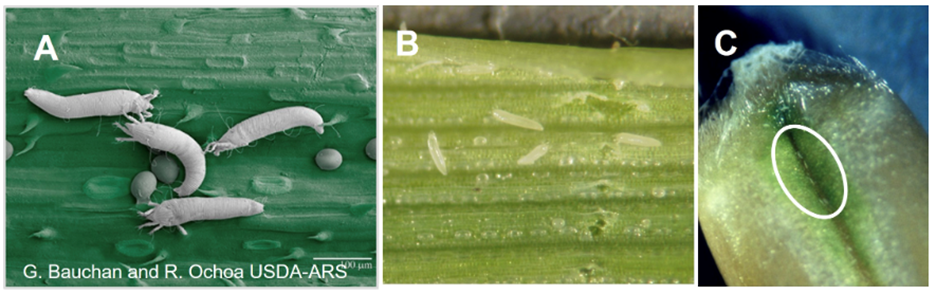
Figure 1. Wheat curl mites and eggs on a wheat leaf (A, B), and mites on a maturing wheat kernel (C). Images courtesy G. Bauchan and R. Ochoa, USDA-ARS.
Biology and Life Cycle
Understanding the WCM life cycle is critical for preventative management:
- Rapid Reproduction: Under optimal temperatures (75° – 85°F), a WCM can complete its life cycle in 7 to 10 days. This allows populations to explode rapidly during warm autumns or springs.
- Dispersal: WCMs cannot fly; they rely entirely on wind currents to move from plant to plant or field to field. They crawl to the tips of leaves and hitchhike on the wind.
- Survival (The Green Bridge): WCMs are obligate parasites, meaning they require living green tissue to survive and reproduce. They persist through the summer on volunteer wheat and various perennial or annual grasses. This is known as the green bridge. If this bridge is not broken, mites move into the newly planted crop in the fall.
Damage and Virus Transmission
WCMs cause two types of damage:
- Direct Feeding: Mites suck sap from the leaf cells. This causes the edges of the leaf to roll inward (the curl part of WCM) (Figure 2). This curling provides a protected microclimate for the mites to reproduce. Heavy infestations can cause stunting and a slowed appearance in growth.
- Viral Vector (Primary Concern): The WCM is the sole vector for Wheat Streak Mosaic Virus (WSMV), High Plains Wheat Mosaic Virus (HPWMoV), and Triticum Mosaic Virus (TriMV).
- Symptoms: Infected plants show yellowing, mottled or streaked leaves, and severe stunting (Figures 3 & 4).
- Impact: If infection occurs in the fall, yield loss can be up to 100%. Spring infections are generally less damaging.
Scouting Techniques
Because the mites are so small, scouting focuses on leaf symptoms and having a hand lens:
- Check your Fields: Examine the youngest leaves of the wheat plant. Look for the characteristic inward rolling of the leaf edges (Figure 2).
- Use Magnification: Slowly unroll a suspect leaf and use a hand lens to look for tiny, white, slow-moving specks in the leaf furrows.
- Pattern of Infestation: Wind-dispersed mite infestations often start at the edge of a field (particularly edges adjacent to volunteer wheat or CRP land) and move inward in the direction of prevailing winds. Areas with infestations may show signs of yellowing and appear as patches distributed at random across the field (Figure 4).
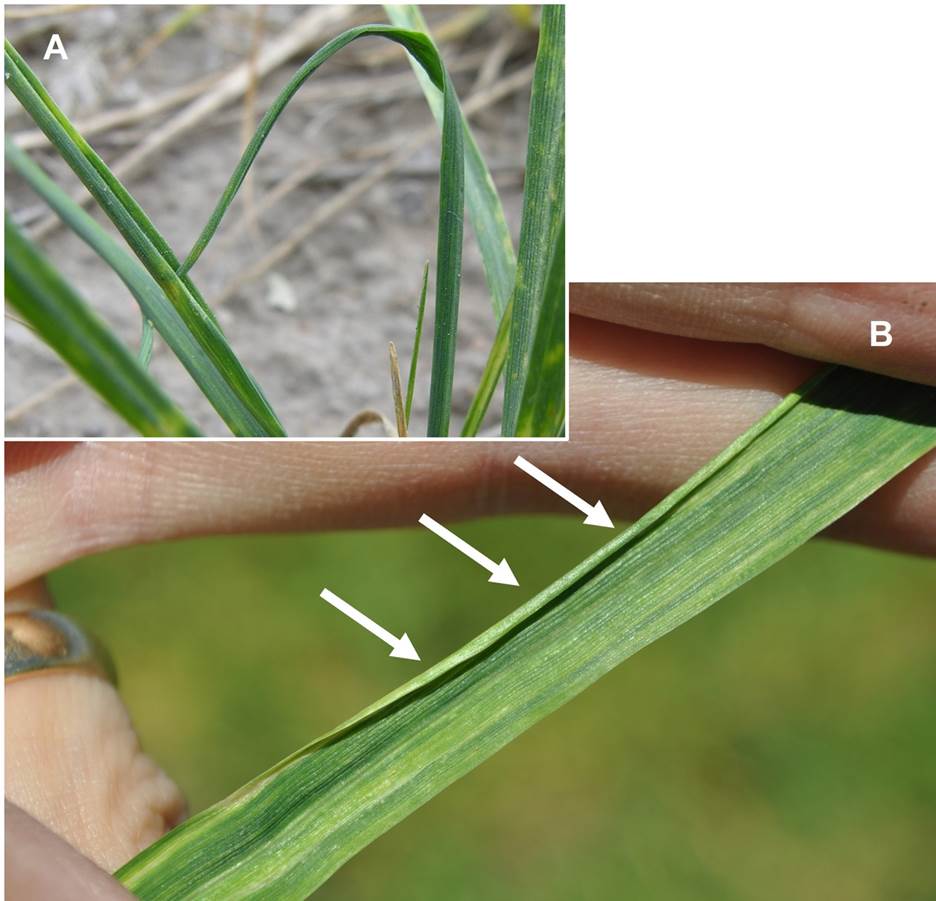
Figure 2. Infestation of wheat curl mites on wheat results in tightly curled leaves and entrapment of subsequent leaves within the curl (A). After full leaf emergence, a tight curl at the leaf edge remains (B). Images courtesy of UNL Extension.
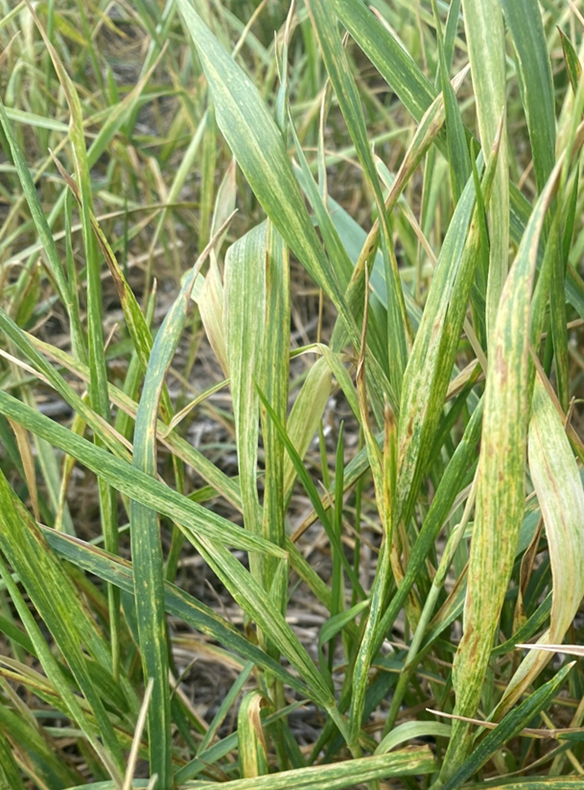
Figure 3. Wheat streak mosaic virus (WSMV) symptoms includeyellowing, mottled or streaked leaves. Image courtesy of Meriem Aoun, Oklahoma State University.
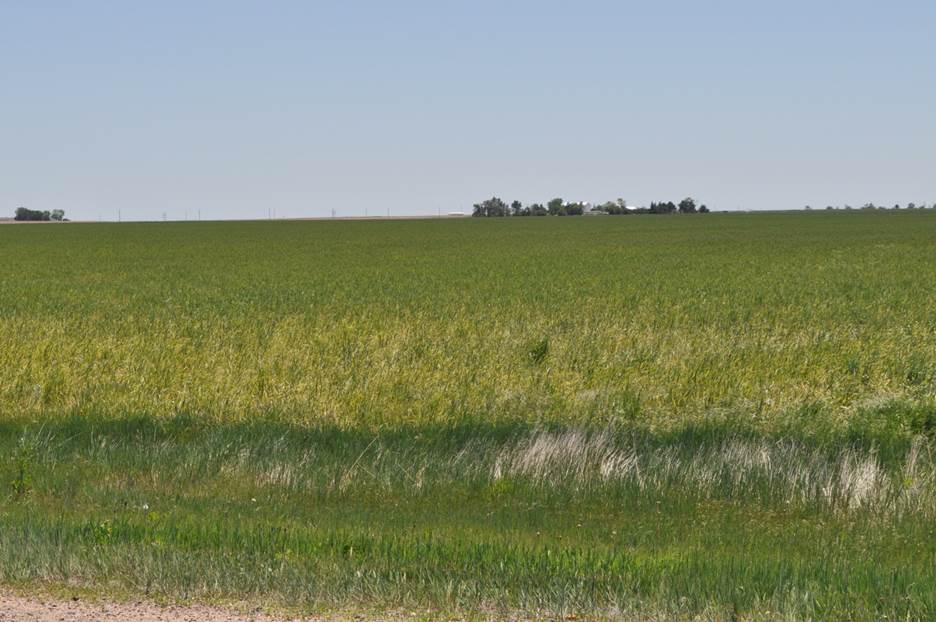
Figure 4. Plants at field margins, neighboring a wheat curl mite source, are the first to become infected with viruses of the Wheat Streak Mosaic Virus (WSMV) complex and develop symptoms, such as yellowing and streaking. Notice the gradient in color from the field edge (left) toward the center of the wheat field. Image courtesy of UNL Extension.
Management Recommendations
Currently, there are no effective rescue chemical treatments for WCM once symptoms appear in the field. Miticides generally do not reach the mites hidden inside the curled leaves. Management must be proactive:
- Manage volunteer wheat and grassy weeds: This is the most effective management tool to break the green bridge. Ensure all volunteer wheat and grassy weeds are completely dead (via tillage or herbicide) at least two weeks prior to planting the new crop. WCMs will starve within days without a living host.
- Delayed Planting: Planting wheat later in the fall reduces the window of time that mites must migrate into the crop and slows their reproduction rate as temperatures drop.
- Variety Selection: Some wheat varieties offer resistance or tolerance to WCM or WSMV. Consult the latest OSU variety trial data to select adapted varieties for north-central Oklahoma that carry these traits. Currently, Breakthrough is the most resistant OSU variety, which carries the WSMV resistance gene, Wsm1.
Brown Wheat Mite Activity in North Central Oklahoma
Ashleigh Faris, Cropping Systems Entomologist, IPM Coordinator
Department of Entomology & Plant Pathology,
Oklahoma State University
Following a period of dry weather, wheat growers in central Oklahoma are reporting activity of the Brown Wheat Mite (BWM). Unlike many other wheat pests, BWM thrives in drought conditions, and its damage can often be mistaken for moisture stress or nutrient deficiency.
Identification
The Brown Wheat Mite is small—about the size of a needle point—but is generally easier to spot than the Wheat Curl Mite because it is active on the leaf surface.
- Appearance: BWM has a dark red to brownish-black, oval-shaped body (Figure 1).
- Distinguishing Feature: Its front legs are significantly longer than its other three pairs of legs.
- Behavior: They are most active during the day, particularly in the afternoon, and will quickly drop to the ground if the plant is disturbed (Figure 2).
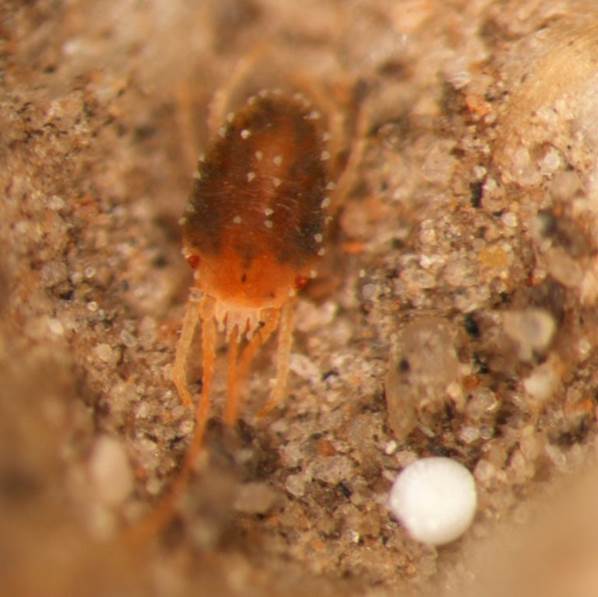
Figure 1. Brown wheat mite (BWM).
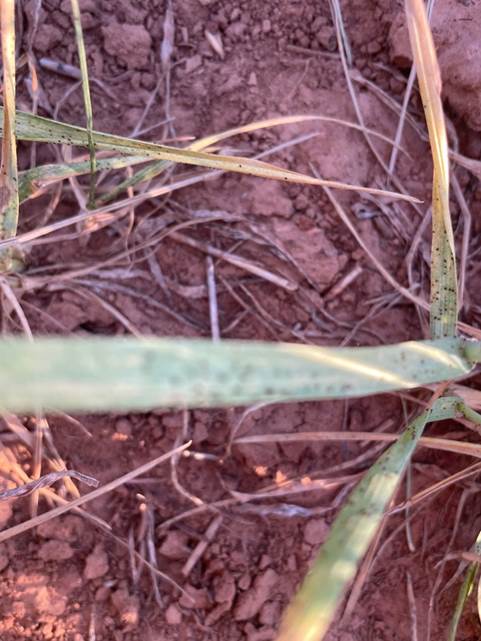
Figure 2. Brown wheat mites (BWM) on wheat. Image courtesy L. Galvin, OSU Extension.
Biology and Life Cycle
BWM populations consist entirely of females that produce offspring without mating (parthenogenesis), allowing for extremely rapid population growth under dry conditions. The BWM has a unique life cycle in that it can lay two types of eggs. Environmental conditions dictate when these two types of eggs are laid:
- Red Eggs: Laid during the growing season and hatch in about a week when conditions are favorable.
- White (Diapause) Eggs: Laid as temperatures rise and the crop matures. They are highly resistant and allow the population to survive the summer heat, hatching only when cooler, wetter weather arrives in the fall.
Damage
BWM damage is caused by the mites piercing plant cells and sucking out the plant nutrients.
- Symptoms: Initial damage appears as “stippling” (fine white or yellow spots) on the leaves. As feeding continues, leaves take on a silvery or bronzed appearance (Figure 3).
- Tipping: Heavy infestations cause the tips of the leaves to turn brown and die.
- Weather Interaction: Damage is most severe when plants are already under drought stress. Because both BWM damage and drought cause yellowing/browning, it is essential to confirm the presence of mites before treating.
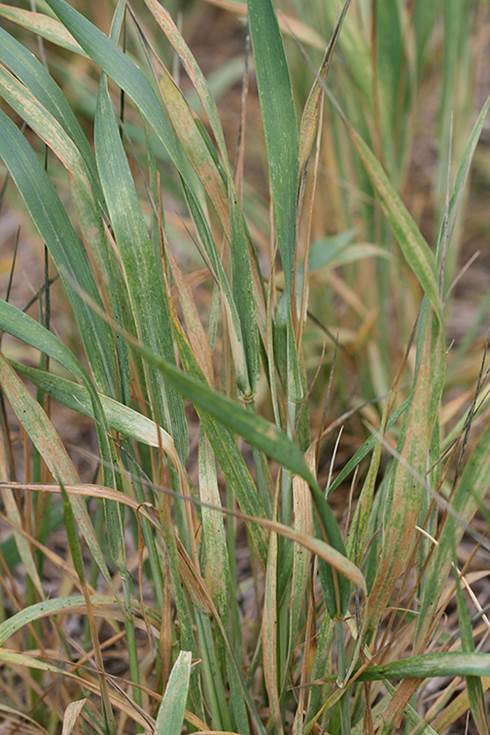
Figure 3. Brown wheat mite (BWM) damage.
Scouting
Because BWM is highly mobile and drops when disturbed, careful scouting is required:
- Timing: Scout during the warmest part of the day when mites are most active on the upper leaves.
- The Paper Test: Gently but quickly shake or tap wheat plants over a white piece of paper or a white clipboard. Look for tiny dark specks moving across the surface.
- Economic Threshold: While thresholds vary based on crop value and moisture stress, research suggests a treatment threshold of 25 to 50 brown wheat mites per leaf in wheat that is 6 inches to 9 inches tall is economically warranted. An alternative estimation is “several hundred” per foot of row. If the wheat is severely stressed, the lower end of that threshold should be used.
Management Recommendations
- The “Rain” Factor: A significant, driving rain is often the most effective control for BWM. Rain can physically knock mites from the plant and promote fungal pathogens that naturally reduce the population.
- Chemical Control: If populations exceed the threshold and no rain is in the forecast, chemical intervention may be necessary. Know the cost of the treatment and value of your wheat so you can determine if an application is a worth return on investment.
- Effective Ingredients: Organophosphates (such as Dimethoate) have historically provided better control than many pyrethroids, as the latter can sometimes result in mite “flaring” or simply fail to provide adequate residual control.
- Coverage: High water volume is critical to ensure the insecticide reaches the mites, especially if they have moved toward the base of the plant.
- Pre-harvest Intervals & Grazing Restrictions: Always read and follow the label guidelines. For more on acaricides that can be applied in wheat see the Oklahoma State University Fact Sheet “Management of Insect and Mite Pests in Small Grains” (CR-7194).
- Cultural Practices: Since BWM thrives in dry, dusty conditions, maintaining good soil moisture and vigorous plant growth can help the crop tolerate feeding. Here’s to hoping for some rain soon in the forecast; we could really use it for lots of reasons in Oklahoma.

