Home » Posts tagged 'IPM'
Tag Archives: IPM

Stop the March: Starting Your Wheat Season Off Right with Fall Armyworm Management
Ashleigh M. Faris, State Specialist for Cropping Systems Entomology
As Oklahoma summer crops are winding down, we are seeing an increase in fall armyworm reports. Fall armyworms are posing a significant risk of economic damage to our upcoming winter wheat crop. These summer crops and weeds have supported lush vegetation, creating highly attractive habitats for female moths to lay eggs, which can subsequently move into newly planted wheat.
Here is what wheat producers need to know to identify, manage, and prevent fall armyworm infestations this planting season.
Fall Armyworm (FAW) Identification and Life Cycle
Fall armyworms have a distinct, broad, white inverted “Y” present on the front of their head capsule (Fig. 1). Their body varies from light tan to green to dark brown or nearly black in color with three widely separated narrow, yellowish-white stripes down their back (Fig. 2). There are four distinct black dots arranged in a square on the top of the 8th abdominal segment.
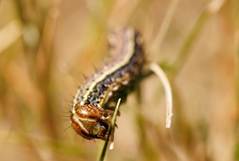
Fig. 1 Fall armyworm. Note the white inverted “Y” on the head capsule. Credit: Mitchell Alcala, OSU Agriculture.
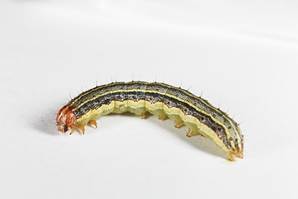
Fig. 2. Fall armyworm. Credit: Pat Porter, Texas A&M AgriLife Extension.
The adult moth will lay their eggs that hatch as caterpillars (the damaging stage). Adult moths migrate from Mexico and Texas to Oklahoma usually by late June. Eggs are laid in clusters on host plants and appear pale yellow but darken as they age turning black just before hatching (Fig. 3). Larvae will feed on foliage for 2-3 weeks, increasing with size as they progress through 6 larval instars, then dig into the soil to pupate. A new generation of moths emerge about 2 weeks later. Because there are several overlapping generations in Oklahoma, extending into October and November, protecting wheat stands and monitoring for FAW can be critical for crop establishment. Keep in mind that FAW do not overwinter in Oklahoma; the first killing frost of the season should eradicate the population.
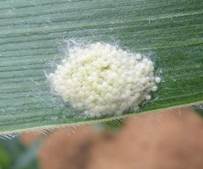
Fig. 3. Fall armyworm eggs laid on grass. The fuzzy appearance is due to scales that are deposited between and over the eggs. Credit: Desiree van Heerden, Syngenta.
Signs of FAW Damage, Scouting, and Economic Threshold
The earliest sign of infestation is “windowpane” damage, where tiny, newly hatched FAW larvae chew off a single layer of leaf tissue, leaving behind transparent patches (Fig. 4). Within a few days, the growing FAW caterpillars can consume entire leaves. Because 90% of crop damage happens during the insect’s final two growth stages, FAW can quickly decimate seedling stands, sometimes forcing producers to completely replant their winter wheat.
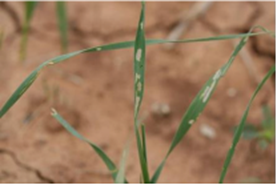
Fig. 4. Small FAW larvae will scrape off the top layer of leaf tissue when they feed, leaving behind a “windowpane” appearance. Credit: Lanie Hale, Wheeler Bros.
To scout for FAW, check your fields regularly (e.g., every other day in the evenings), looking closely at the base of newly emerged seedlings. Focus on field borders and edges near grassy or weedy areas where FAW often start. During the day FAW will hide under residue and at the base of the plant, scouting early morning or in the evenings is the best time for spotting FAW in the crop canopy. Look closely and carefully for early instars, as these are very small (Fig. 5).

Fig. 5. Small, early instar FAW can be difficult to see against wheat and residue, especially when scouting in full sun. Red circles highlight the FAW hiding in this image. Credit: Dr. Amanda Silva, OSU Small Grains Extension Specialist.
The economic threshold for FAW in winter wheat is 3 – 4 larvae per linear foot of row alongside visible feeding damage. Alternatively, treat when there are 4 or more larvae (1 inch or longer) per square foot threatening the stand. If 25-30% of plants show window-pane injury, monitor the field daily and treat immediately if the stand is in danger.
Planting Practices: Cultural Control & Insecticide Seed Treatments
Keeping your field and its surrounding borders completely weed-free, in additional to removal of volunteer wheat for at least two weeks before planting is one way to make sure your wheat season starts off on the right foot. This removes early food sources and makes the area less attractive for egg-laying female moths.
Another way to get your season off on the right foot is to consider using an insecticide seed treatment but make sure it is specifically labeled for FAW. This is because not all insecticides are effective against FAW. Seed treatments containing the active ingredient Chlorantraniliprole (Group 28), such as Cedocor CPL and Lumivia, are effective options labeled to control or suppress FAW. These products also provide protection against wireworms, cutworms, and grasshoppers. Insecticide seed treatments can provide protection for four to six weeks.
How do you know if you should invest in a seed treatment? Consider your planting timing and intended use for your wheat. Planting wheat early for use as a dual-purpose crop significantly increases the prevalence of several diseases and damage caused by viruses, fungi, and by insect pests compared to planting wheat later for grain-only. You should also consider the history of the field. If you have seen issues in a particular field, then it may be worth planting treated seed. If you don’t know the history of the field, work with your local agronomist to determine what insects are likely an issue in those fields.
If you are using treated seed, remember that combinations of some fungicidal and insecticidal seed treatments can be toxic to the seed. Read the label carefully before mixing insecticides with fungicides. Also be sure to follow required grazing restrictions and intervals listed on the label. Equipment such as augers and trucks to deliver grain should not be contaminated by treated grain.
Foliar Chemical Control Options
It is critical to treat fields while FAW caterpillars are on the small side meaning less than half an inch long; larger caterpillars do the most damage and can be highly resilient to insecticides. Effective foliar products typically include active ingredients like chlorantraniliprole, lambda-cyhalothrin, spinetoram, or cyfluthrin. Options labeled for FAW control include Coragen eVo, Tombstone, Warrior II, Mustang Maxx, Besiege, and Radiant SC. When selecting an insecticide, it is important to consider if the option is broad spectrum. Broad spectrum insecticides can reduce natural control such as lacewing and syrphid larvae, as well as lady beetles that may be keeping other pests like aphids under threshold. Always read and follow all label instructions to ensure you are applying at the correct rate and adhering to the required pre-harvest and grazing intervals.
This fall, the OSU Cropping Systems Entomology team will be conducting field trials to evaluate the efficacy of insecticide seed treatments and foliar insecticides on FAW in hard red winter wheat. These trials are made possible through support from industry partners and the Oklahoma Wheat Commission. Trial results will be shared at future OSU Field Days and grower meetings.
Scout, Identify, Control: Winning the Battle Against Sorghum Headworms
Ashleigh M. Faris, Cropping Systems Entomologist
This week the OSU Cropping Systems Entomology crew detected treatable numbers of sorghum headworms at several North Central Oklahoma sorghum fields at milk to soft dough stages (Figure 1). Sorghum headworms are a complex of different caterpillar pests that can inflict severe economic damage on grain sorghum during its reproductive stages. The two primary species comprising the headworm complex in our region are the fall armyworm, Spodoptera frugiperda, and the corn earworm, Helicoverpa zea. A third species in this complex is the sorghum webworm, Nola sorghiella. Because these pests feed hidden in the developing sorghum head, timely scouting is important for protecting yields.
Pest Identification
Fall armyworm, corn earworm, and sorghum webworm are all moths as adults. The immature forms, caterpillars which are also referred to as “worms”, are the economically damaging stages. These caterpillars will progress through multiple instars, increasing in size and appetite as they grow. Oklahoma has multiple, overlapping generations of these pests. See Table 1 for identifying characteristics of sorghum headworms.
Table 1. Sorghum headworm identification. Image credits: Fall armyworm, OSU Extension. Corn earworm, Ashleigh M. Faris, OSU Extension. Sorghum webworm, Cliff Beaton, Mississippi Entomological Museum.
| Pest | Image | Body Characteristics |
| Fall Armyworm |  | Dark head capsule with a distinct, broad, white inverted “Y” shape. Dorsal lines running lengthwise down the body. Range in color from light green, brown, or tan. |
| Corn Earworm |  | Light-colored head capsule. Alternating light and dark stripes along the body. Body covered with small bristles visible with a hand lens. Vary in color from green and yellow to brown or pink. |
| Sorghum Webworm |  | Four distinct reddish-brown stripes down the back Many spines and clear white hairs on their body, grouped in clusters. |
Sorghum Vulnerability and Damage
Sorghum is most vulnerable to headworm infestations from panicle emergence (bloom) through the hard dough stage. Fall armyworms and corn earworm can also be considered whorl worms, caterpillars that feed during the vegetative sorghum stages. Whorl-stage feeding causes “windowpaning” (Figure 1) and “shot holes” (Figure 2) on the leaves, but this damage rarely reduces yields enough to justify chemical control. Open-headed sorghum varieties are more susceptible to headworm infestations than tight-headed varieties. Tight-headed varieties make chemical control penetration much more challenging but using high gallon per acre (GPA) when spraying can help.

Figure 1. “Windowpaning” caused by early instar whorl worms feeding on a sorghum leaf. Image credit: Ashleigh M. Faris, OSU Extension.
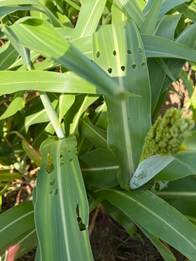
Figure 2. “Shot holes” caused by later instar whorl worms on a sorghum leaf. Image credit: Ashleigh M. Faris, OSU Extension.
Headworms directly feed on flowering parts and the developing starches within the grain (Figures 3 and 4). They feed in an irregular pattern on the sorghum head, leaving the starchy portion of the kernel exposed (Figure 5). A single larva can consume approximately 0.01 pounds of grain (up to 12 kernels per day) during its lifespan. Infestations of 1 to 2 larvae per head can result in a 5% to 10% overall yield loss.

Figure 3. Early instar corn earworm feeding on developing sorghum kernels. Image credit: Ashleigh M. Faris, OSU Extension.

Figure 4. Late instar corn earworm feeding on developing sorghum kernels. Image credit: Ashleigh M. Faris, OSU Extension.
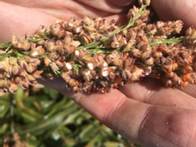
Figure 5. Sorghum webworm feeding damage. Note the empty glumes and irregular feeding pattern. Image credit: Ron Schnell, Texas A&M University.
Scouting Procedures
Active monitoring gives producers the best chance at making timely insecticide applications. Scouting should begin at full panicle emergence and continue every 3 to 5 days until the hard dough stage. OSU Extension Specialists have developed a sequential sampling Sorghum Headworm Quick Count Sampling Plan to aid growers in management decision making. This support tool can be found at the OSU EPP-7087 Fact Sheet Sampling for Sorghum Headworms in Oklahoma Using the Headworm Decision Support System.
Alternatively, one can also scout for headworms using the following steps:
- Walk at least 15 to 20 feet into the sorghum field before taking your first sample.
- Grasp the stalk just below the emerged head and bend it into a white 2.5 – 5-gallon bucket.
- Vigorously beat the head against the side of the bucket to dislodge the larvae.
- Ignore any caterpillars smaller than 1/4 inch, as they feed very little and experience extremely high natural mortality.
- Count and categorize the remaining worms as either medium (1/4 – 1/2 inch) or large (greater than 1/2 inch).
- Walk 30 paces down the row, sample another head, and repeat this process across multiple rows to ensure field-wide representation.
Economic Threshold for Sorghum Headworms
Management decisions should be driven by the size of the larvae and the growth stage of the crop. When sorghum is in the reproductive/panicle stage, use a treatment threshold of 1 to 2 larvae per head for corn earworms or fall armyworms, or 0.5 headworms per head using sequential sampling. The threshold for smaller, less damaging pests like the sorghum webworm is higher, at 3 to 4 larvae per head.
Insecticide Management Options
If economic thresholds are met, selecting the appropriate chemistry is vital for control and the preservation of natural enemies. Spraying broad-spectrum insecticides like pyrethroids or carbamates can kill beneficial insects that are predators of sorghum aphids and other pests (Table 2). Removing these natural enemies can cause sorghum aphid populations to flare and reach/exceed economic thresholds. Always read the label to ensure the product is registered for use on sorghum and the target pest, and to be aware of restricted entry intervals (REI) and pre-harvest intervals (PHI).
Table 2. List of select available products labelled for managing headworms in grain sorghum in Oklahoma as of the date of this publication. Note that inclusion of insecticide in the table below is not an endorsement or guarantee by OSU Extension. Refer to and follow insecticide labels.
| Insecticide Active Ingredient | Trade Name | Notes |
| Spinosad | Blackhawk | Soft on natural enemies. |
| Chlorantraniliprole | Vantacor (formerly Prevathon) | Excellent option for larger worms and populations resistant to pyrethroids; provides effective control with lower toxicity to natural enemies. |
| Zeta-cypermethrin, lambda-cyhalothrin | Mustang MAXX EC, Warrior II with Zeon | Broad-spectrum activity may impact beneficial/natural enemy insect populations, potentially flaring sorghum aphids. |
Corn Leafhopper Detected in Southwest Oklahoma – What Growers Need to Know to Reduce Risk of Corn Stunt Disease
Maíra R. Duffeck: OSU Field Crops Extension Pathologist, Department of Entomology and Plant Pathology
Ashleigh Faris, OSU Field Crops Extension Entomologist, Department of Entomology and Plant Pathology
On June 5, 2026, the first corn leafhoppers of the year were detected in a corn field near Fort Cobb in Caddo County, Oklahoma. The insects were collected from grain corn by Dr. Maira Duffeck’s Row Crop Pathology team, and its identification was subsequently confirmed by Dr. Ashleigh Faris, OSU State Extension Entomologist for Cropping Systems.
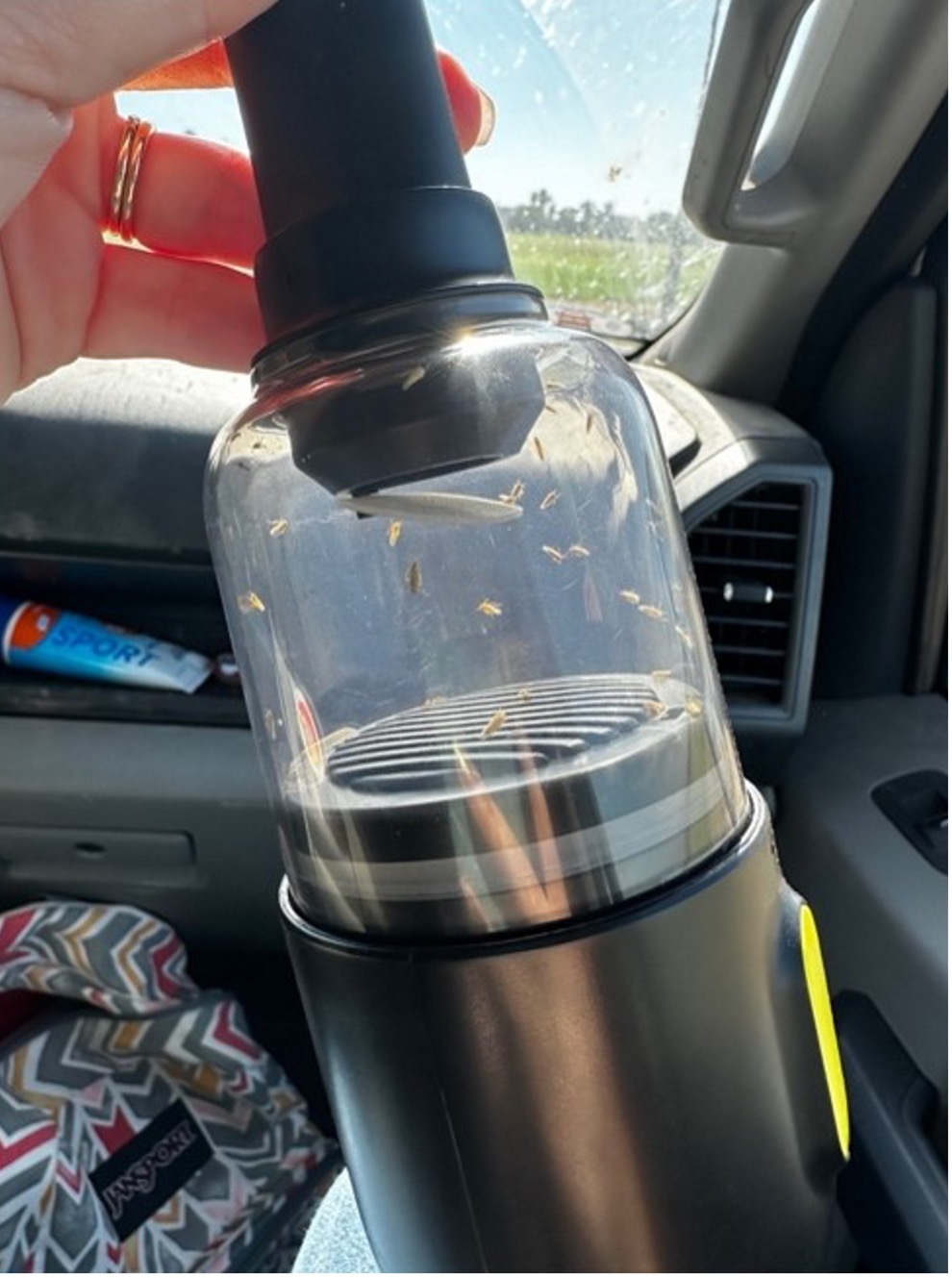
The two corn leafhoppers specimens were collected from within the whorls of V6-stage corn plants during routine field scouting. Specimens were collected using a cordless vacuum for identification and documentation. In addition, one corn leafhopper was captured on a yellow sticky trap installed at the edge of the field. The trap has been monitored and replaced weekly since planting as part of ongoing surveillance efforts.
This 2026 detection occurred 18 days earlier than the first corn leafhopper detection reported in Oklahoma during 2025. Due to delayed planting associated with drought conditions, much of the corn across the state is currently at vegetative growth stages compared to this same time last year. This situation raises concerns about the potential transmission of corn stunt pathogens by corn leafhoppers.
Research outside of the U.S. has shown that corn plants are most susceptible to infection by corn stunt pathogens during the vegetative growth stages, from emergence (VE) through tasseling (VT). However, infection can also occur during the early reproductive stages. Early infection can result in significant yield losses because affected plants have a longer period to develop symptoms and experience reductions in growth and grain production.
It is not yet known if the corn leafhoppers detected in Oklahoma are carrying corn stunt pathogens, therefore growers should assume that any corn leafhopper has the potential to be infectious. Consequently, management efforts should focus on early detection and suppression of corn leafhopper populations, particularly in fields with corn at vulnerable vegetative growth stages. Regular scouting and timely management decisions will be critical for reducing the risk of corn stunt development during the 2026 growing season.
The Insect Identification
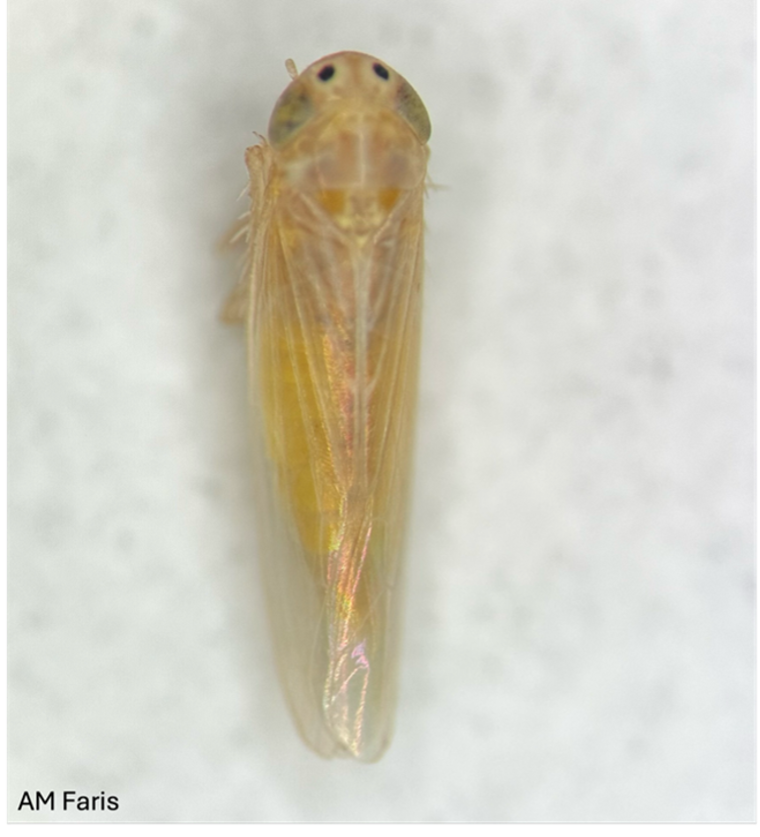
The corn leafhopper is a small insect, approximately 1/8 inch long (about the size of a grain of rice), with a yellow to tan body color. Adults are characterized by two small black spots surrounded by lighter-colored halos located between the eyes (Figure 1), as well as a clean face meaning there are no additional markings on the head or body. It is important to note that many leafhopper species also possess two spots between their eyes, however, these other leafhoppers will also have other dark marks on their head and/or face.
To distinguish corn leafhoppers from other leafhopper species, look for the combination of the two black spots with halos and the absence of additional markings. Corn leafhoppers do not have spots, stripes, or other markings on their wings, back, abdomen, face, or the top of the head (Figure 2). For mor information on how to distinguish the corn leafhopper from other commonly occurring leafhoppers see OSU e-Pest Alert EPP-25-24.
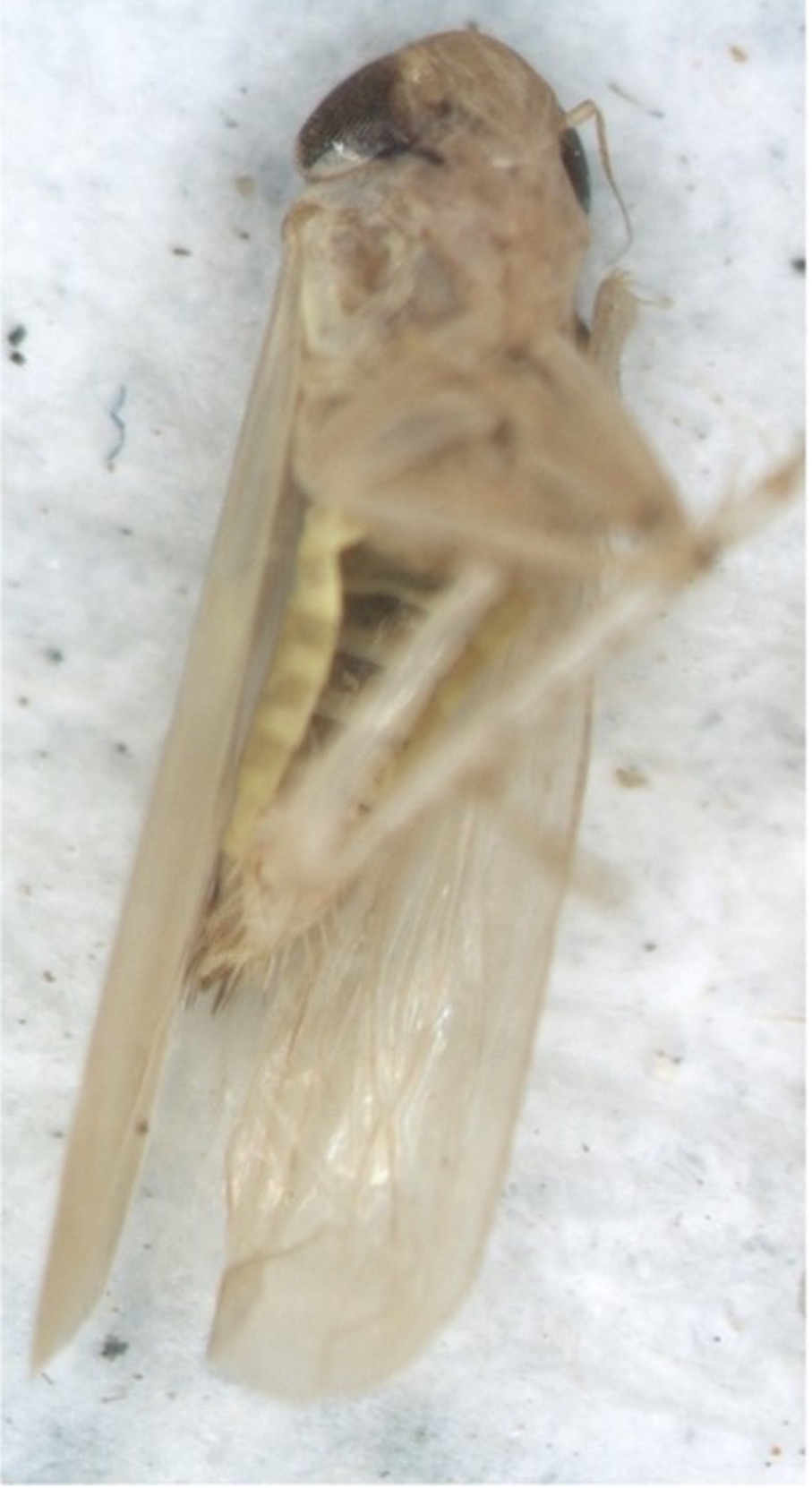
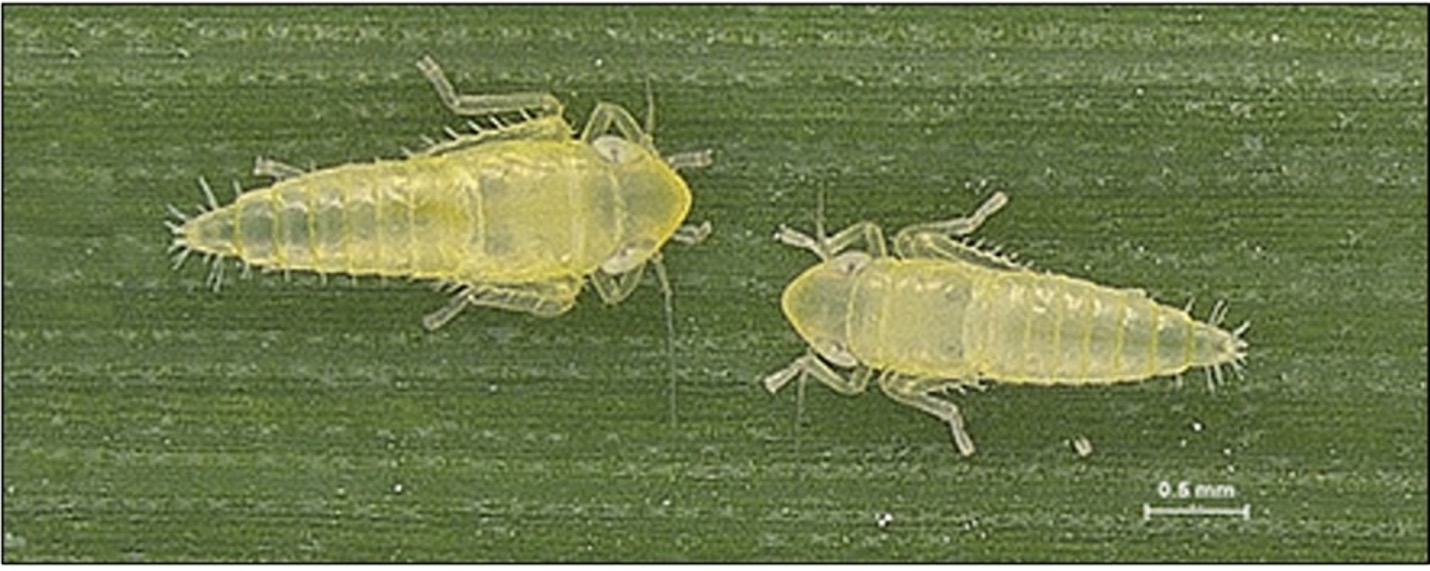
The immature or nymphal stage is wingless and resembles a smaller version of the adult. Nymphs may also lack the characteristic black spots and halos found on adults (Figure 3), making identification more challenging.
For additional information on corn leafhopper identification, biology, life cycle, and its role in transmitting corn stunt pathogens, see OSU E-Pest Alert EPP-23-17 and OSU e-Pest Alert EPP-25-29.
Scouting Tips and Guidance
Corn leafhoppers can be difficult to detect due to their small size, preference for hiding deep within the whorls of developing corn plants, and their rapid darting movement when disturbed. Because of these behaviors, effective scouting requires a combination of methods, including vacuum sampling, sweep net sampling, and direct visual inspection. Check the borders and edges of corn fields first as this is where most early migrators will be found.
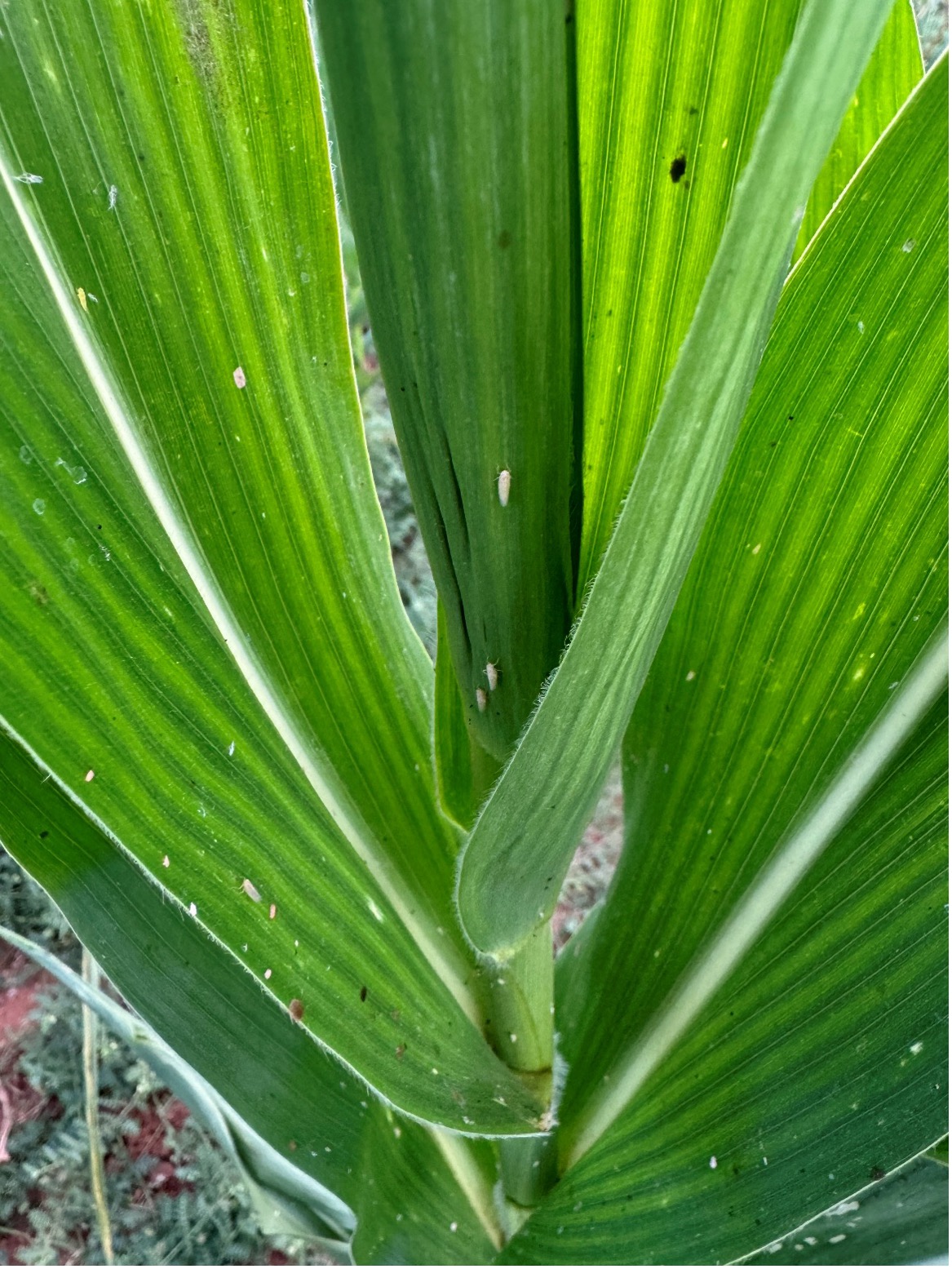
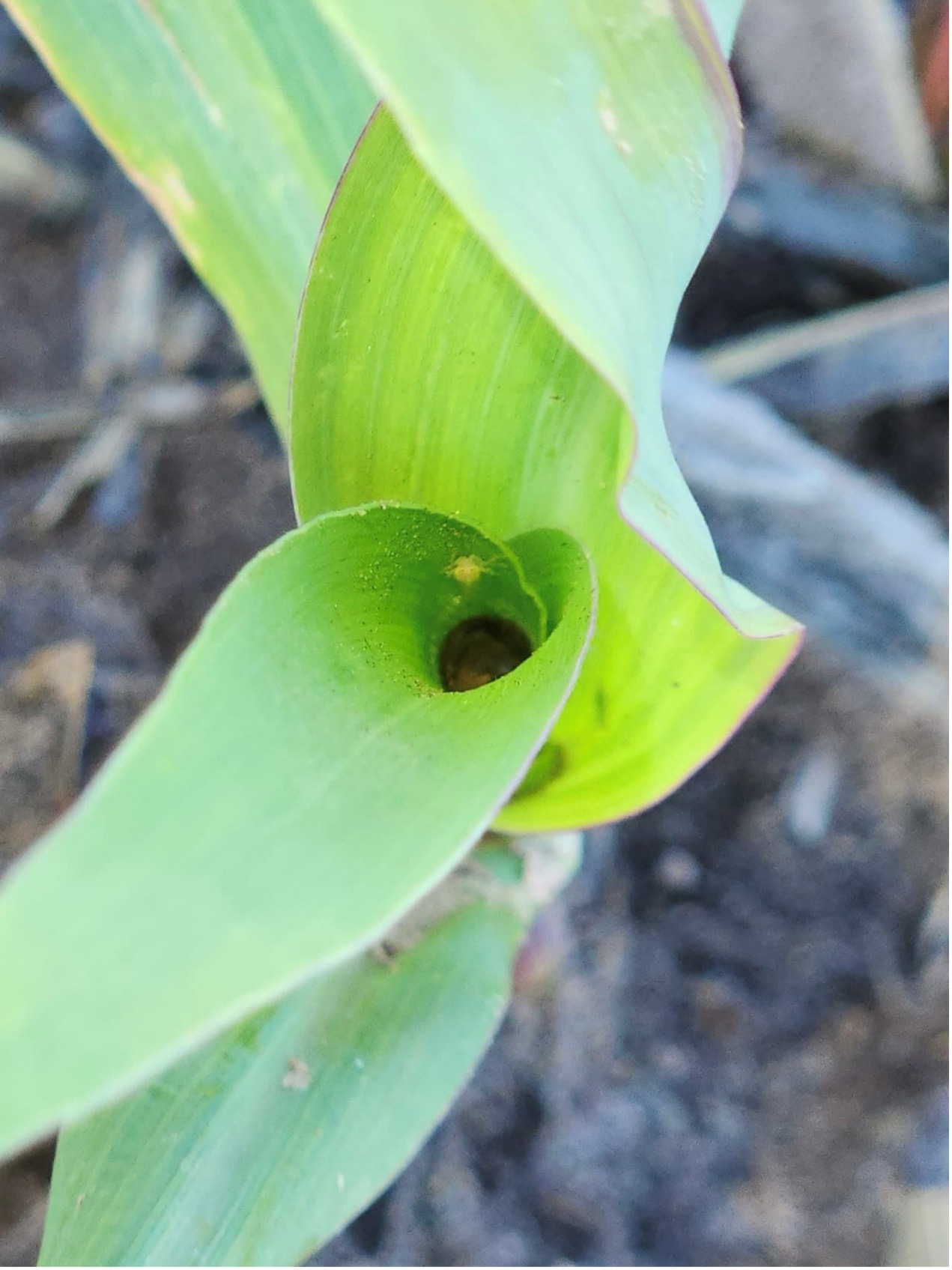
During vegetative growth stages, plants should be carefully examined by inspecting the whorls, where corn leafhoppers often remain concealed (Figure 4 and 5). Individuals may be dislodged from the whorl using a cordless vacuum (Figure 6) or cordless leaf blower equipped with thigh high stockings to capture collected leafhoppers. Vacuum several whorls, randomly at the field borders, moving into the interior of the field.
Sweep net sampling is another useful scouting tool. When walking through corn rows, the net should be swept side-to-side in a figure-eight motion over the canopy and across plants on both sides of the row. After several sweeps, the net should be carefully closed, and contents slowly examined for the presence of corn leafhoppers. As the crop transitions into reproductive stages, sweep netting should be adjusted to target the lower portion up to through the upper and mid-canopy by sweeping up and down along the sides of the corn plants.
Visual inspection remains an important component of scouting throughout both vegetative and reproductive stages. In vegetative corn, focus on whorl inspection. As the canopy closes and plants reach reproductive stages, examine the underside of leaves where leafhoppers may congregate. Check the underside of lower leaves for nymphs. When entering a field, pause periodically to allow leafhoppers to settle, then slowly observe surrounding plants before moving forward.
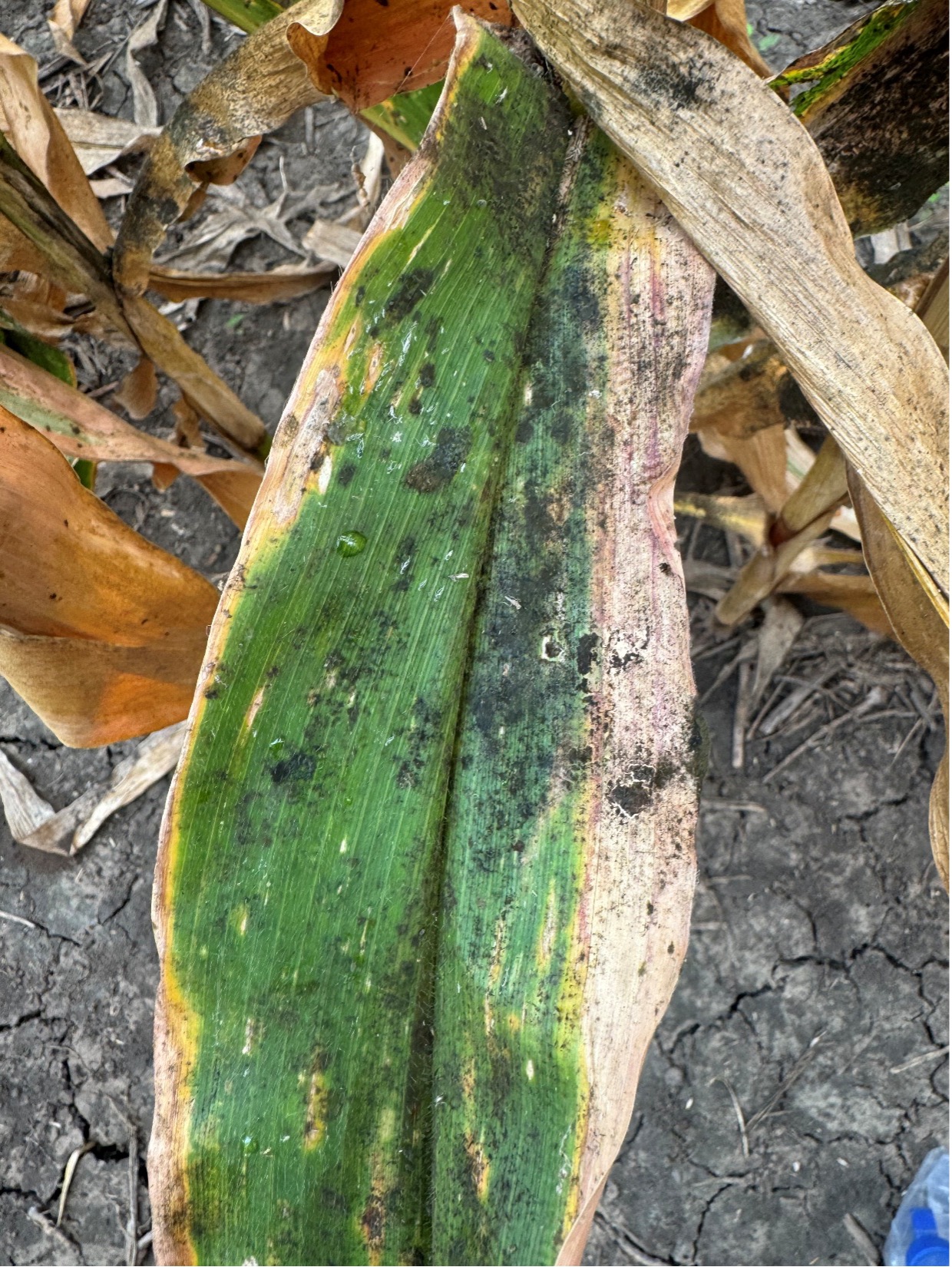
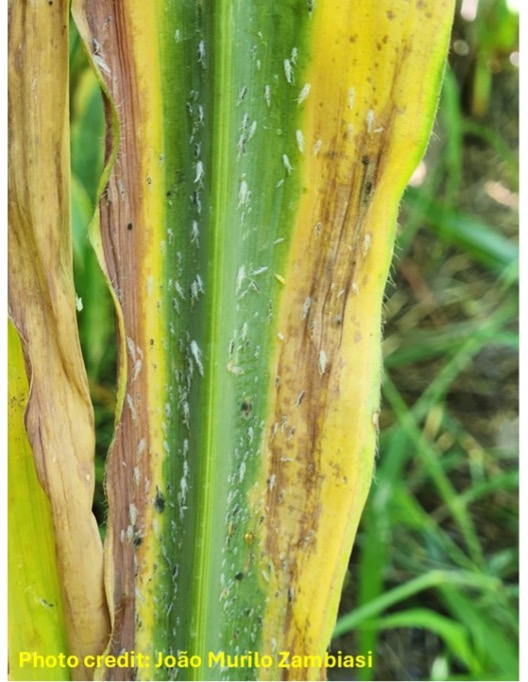
In addition to the insects themselves, other indicators of corn leafhopper presence include honeydew deposits, which appear shiny and feel sticky, the development of black sooty mold growing on honeydew (Figure 7), and the presence of white or translucent cast skins (exuviae) resulting from molting (Figure 8).
Current Integrated Pest Management (IPM) Guidance for Corn Leafhoppers
Pre-planting and Planting Decisions
There are currently no known corn stunt resistant hybrids available on the U.S. market. In areas where volunteer corn is present, growers should remove it as this vegetation serves as a reproductive resource for the insect and a potential reservoir for corn stunt pathogens. When possible, growers are encouraged to plant corn early, as this will help reduce the likelihood of corn being planted when corn leafhoppers are present. In areas where corn leafhoppers will be present at planting, growers should use a high insecticide seed treatment containing Cruiser® Corn 1250 or Poncho® 1250 to allow for protection of early vegetative stages. Trials conducted by Texas A&M AgriLife Research and Extension indicate that 500 and 1250 rates of the insecticide seed treatments suppress corn leafhopper adults through V5 and suppress nymphs (or egg laying) at least until V10. The higher 1250 rates of insecticide seed treatment outperformed the lower 500 rates.
Scout for the Corn Leafhopper
Follow the scouting guidance outlined above to monitor for the insect. Due to the efficiency of corn leafhoppers in transmitting pathogens associated with corn stunt disease, no economic threshold has been established at this time. As a result, growers are encouraged to manage corn leafhopper populations when they are detected in the field.
At present, the exact corn growth stage at which scouting should cease is not known. Previous guidance suggested continuing scouting through the V8 growth stage; however, based on past observations by state Extension personnel, recommendations have been extended to encourage growers to continue managing corn leafhopper populations through the R1 or R2 growth stages. More research is needed to determine the cutoff point for insect management under U.S. crop production conditions.
Chemical Control Options
Results from foliar insecticide efficacy trials conducted in 2025 by Dr. Ashleigh Faris at Oklahoma State University, and by personnel at Texas A&M AgriLife Research and Extension, provide insight into current foliar management options for corn leafhopper.
In these studies, pyrethroid insecticides and dimethoate were largely ineffective against corn leafhoppers. Foliar applications of indoxacarb at 8 – 10 fl. oz./A rate and flupyradifurone at 7 fl. oz./A rate provided up to 14 days of suppression for corn leafhopper nymphs. Thiamethoxam and lambda-cyhalothrin at 10 fl. oz./A rate provided similar nymph suppression for 14 days. If applying a foliar insecticide prior to tassel, applicators should not use a non-ionic surfactant (NIS) as an adjuvant. An NIS applied pre-tassel, particularly mid to late vegetative stages (V6-VT) can result in arrested ear development which causes “baby” or stunted ears/cobs with reduced or absent kernels, underdeveloped husks, poor or absent silk emergence and reddish/purple leaves These symptoms can appear like corn stunt disease symptoms; however, confirmation of corn stunt disease pathogens can only be done through molecular testing.
When selecting an insecticide, growers should prioritize products that are not broad-spectrum and that are less disruptive to beneficial arthropods, to preserve natural biological control in the agroecosystem. Insecticide applications should only be made when corn leafhoppers are confirmed to be present in the field being treated. As with all pest management decisions, the insecticide label must be followed; the label is the law.
Integrated pest management (IPM) recommendations for corn leafhopper will continue to evolve as additional research becomes available under Oklahoma growing conditions. Growers are encouraged to stay updated through future OSU Pest e-Alerts and to follow Cropping Systems Extension Entomologist Dr. Ashleigh Faris (@OSU_crop_insects) and OSU Field Crops Pathologist Dr. Maira Duffeck (@osu.plantpath) on Instagram for ongoing updates on corn leafhopper and corn stunt disease distribution in the state and results from 2026 insecticide efficacy trials.
Green Peach Aphids Are Showing Up in Oklahoma Canola
Ashleigh Faris, Cropping Systems Extension Entomologist
Josh Lofton, Cropping Systems Extension Agronomist
Recent reports from growers in north central Oklahoma indicate increased green peach aphid activity in winter canola. Although green peach aphid is often overshadowed by cabbage aphid and turnip aphid, it can cause significant damage through direct feeding and by transmitting plant viruses. Given current field reports and ongoing dry conditions, producers should scout fields now and determine whether treatment thresholds have been reached.
Green Peach Aphid Identification
Accurate identification is the first step in management because green peach aphid behaves differently than other aphid species and is often more resistant to certain insecticides.
Appearance: Green peach aphids are small, about 1.5 to 2.5 mm long, and vary in color from pale green to yellow or pinkish. Unlike cabbage aphids, they do not have a thick, waxy or powdery covering. One of the most important identifying features is the presence of prominent swellings at the base of the antennae, that point inward and create a distinct “W” or “U” shape between the antennae (Figure 1). Their cornicles (tailpipes) are relatively long and usually match body color, although the tips may appear slightly darker.
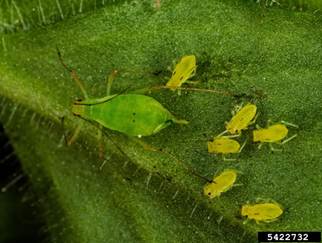
Figure 1. Green peach aphid adult and nymphs. Image courtesy invasive.org.
Differentiating Green Peach Aphid from Other Aphid Species
Cabbage aphids are typically covered in a grayish-white waxy bloom (Figure 2) and often form dense, crusty colonies on the youngest leaves and flower stalks. Turnip aphids are light green and lack the waxy bloom seen on cabbage aphids. They often have dark bands across the abdomen (Figure 3).
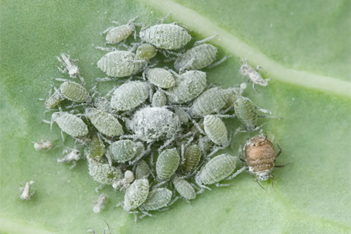
Figure 2. Cabbage aphid adults and nymphs. The brown, globular aphid in the bottom right has been parasitized (aphid mummy). Image courtesy biologicalservices.com/au.
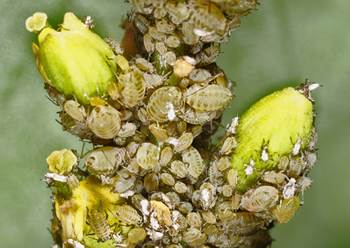
Figure 3. Turnip aphid adults and nymphs. Image courtesy Claude Pilon.
Green Peach Aphid Scouting and Distribution
Green peach aphids typically colonize the undersides of lower leaves first. This differs from cabbage aphids, which more often infest terminal buds and flower stalks.
Where to look: Focus on the undersides of leaves in the mid- to lower canopy. Green peach aphids are often solitary or found in small, scattered groups rather than the large, tight colonies commonly associated with cabbage aphids.
Sampling: Examine 5 to 10 plants in at least 10 different areas of the field.
Signs of injury: Watch for yellowing (chlorosis), leaf curling, or stunted growth, which are common symptoms of green peach aphids feeding.
Green Peach Aphid Management and Thresholds
Because canola can compensate for some early-season feeding injury, insecticide applications should be based on established thresholds.
Economic threshold: Treatment is generally recommended when populations reach 50 to 100 aphids per plant before flowering. Use the lower end of that range when the crop is moisture stressed. From budding to early bloom, treatment may be justified when 20% of racemes are infested with 25 to 50 or more aphids. For cabbage aphid, the comparable threshold is 15% infested racemes. Oklahoma State University research suggests that an average of one turnip aphid or one green peach aphid per plant during reproductive stages may result in approximately 0.5 lb/acre of yield loss. Treatment decisions should always be weighed against crop value and application cost.
Biological control: Before spraying, check for beneficial insects such as lady beetles, lacewings, and parasitic wasps. Aphid mummies are a good indicator of parasitism. When temperatures are warm enough for beneficials to remain active, they can substantially reduce aphid populations.
Chemical Control for Green Peach Aphid and Resistance Warning
Green peach aphids are well known for developing resistance to several insecticide classes, especially older pyrethroids and organophosphates.
Product Selection: Several insecticides are labeled for aphids in canola, but products containing sulfoxaflor (Transform WG) or flupyradifurone (Sivanto Prime) have generally shown strong efficacy against green peach aphid while being relatively less disruptive to beneficial insects. Be aware that some products have restrictions related to bloom timing, petal fall, and preharvest intervals. Always read and follow the label. For a list of registered insecticides and rates, refer to CR-7667: Management of Insect and Mite Pests in Canola.
Coverage: Because green peach aphid commonly feeds on the undersides of lower leaves, thorough coverage is critical. Use high carrier volumes of at least 10 to 15 gallons per acre for ground applications. For aerial applications, at least 10 gallons per acre is recommended.
The information given herein is for educational purposes only. Reference to commercial products or trade names is made with the understanding that no discrimination is intended and no endorsement by the Cooperative Extension Service is implied.
Check Your Wheat: Greenbugs Reported in Central Oklahoma
Ashleigh M. Faris
Cropping Systems Extension Entomologist
Department of Entomology & Plant Pathology
Oklahoma State University
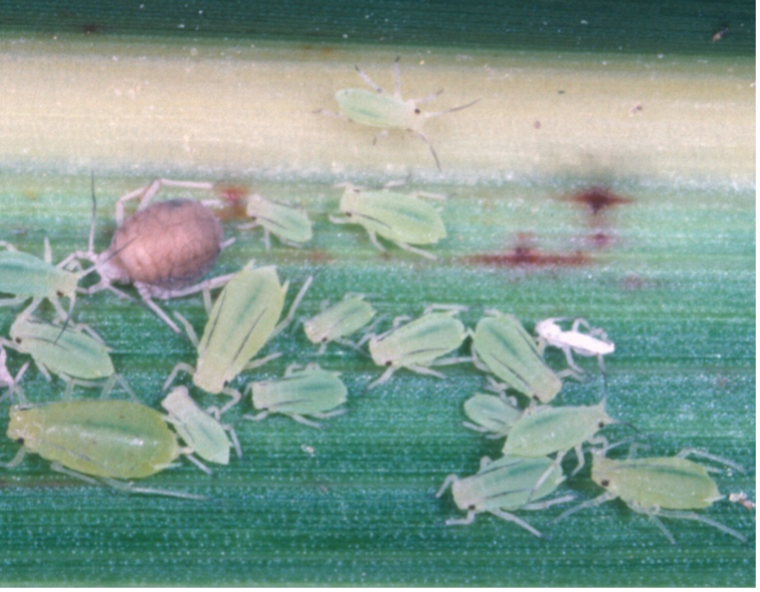
Wheat producers in central Oklahoma are reporting the presence of the greenbug, Schizaphis graminum, in winter wheat fields. Greenbugs are one of the most important insect pests of wheat in the southern Great Plains and can occur from fall through spring. These aphids feed on plant sap and inject toxins into wheat plants, causing characteristic leaf discoloration and plant injury.
Early detection through field scouting is essential to determine whether populations are increasing and if an insecticide treatment is justified.
Greenbug Identification & Biology
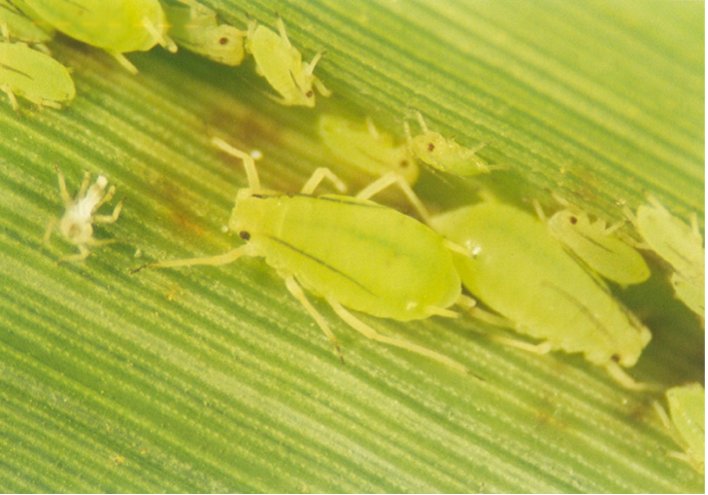
Key identifying characteristics of greenbug (Figure 1):
- Small aphids (~1/16 inch long)
- Pale to lime-green body
- Dark green stripe down the middle of the back
- Dark tips on antennae and legs
- Found in colonies on the underside of wheat leaves
Greenbugs reproduce rapidly under favorable conditions (between 55° F and 95° F) and often occur in patches within fields rather than evenly distributed populations. During periods of cool weather, the greenbug may increase to enormous numbers, due to the absence of natural enemies, which develop significantly slower compared to greenbugs at such temperatures. On the other hand, cold weather can also influence aphid populations. However, this latest cold snap is not enough to eliminate greenbugs. It takes average temperatures below 20° F for at least a week to kill a substantial number of greenbugs in wheat.
Greenbug Damage in Wheat
Greenbugs damage wheat in two ways, through direct feeding and injection of toxic saliva. Greenbugs may also transmit barley yellow dwarf virus (BYDV), which can further reduce yield potential.
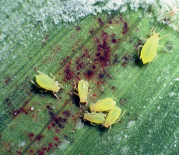
Typical early symptoms include small, reddish or copper spots on leaves (Figure 2) and yellowing around feeding sites. Advanced infestations will result in leaves turning yellow or orange, dead leaf tissue, stunted plants, and expanding patches of dead wheat. Heavy infestations may kill seedlings and reduce tillering, particularly during drought stress.
How to Scout for Greenbugs
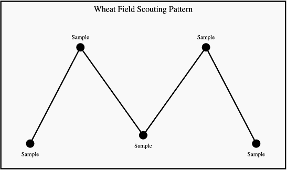
The Glance-N-Go™ sampling system developed by Oklahoma State University can help determine whether aphid populations exceed economic thresholds. Download the Greenbug Glance N’ Go Sampler app for your smartphone. You will then input the control cost ($/Acre), crop value ($/Acre), and the Spring sampling window. Use a zig-zag or W-pattern (Figure 3) to scout your field, checking undersides of leaves at three tillers per stop for greenbugs and brown mummies. Use the app to record the numbers of these insects and sample until the app tells you to stop sampling or tells you treat. As temperatures warm, continue to scout regularly as greenbug populations may build.
Scouting recommendations without the Greenbug Glance N’ Go Sampler app:
- Walk a W or zigzag pattern across the field.
- Examine 10–20 plants at each stop.
- Check:
- Underside of leaves
- Leaf midrib
- Base of tillers
- Record:
- Aphids per tiller
- Presence of aphid mummies (Figure 4)
- Beneficial insects
Beneficial Insects
Natural enemies frequently control aphid populations. While scouting for greenbug you should also look for lady beetles, lacewing larvae, hoverfly larvae, and parasitized aphids (“mummies”) (Figure 4). If beneficial insects are abundant, aphid populations may decline without insecticide treatment. Where there are one to two lady beetles (adults and larvae) per foot of row, or 15 to 20 percent of the greenbugs have been parasitized, control measures could be delayed until it is determined whether the greenbug population is continuing to increase.
Based on current wheat scouting, it appears that parasitoid numbers are low this 2026 season so continuing to scout for greenbug will be critical in responding to populations that go unchecked by beneficials.
Economic Threshold Guidelines
The simplest way to determine if action needs to be taken against greenbugs is to utilize the Glance-N-Go™ sampling system developed by Oklahoma State University. Approximate guidelines historically used in Oklahoma wheat can be found in Table 1 below.

Thresholds are influenced by:
- Wheat growth stage
- Crop value
- Cost of treatment
- Presence of beneficial insects
Insecticides Labeled for Greenbugs in Wheat
Aphid feeding and insecticide performance are strongly influenced by temperature. Greenbugs tend to move higher on wheat plants during warm conditions but may move lower on the plant or below ground during cold weather, reducing exposure to insecticides. As a result, damaging populations are most often observed in late winter and early spring. Insecticides generally perform best when temperatures are above 50°F, and control may occur more slowly in cooler conditions (e.g., control at 45° F may take roughly twice as long as at 70° F). If applications must be made under cooler temperatures, use the highest labeled rate. Wheat grown under irrigation can typically tolerate higher greenbug populations than dryland wheat.
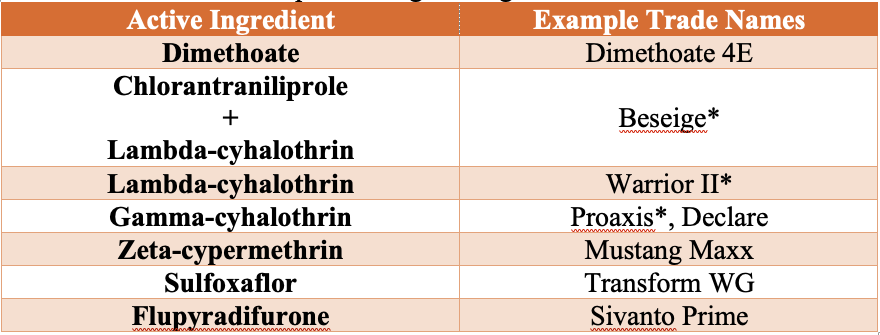
Always follow pesticide label directions, application sites, and rates. Be sure to read and follow the label for preharvest intervals (PHI) and restricted-entry intervals (REI). Use a minimum of 10 GPA by ground and 3 GPA by air (if labelled for aerial application) to ensure adequate coverage.
For assistance with aphid identification or treatment decisions, see OSU Fact Sheet EPP-7099 Small Grain Aphids in Oklahoma and Their Management, or contact your local OSU Extension office.
Cotton disease update: Reniform nematode – 08/25/2025
Maíra Duffeck, OSU Row Crops Extension Pathologist, Department of Entomology and Plant Pathology Oklahoma State University
Maxwell Smith, OSU IPM for Cotton Extension Specialist, Department of Entomology and Plant Pathology, Oklahoma State University
Jenny Dudak, OSU Extension Cotton Specialist, Department of Plant & Soil Sciences Oklahoma State University
Reniform nematode continues to be detected in cotton fields across Oklahoma. During the 2023 and 2024 growing seasons, a survey was conducted in 17 commercial cotton fields located in Tillman, Jackson, Grady, and Caddo counties to assess the presence of parasitic nematodes affecting cotton production. We collected soil samples in areas of the fields showing irregular and stunted cotton plants.
Out of the 17 soil samples collected, reniform nematode was detected in 5 fields, marking the first confirmed report of this pest in Oklahoma cotton. Notably, in one of the positive fields, the reniform nematode population reached 1,569 nematodes per 100 cm³ of soil; more than double the economic threshold of 700 nematodes per 100 cm³. In 2025, a soil sample from a cotton field in Jackson County already tested positive for the reniform nematode.
The reniform nematode, caused by Rotylenchulus reniformis, is one of the most important yield-limiting pathogens of cotton production in the southern U.S. In addition to cotton, the reniform nematode can reproduce on other field crops such as soybean, with yield loss estimates being greater in cotton than soybean. The reniform nematode is easy to introduce into new fields because of its unique ability to survive in a dehydrated state in dry soils. Therefore, it can be transported long distances on field equipment.
We suspect that parasitic nematodes, such as root-knot and reniform nematodes, are already present in many Oklahoma cotton fields, but the damage they cause often goes unnoticed. This is especially important for the reniform nematode, as yield losses can occur without obvious aboveground symptoms. For this reason, monitoring the distribution of this nematode across the cotton fields in Oklahoma is crucial to raise awareness of this emerging issue and to guide future management decisions.
Symptoms and Signs
The expression of symptoms depends on several factors, including the susceptibility of the cotton hybrid, nematode population levels, soil type, and for how long that field has been infested. Affected plants may show reduced growth, delayed flowering, fewer fruits, and smaller fruit size, which together contribute to yield losses in lint or pods. Unlike the southern root-knot nematode (Meloidogyne incognita), the reniform nematode does not induce gall formation on roots, making field diagnosis based solely on visible symptoms challenging. For this reason, soil testing through a nematode assay is often necessary for proper identification. In newly infested fields, stunted plants are typically the most noticeable sign (Figure 1).
Plan of Action
To address this issue, a statewide nematode survey is underway to document the presence, abundance, and geographic distribution of parasitic nematodes in Oklahoma cotton fields. The information generated from this survey will provide a foundation for developing and implementing economically viable strategies to manage this issue and protect cotton production in the state.
How to participate?
Oklahoma cotton growers interested in having their fields tested for parasitic nematodes have several ways to participate in this study:
- Schedule a field visit: Contact Dr. Maira Duffeck to arrange soil sample collection. She can be reached by phone at 347-205-2180 or by email at mairodr@okstate.edu.
- Drop off samples at the Peanut & Cotton Field Day: September 18, 2025, from 5:00–8:00 p.m. at the Caddo Research Station (28054 County Street 2540, Ft. Cobb)
- Drop off samples at the Cotton Field Day: September 25, 2025, from 8:30 a.m. to 1:00 p.m. at the Southwest Research & Extension Center (16721 US Hwy 283, Altus)
More information about dropping off samples on OSU field days can be found on the flyers shown in Figures 2 and 3. Growers can submit soil samples for analysis at no cost, as expenses are covered through a project funded by the Oklahoma Cotton Council in partnership with Cotton Incorporated.
How to collect soil samples for analysis?
- Soil samples should be collected from the root zone of the plants
- Collect 15–20 soil cores (6–8 inches deep) from across the field
- Growers should focus on areas of the field where plants are showing poor growth and development
- Mix the cores thoroughly, then place the mixed soil into a resealable plastic bag
- We need about 2 pints (1 kg) of soil for analysis
- Keep samples cool — store them in a refrigerator until the field day.
- If you collect soil samples from different fields, please label and add field information to the plastic bag accordingly


For Additional Information contact.
Dr. Maíra Duffeck mairodr@okstate.edu
Meet the Aster Leafhopper and Learn How to Distinguish it from the Corn Leafhopper
Ashleigh M. Faris: Extension Cropping Systems Entomologist, IPM Coordinator
Release Date June 3 2025
Last year’s corn stunt disease outbreak, caused by the corn leafhopper transmitting pathogens associated with corn stunt disease, has been on everyone’s minds. Over the past few weeks, I’ve received several calls from growers, crop consultants, and industry partners concerned about leafhoppers in corn. Fortunately, none have been corn leafhoppers, the vast majority have instead been aster leafhoppers. So far, no corn leafhoppers have been reported north of central Texas. Oklahoma did not have any reports of overwintering corn leafhoppers so if we have the insect this year it will need to migrate northward from where it currently resides. For a refresher on the corn leafhopper and corn stunt disease, check out these two previously posted OSU Pest e-Alerts: EPP-25-3and EPP-23-17.
Leafhoppers in general are insects that we have had for many years in our row and field crops. But we likely did not pay attention to them or notice them until this past year due to our heightened awareness of their existence thanks to the corn leafhopper and corn stunt disease. Below is guidance on how to distinguish between the corn leafhopper and aster leafhopper. Remember, if the corn leafhopper is detected in the state, OSU Extension will notify growers, consultants, and industry partners through Pest e-Alerts and our social media channels.
Aster Leafhopper Overview
The aster leafhopper (aka six spotted leafhopper), Macrosteles quadrilineatus, is native to North America and can be found in every U.S. state, as well as Canada. This polyphagous insect feeds on over 300 host plant species including weeds, vegetables, and cereals. Like many other leafhoppers, the aster leafhopper can be a vector of pathogens that cause disease, but corn stunt is not one of them. Instead, aster leafhoppers cause problems in traditional vegetable growing operations, as well as floral production. There is currently no concern for this insect being a vector of disease in row or field crops, including corn. Check out the OSU Pest a-Alert EPP-23-1to learn more about this insect and aster yellows disease.
Aster Leafhopper versus Corn Leafhopper
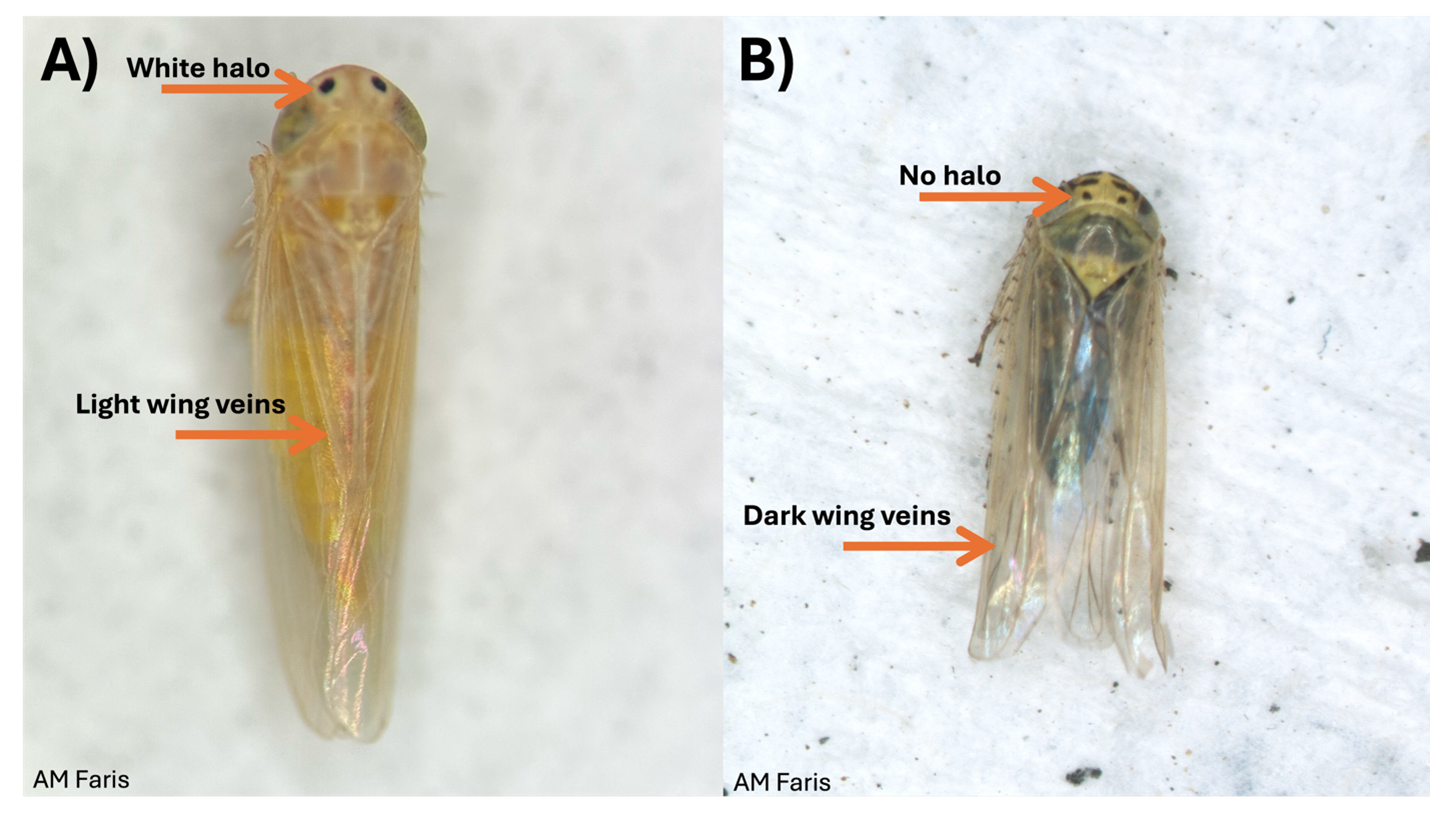
The corn leafhopper (Photo 1A) and the aster leafhopper, as well as many other leafhopper species have two black dots located between the eyes of the insect (Photo 1). Aster leafhopper adults are 0.125 inches (3 mm) long, with transparent wings that bear strong veins, and darkly colored abdomens (Photo 1B). Their dark abdomen can cause the aster leafhopper to appear grey when you see them in the field. Their long wings can also make the insect appear to have a similar appearance to the corn leafhopper (Dalbulus maidis) (Photo 1).
Characteristics that differentiate the corn leafhopper from the aster leafhopper are as follows. When viewed from above (dorsally): 1) the corn leafhopper’s dots between the eyes have a white halo around them and the aster leafhopper’s dots between eyes lack the white halo and 2) the corn leafhopper has lighter/finer wing veination than the aster leafhopper (Photo 1). When when viewed from their underside (ventrally) 3) the corn leafhopper lacks markings on their face whereas the aster leafhopper has lines/spot on the face and 4) the abdomen of the corn leafhopper lacks the dark coloration of the aster leafhopper (Photo 2).

Confirming Corn Leafhopper Identification
It is important to note that many insects will have their cuticle darken as they age. This, along with there being light and dark morphs of many insects can lend to additional confusion when distinguishing one species from another. If you believe that you have a corn leafhopper then you need to collect the insect and send it to a trained entomologist that can verify the identity of the insect under the microscope. Leafhoppers in general are fast moving insects but they can be collected in an insect net or using a handheld vacuum (see EPP-25-3). You can submit samples to the OSU Plant Disease and Insect Diagnostic Lab.
Please feel free to reach out to OSU Cropping Systems Extension Entomologist Dr. Ashleigh Faris with any questions or concerns. @ ashleigh.faris@okstate.edu

