
4 Keys to Reaching Grain Sorghums Yield Potential
When I started writing this blog (3.13.2105) Ok grain elevator cash bids for grain sorghum aka milo was 6.61-7.70 cwt (3.7-4.31 per bushel) and corn was at 3.64-4.06 per bushel. Meaning there is currently a premium on sorghum grain. This difference among other things has increased the interest in planting sorghum. Of late I have been quite successful, at least on a small-scale, at producing sorghum yield in the 120-150 bpa range, thanks to the advice of Rick Kochenower former OSU sorghum specialist. Both of us believe that every year many producers are leaving significant bushels on the table due to one or two miss steps. I wanted to take this opportunity to share what is in my opinion the keys in producing a bumper sorghum crop. I should note that the primary key is out of our control, rain.
Key 1. Planting date, the optimum planting date for grain sorghum is generally when soil temperatures reach 60° F and increase after planting. For much of the region that I believe is best suited for sorghum this falls between April 1 and April 15 for south of I40 and April 15 and May 1 north of I40. graph below shows the long-term average daily 4″ soil temp (bare soil) for Apache, Blackwell, Cherokee, and Vinita. It is easy to see how your location within the state can impact soil temps.
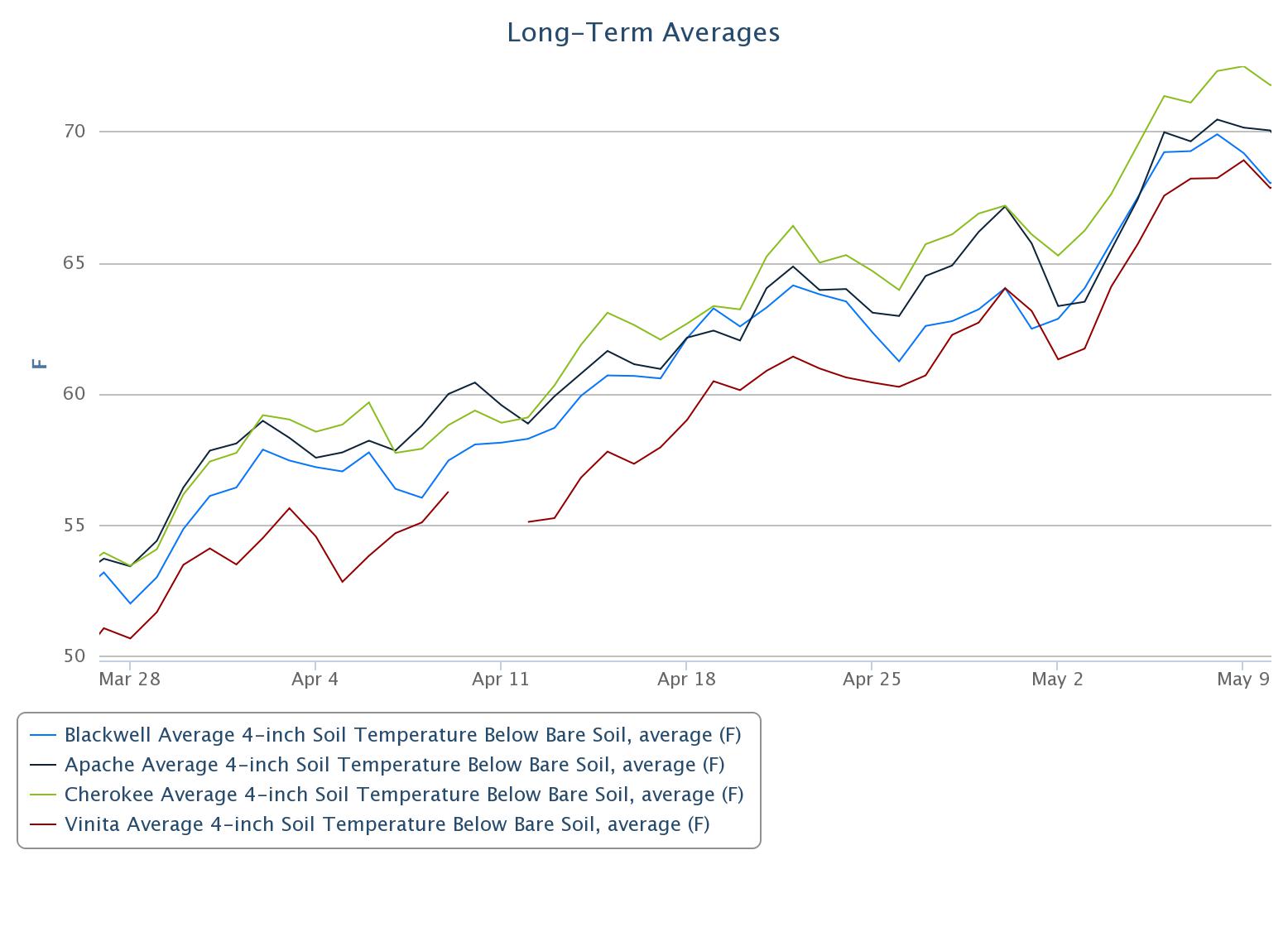
Long term average 4 inch soil temps from Blackwell, Apache, Cherokee, and Vinita for bare soil. Data from the Mesonet.org.
You should not forget however that tillage practices will also impact soil temps. The two graphs below show the long-term average daily 4″ soil temp for Cherokee and Blackwell for both bare soil and under sod. Note that when the soil is covered by residue it warms slower. The two figures also show that residue will have more impact in some areas more so than others.
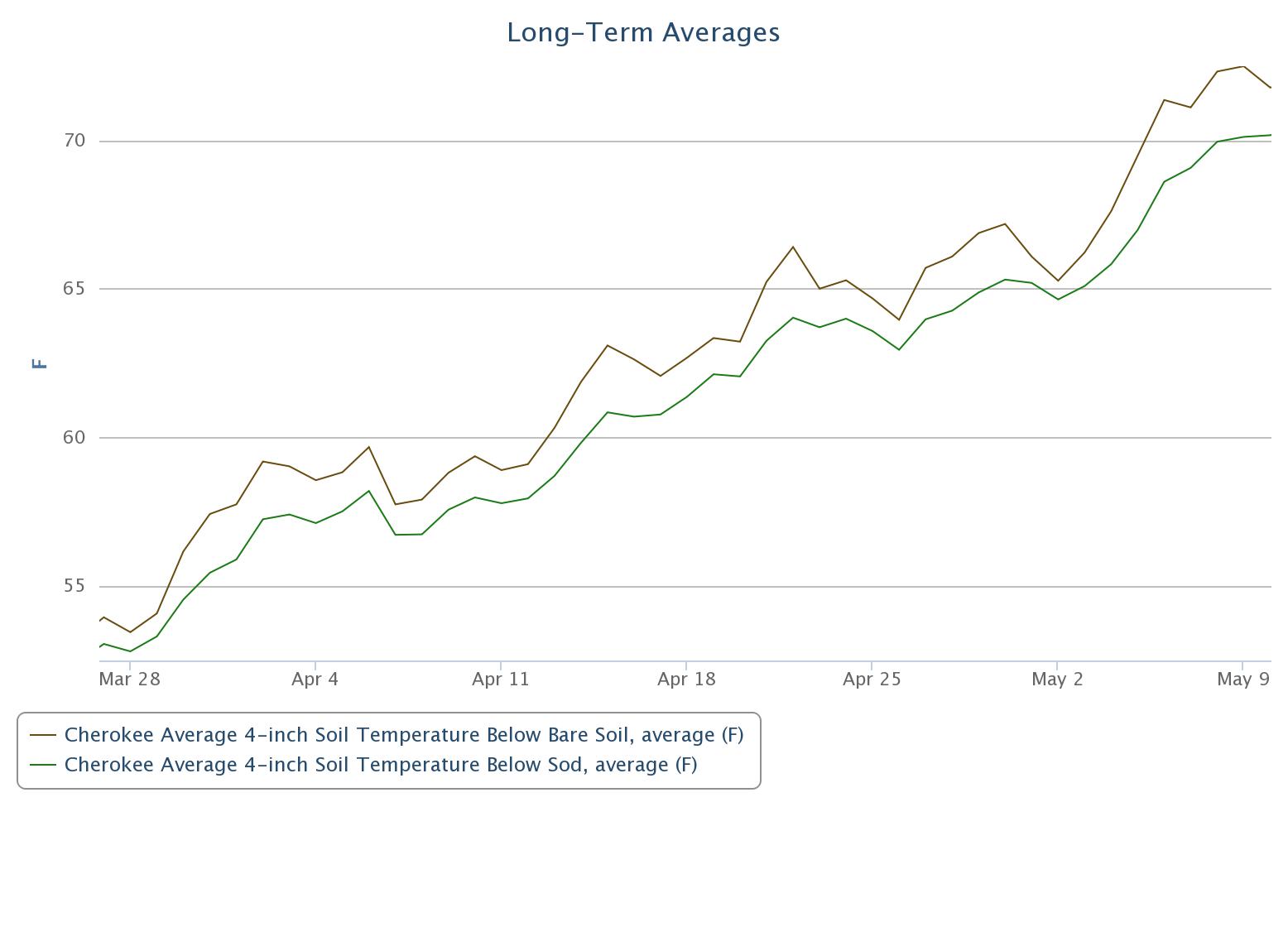
Long term average 4 inch soil temps at Cherokee for bare soil and under sod. Data from the Mesonet.org.
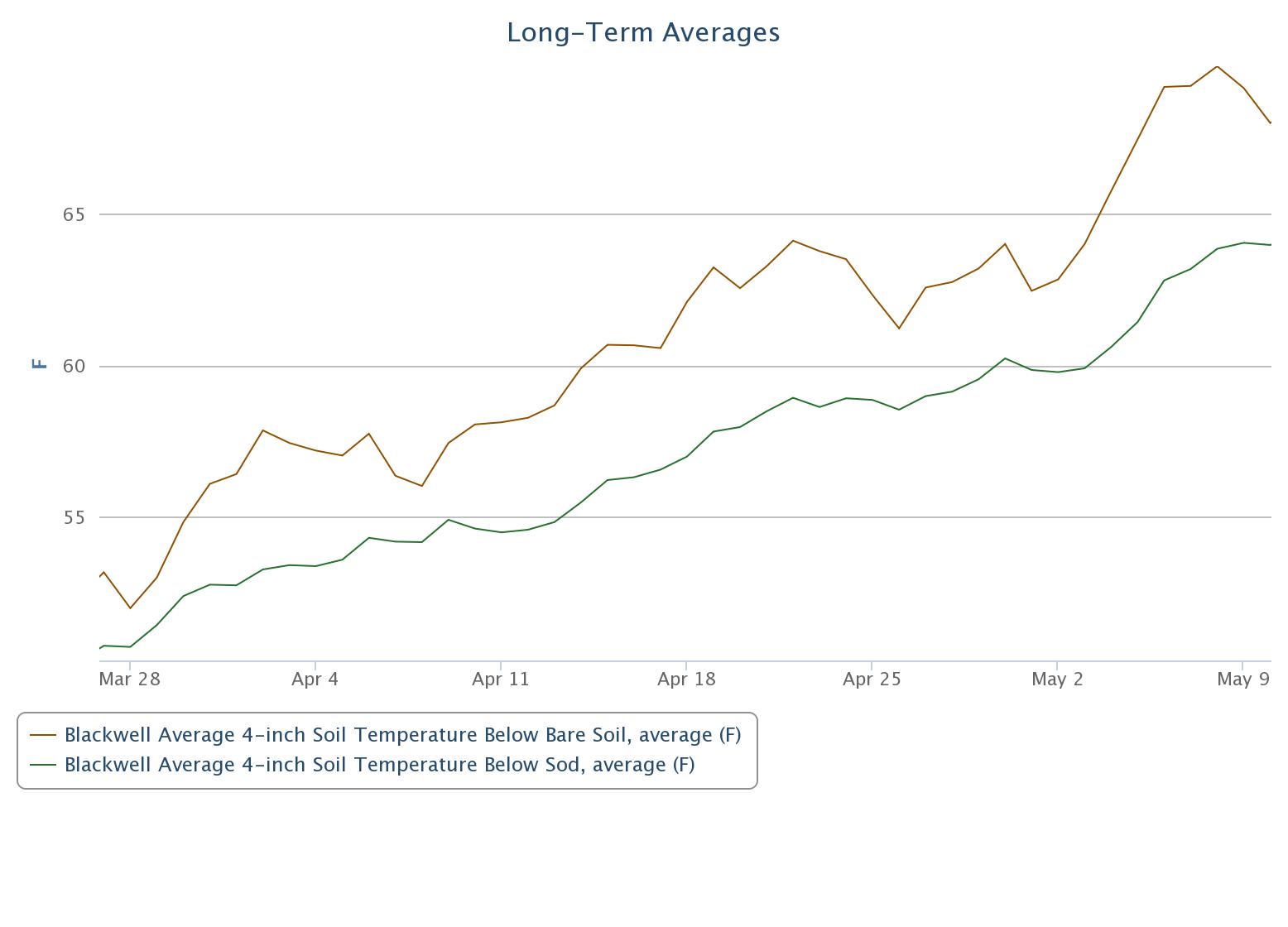
Long term average 4 inch soil temps at Blackwell for bare soil and under sod. Data from the Mesonet.org.
My best word of advise is to keep a watchful eye on the Mesonet. While the long-term average is nice to know here in Oklahoma the difference in weather from one year to the next can be huge. The figure below shows the average daily 4″ soil temp (below sod) from Blackwell for the past five years. Link to Mesonet Soil Temp page Click here.
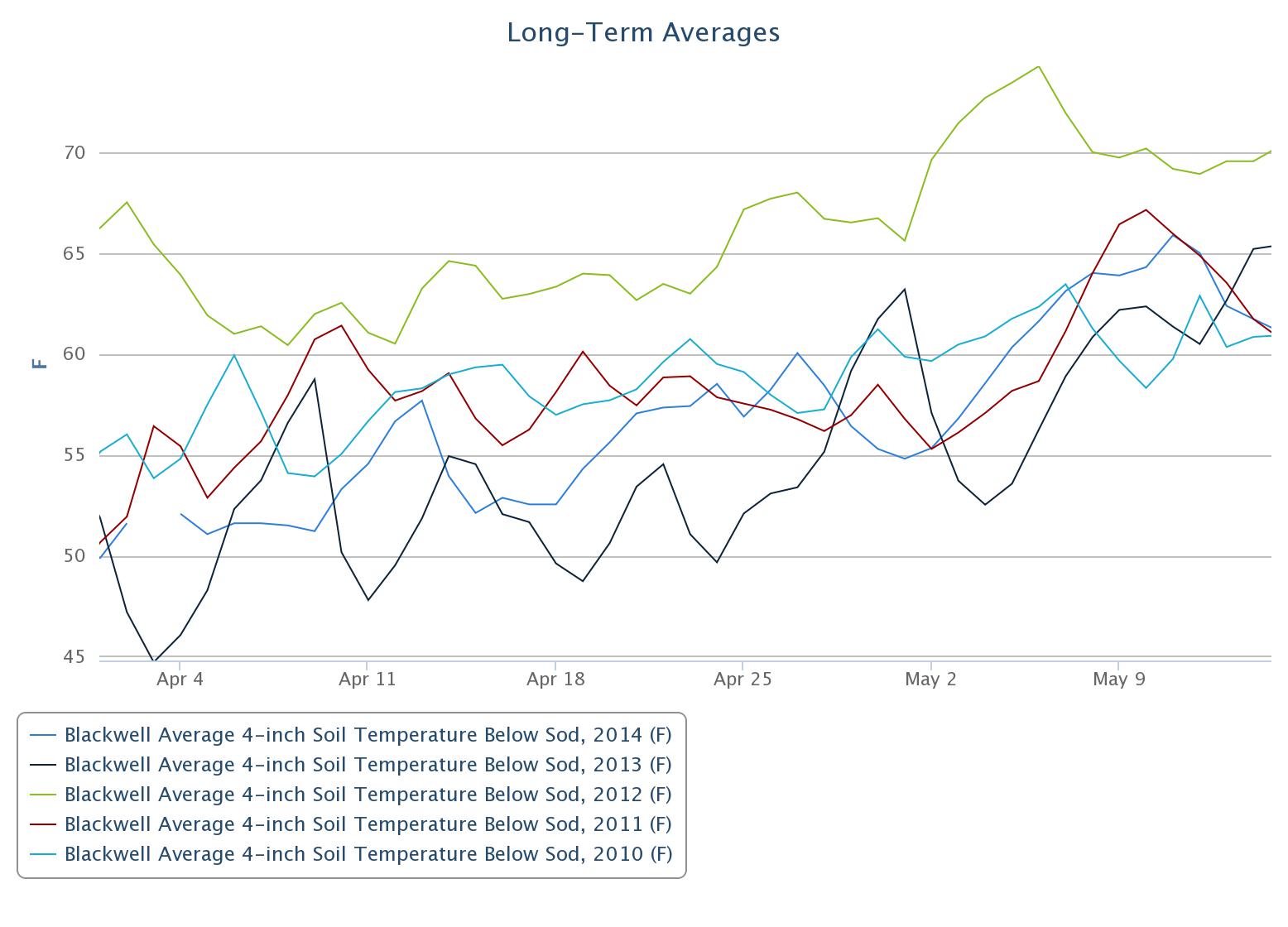
Average 4 inch soil temps at Blackwell for 2010, 2011, 2012, 2013, and 2014 for under sod. Data from the Mesonet.org.
Another great resource is a report on planting date written by Rick Kochenower presented to RMA. Link to report.
Key 2. Hybrid selection, primarily maturity group selection. Rick has created a great graphic that helps put a planting date window with maturity group. It is always important to visit with your local seed dealer to find out what has been performing best in your region and consider the importance of stay-green, standablilty and disease packages. But for me the number one key is the selection of maturity group. This should be based upon planting date and harvest strategies. Below is a great graphic created by Rick, while this may not be scientific it is a great guide created via years of experience. I also recommend that if you are planting a significant amount of acres you should diversify your maturity groups. Not only does this spread out he harvest window but it also you to spread the risk of high temps coming early or late. An additional resource is the Sorghum Performance trial summary located on the Ok Panhandle Research and Extension Center website. Click here.
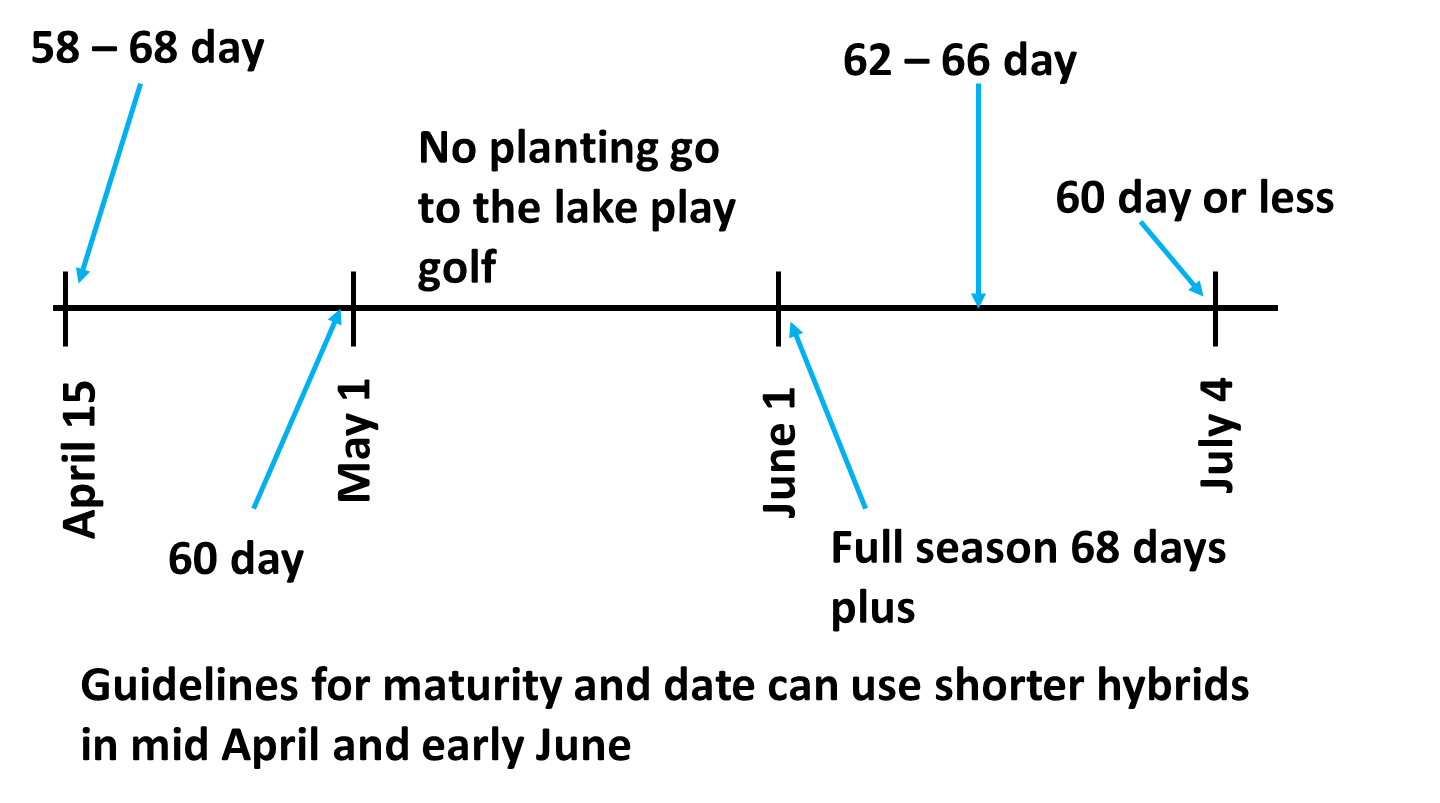
Timeline for optimum planting date (N of I-40) and proper maturity groups. Developed by Rick Kochenower (Chromatin seed)
Key 3. Soil Fertility, while soil pH plays a big role on sorghum productivity but it is too late in the game to do much about it this year. So the most important things to keep in mind on fertilizing sorghum are your macro-nutrients nitrogen (N), phosphorous (P) and potassium (K). It is my opinion that historically producers have underestimated the yield potential of sorghum and therefore lost yield due to under application on N. You should expect more than 60 to 80 bushel out of your crop if you put the right seed in the ground, at the right time and in the right way.
Ask around look at Rick’s yield data, producers in N. Central Ok on a good soil should be going for 125+ bpa easy. Unfortunately you are unlikely to hit these yield levels if you fertilize for a 75 bpa crop. An easy rule of thumb on N fertilization is 1.2 lbs of N per bushel, for a more exact number take a look at the image below. This comes from the corn and sorghum PeteSheet and is the same table that comes from the Soil Fertility Handbook. (If you would like some Pete Sheets just send me an email requesting them at b.arnall@okstate.edu, Link to PeteSheets page).

Nitrogen, Phosphorus and Potassium Recommendations for corn and sorghum production. Adapted from the Field guide and PeteSheet available at http://www.npk.okstate.edu
Key 4. Weed Control With sorghum utilizing a pre-plant herbicide with residual is extremely important due to the lack of over the top options. Most times proper weed control will be accomplished by utilizing concept treated seed and use of labeled rates of a pre-emergent grass control herbicide combined with atrazine.
While I primarily focus of the four keys above there are a few other important items to consider.
Population: Prefer to think in terms of seeds per acre instead of lbs per acre. This comes into to play with the use of a planter. Rick Kochenower says “for seeding rate(on 30 inch rows), it isn’t as critical as most people think it is. Because most guys in Oklahoma tend to under plant not over plant. I always suggested 45,000 but as you look at the last slide it really don’t matter much. The way I always liked putting it is to make you sure have enough out there to not have to replant, because being late hurts more than having to few too many or too few plants.”
Row spacing: I like 30, but many may not have a planter so I suggest at least plugging every other hole in the drill to be at a 12″-20″ spacing. Make sure your population is correct for your row spacing. For this consult with your local seed dealer to match cultivar with row spacing and proper population.
Insects: Scouting for aphids and head midge is very important, these little critters are yield robbers and can gum up the works at harvest.
Harvest prep: I almost put this as the fifth key. By chemically maturing/terminating your crop you are both able to increase harvest efficiency and preserve moisture for a following winter crop of wheat or canola.
While this is a good start I suggest a visit with your local OSU Extension educator, consultant or seed dealer for information about your specific situation. Just know the crop has great potential to yield big if treated right. I like to say don’t treat your sorghum crop like the stray you adopted, treat it like your hunting dog that you traveled halfway across the country to pick up. Good luck in 2015 and I hope the rains fall when and were needed.
Saline and Sodic Seep Renovation A potential Positive Impact of Drought
This article is written by Dr. Jason Warren, OSU Soil and Water Conservation State Extension Specialist.
The drought has caused numerous negative impacts on Agriculture in Oklahoma. However its impact on our ability to renovate some types of Saline and/or Sodic soils has been a positive. Saline and sodic seeps are referred to by many names, including: salt spots, alkaline spots or slick spots. They are all similar in that they contain excessive amounts of salt or sodium that prevent plant growth. However there are various differences that influence how we renovate these sites.
These areas are classified by the amount and type of salt present. Saline soils are those that contain an EC greater than 4000 μmhos/cm and less than 15% Exchangeable sodium. A Saline/sodic soil contains an EC greater than 4000 μmhos/cm and greater than 15% exchangeable sodium. Lastly, the Sodic soils contain less than 4000 μmhos/cm and greater than 15% exchangeable sodium. Given these differences it is important to have soils from these barren areas tested before a renovation plan is developed. The soil tests will provide recommendations for renovation and more detail on these strategies can be found in factsheet PSS-2226.
Beyond the classifications briefly mentioned above there are different ways in which these saline and sodic soils form. Some of these soils are formed from parent material that contained excessive salt or sodium. Others are formed when ground water moves to the surface through evaporation and deposits salt as the water is lost to the atmosphere. The drought conditions we are current experiencing can impact our ability to renovate the latter.


Figure 1: The upper picture was taken in Feb. 2011 and the bottom picture was taken in April 2013.
Hydraulic seeps, those formed from the movement of groundwater to the surface, are often found in low lying areas of the landscape where the groundwater is close enough to the soil surface that water can be conducted through capillary force to the soil surface. These forces are similar to those that allow use to suck water up through a straw but in the case of a saline seep evaporation from the soil surface provides the hydraulic gradient that pulls water from the water table. The drought has caused the water table in many areas to subside and become too deep for these force to pull water to the surface and deposit salts.
Figure 1 shows a saline/sodic soil in 2011 and again in 2013. This site had been treated with Gypsum as described factsheet PSS -2226 in 2007. However, because of a shallow water table that persisted until the onset of drought in 2011 the renovation effort was not successful because there was insufficient movement of water through the profile to leach the salts down out of the soil surface. These soils are in proximity to Stillwater Creek and Lake Carl Blackwell. The water table has declined which allows limited rainfall experienced at this site in 2012-13 to move the salts down out of the soil surface. This in turn has allowed crop establishment further improves water infiltration by protecting the soil from crusting.
The drop in most water tables across Oklahoma, particularly western Oklahoma where these salt spots are most common, provides for a unique opportunity to renovate hydraulic salt spots. Again the first course of action is to collect a soil sample to determine what types of salts are present. You can also make an effort to determine how the salt spot was formed. This information can be found on the soil survey at http://websoilsurvey.sc.egov.usda.gov/App/HomePage.htm. Your county extension educator or local NRCS can help to interpret this information.
We have observed that our success in renovating a hydraulic seep near Stillwater was greatly improved during this period of drought. However, given the fact that our sub soils are generally dry throughout Oklahoma, which improves our ability to leach salts, the drought should improve our ability to renovate those formed from parent material as well.
Time to start topdressing wheat
My favorite part of the blog “Don’t have an N-Rich Strip? It’d be a lot cooler if you did.”

There are few crop inputs that deliver as much return on investment as nitrogen fertilizer. It takes approximately two pounds of nitrogen, costing approximately $1.00, to produce one bushel of grain worth about $5.00. Of course, nitrogen is not the only yield determining factor in a wheat crop. Also, the law of diminishing marginal returns eventually kicks in, but nitrogen fertilizer is still one of the safest bets in the house.
Top dress nitrogen fertilizer is especially important because it is applied and utilized at a time when the plant is transitioning from vegetative to reproductive growth. Several things, including the number of potential grain sites, are determined just prior to jointing and it is imperative that the plant has the fuel it needs to complete these tasks. Jointing also marks the beginning of rapid nitrogen uptake by the plant which is used to build new leaves, stem, and the…
View original post 707 more words
Agriculture Apps, 200 strong and growing
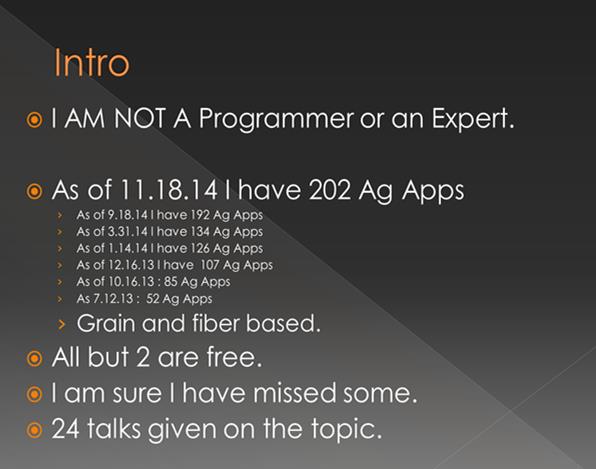
It was just 11 months ago when I wrote my last blog on Ag apps. Since that time I have presented on the topic several times, added nearly 100 new apps, have filmed several designated segment on sunup featuring apps (these can be seen at http://www.youtube.com/osunpk), and released two (soon to be three) apps myself. Below is the introductory slide I have been using in all of my app talks, on this slide you can see how the number of apps have been increasing overtime. In this update I wanted to share some of the new sections I have added to manage the vast number apps and go through some of my favorite apps in each of the sections.
Finding the right app has not changed as I still just give an app 3 minutes before a keep or drop decision is made, however since a year ago some of the key words are now less useful. For example a search for wheat will bring up droves of gluten free diet apps. None of these fit the bill for what I am looking for. Though out the blog you can click on pictures screenshots to get a better view of the app buttons.
Ag News and Weather

Still a very large section with little change for my recommendations, just go with what suits you in layout and reporting. I personally use RonOnRON (Ron Hays, the voice of Oklahoma Agriculture), DTN/PF, AG/Web, and AgWired.
Ag Resources

This includes peer review publications, resource guides and extension materials.
Calculators
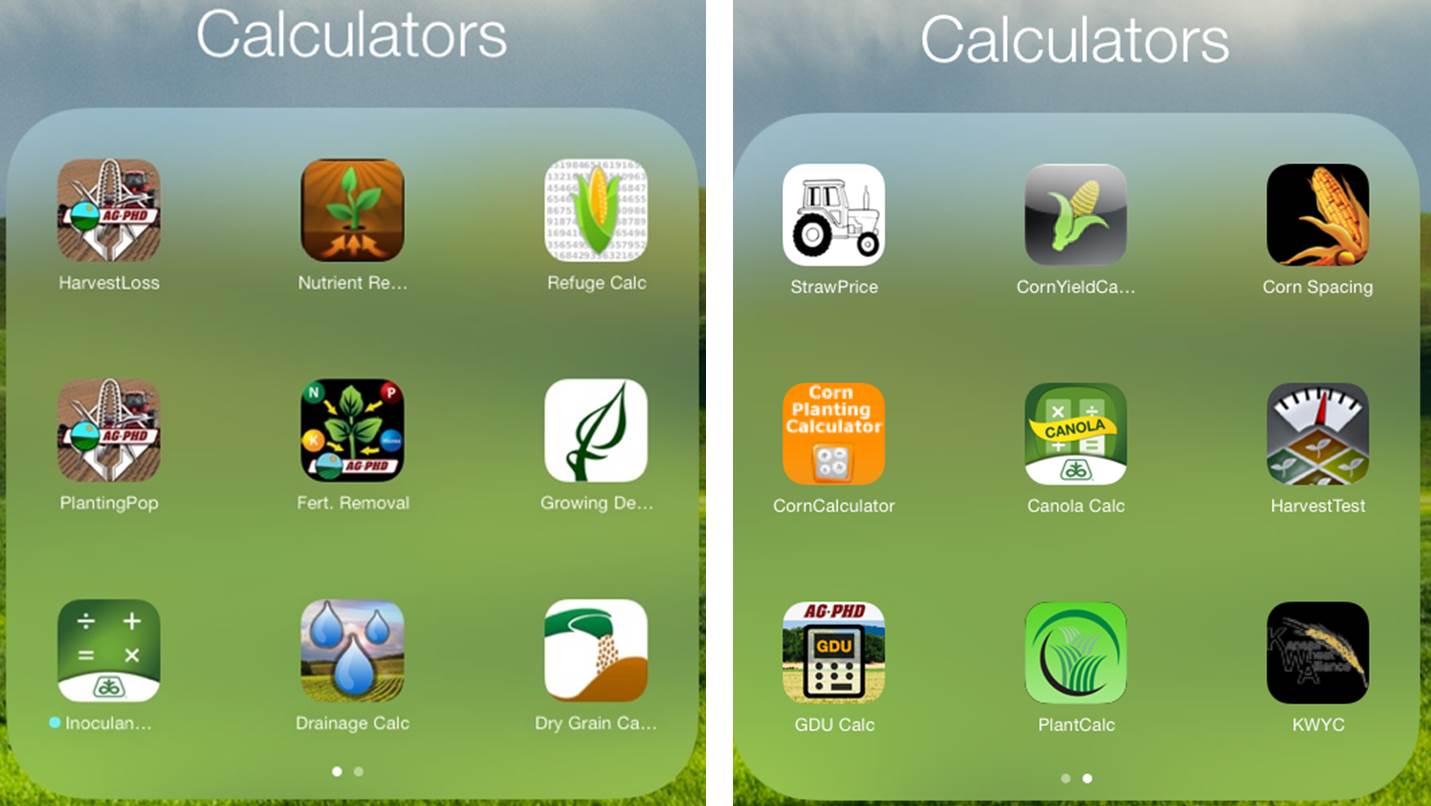
The majority of the Calculator apps preform relatively simple functions without the need of cellular or wifi connectivity. The Ag PhDs have two apps in the section I want to highlight, HarvestLoss and Fert. Removal. Both apps are useful tools in making management decisions. HarvestLoss allows the user to calculate the economic loss of a poorly set combine while Fert. Removal allows the user to select from a wide range of crops and see an exit ate of nutrient removal based upon selected yield level. Other useful apps are Growing Degree which allows the user to see cumulative heat units a crop has received anywhere in the US, Corn Yield Calc estimates corn yield based on ear girth and length, Canola Calc is a great apps produced by Pioneer which calculates the proper planting rate of canola based upon several factors and the Kansas Wheat Yield Calculator KWYC, uses growth stage stalk counts, height and/or NDVI to estimate potential grain yield.
Crop Tools

This section is filled with University Extension handbooks such as Purdue’s Field Guide ($12.99), University of Arkansas Corn Advisor, University of Kentucky Corn Production, and one private groups MFA Agronomy. Each of these guides are quality apps and should be chosen based upon geography or personal preference. The university apps mirror their respective hard copies however UK’s app added a nice update section highlighting local Ag news. MFA’s app is strong in pesticides with good herbicide performance data.
Fertilizer

For any producer who regularly applies animal waste the Manure Calc by the University of Nebraska is a great tool. The University of Wisconsin has a nice app in N Price Calculator and the Saskatchewan Soil Conservation association (SSCA) has created a nice fertilizer blend app. Oklahoma State University has Ammonia Loss Calculator which uses soil pH and environmental conditions to estimate N losses from surface applied urea.
OSUNPK

I am also getting into the app game with two recently released apps the Canola Starter and Field Guide. Canola Starter provides a recommendation for safe starter rates based on row width and fertilizer source. Field Guide is app version of my Nutrient Management Field Guide, this app includes a nutrient removal calculator, nutrient deficiency ID tool, and fertilizer rate calculators. Along with these I have several in the wings with titles like Crop Nutrients in Irrigation, GDDs>0, and Wildlife FoodPlot.
ID Tools
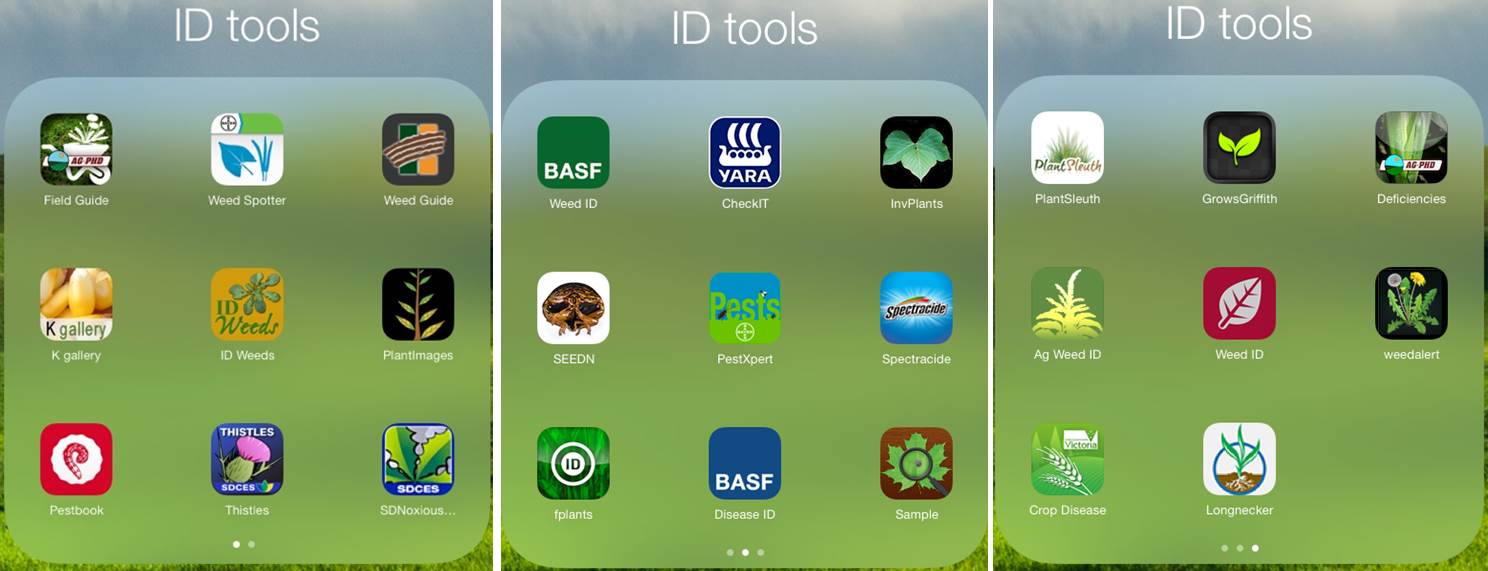
As mentioned in my first two blogs the University of Missouri’s IDWeeds app was the first taxonomy based weed identification tool. I still use it regularly but both BASF and Monsanto have brought products to the table, both named WeedID, that are very user friendly and effective. Plant Images ($5.00) is a library of nutrient deficiency photos from a large selection of crops. Years and Ag PhDs also have apps available with deficiency images named Yara Checkit and Crop Nutrient Deficiencies. Cereal Disease ID app by BASF is intended for the UK and DuPonts Pestbook for Australian cotton farmers but I find that both can be very useful even in Oklahoma.
Pay to Play, Registrations

I have heard several good things about many of these apps. However they reguire the user to either be an employee or patron of the company or online registration. In a pay to pay app I would expect an all inclusive tool that could replace several free apps and preform record keeping duties.
Records
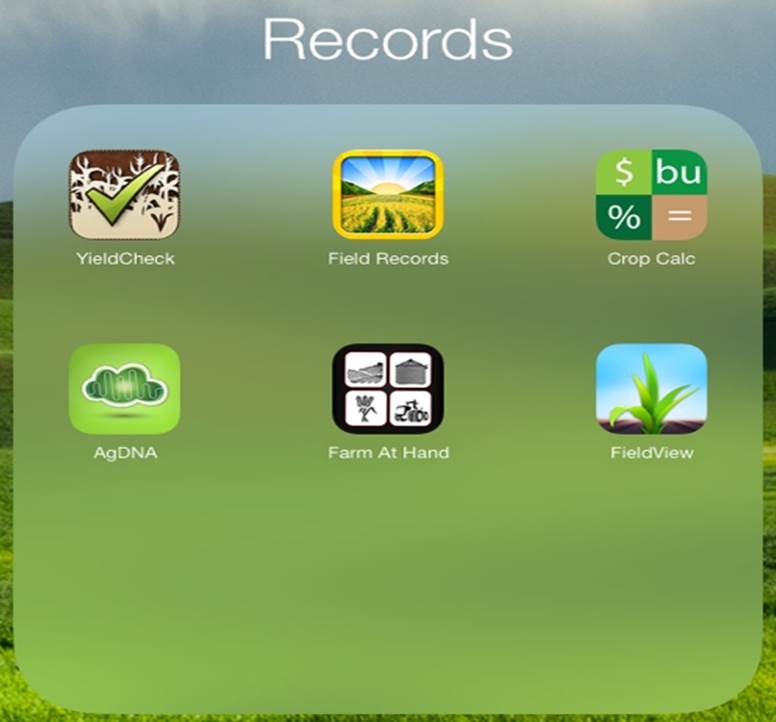
To be honest this is not a section I use much as I do not have an operation to maintain records on. However just by walking through the apps Crop Calculator by the University of Wisconsin and Pesticide Recordkeeping (PeRK) by University of Nebraska.
Scouting/Mapping

This section has apps that I classify as decision aid tools that could be used by someone scouting crops and apps that can be used to map and or collect field notes. South Dakota State has two great tools in Soy Diseases and NPIPM Soybean Guide. Scout and Sirrus.
Seed Select

Company based, Pioneers app products are some of the best with Plantability and Estimator
Sprayer Chemical

Some things haven’t changed I still use Tank Mix Calc and Spray Select on a very regular basis. But over the past year a few companies have added product finders and Clemson University has released a very nice sprayer calibration app named Calibrate.
Weather

The last two apps are Mesonet and Climate Corp Basic. You will notice the background on the screen shot is slightly different. That is because neither of these apps is kept Ina folder, both are on my home screen. Whether it is rain, temp, or wind weather impacts all aspects of agriculture therefore these two apps are always within one tap. For any producer in Oklahoma the Mesonet is an amazing system with 120 automated weather stations spread evenly across the state. This app just provides this data with just a few swipes of the finger. For those outside of Ok Climate Basic allows producers to first save field of interest and then monitor rainfall and environmental conditions of each field. While not extremely accurate it is defiantly close enough for those with a wide territory to be a very handy app.
For more information and some screen shots of the apps in action either visit my website http://npk.okstate.edu/presentations or my YouTube site http://www.youtube.com/osunpk under the playlist OSU_NPK on Sunup.
How to make $100,000 in a day
This is a familiar soap box. SOIL SAMPLE, SOIL SAMPLE, SOIL SAMPLE.
No, this blog post is not about a get rich quick scheme, but there is a way for the average wheat farmer in the southern Great Plains to add $50,000 to $100,000 to the bottom line in a single day. Most soil tests I have pulled this summer have shown 50 to 90 lb/ac of NO3-N in the top 18 inches of soil. Ninety pounds of N equates to about $45 of N fertilizer, and this knowledge could save a 2,500 acre wheat farmer in excess of $100,000 in fertilizer cost. Soil testing is laborious, but the potential economic returns for spending a day or two soil sampling are outstanding.
There is still time to soil sample. Soil samples only take a few days to process once they are in the OSU lab. It is not unusual for transit time to the lab to the slowest part of the process…
View original post 219 more words
Nutrient Products: Stabilizers, Enhancers, Safeners, Biologicals and so on.
In this blog I am not going to tell you what to use or what not to use. In fact I will not mention a single product name. What I will do is hopefully provide some food for thought, new knowledge and direction.
First I want to approach a topic I have been called out on several times. I believe there is a stigma that University researchers and extension specialists do not want products to work. It may seem that way at times but it is far from the truth. The reality is that all of us are scientists and know someone may be inventing the product that changes nutrient management as we speak. The issue is that most of us have been jaded. While I may be younger I have over 11 years experience, testing “products” in the field, and that includes dozens of products. I have sprayed, spread, tossed, drilled, mixed and applied everything under the sun, with hopes that I will see that one thing I am always looking for, MORE GRAIN…
The truth is Everything works Sometimes yet Nothing works ALL the time. I and others in my profession do not expect anything to work 100% of the time, I am personally looking for something that will provide a checkmark in the win column 50% of the time. A win is the result of one of two things, more money in the producers pocket or less nutrients in the water or air. Products can increase vigor, nutrient uptake, chlorophyll concentration, greenness but not yield. What Co-op or elevator pays for any of those attributes? Grain makes green.


So many safeners, stabilizers, enhancers, biologicals, and on and on are available, so what should a producer do? Here are few things to think about. Ask yourself “ what part of my nutrient management plan can I get the most bang from improving”?
If the answer is Nitrogen (N) there are three basic categories: Urease inhibition, Nitrification inhibitor, and slow release. All are methods of preventing loss; the last two are preventing loss from water movement.
Urease inhibitors prevent the conversion of Urea to NH3 (ammonia). This conversion is typically a good thing, unless it happens out in the open. Ideally any urea containing product is incorporated with tillage or rain. However, in No-till when urea is broadcast and no significant rainfall events (>0.5”) occur, N loss is likely. The urea prill starts dissolving in the presence of moisture, this can be a light rain or dew, and urease starts converting urea into NH3. As the system dries and the day warms, if there was not enough moisture to move the NH3 into the soil the wind will drive NH3 into the atmosphere. Nitrogen loss via this pathway can range from 5% to 40% of the total N applied.
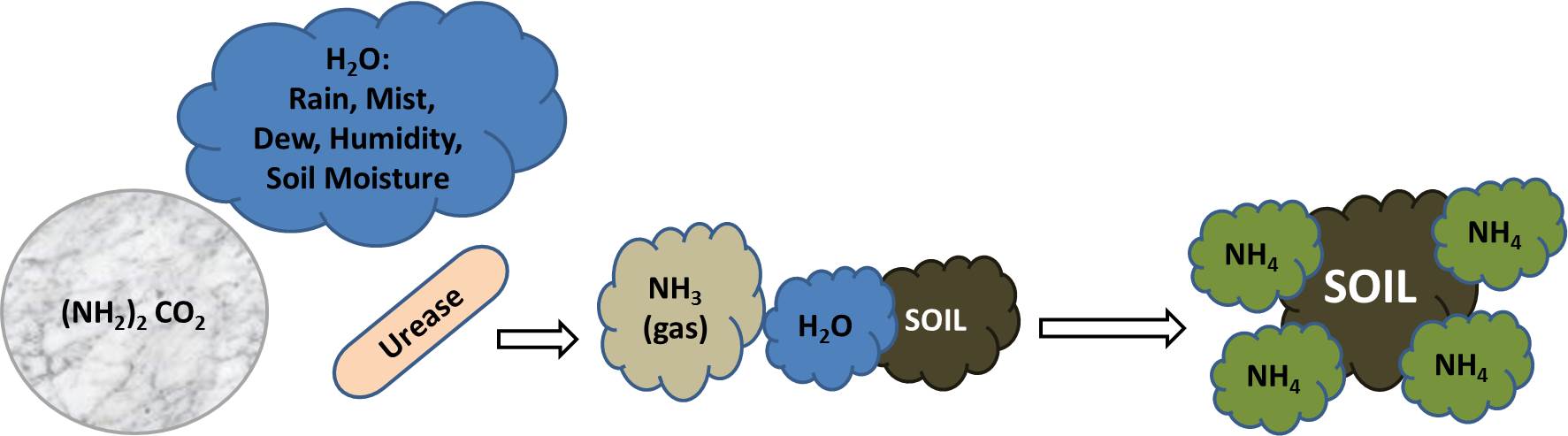
Graphic of Urea’s conversion to plant available ammonium.

Urea placed on a wet soil under two different temperatures. Number in white is hours after application.
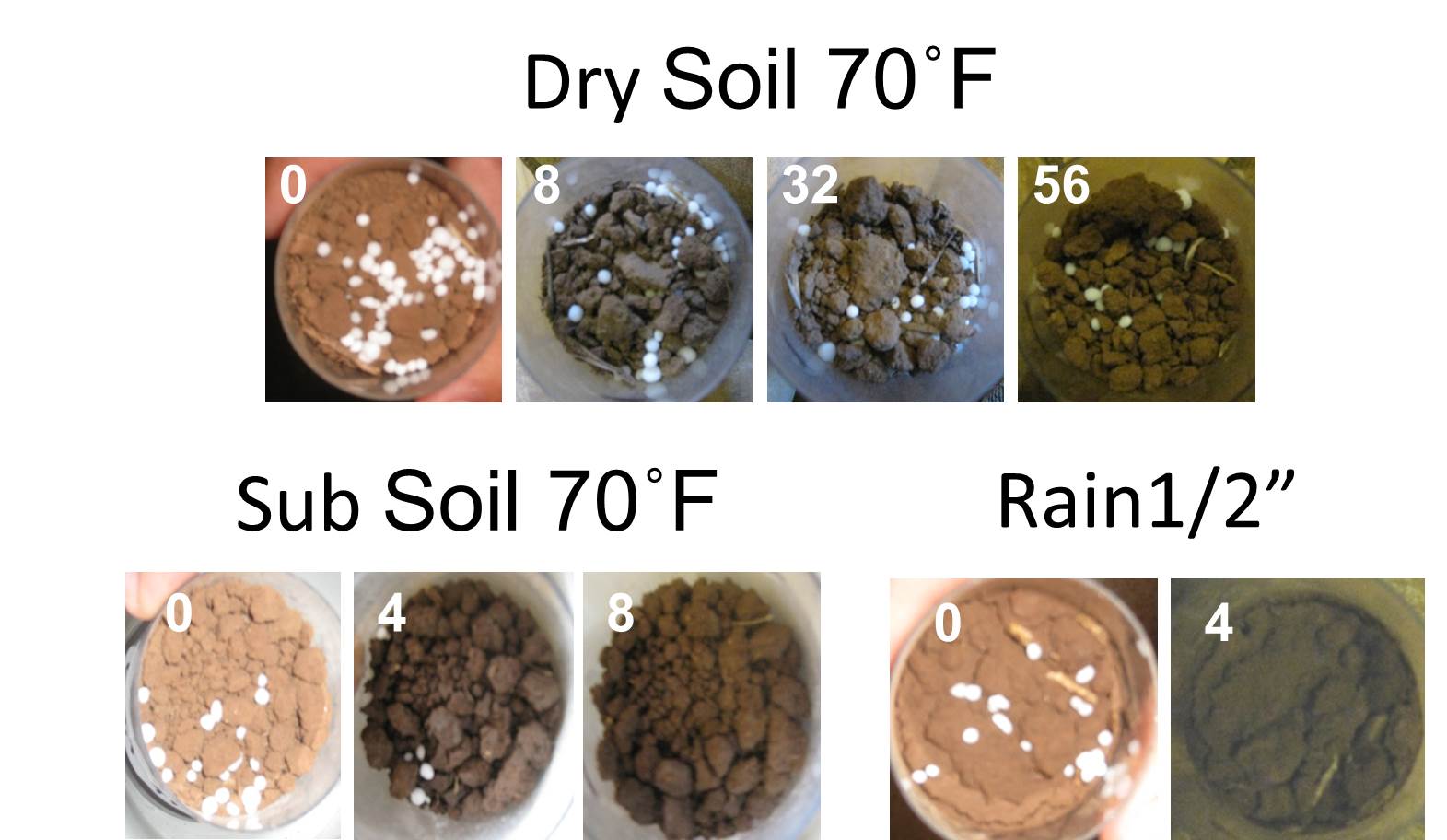
Urea placed on a dry soil, on top no water added, bottom left is moisture from the subsurface, and bottom right is simulated rain fall of 1/2″. Number in white is hours after application.
Nitrification inhibitors prevent the conversion of NH4 into NO3. Both are plant available N sources but NH4 is a positively charged compound that will form a bound with the negatively charged soil particles. Nitrate (NO3) is negatively charged and will flow with the water, in corn country that tends to be right down the tile drainage. Nitrate will also be converted to gasses under wet water logged soil conditions. Nitrate is lost in the presence of water, this means I do not typically recommend nitrification inhibitors for western OK, KS, TX dryland wheat producers.
Slow release N (SRN) comes in a range of forms: coated, long chain polymer, organic and many versions in each category. Again, water is the reason for the use of SRN sources. Slow release N whether coated or other have specific release patterns which are controlled by moisture, temperature and sometimes microbes. The release patterns of SRNS are not the same and may not work across crops and landscapes. For instance in Oklahoma the uptake pattern of nutrients for dryland corn in the North East is not that same as irrigated corn in the West. The little nuances in the growth pattern of a crop can make or break your SRN.
While N products have been on the market for decade’s phosphorus enhancers and stabilizers are relatively new, resulting in many of my peers holding back on providing recommendations until field trials could be conducted. At this point many of us do have a better understanding of what’s available and are able to provide our regional recommendations. Phosphorus products are not sold to prevent loss like their N counterparts; they are sold to make the applied P more available. On a scale of 1 to 10, P reactivity with other elements in the soil is a 9.9. If there is available Ca, Mg, Fe, or Al, phosphorus is reacting with it. In the southern Great Plains it is not uncommon for a soil to have 3,000-5,000 lbs of available Ca, a soil with a pH of 4, yes we have many of those, will have approximately 64,000 lbs of Al in the soil solution. That’s a lot of competition for your fertilizer P and for any substance that is trying to protect it.
I have been testing “biologicals” of all shapes and forms since 2003. While I have not hit any homeruns I have learned quite a bit. Many of these products originate from up north where the weather is kind and organic matter (OM) is high. Where I work the average OM is 0.75% and soil temp is brutal and unforgiving. Our soil does not have many reserves to release nor is it hospitable to foreign bodies.

Soil temperature for Stillwater OK under sod and bare soil conditions. Graph from http://www.Mesonet.org.
I hope you are still hanging on as this next topic is a bit of a soap box for me. Rate, Rate, Rate this aspect is missed both by producers and academia and it drives me crazy. If your crop is sufficient in any growth factor adding more will not increase yield. It goes back to Von Liebig’s LAW of the Minimum. I see too many research studies in which products are tested at optimum fertilization levels. This is just not a fair comparison. On the other hand, time and again I see producers sold on a product because they applied 30% less N or P and cut the same yield. If you let me hand pick 100 farms in Oklahoma I could reduce the N rate by 30% of the average and not lose a bushel on 75 of the farms. Why? Because the rate being used was above optimum in the first place, there is no magic just good agronomy. The list of products that increase the availability of nutrients is a mile long. Increasing nutrient availability is all well and good if you have a deficiency of one of those nutrients. If you don’t, well you have increased the availability of something you did not need in the first place.
University researchers and extension professionals seem to live and die by the statistics, and are told so regularly. We do rely upon the significant differences, LSD’s, and etc to help us understand the likely hood of a treatment causing an effect. However if I see a trend develop, or not develop, over time and landscape regardless of stats I will have no problem making recommendations. The stats help me when I do not have enough information (replications).
Too wrap up, have a goal. Do not just buy a product because of advertised promises or because a friend sells it. There is a right time and place for most of the things out there, but you need to know what that is and if it suits your needs. I also recommend turning to your local Extension office. We do our best to provide unbiased information in hopes of making your operation as sustainable as possible. If you are looking at making sizable investments do some reading, more than just Google. Testimonies are great but should but should not be enough to cut a check. Google Scholar www.google.com/scholar is a good resource for scientific pubs. I have done my best to put together a list of peer reviewed publications and their outcomes. To make the review work I had to be very general about outcome of the research. Either the product increased yield or decreased environmental losses or it had no impact. This was not easy as many of the papers summarize multiple studies. I did my best to make an unbiased recommendation but some could be argued. http://npk.okstate.edu/Trials/products/Product_Peer_Review.8-21-2014.pdf
2013 Wheat and Canola preplant soil test results
Every few years I request the results of all soil samples submitted to OSU Soil, Water, & Forage Analytical Labs (www.soiltesting.okstate.edu) under the crop codes of winter wheat and winter canola. Within this data set I can look at trends occurring across the state over time. In this report I will focus on the 2013 results but make some comparison with the 2011 sample values.
As it pertains to mobile nutrients such as N, S, and B there is little that can be applied from the previous year’s soil samples because their levels in the soil change rapidly. Samples must be collected every year to determine the current status. However the soil test levels of immobile nutrients, P, K, Mg, ect are relatively stable over time and the recommendation is to take a close look at these values every three to five years.
In 2013 the number of sample submitted increase. There were nearly 1000 more wheat soil samples (2733 to 3574) and 200 more canola soil samples (33 to 231). If the distribution of nutrient levels of the two years are compared the only significant change is that the soil test NO3 level was significantly lower in 2013 (Tables 1 and 2). This is attributed to the extremely dry 2012 spring and summer which delayed the breakdown of wheat straw and immobilization of residual N.

Table 1 and 2. Summary from all samples submitted to SWFAL under the wheat and canola crop codes in 2001 and 2013.
Reviewing the 2013 values the most concerning aspect is that 72% of the 3800+ soils samples had a Mehlich 3 P value below optimum soil test phosphorus (STP) of 65 (Figures 1 and 2). That adds up to 109,000 acres needing phosphorus, if you assume each sample represents 40 acres. There is no way to determine how much P2O5 if any was applied to these particular fields. However, an estimated impact of not fertilizing can be calculated. Based on the Oklahoma typical average yield of just below 40 bpa, it would cost the state approximately 575,000 bushels if the land went unfertilized. At $5.00 a bushel that is $2.8 million in revenue. To remedy the low STP it would take approximately 2.76 million lbs P2O5 at a cost of $1.5 million ($0.50 per lb).
In the NPKS response study wheat fields across the state were evaluated for a response to additional (in addition to producer’s standard practice) nitrogen, phosphorus, potassium, and sulfur. Phosphorus was the most limiting nutrient at 7 of the 59 harvest locations. A response to P occurred more often than any of the other nutrients tested. It is important to note at all seven fields had been fertilized with P that season, however each time it was below the OSU recommended rate. The response study was a great reminder that it is important to have a good soil test and to follow the recommendations.

Figures 1 and 2. 1)Range of soil test P levels (Mehlich 3) for all samples submitted to SWFAL in 2013 under the wheat and canola crop codes. 2) Range of Soil Test P level for all samples with STP<65.
Soil pH on the other hand showed a slight improvement from 2011. The percent of samples under 5.5 decreased by 4%, 25 to 21. Of the samples <5.5 the majority fall within the 5.0-5.5 category, which for winter wheat is still within the optimum growth window (Figures 3 and 4). These numbers are a good sign however two points should be made. There is a significant amount of winter wheat acres that is not sampled; much of this is likely to fall below 5.5 soil pH.
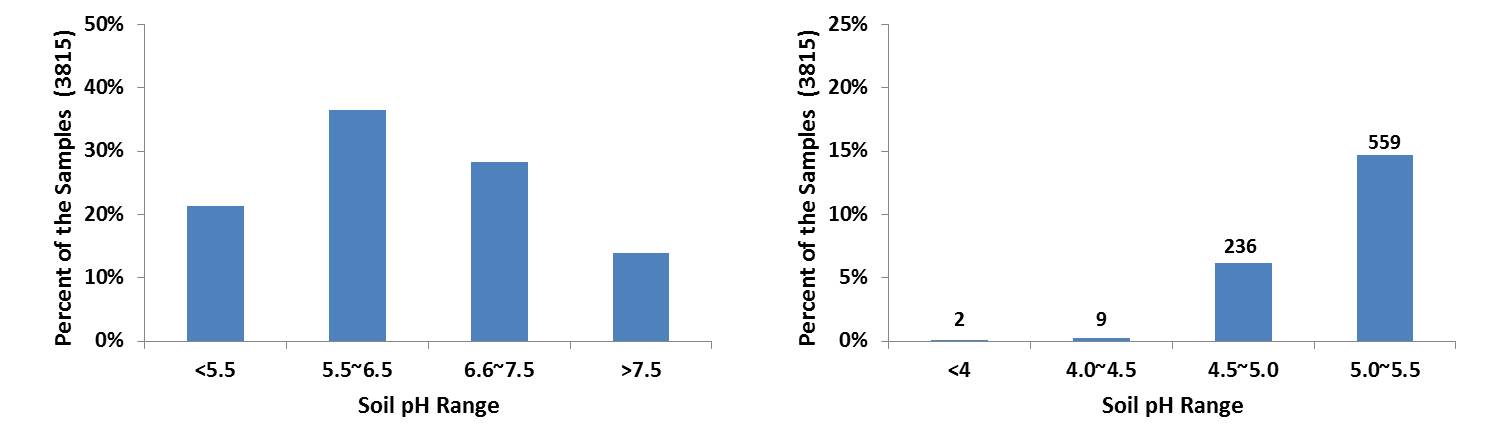
Figures 3 and 4. 1)Range of soil pH levels for all samples submitted to SWFAL in 2013 under the wheat and canola crop codes. 2) Range of soil pH levels for all samples with pH<5.5.
Additionally grid soil sampling and variable rate lime should consider on any field which the composite soil sample pH ranges from the high 4’s to the high 5’s. For example a 75 ac field near Deer Creek had a composite soil sample test pH of 5.3 and buffer index of 6.5. The OSU lime recommendation, for a wheat crop, was 2.2 ton per acre for a total of 166 tons to lime the entire field. However the producer grid soil sampled the field himself at a 2.5 acre resolution (31 samples). Figure 5, shows that the pH of the field ranged from 4.4 to 7.9. Only 33 tons of lime would be required if the field were limed using a variable rate technologies. Cutting the total amount applied by 133 tons would save the producer approximately $4000.
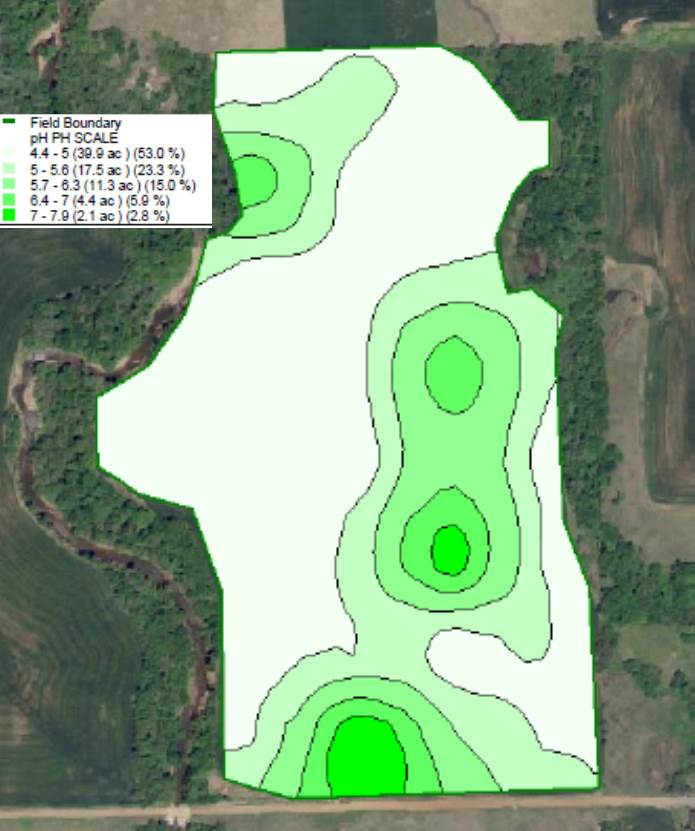
Figure 5. Soil pH results from a 75 acre field that was grid soil sampled at a 2.5 ac resolution.
Oklahoma wheat and canola producers must take advantage of the weather when it goes their way. Yet if the crop does not have the proper soil pH and nutrients under it, it will never reach its potential. Take the time to collect a soil sample and send it in to a lab. The hour it takes to collect the sample a few dollars you spend on analysis will help ensure that crop you are producing has the best chance of hitting maximum yield in the most economically and environmentally sound manner.
Related Factsheets
OSU Soil Test Interpretations
http://npk.okstate.edu/documentation/factsheets/PSS-2225web2013.pdf
Fertilization Based on Sufficiency, Build-up and Maintenance Concepts
http://npk.okstate.edu/documentation/factsheets/PSS-2266web.pdf
2014 Harvest has wrapped up.
The last of the Precision Nutrient Management winter crop harvest was wrapped up in Chickasha June 25. Across the trial locations (Lahoma, Perkins, Chickasha, and Stillwater) the yields came in across the board in the high teens low twenties, bushel per acre. For most of the trials there was very little treatment difference, often the check ( Zero N) was not far from the fertilized plots. At this time the students are processing the grain. Some will be sent to a NIR Spectrophotometer for protein analysis the rest will be ground and analyzed for nitrogen and mineral content. The response to fertilizer was so low this year many of my trial areas have a double crop sorghum growing, in hopes to take advantage of the recent rains and harvest the residual nutrients. While I am processing the data and the students are running the samples I thought I would share a few of the images from the 2014 harvest. I will post results on the npk.okstate.edu as the become available and share the information on this blog. The best way to learn when results are posted are to follow me on Twitter @OSU_NPK or subscribe to our Extension news list serve (send me an email at b.arnall@okstate.edu to be added to the listserv).
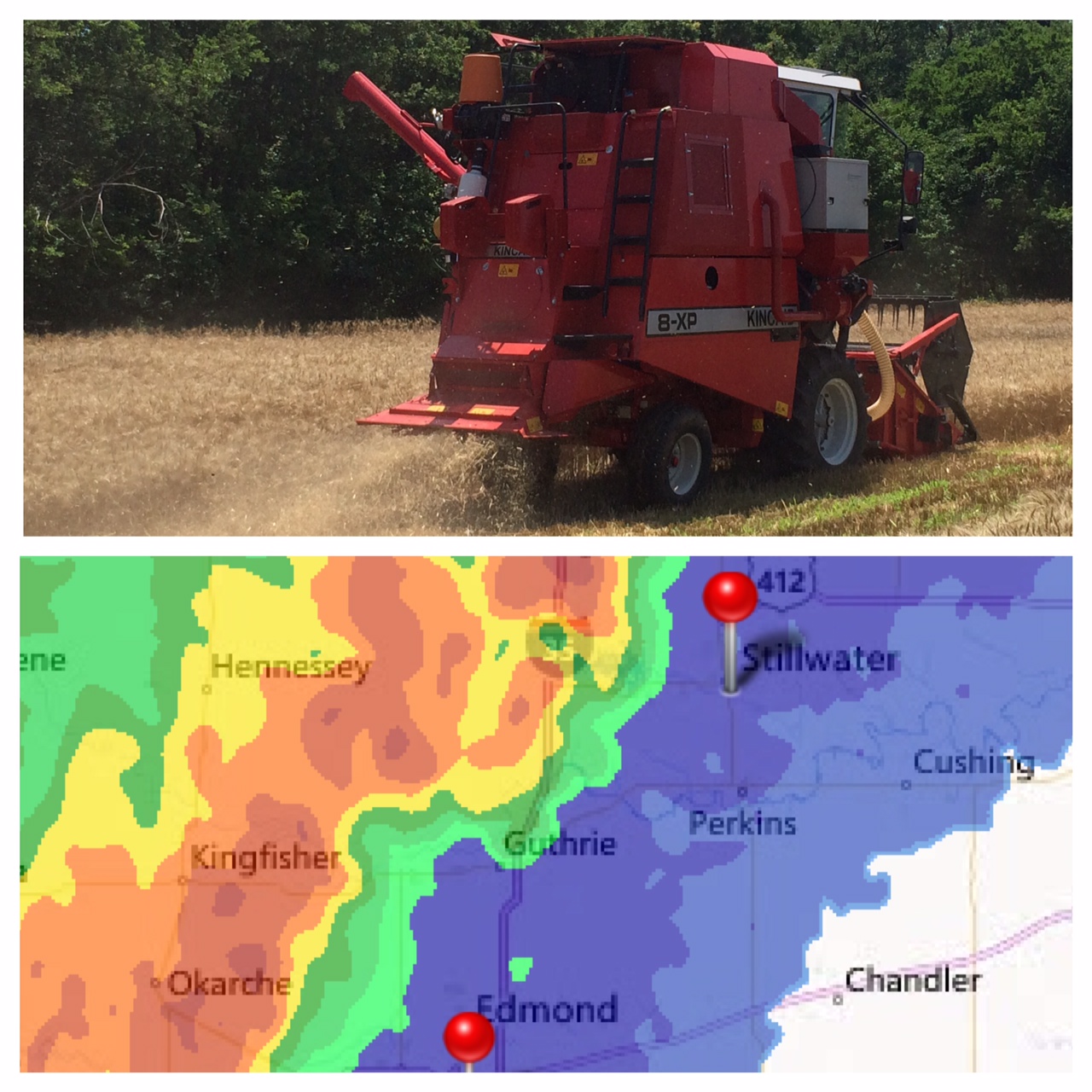
This harvest was spent watching the radar and going where the weather allowed.
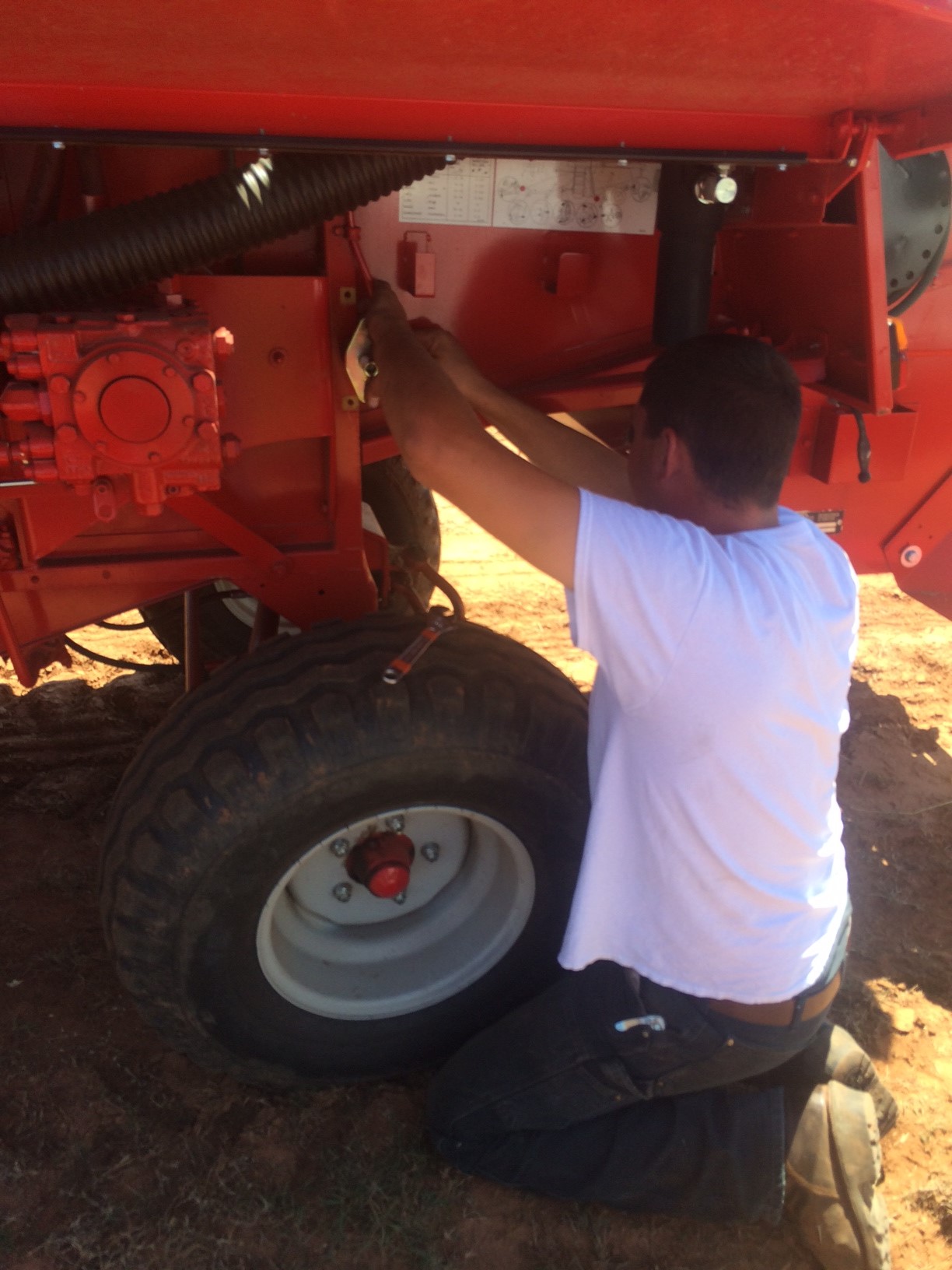
Even a new machine needs a few in field “Modifications”
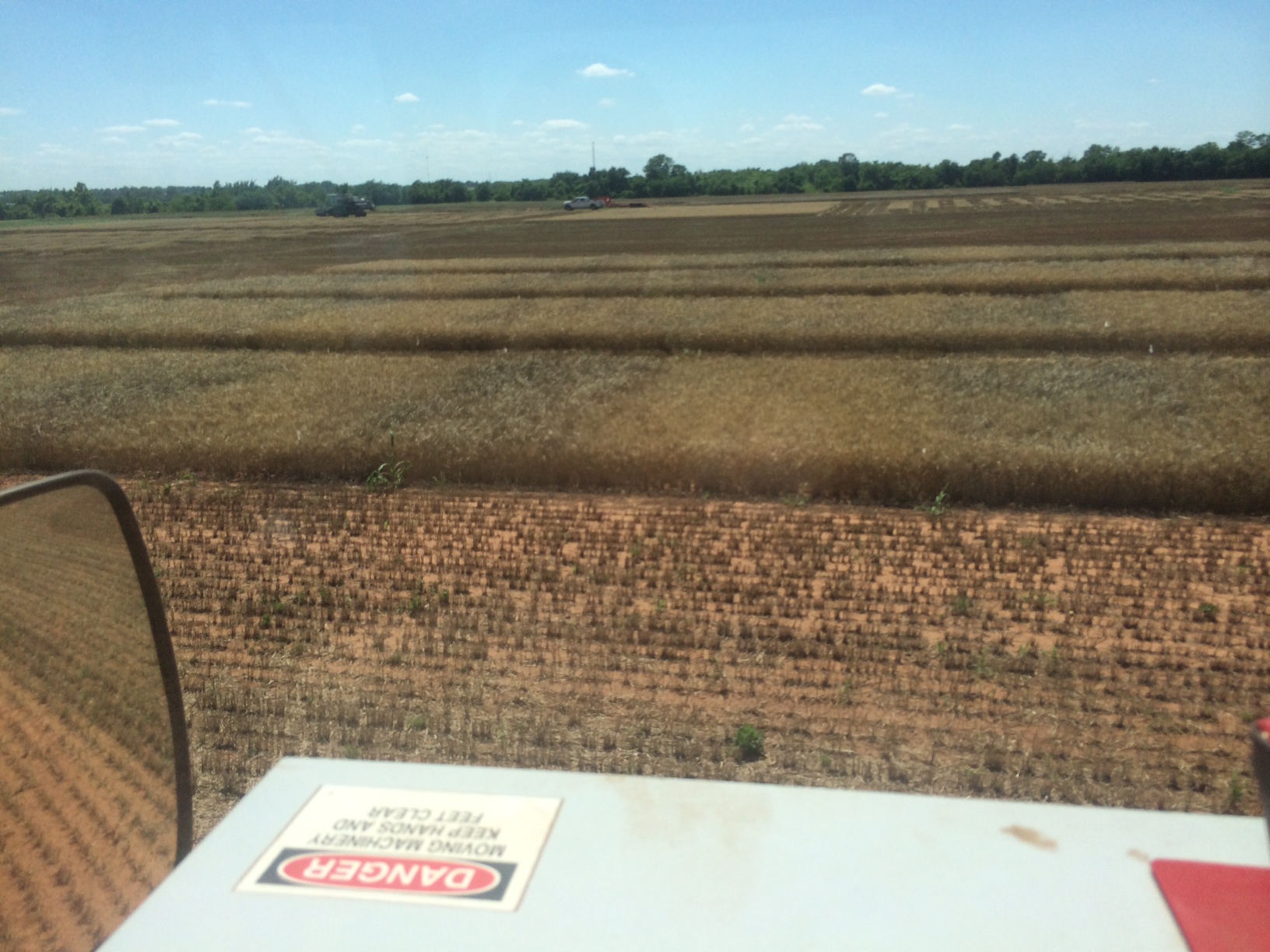
In this you can see the impact of fertility on freeze damage. The dark plots survived the freeze, the light did not and were full of smaller tiller heads. In the end no major yield differences.
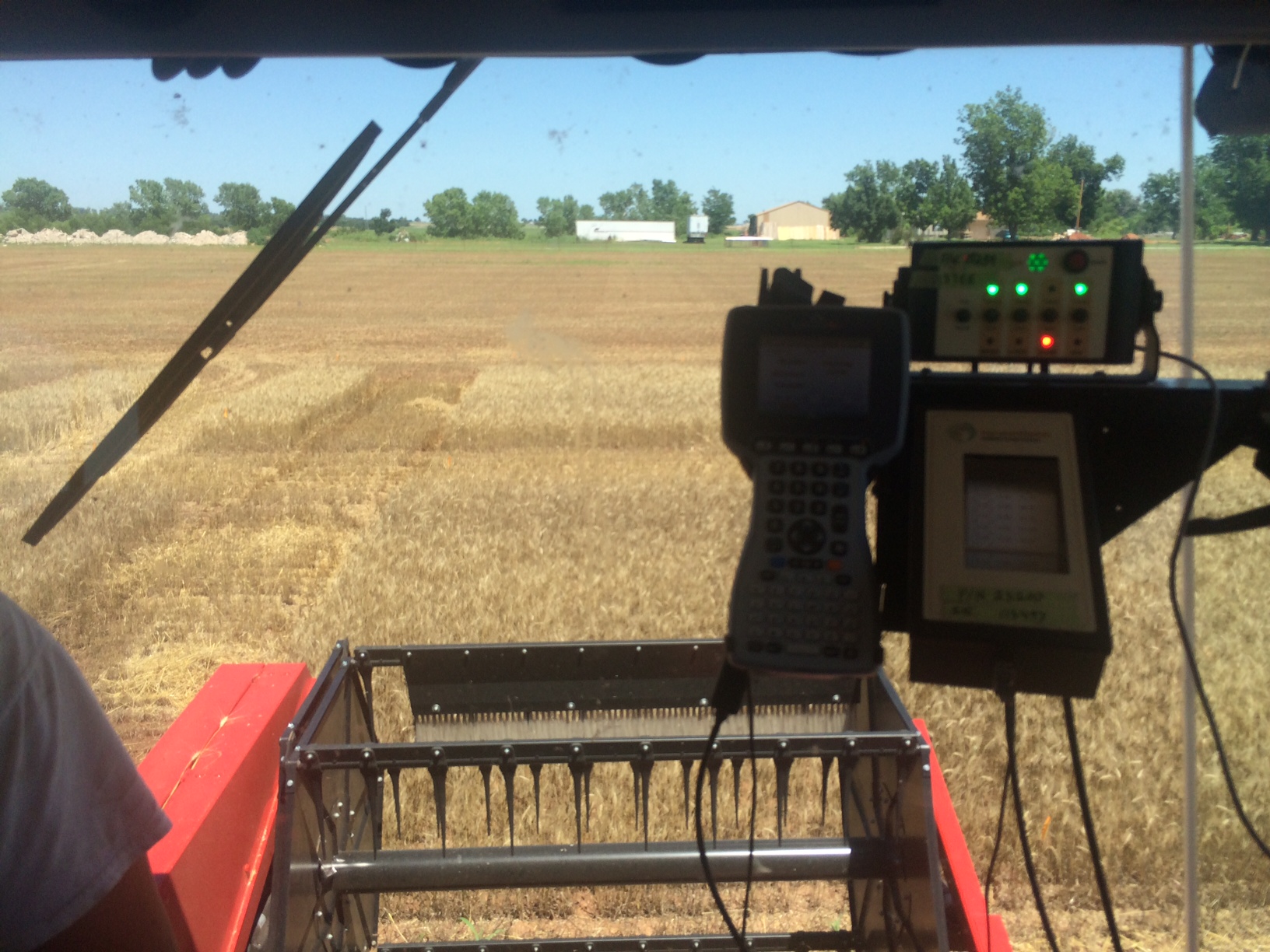
The view from the driver seat of the Massey 8XP, with the Harvest Master on the right.
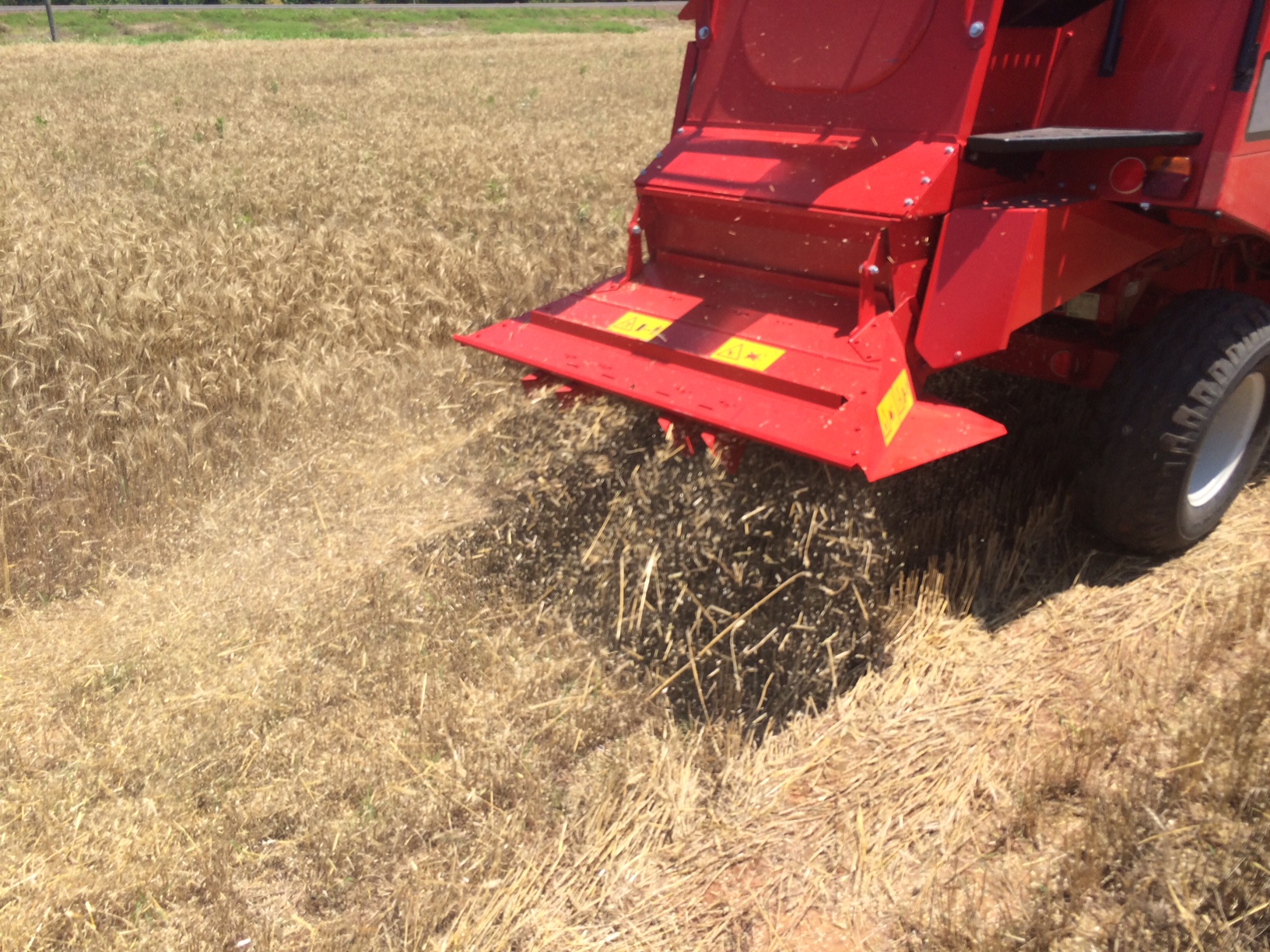
Even with a 5 ft header residue management is important.
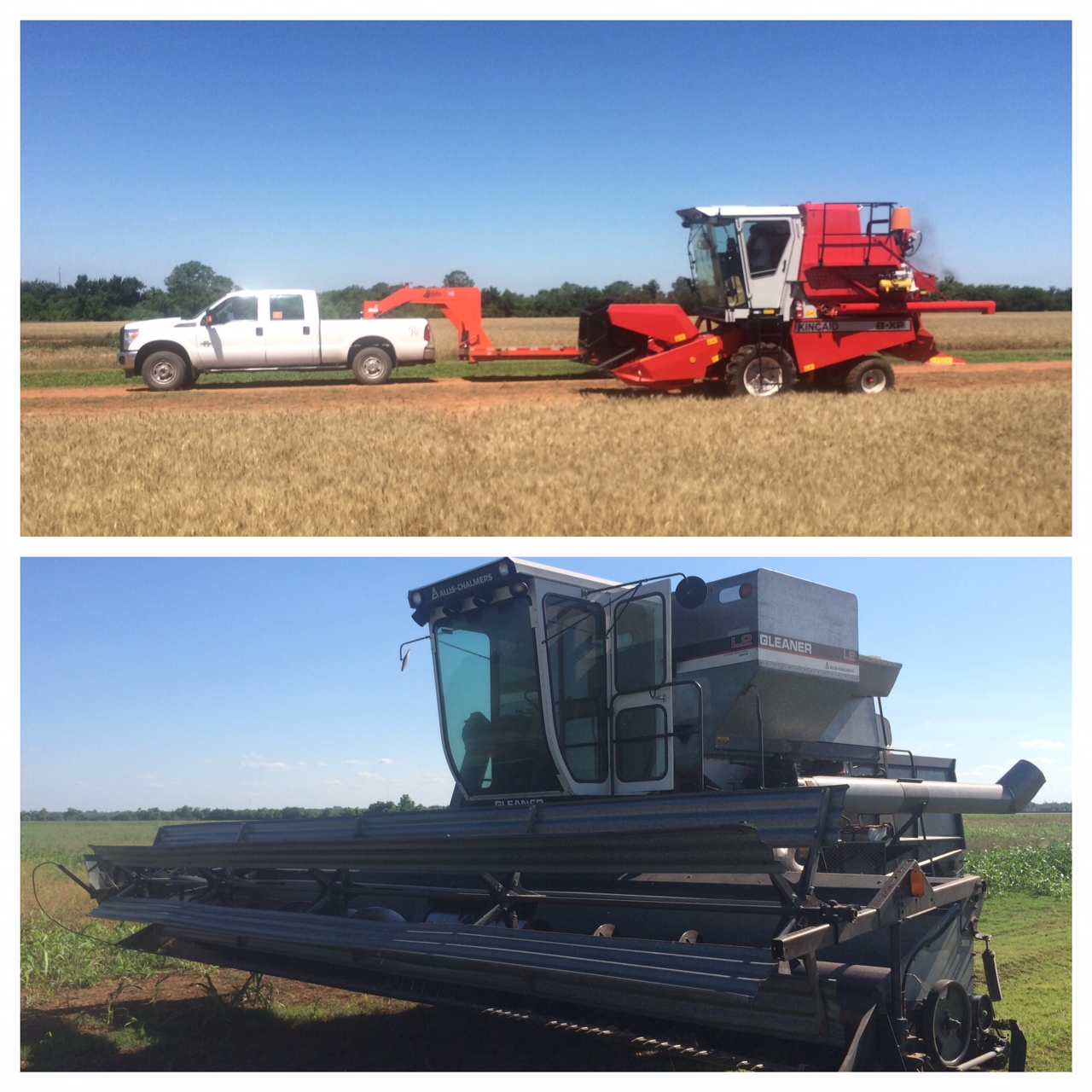
While all plots are cut with the 8XP, for cleanup we borrowed a few Gleaners when available. I liked to say we started with Young and Cute and finished with Mature and Efficient.

To beat the rains all of us at OSU ran late nights and weekends.

When possible we like to let students get as much experience as possible. In this a Brazilian intern Luciano is learning to run the 8XP.
I am in Extension and I am just borrowing your idea
This blog is a bit of a self-serving advertisement while at the same time telling an important story about a successful extension program. I am still a newbie in terms of service years as I just finished my sixth year as a state specialist. Over this time I have learned an important fact, an idea or concept does not have to be your own to be applicable. Case in point, ever since grad school I’ve had a tent card, 4”x 3.5” card folded in half to equal the size of a business card, from Potash and Phosphate Institute (PPI), now the International Plant Nutrition Institute (IPNI) pinned to my wall. The Plant Food Uptake card has the nutrient concentrations of the primary grain crops grown in the Great Plains. During my research, it was a handy piece of information. Today, it still hangs on my board today with a series of out-dated photos and thank you cards from former students.
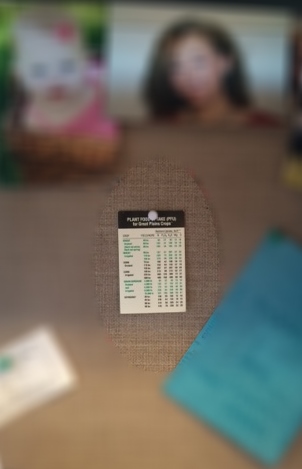
Plant Food Uptake (PPI)
It is from the Plant Food Uptake card that I developed the concept of the first Pete’s Sheets Do’s and Don’ts of using N-Rich Strips and N-Ramps in 2008. I personally thought this was a great idea but did not know if it would be well received by my audience. The results have been more than I could have ever imaged. Since 2009, I have developed 10 additional Pete’s Sheets with the latest out for print. I keep close tabs on how many I have ordered, and the latest order brings to total 38500 Pete’s Sheets. I currently have 8000 Pete’s Sheets on hand, which means there is approximately 30,000 cards in circulation. I doubt any fact sheet I have ever written has that level of distribution.
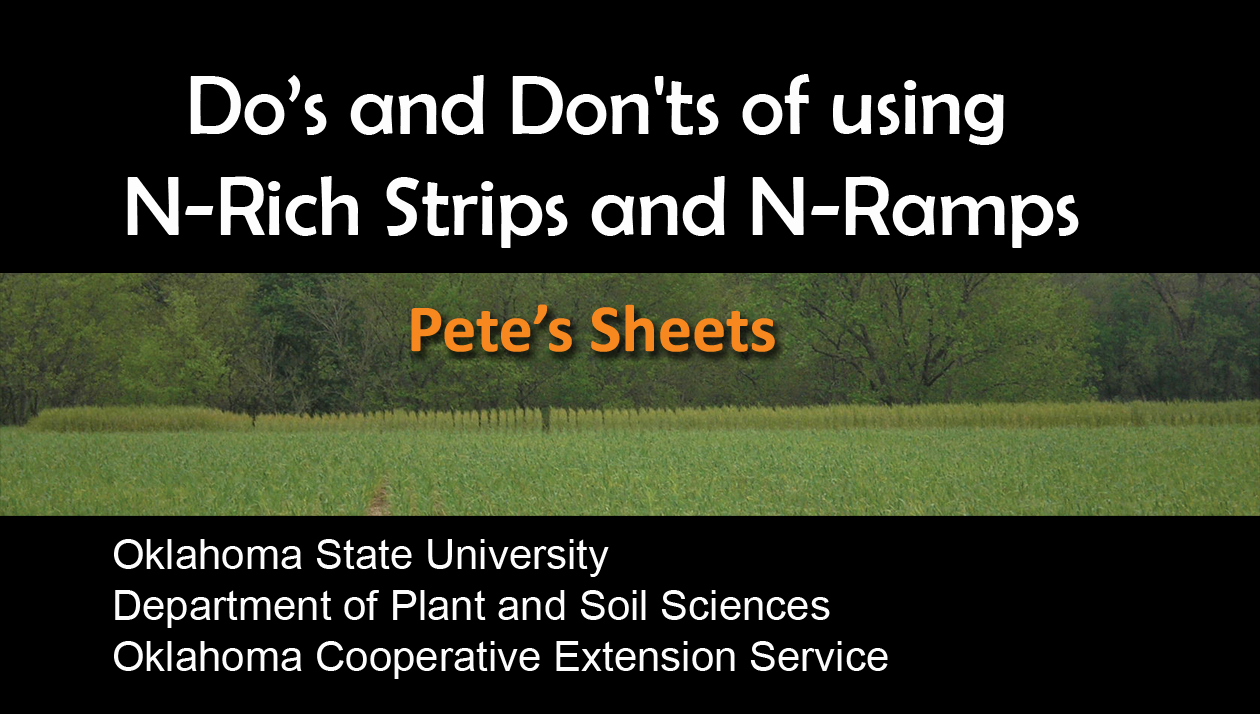
Cover of the first Pete’s Sheets produced.
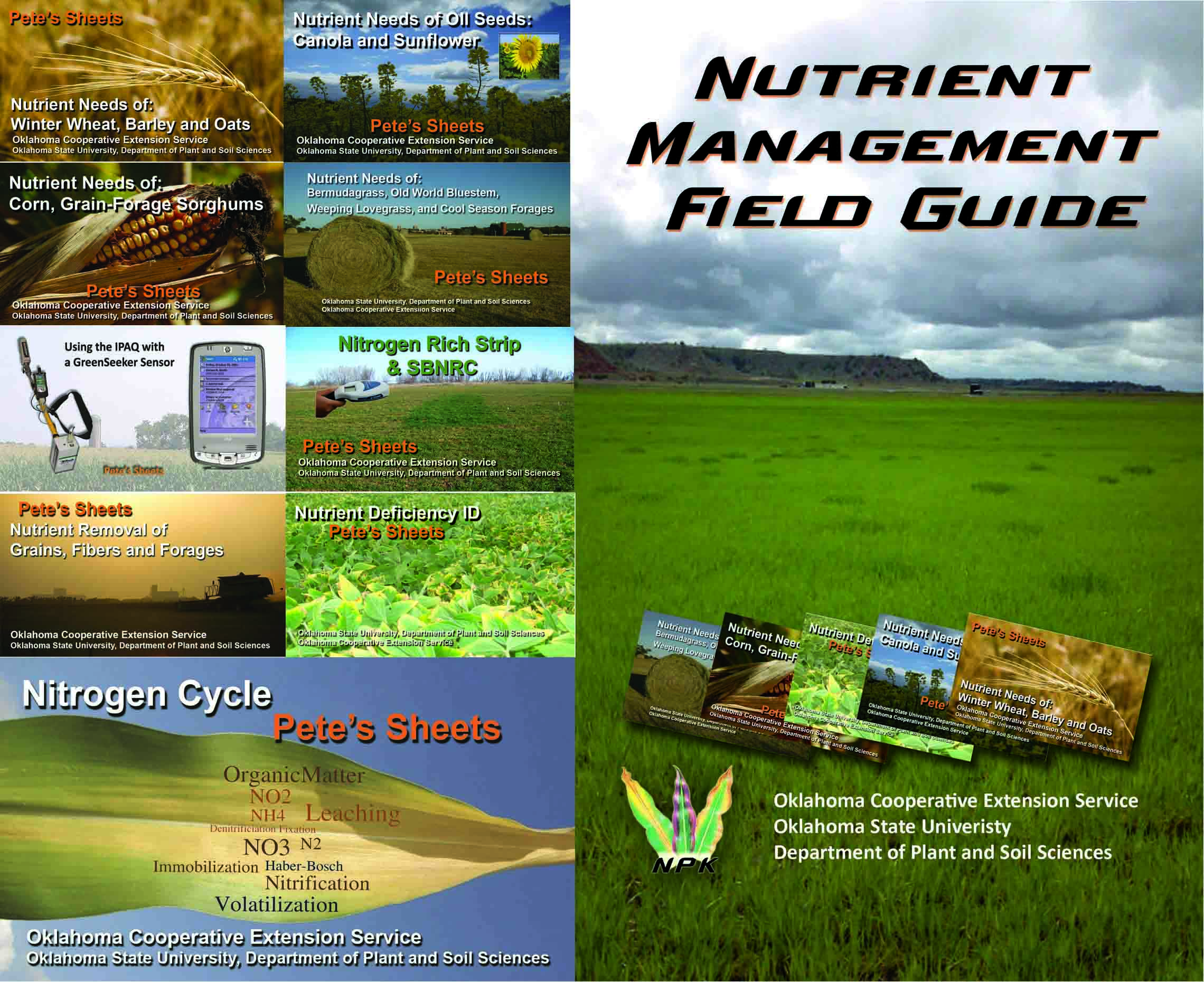
Pete Sheets for business card size tent cards Fact-Sheet/Research based information.
The Nutrient Management Field Guide is a spiral bound compilation.
I am able to travel to meetings and speaking engagements with relevant Pete’s Sheets easily in tow, and I also provide bulk quantities for free via request. Another enjoyable aspect of the Pete’s Sheets is I am able to place them in a tray on my office door. It is always a good day when I have the need to refill card holders, and this happens surprisingly often.
The spin-off from the PS has also been quite impressive. One of the best complaints I have ever received was from a producer who quipped he could no longer carry all of the Pete’s Sheets in his wallet. I took that as a major complement and went to work at compiling the cards immediately. The outcome was the 5″x 8″ spiral bound Nutrient Management Field Guide which has been equally successful. Not only did I “borrow” the tent card concept from PPI/IPNI, but I have also “borrowed” the idea of providing a customized logo just as Purdue has with its fields guides. The most famous is probably the Purdue Corn and Soybean Field Guide. While the custom logo has not been widely utilized, the times it has the revenue has been used to purchase more standard cards.

Office door with the Pete’s Sheets tray. Always free to a good home.
My take home from this experience is in extension old ideas can easily be incorporated into new educational tools. Often, it takes just a little time and imagination to be successful. Pete’s Sheets now greatly aid both my extension and teaching programs.
Now to the self-serving portion of the blog an announcement for the newest card titled Nitrogen Cycle. Within the Pete’s Sheet is a visual representation of the N-cycle, which every student enrolled in my Soil Nutrient Management course must learn, and the back of has a list of important N-cycle terms with definitions. I will mail Pete’s Sheets to anyone requesting a set, with a maximum of 100 per style. I continuously look for new ideas and topics and welcome any suggestions. View pdfs of the cards and booklets or download the custom order form on my NPK website at http://npk.okstate.edu/petesheets. To receive sets of the standard Pete’s Sheets, simply email me your request and provide a mailing address.
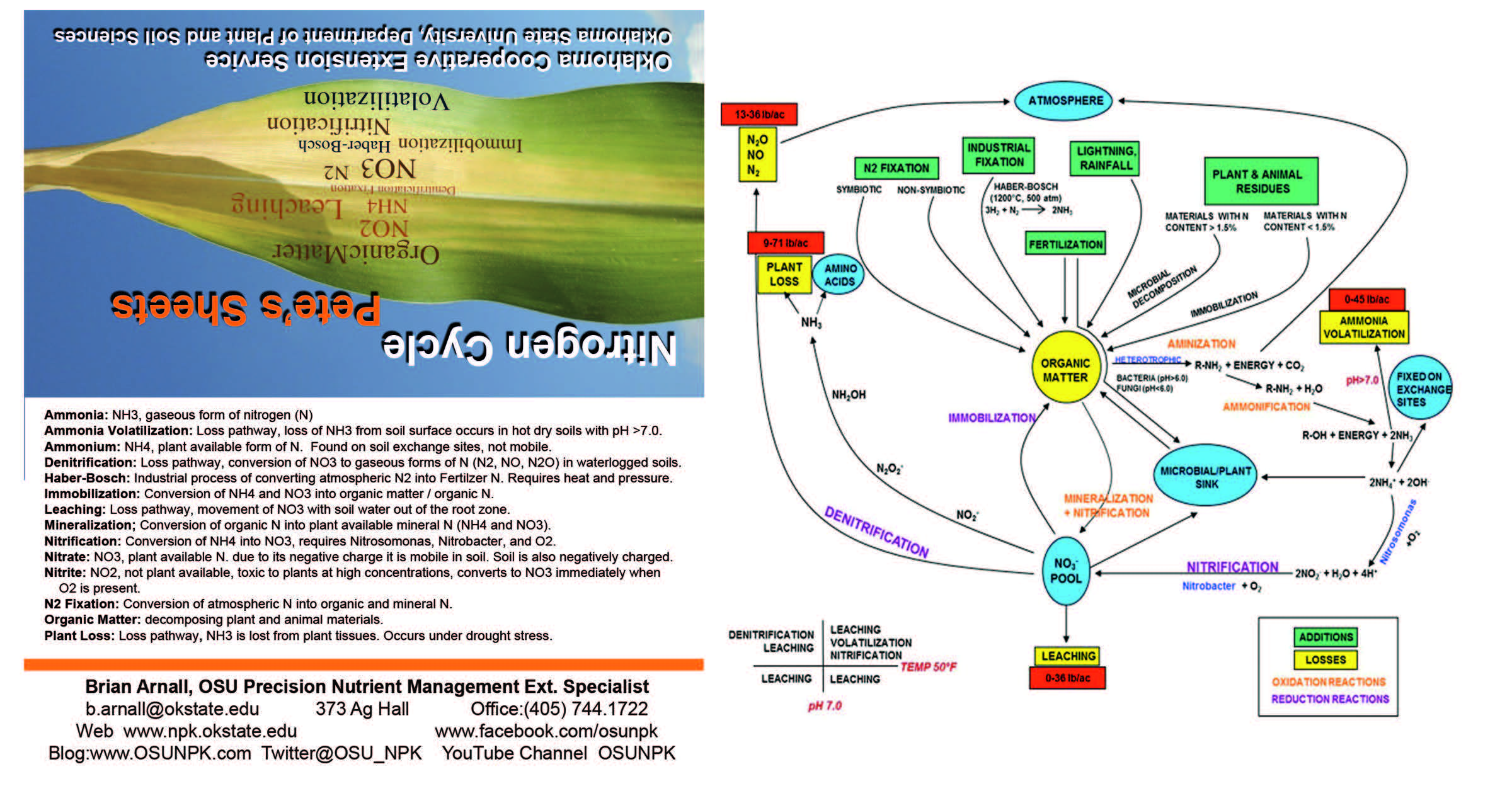
Nitrogen Cycle Pete’s Sheet
Banding P as a Band-Aid for low-pH soils.
In the mid-1970s Dr. Robert Westerman banded 18-46-0 with wheat at planting in a low-pH soil near Haskel Ok. The impact was immediately evident. Soon after Oklahoma State University recommended the “Banding of Phosphate in Wheat: A Temporary Alternative to Liming” Figure 1. This method was a Band-Aid solution for the significant amount Oklahoma winter wheat production area which was either too far from a reliable lime source or under a short term lease contract.

Figure 1. The cover of an extension brochure distributed in Oklahoma during the 1980s.
Still today grain producers throughout the United States commonly farm a large percentage of land that is not their own. In the leasing process agreements can widely vary both on length of the lease and the amount of inputs that the land owner will pay. The wheat belt of Oklahoma is known for having large areas with low soil pH levels. A survey of soil samples submitted to the Oklahoma State University Soil, Water, and Forage Analytical Laboratory in 2011 under the winter wheat crop code showed 38% of the samples having a soil pH level below 5.5 (Figure 2). In Oklahoma short term leases with limited shared expenses have limited the access to agricultural lime for remediation of acidic soils. In the dry environment it may take up to one year before the lime applied has completely corrected the soil acidity problem. In a situation where the lease agreement is only for one to two years there may be no economic benefit for the producer to apply lime especially in regions where winter wheat average yields range from 20 to 40 bushel per acre. The current recommendation for winter wheat producers working on low-pH short term lease ground is to apply 30 lbs P2O5 ac-1 ( 65 lbs 18-46-0 ac-1) with the seed for grain only wheat and 60 lbs P2O5 ac-1 (130 lbs 18-46-0 ac-1) for dual-purpose wheat production. This recommendation however is for soils with adequate soil test P, but low soil pH. When soil test P is below optimum the 30 or 60 units is applied in addition to the amount needed to reach 100% sufficiency.
Banding P is considered a “Band-Aid” as the problem of soil acidity is not re-mediated it is only masked. If not addressed the pH of the soil will continue to fall over time. Aluminum and manganese toxicity is the greatest issue associated with soil acidity. Available aluminum, a predominant mineral in the regions soils, is pH dependent. A change of 1.0 pH level changes available Al by 1000 fold. For example a soil with a pH of 5.0 will have an approximate Al concentration of 27 ppm, critical level of winter wheat is 27 ppm, while a soil with a pH of 4.0 will have an Al concentration of approximately 27,000 ppm. Aluminum and manganese toxicity does not only impact grain yield but it has an even greater impact on biomass production. Kariuki et al (2007) recorded the impact of soil acidity on eight current winter wheat lines. Correcting soil acidity increased wheat grain yield by 82% and increased forage production by 150%. For Oklahoma the forage produced by the wheat crop is as important as the grain. Oklahoma is unique in that approximately 50% of the four million acres of winter wheat are grazed annually much of this under the dual –purpose “Graze-N-Grain” management. To maintain productivity on the land without the long term investment of Ag lime producers have been applying phosphorus fertilizer to alleviate the impact of aluminum toxicity.

Figure 2. Summary of the soil pH values for the 614 samples submitted to the Oklahoma State University Soil, Water, Forage, Analytical Laboratory under wheat crop code during the time frame of 1-1-2011 11-30-2011.
In 1992 Boman et al reported that impact banding phosphates with seed on winter wheat forage production (Figure 3). Across the four locations the addition of P increase yield from 2 to 4 fold. The work by Kaitibie et al (2002) documented an additional aspect of banding P. In the variable and often arid climate of Oklahoma the activation of lime can take a significant amount of time, in upwards of one year. In comparison banding P has an immediate impact on the alleviation of metal toxicities. Figure 4 shows the incorporation of lime improved forage yield but not to the degree of banding P. For continuous winter wheat producers the time between application of lime and planting can be quite short. Typically the previous crop will be harvest in mid-June and in the best case scenario lime would be applied and incorporated by mid-July. At this point there is only 60 days until the next wheat crop is planted in early to mid-September.
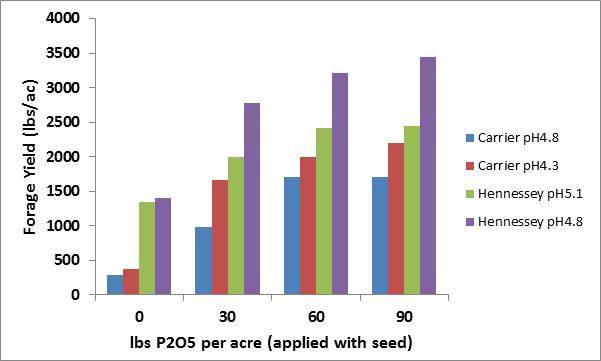
Figure 3. The impact of banding phosphate with seed at planting in acidic soils on winter wheat forage production in Oklahoma. Chart adapted from Boman et al. 1992.

Figure 4. The impact of applying of phosphate fertilizer and lime on the forage production of two winter wheat cultivars in Oklahoma. Chart adapted from Kaitibie et al. 2002.
For many with short term leases banding P is still the only viable solution for wheat production in low-pH soils. However there is ground being farmed by the owner or is under long-term lease that is still receiving this Band-Aid approach. At the 1980-1990 fertilizer and lime prices there is good reason to continue this method. However the cost of P fertilizer has quadrupled since the 1970’s. The last ten year average price of P2O5 was $0.42 per pound while it cost an average of $0.10 in the 70s. So for those who own or are able to work out beneficial lease agreements Table 1 should be of interest. By year three the cost of phosphate exceeds the cost of lime. If you were to use the values from the 1980’s of $0.20 per pound of P2O5 and $25 per ton ECCE lime it was not until year five, the last year before reapplying lime, did the cost of P exceed cost of lime.

Table 1. Cumulative cost per acre of applying phosphorus and lime to remediate aluminum and manganese toxicity based on a five year liming cycle. The 30 lb P2O5 rate is recommended for grain only production while dual-purpose wheat require 60 P2O5. Prices based on current quotes of DAP at $590 a ton ($0.41 lb P2O5) and Ag lime at $30 per ton ECCE.
As the 2014 winter wheat and canola crop is being transported to the bins it is extremely important to take advantage of this time to take soil samples from as many fields as possible. Soil pH issues must be understood and addressed. I often remind producers soil pH plays an exception number of roles. Not only does it impact yield as shown before but it impacts rooting (ability to survive stresses), nutrient availability, and herbicide activity. Our SU herbicides (Finesse, Powerflex, and Maverick) that are used widely across the state are negatively impacted by low soil pH. Figure 5 shows how at a pH of 5.6 Glean is down to a 50% concentration in the soil approximately two weeks after application. So when it comes time to make the call for phosphorus or lime try to weigh all of these aspects, at current prices P is not that much cheaper, improving pH will improve yield and potentially improve weed control.
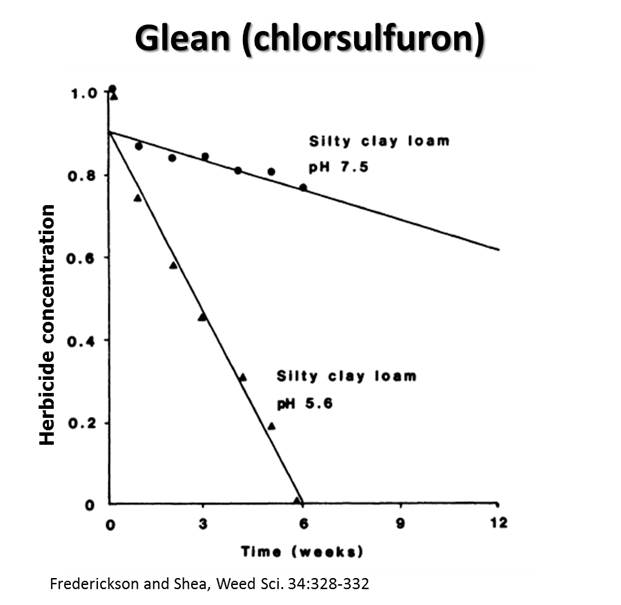
Figure 5. The concentration of Glean (Cholorsulfuron) remaining in too soils (pH 7.5 and pH 5.6) over a twelve week period.
Citations
Boman,R.K., R.L. Westerman, G.V. Johnson, and M.E. Jojola. 1992. Phosphorus fertilization effects on winter wheat production in acid soils. In Soil Fertility Highlights, Agronomy Department Oklahoma Agricultural Experiment Station, Oklahoma State University.Agronomy 92-1 pg171-174
Kaitibie,S., F. M. Epplin, E.G. Krenzer, and H. Zhang. 2002. Economics of lime and phosphorus application for dual-purpose wheat production in low-pH soils. Agron. J. 94:1139:1145.
Kariuki, S.K., H. Zhang, J.L. Schroder, J. Edwards, M. Payton, B.F. Carver, W.R. Raun, and E.G. Krenzer. 2007. Hard red winter wheat cultivar responses to a pH and aluminum concentration gradient. Agron J. 99:88-98.

