Ashleigh M. Faris, State Specialist for Cropping Systems Entomology
As Oklahoma summer crops are winding down, we are seeing an increase in fall armyworm reports. Fall armyworms are posing a significant risk of economic damage to our upcoming winter wheat crop. These summer crops and weeds have supported lush vegetation, creating highly attractive habitats for female moths to lay eggs, which can subsequently move into newly planted wheat.
Here is what wheat producers need to know to identify, manage, and prevent fall armyworm infestations this planting season.
Fall Armyworm (FAW) Identification and Life Cycle
Fall armyworms have a distinct, broad, white inverted “Y” present on the front of their head capsule (Fig. 1). Their body varies from light tan to green to dark brown or nearly black in color with three widely separated narrow, yellowish-white stripes down their back (Fig. 2). There are four distinct black dots arranged in a square on the top of the 8th abdominal segment.
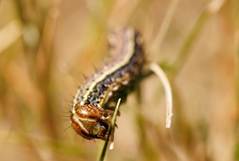
Fig. 1 Fall armyworm. Note the white inverted “Y” on the head capsule. Credit: Mitchell Alcala, OSU Agriculture.
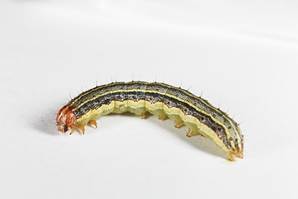
Fig. 2. Fall armyworm. Credit: Pat Porter, Texas A&M AgriLife Extension.
The adult moth will lay their eggs that hatch as caterpillars (the damaging stage). Adult moths migrate from Mexico and Texas to Oklahoma usually by late June. Eggs are laid in clusters on host plants and appear pale yellow but darken as they age turning black just before hatching (Fig. 3). Larvae will feed on foliage for 2-3 weeks, increasing with size as they progress through 6 larval instars, then dig into the soil to pupate. A new generation of moths emerge about 2 weeks later. Because there are several overlapping generations in Oklahoma, extending into October and November, protecting wheat stands and monitoring for FAW can be critical for crop establishment. Keep in mind that FAW do not overwinter in Oklahoma; the first killing frost of the season should eradicate the population.
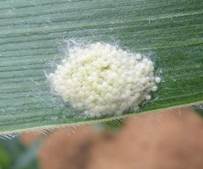
Fig. 3. Fall armyworm eggs laid on grass. The fuzzy appearance is due to scales that are deposited between and over the eggs. Credit: Desiree van Heerden, Syngenta.
Signs of FAW Damage, Scouting, and Economic Threshold
The earliest sign of infestation is “windowpane” damage, where tiny, newly hatched FAW larvae chew off a single layer of leaf tissue, leaving behind transparent patches (Fig. 4). Within a few days, the growing FAW caterpillars can consume entire leaves. Because 90% of crop damage happens during the insect’s final two growth stages, FAW can quickly decimate seedling stands, sometimes forcing producers to completely replant their winter wheat.
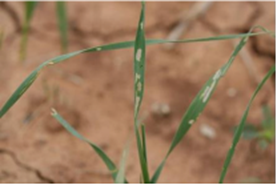
Fig. 4. Small FAW larvae will scrape off the top layer of leaf tissue when they feed, leaving behind a “windowpane” appearance. Credit: Lanie Hale, Wheeler Bros.
To scout for FAW, check your fields regularly (e.g., every other day in the evenings), looking closely at the base of newly emerged seedlings. Focus on field borders and edges near grassy or weedy areas where FAW often start. During the day FAW will hide under residue and at the base of the plant, scouting early morning or in the evenings is the best time for spotting FAW in the crop canopy. Look closely and carefully for early instars, as these are very small (Fig. 5).

Fig. 5. Small, early instar FAW can be difficult to see against wheat and residue, especially when scouting in full sun. Red circles highlight the FAW hiding in this image. Credit: Dr. Amanda Silva, OSU Small Grains Extension Specialist.
The economic threshold for FAW in winter wheat is 3 – 4 larvae per linear foot of row alongside visible feeding damage. Alternatively, treat when there are 4 or more larvae (1 inch or longer) per square foot threatening the stand. If 25-30% of plants show window-pane injury, monitor the field daily and treat immediately if the stand is in danger.
Planting Practices: Cultural Control & Insecticide Seed Treatments
Keeping your field and its surrounding borders completely weed-free, in additional to removal of volunteer wheat for at least two weeks before planting is one way to make sure your wheat season starts off on the right foot. This removes early food sources and makes the area less attractive for egg-laying female moths.
Another way to get your season off on the right foot is to consider using an insecticide seed treatment but make sure it is specifically labeled for FAW. This is because not all insecticides are effective against FAW. Seed treatments containing the active ingredient Chlorantraniliprole (Group 28), such as Cedocor CPL and Lumivia, are effective options labeled to control or suppress FAW. These products also provide protection against wireworms, cutworms, and grasshoppers. Insecticide seed treatments can provide protection for four to six weeks.
How do you know if you should invest in a seed treatment? Consider your planting timing and intended use for your wheat. Planting wheat early for use as a dual-purpose crop significantly increases the prevalence of several diseases and damage caused by viruses, fungi, and by insect pests compared to planting wheat later for grain-only. You should also consider the history of the field. If you have seen issues in a particular field, then it may be worth planting treated seed. If you don’t know the history of the field, work with your local agronomist to determine what insects are likely an issue in those fields.
If you are using treated seed, remember that combinations of some fungicidal and insecticidal seed treatments can be toxic to the seed. Read the label carefully before mixing insecticides with fungicides. Also be sure to follow required grazing restrictions and intervals listed on the label. Equipment such as augers and trucks to deliver grain should not be contaminated by treated grain.
Foliar Chemical Control Options
It is critical to treat fields while FAW caterpillars are on the small side meaning less than half an inch long; larger caterpillars do the most damage and can be highly resilient to insecticides. Effective foliar products typically include active ingredients like chlorantraniliprole, lambda-cyhalothrin, spinetoram, or cyfluthrin. Options labeled for FAW control include Coragen eVo, Tombstone, Warrior II, Mustang Maxx, Besiege, and Radiant SC. When selecting an insecticide, it is important to consider if the option is broad spectrum. Broad spectrum insecticides can reduce natural control such as lacewing and syrphid larvae, as well as lady beetles that may be keeping other pests like aphids under threshold. Always read and follow all label instructions to ensure you are applying at the correct rate and adhering to the required pre-harvest and grazing intervals.
This fall, the OSU Cropping Systems Entomology team will be conducting field trials to evaluate the efficacy of insecticide seed treatments and foliar insecticides on FAW in hard red winter wheat. These trials are made possible through support from industry partners and the Oklahoma Wheat Commission. Trial results will be shared at future OSU Field Days and grower meetings.

