Maíra R. Duffeck: OSU Field Crops Extension Pathologist, Department of Entomology and Plant Pathology
Ashleigh Faris, OSU Field Crops Extension Entomologist, Department of Entomology and Plant Pathology
On June 5, 2026, the first corn leafhoppers of the year were detected in a corn field near Fort Cobb in Caddo County, Oklahoma. The insects were collected from grain corn by Dr. Maira Duffeck’s Row Crop Pathology team, and its identification was subsequently confirmed by Dr. Ashleigh Faris, OSU State Extension Entomologist for Cropping Systems.
The two corn leafhoppers specimens were collected from within the whorls of V6-stage corn plants during routine field scouting. Specimens were collected using a cordless vacuum for identification and documentation. In addition, one corn leafhopper was captured on a yellow sticky trap installed at the edge of the field. The trap has been monitored and replaced weekly since planting as part of ongoing surveillance efforts.
This 2026 detection occurred 18 days earlier than the first corn leafhopper detection reported in Oklahoma during 2025. Due to delayed planting associated with drought conditions, much of the corn across the state is currently at vegetative growth stages compared to this same time last year. This situation raises concerns about the potential transmission of corn stunt pathogens by corn leafhoppers.
Research outside of the U.S. has shown that corn plants are most susceptible to infection by corn stunt pathogens during the vegetative growth stages, from emergence (VE) through tasseling (VT). However, infection can also occur during the early reproductive stages. Early infection can result in significant yield losses because affected plants have a longer period to develop symptoms and experience reductions in growth and grain production.
It is not yet known if the corn leafhoppers detected in Oklahoma are carrying corn stunt pathogens, therefore growers should assume that any corn leafhopper has the potential to be infectious. Consequently, management efforts should focus on early detection and suppression of corn leafhopper populations, particularly in fields with corn at vulnerable vegetative growth stages. Regular scouting and timely management decisions will be critical for reducing the risk of corn stunt development during the 2026 growing season.
The Insect Identification
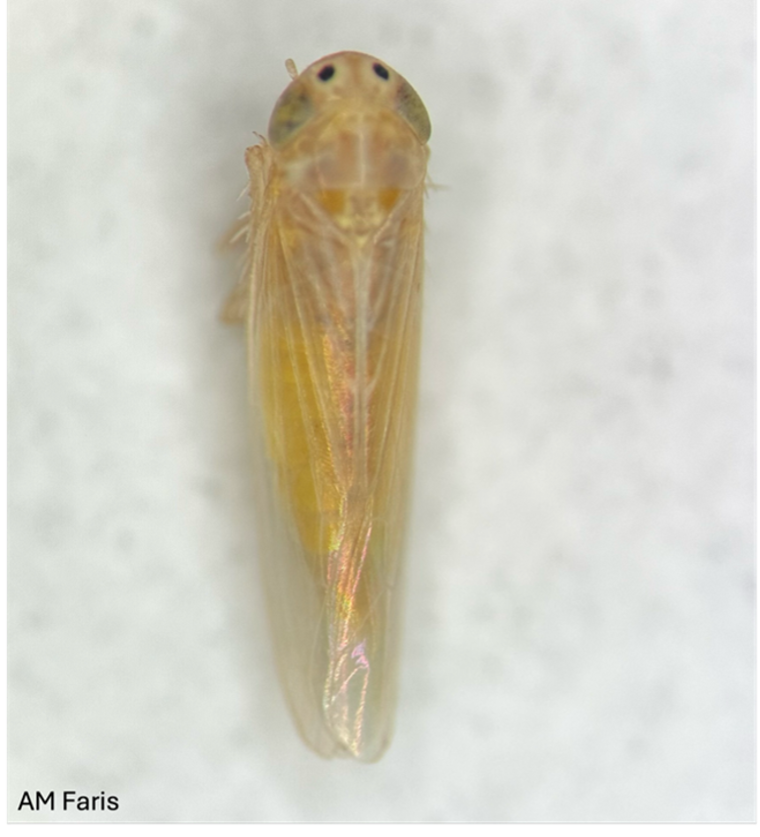
The corn leafhopper is a small insect, approximately 1/8 inch long (about the size of a grain of rice), with a yellow to tan body color. Adults are characterized by two small black spots surrounded by lighter-colored halos located between the eyes (Figure 1), as well as a clean face meaning there are no additional markings on the head or body. It is important to note that many leafhopper species also possess two spots between their eyes, however, these other leafhoppers will also have other dark marks on their head and/or face.
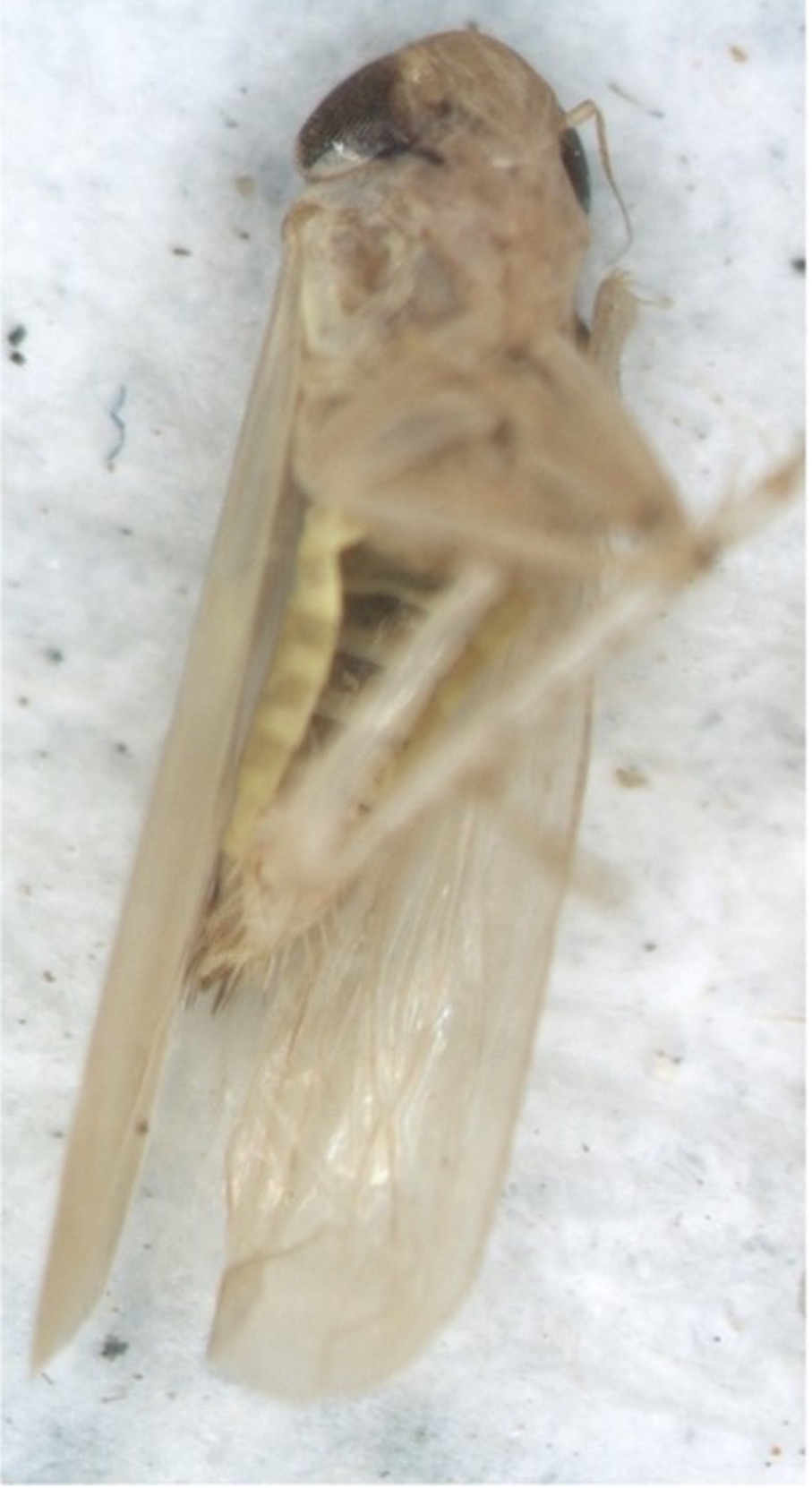
To distinguish corn leafhoppers from other leafhopper species, look for the combination of the two black spots with halos and the absence of additional markings. Corn leafhoppers do not have spots, stripes, or other markings on their wings, back, abdomen, face, or the top of the head (Figure 2). For mor information on how to distinguish the corn leafhopper from other commonly occurring leafhoppers see OSU e-Pest Alert EPP-25-24.
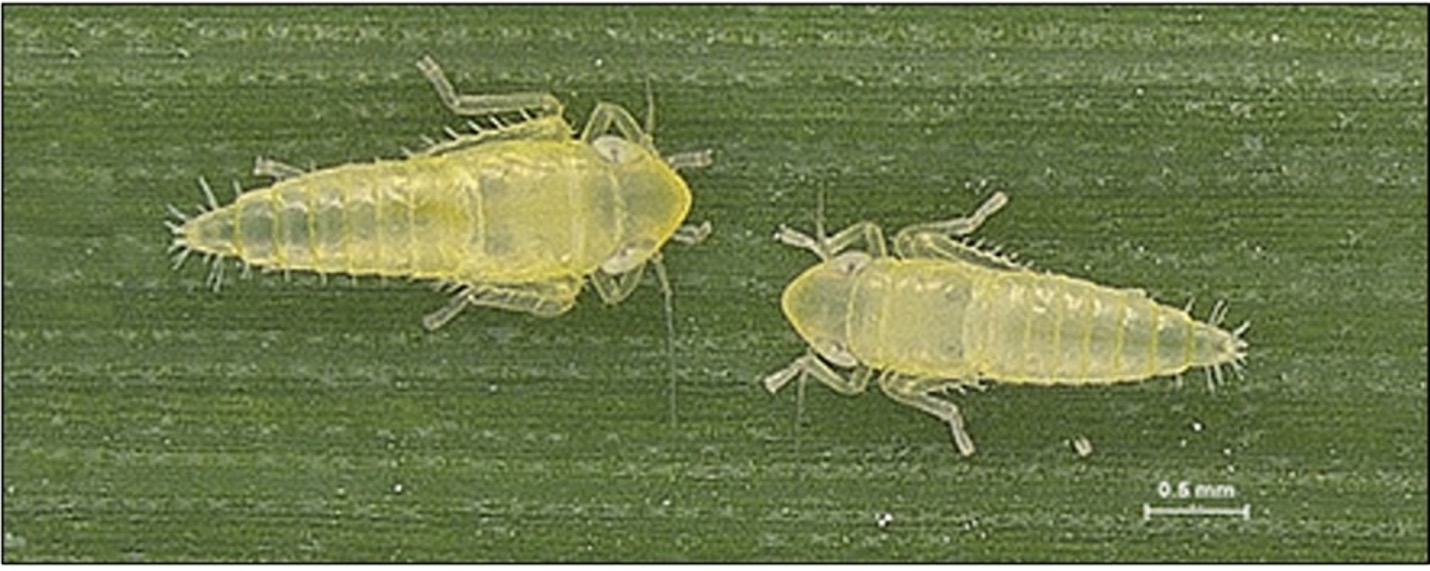
The immature or nymphal stage is wingless and resembles a smaller version of the adult. Nymphs may also lack the characteristic black spots and halos found on adults (Figure 3), making identification more challenging.
For additional information on corn leafhopper identification, biology, life cycle, and its role in transmitting corn stunt pathogens, see OSU E-Pest Alert EPP-23-17 and OSU e-Pest Alert EPP-25-29.
Scouting Tips and Guidance
Corn leafhoppers can be difficult to detect due to their small size, preference for hiding deep within the whorls of developing corn plants, and their rapid darting movement when disturbed. Because of these behaviors, effective scouting requires a combination of methods, including vacuum sampling, sweep net sampling, and direct visual inspection. Check the borders and edges of corn fields first as this is where most early migrators will be found.
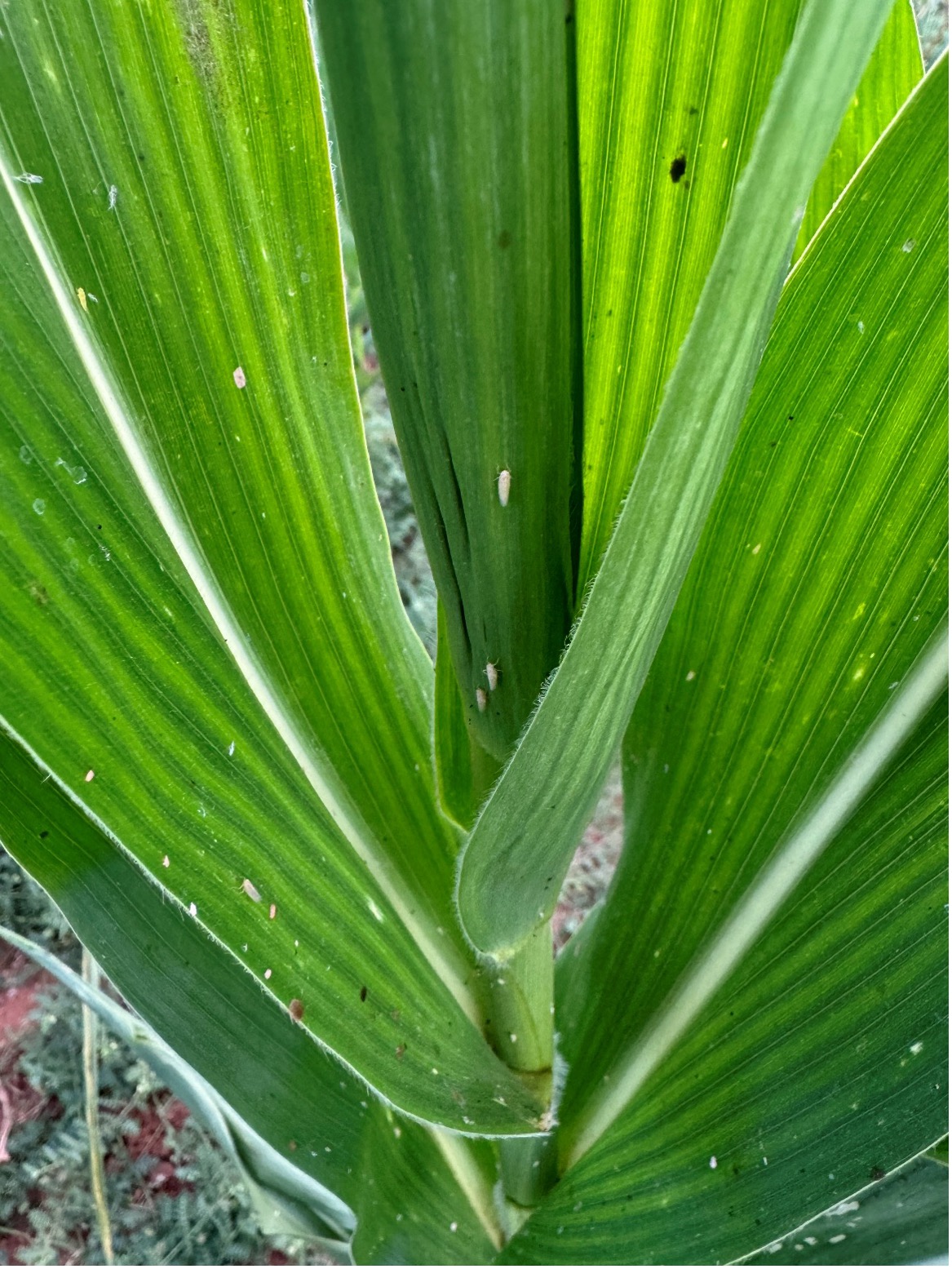
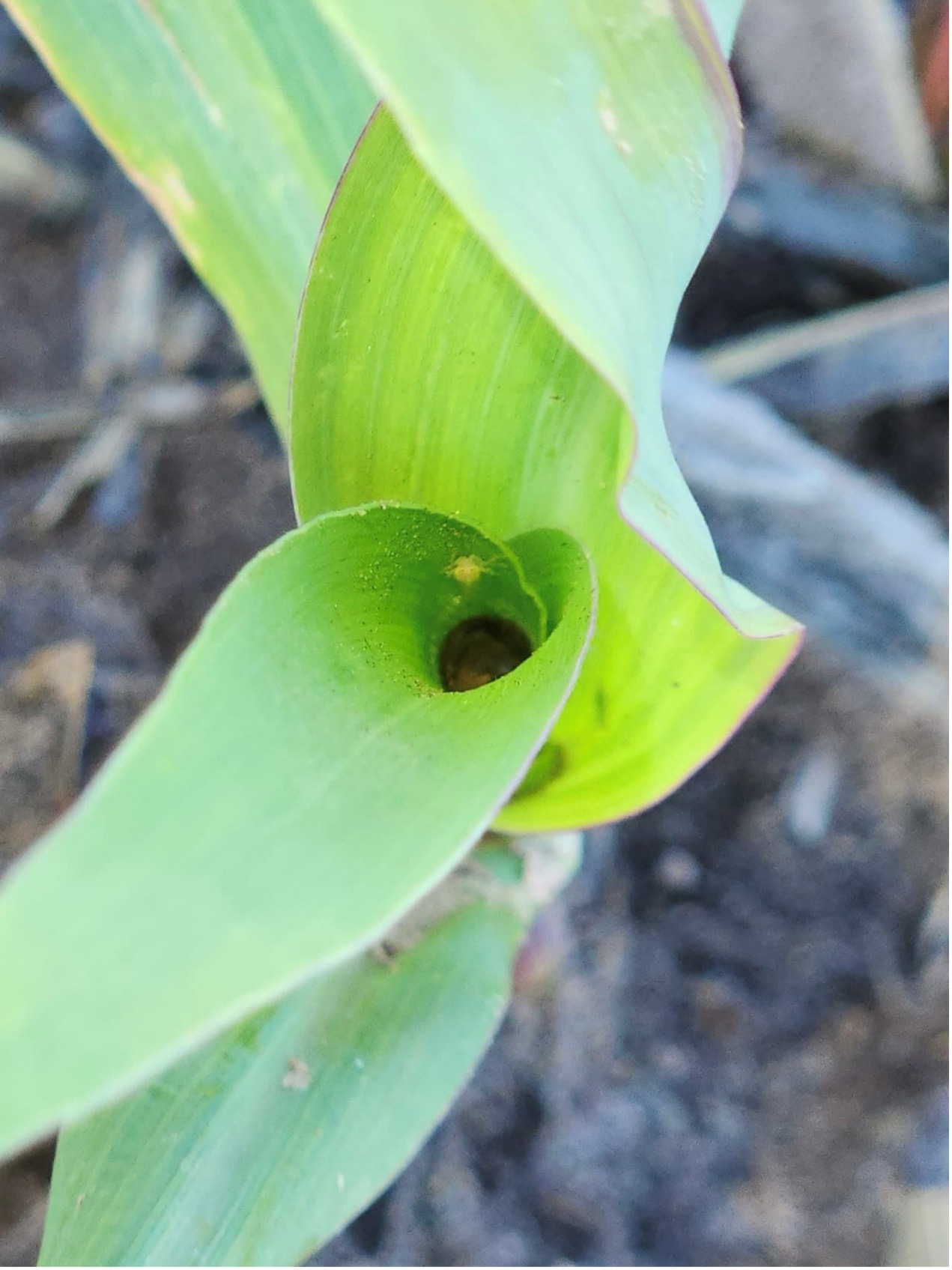
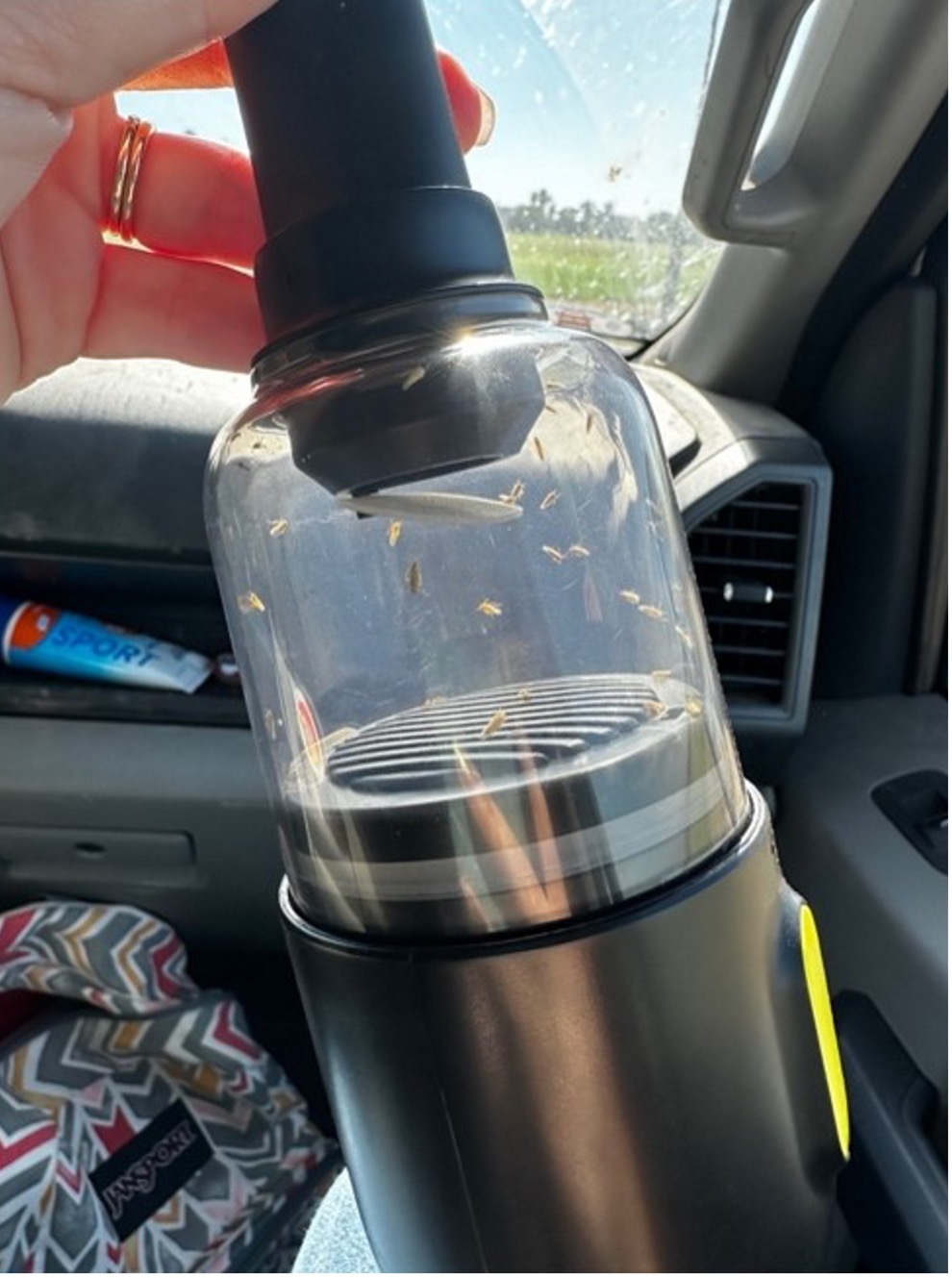
During vegetative growth stages, plants should be carefully examined by inspecting the whorls, where corn leafhoppers often remain concealed (Figure 4 and 5). Individuals may be dislodged from the whorl using a cordless vacuum (Figure 6) or cordless leaf blower equipped with thigh high stockings to capture collected leafhoppers. Vacuum several whorls, randomly at the field borders, moving into the interior of the field.
Sweep net sampling is another useful scouting tool. When walking through corn rows, the net should be swept side-to-side in a figure-eight motion over the canopy and across plants on both sides of the row. After several sweeps, the net should be carefully closed, and contents slowly examined for the presence of corn leafhoppers. As the crop transitions into reproductive stages, sweep netting should be adjusted to target the lower portion up to through the upper and mid-canopy by sweeping up and down along the sides of the corn plants.
Visual inspection remains an important component of scouting throughout both vegetative and reproductive stages. In vegetative corn, focus on whorl inspection. As the canopy closes and plants reach reproductive stages, examine the underside of leaves where leafhoppers may congregate. Check the underside of lower leaves for nymphs. When entering a field, pause periodically to allow leafhoppers to settle, then slowly observe surrounding plants before moving forward.
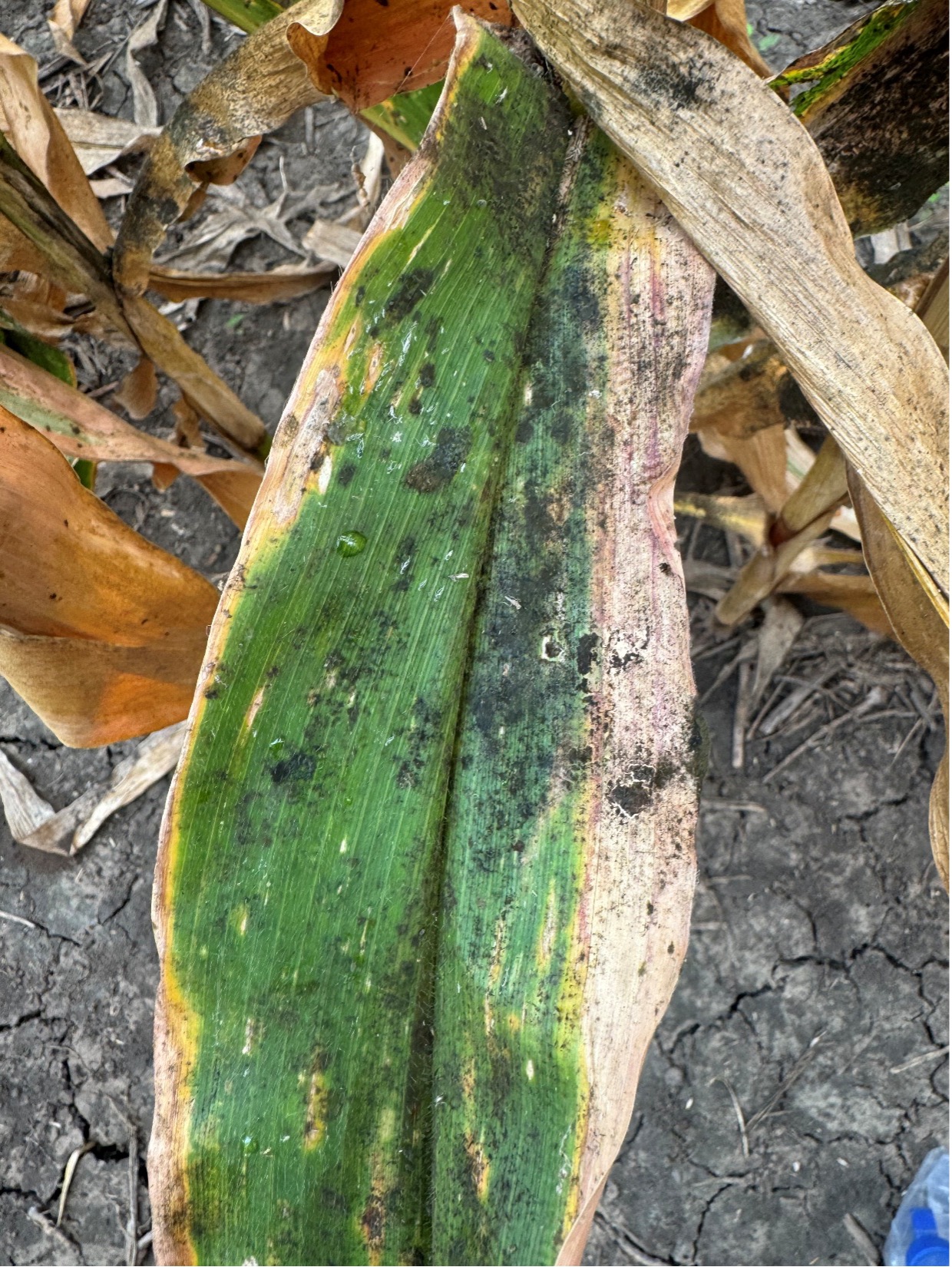
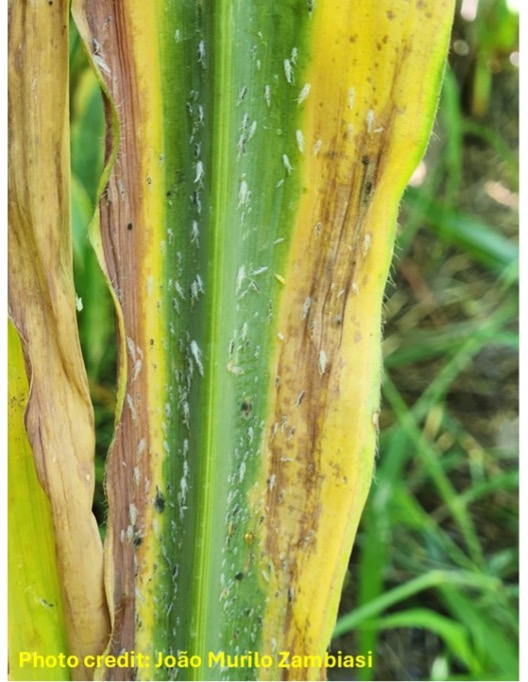
In addition to the insects themselves, other indicators of corn leafhopper presence include honeydew deposits, which appear shiny and feel sticky, the development of black sooty mold growing on honeydew (Figure 7), and the presence of white or translucent cast skins (exuviae) resulting from molting (Figure 8).
Current Integrated Pest Management (IPM) Guidance for Corn Leafhoppers
Pre-planting and Planting Decisions
There are currently no known corn stunt resistant hybrids available on the U.S. market. In areas where volunteer corn is present, growers should remove it as this vegetation serves as a reproductive resource for the insect and a potential reservoir for corn stunt pathogens. When possible, growers are encouraged to plant corn early, as this will help reduce the likelihood of corn being planted when corn leafhoppers are present. In areas where corn leafhoppers will be present at planting, growers should use a high insecticide seed treatment containing Cruiser® Corn 1250 or Poncho® 1250 to allow for protection of early vegetative stages. Trials conducted by Texas A&M AgriLife Research and Extension indicate that 500 and 1250 rates of the insecticide seed treatments suppress corn leafhopper adults through V5 and suppress nymphs (or egg laying) at least until V10. The higher 1250 rates of insecticide seed treatment outperformed the lower 500 rates.
Scout for the Corn Leafhopper
Follow the scouting guidance outlined above to monitor for the insect. Due to the efficiency of corn leafhoppers in transmitting pathogens associated with corn stunt disease, no economic threshold has been established at this time. As a result, growers are encouraged to manage corn leafhopper populations when they are detected in the field.
At present, the exact corn growth stage at which scouting should cease is not known. Previous guidance suggested continuing scouting through the V8 growth stage; however, based on past observations by state Extension personnel, recommendations have been extended to encourage growers to continue managing corn leafhopper populations through the R1 or R2 growth stages. More research is needed to determine the cutoff point for insect management under U.S. crop production conditions.
Chemical Control Options
Results from foliar insecticide efficacy trials conducted in 2025 by Dr. Ashleigh Faris at Oklahoma State University, and by personnel at Texas A&M AgriLife Research and Extension, provide insight into current foliar management options for corn leafhopper.
In these studies, pyrethroid insecticides and dimethoate were largely ineffective against corn leafhoppers. Foliar applications of indoxacarb at 8 – 10 fl. oz./A rate and flupyradifurone at 7 fl. oz./A rate provided up to 14 days of suppression for corn leafhopper nymphs. Thiamethoxam and lambda-cyhalothrin at 10 fl. oz./A rate provided similar nymph suppression for 14 days. If applying a foliar insecticide prior to tassel, applicators should not use a non-ionic surfactant (NIS) as an adjuvant. An NIS applied pre-tassel, particularly mid to late vegetative stages (V6-VT) can result in arrested ear development which causes “baby” or stunted ears/cobs with reduced or absent kernels, underdeveloped husks, poor or absent silk emergence and reddish/purple leaves These symptoms can appear like corn stunt disease symptoms; however, confirmation of corn stunt disease pathogens can only be done through molecular testing.
When selecting an insecticide, growers should prioritize products that are not broad-spectrum and that are less disruptive to beneficial arthropods, to preserve natural biological control in the agroecosystem. Insecticide applications should only be made when corn leafhoppers are confirmed to be present in the field being treated. As with all pest management decisions, the insecticide label must be followed; the label is the law.
Integrated pest management (IPM) recommendations for corn leafhopper will continue to evolve as additional research becomes available under Oklahoma growing conditions. Growers are encouraged to stay updated through future OSU Pest e-Alerts and to follow Cropping Systems Extension Entomologist Dr. Ashleigh Faris (@OSU_crop_insects) and OSU Field Crops Pathologist Dr. Maira Duffeck (@osu.plantpath) on Instagram for ongoing updates on corn leafhopper and corn stunt disease distribution in the state and results from 2026 insecticide efficacy trials.

 Down and Dirty with NPK