Josh Lofton Cropping System Specialist, OSU
Tipton:
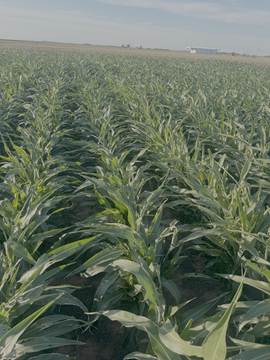
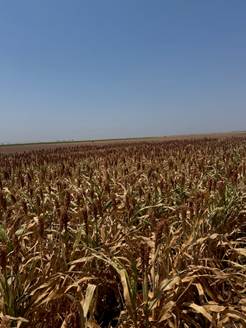
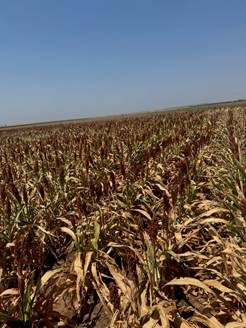
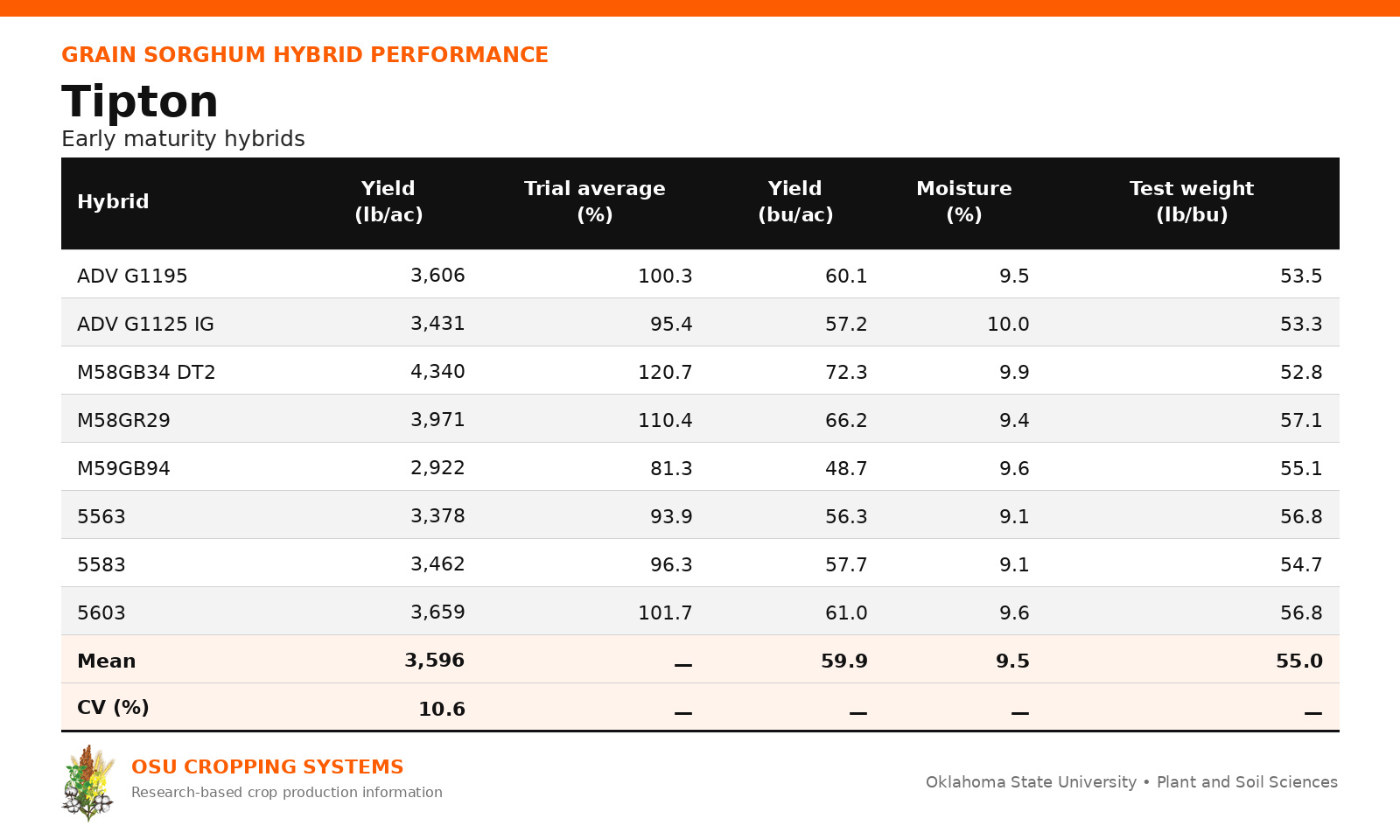
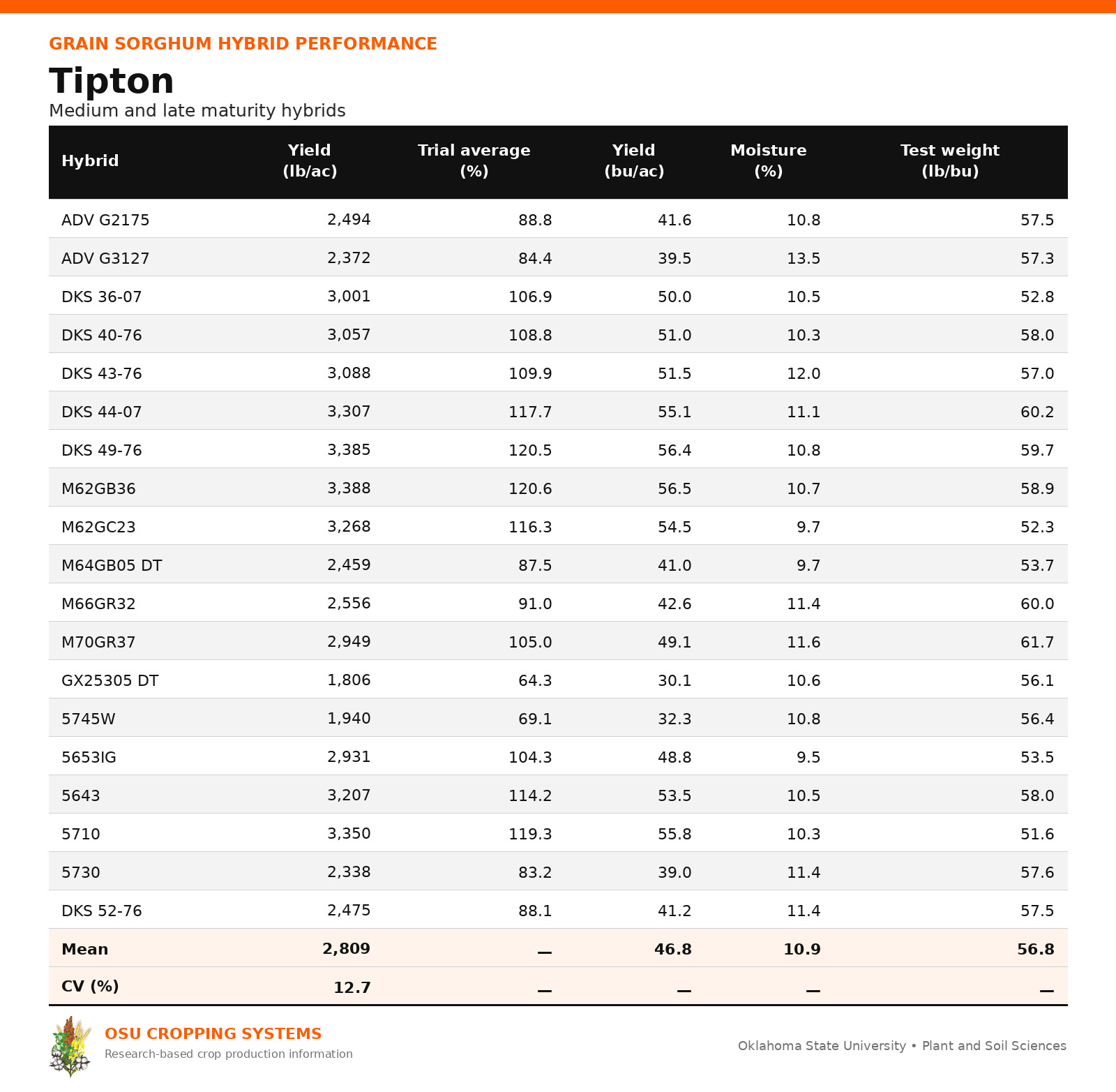
The southern most location in our sorghum plots is often the first to be planted and the first to be harvested. However, in the last couple of years, moisture has resulted in having to wait for appropriate moisture to be present to successfully establish the crop. This year, the plots were planted on April 21st and harvested on August 13th. As with all of our dryland plots, we seeded the plots to approximately 45,000 seeds/ac with the hope of getting stands, at minimum, between 30,000 to 35,000 plants/ac. This was located on the Oklahoma State University research station just south of Tipton Oklahoma. Overall, minimal pressure was noted throughout the year. This is unique for this location, being close to Texas and located where it is on station, pest and late-season bird pressure is common. Weeds were maintained mainly through the use of preplant herbicide program (labeled rates of S-Metolachlor and Atrazine). Outside of the yield, moisture and test weight values in the graph, averages for each column are provided as well as CV for the trial. This CV value is a measure of the variability between the individual varieties throughout the trial. A CV value below 15% is considered very good with most differences in average yields being associated with performance and not environmental, soil, or management differences.
Chickasha:
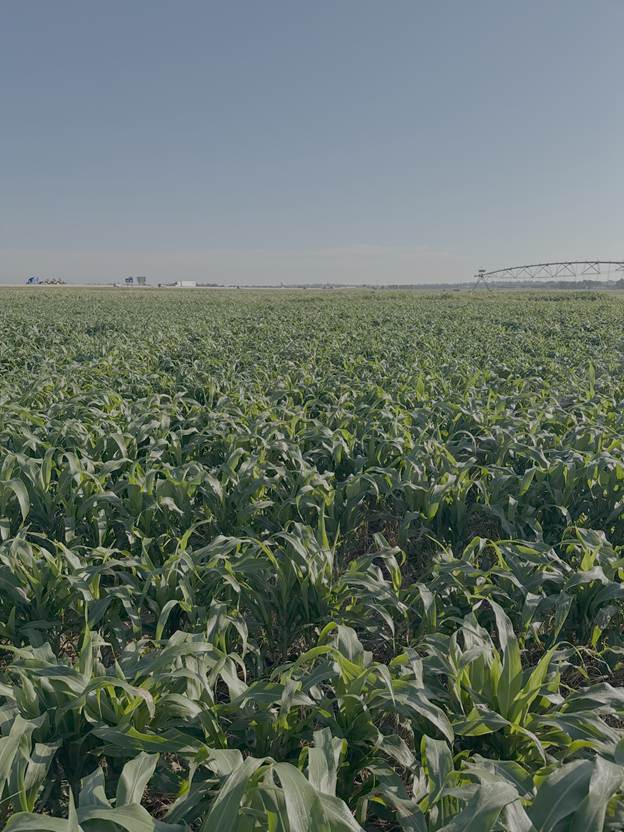
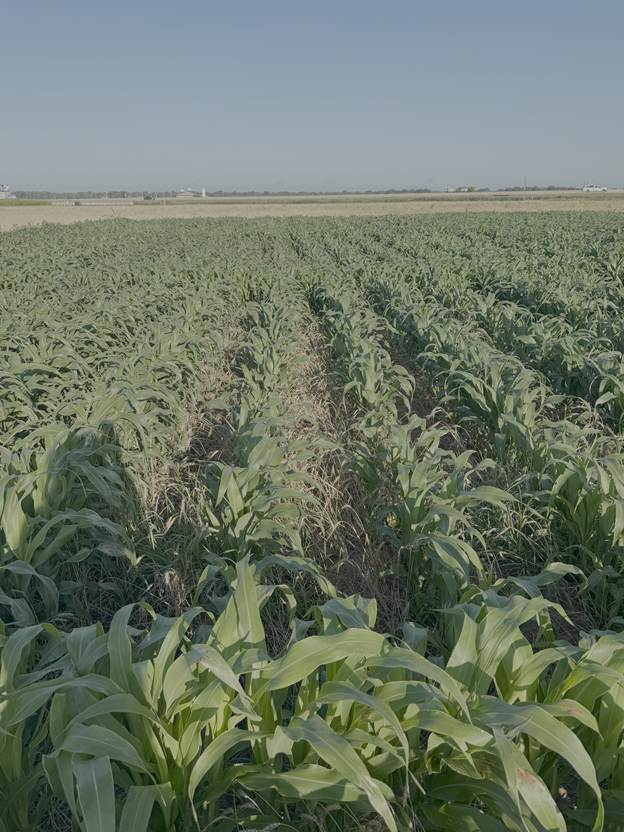
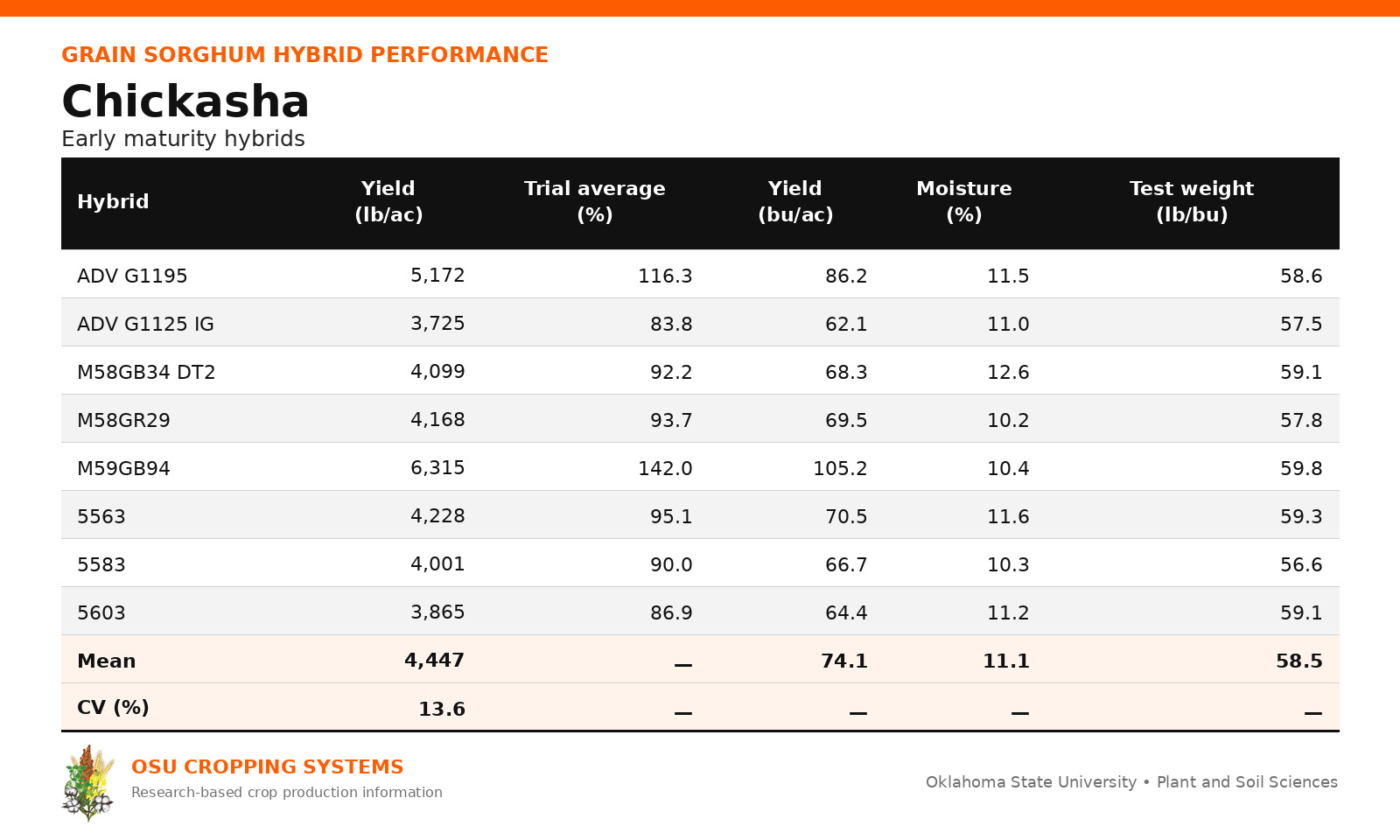
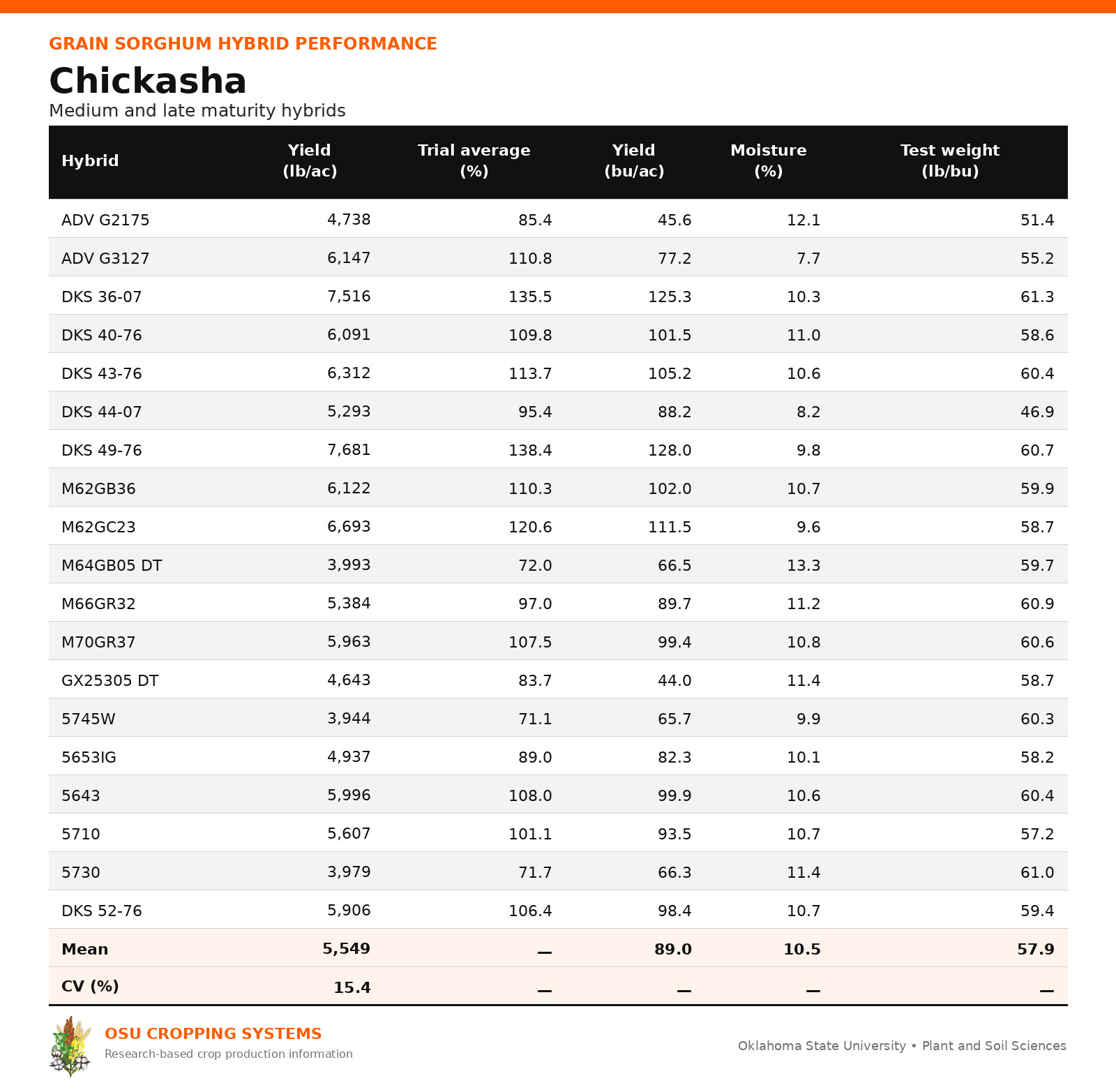
Our Chickasha location was planted a little later than intended; however, the crop went into a terminated wheat stand and had to work with periods of wet conditions in late April that pushed planting into early May. Harvest occurred in late August (the 20th) after a glyphosate desiccation treatment. As with all of our dryland plots, we seeded the plots to approximately 45,000 seeds/ac with the hope of getting stands, at minimum, between 30,000 to 35,000 plants/ac. This trial was located at the Oklahoma Research and Extension Center outside of Chickasha, Oklahoma. There was minor pest pressure throughout the season, with grasshopper, sorghum aphids, and chinch bugs being present but not to levels that require any management. The aphids and chinch bugs were only present during the latest part of the season during grain dry down. Weeds were the primary issues with this location this season. While most years have a prominent johnsongrass and pigweed issue, crabgrass was primary issue this season. Impact was minimized by manually weeding the plots several times throughout the season. Outside of the yield, moisture and test weight values in the graph, averages for each column are provided as well as CV for the trial. This CV value is a measure of the variability between the individual varieties throughout the trial. A CV value below 15% is considered very good with most differences in average yields being associated with performance and not environmental, soil, or management differences.
For any questions please contact Josh Lofton at josh.lofton@okstate.edu

