Ashleigh Faris, Cropping Systems Extension Entomologist
Josh Lofton, Cropping Systems Extension Agronomist
Recent reports from growers in north central Oklahoma indicate increased green peach aphid activity in winter canola. Although green peach aphid is often overshadowed by cabbage aphid and turnip aphid, it can cause significant damage through direct feeding and by transmitting plant viruses. Given current field reports and ongoing dry conditions, producers should scout fields now and determine whether treatment thresholds have been reached.
Green Peach Aphid Identification
Accurate identification is the first step in management because green peach aphid behaves differently than other aphid species and is often more resistant to certain insecticides.
Appearance: Green peach aphids are small, about 1.5 to 2.5 mm long, and vary in color from pale green to yellow or pinkish. Unlike cabbage aphids, they do not have a thick, waxy or powdery covering. One of the most important identifying features is the presence of prominent swellings at the base of the antennae, that point inward and create a distinct “W” or “U” shape between the antennae (Figure 1). Their cornicles (tailpipes) are relatively long and usually match body color, although the tips may appear slightly darker.
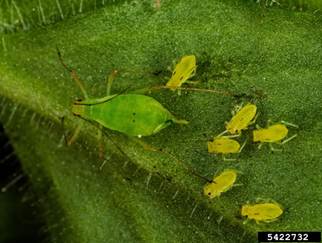
Figure 1. Green peach aphid adult and nymphs. Image courtesy invasive.org.
Differentiating Green Peach Aphid from Other Aphid Species
Cabbage aphids are typically covered in a grayish-white waxy bloom (Figure 2) and often form dense, crusty colonies on the youngest leaves and flower stalks. Turnip aphids are light green and lack the waxy bloom seen on cabbage aphids. They often have dark bands across the abdomen (Figure 3).
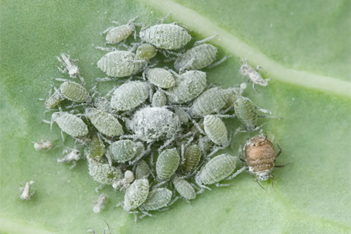
Figure 2. Cabbage aphid adults and nymphs. The brown, globular aphid in the bottom right has been parasitized (aphid mummy). Image courtesy biologicalservices.com/au.
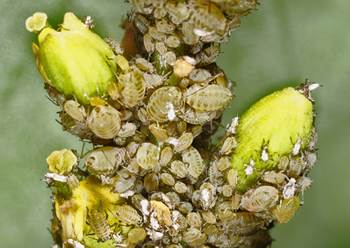
Figure 3. Turnip aphid adults and nymphs. Image courtesy Claude Pilon.
Green Peach Aphid Scouting and Distribution
Green peach aphids typically colonize the undersides of lower leaves first. This differs from cabbage aphids, which more often infest terminal buds and flower stalks.
Where to look: Focus on the undersides of leaves in the mid- to lower canopy. Green peach aphids are often solitary or found in small, scattered groups rather than the large, tight colonies commonly associated with cabbage aphids.
Sampling: Examine 5 to 10 plants in at least 10 different areas of the field.
Signs of injury: Watch for yellowing (chlorosis), leaf curling, or stunted growth, which are common symptoms of green peach aphids feeding.
Green Peach Aphid Management and Thresholds
Because canola can compensate for some early-season feeding injury, insecticide applications should be based on established thresholds.
Economic threshold: Treatment is generally recommended when populations reach 50 to 100 aphids per plant before flowering. Use the lower end of that range when the crop is moisture stressed. From budding to early bloom, treatment may be justified when 20% of racemes are infested with 25 to 50 or more aphids. For cabbage aphid, the comparable threshold is 15% infested racemes. Oklahoma State University research suggests that an average of one turnip aphid or one green peach aphid per plant during reproductive stages may result in approximately 0.5 lb/acre of yield loss. Treatment decisions should always be weighed against crop value and application cost.
Biological control: Before spraying, check for beneficial insects such as lady beetles, lacewings, and parasitic wasps. Aphid mummies are a good indicator of parasitism. When temperatures are warm enough for beneficials to remain active, they can substantially reduce aphid populations.
Chemical Control for Green Peach Aphid and Resistance Warning
Green peach aphids are well known for developing resistance to several insecticide classes, especially older pyrethroids and organophosphates.
Product Selection: Several insecticides are labeled for aphids in canola, but products containing sulfoxaflor (Transform WG) or flupyradifurone (Sivanto Prime) have generally shown strong efficacy against green peach aphid while being relatively less disruptive to beneficial insects. Be aware that some products have restrictions related to bloom timing, petal fall, and preharvest intervals. Always read and follow the label. For a list of registered insecticides and rates, refer to CR-7667: Management of Insect and Mite Pests in Canola.
Coverage: Because green peach aphid commonly feeds on the undersides of lower leaves, thorough coverage is critical. Use high carrier volumes of at least 10 to 15 gallons per acre for ground applications. For aerial applications, at least 10 gallons per acre is recommended.
The information given herein is for educational purposes only. Reference to commercial products or trade names is made with the understanding that no discrimination is intended and no endorsement by the Cooperative Extension Service is implied.
 Down and Dirty with NPK