Ashleigh Faris, Cropping Systems Entomologist and IPM Coordinator
Depending on where you are in Oklahoma, you may have had anywhere between just under 0.5” or over 7.5” of rain in the last 7 days. If you were on the higher end, you may think that the rainfall has helped to prevent or wash off any insect pests building up in your summer crops. Unfortunately, this isn’t case; this morning sorghum aphids and chinch bugs were detected in research plots in northern Payne County. With rain out of the forecast and typical summer temperatures kicking in these insects, and other pests, can start to take off. Both pests have the potential to inflict severe economic damage if left unchecked, particularly during vulnerable crop stages or near recently harvested wheat. Scout now, and if needed, get together a plan to help you keep these economically damaging pests in check.
Sorghum Aphid, Melanaphis sorghi
Formerly known as the sugarcane aphid, the sorghum aphid can infest sorghum at any growth stage but causes the most severe damage from the boot to soft dough stages. The aphids form dense colonies on the undersides of leaves and produce heavy amounts of honeydew that can negatively affect plant growth and severely impede harvest.
Identification: Sorghum aphids are small aphids with light tan to pale yellow bodies, black feet, black antennae, and black cornicles (the two “tailpipes” on the back of the abdomen) (Figure 1).They almost exclusively reside on the underside of the leaves, often nestled against the midrib (Figure 2).
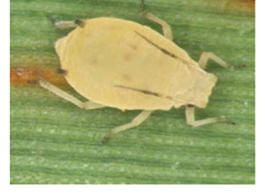
Figure 1. Sorghum aphids are light tan to yellow in color, have black legs, black antennae, and black cornicles (two tailpipe-like appendages at the tip of their abdomen. Photo credit: Oklahoma State University IPM.
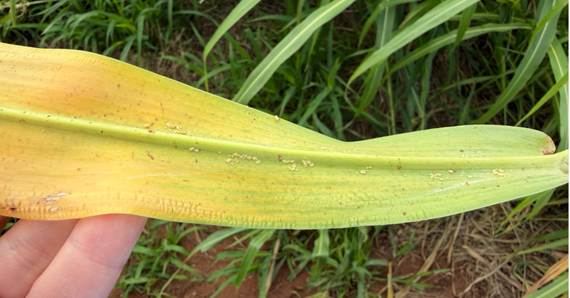
Figure 2. Sorghum aphid nymphs and adults along the midrib of a sorghum leaf. Photo credit: Ashleigh M. Faris, Oklahoma State University Extension.
How to Scout Sorghum Aphids: Begin scouting once a week and increase to twice a week once the aphid is detected. There are two primary ways to scout:
- Option A: The Glance-N-Go App (Recommended) Download the SCA Glance-N-Go App (available on Apple and Google Play). Enter your control cost (
/bushel). Sample two leaves per plant until the app tells you whether to treat or not. It tracks the threshold automatically based on your specific economic variables.
- Option B: The Pen-and-Paper Method
- Walk 90 feet into the field. Inspect the top and bottom leaves of 3 consecutive plants, walk 5 rows over, and sample 3 more plants. (This is 1 “stop” = 6 plants).
- Walk 30 feet in an inverted “U” shape to your next stop and repeat.
- Complete 9 total stops (54 plants total).
- Record the number of plants that have 50 or more aphids.
Sorghum Aphid Economic Threshold: If using the manual method (Option B), the threshold to treat is when 25% of the plants are infested with 50 to 125 aphids per leaf. Do not spray before the threshold is met, as premature spraying can disrupt the natural enemies (lady beetles, lacewings, parasitic wasps) that naturally keep sorghum aphid populations in check.
Sorghum Aphid Management: Sivanto 200 SL and Transform WD are recommended insecticides as both are soft on beneficials and provide good residual. Follow label rates and directions. Coverage is critical so apply with high water volume (5+ gallons/acre by air; 10+ gallons/acre by ground). Avoid pyrethroids. Using pyrethroids to control secondary pests (like headworms once at grain fill) even when aphid numbers are low will wipe out beneficial insects, frequently causing sorghum aphid populations to explode.
Chinch Bug, Blissus leucopterus
Newly seeded sorghum (think double-crop and late planted sorghum for this time of the year) is especially at risk for chinch bug damage. Chinch bugs frequently migrate into sorghum fields looking for a new food source once adjacent wheat fields mature and are harvested.
Identification: Adult chinch bugs are about 1/8 inch long, black body with white wings folded over their back. The wings have distinctive black, triangular markings (Figure 3). Chinch bug nymphs (immatures) are bright red/orange right after hatching (Figure 4). They gradually darken to brown/black as they mature. They do not have wings but do have a light-colored band across their abdomens.
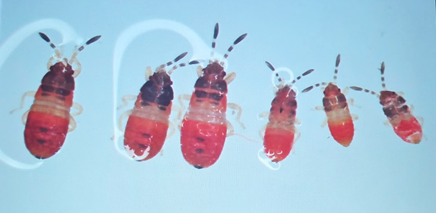
Figure 3. Chinch bug nymphs photographed with a microscope. Nymphs are wingless, early nymphal stages are orange to red in color with a white band, later nymphal stages are darker in color. Photo credit: Jacie Guerrero and Nikolai Thielepape, Department of Entomology and Plant Pathology, Oklahoma State University Extension.
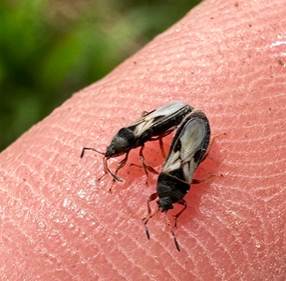
Figure 4. Chinch bug adults have black bodies and white wings that give a triangular shape to the chinch bug’s back when folded over. Photo credit: Ashleigh M. Faris, Oklahoma State University Extension.
How to Scout Chinch Bugs: Focus on border rows adjacent to harvested wheat or thin stands. Double-cropped sorghum planted directly into wheat stubble is at the highest risk, but we have detected chinch bugs in full-season planted sorghum throughout North Central Oklahoma. Chinch bugs pierce the plant and suck the sap, injecting toxins as they feed. Look for stunting, wilting, reddish discoloration on the stalk, or poor root development (Figure 5).Check the leaf blades, but importantly, look under the leaf collars/sheaths and down at the base of the plant near the soil line where the chinch bugs hide (Figure 6).
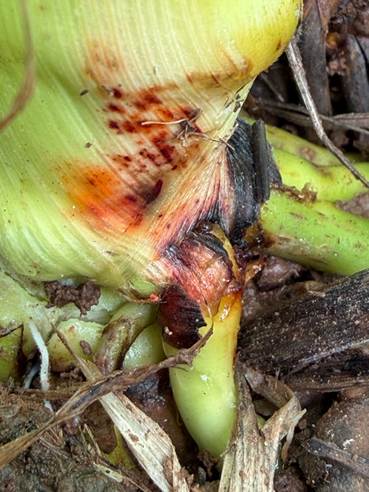
Figure 5. Chinch bug damage and chinch bug nymph on sorghum stalk. Photo credit: Ashleigh M. Faris, Oklahoma State University Extension.
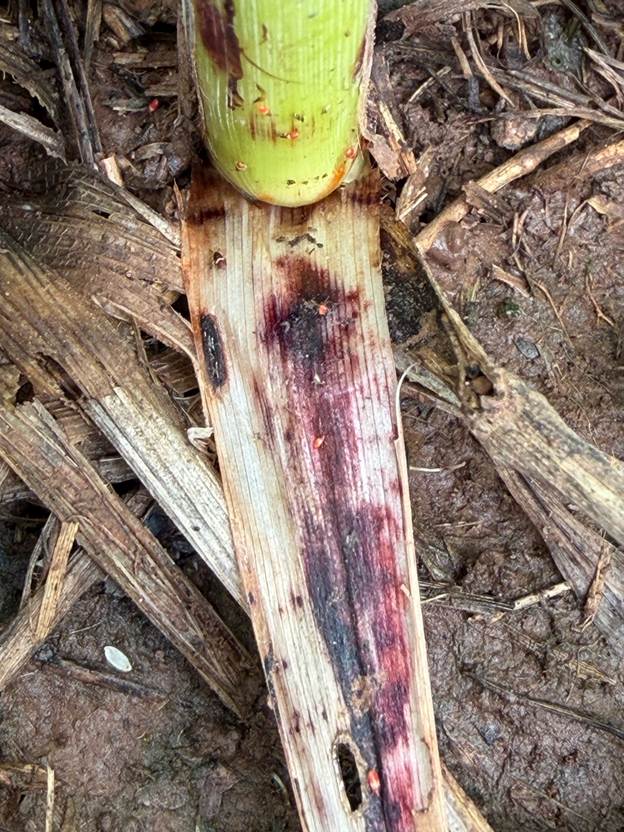
Figure 6. Chinch bug nymphs and damage to sorghum stalks found by peeling back lower sheaths of damaged sorghum stalks.Photo credit: Ashleigh M. Faris, Oklahoma State University Extension.
Chinch Bug Economic Threshold: For sorghum seedlings (less than 6 inches), treat if 2 or more chinch bugs are found on 20% of the plants.Larger plants (over 1 foot), treat if you find 10 or more chinch bugs per plant.
Chinch Bug Management: The best defense is an insecticide seed treatment (e.g., Gaucho, Poncho, or Cruiser), which provides about two to three weeks of early control. Avoid planting sorghum directly adjacent to poor wheat stands if possible.If migrating populations breach the threshold, foliar pyrethroids are the primary option (e.g., lambda-cyhalothrin or zeta-cypermethrin). Because chinch bugs hide behind leaf sheaths and at the soil level, high water volume is essential to achieve proper penetration and coverage on small plants. Spot treatments on border rows are often enough if the migration is caught early and chinch bugs have not spread into the field.
Dr. Ashleigh Faris’s Cropping Systems Entomology IPM team is currently conducting chinch bug insecticide efficacy trials. Stay tuned for the results!
For detailed insecticide rates and grazing/post-harvest intervals, always consult the product’s label guidelines and read the label carefully before application.
 Down and Dirty with NPK